This is a Commission that confuses moralistic fervour and emotional manipulation with legal authority and slogan-infested political theatre with actual power.
By Rafael Pinto BORGES
This week's European Council meeting was supposed to be Ursula von der Leyen's finest hour. After a bitter succession of public humiliations-from that great stain on her probity and credibility that was the Pfizergate debacle to a wave of no-confidence votes in the European Parliament and, more recently, the scandalous arrest of former EU High Representative for Foreign Affairs Federica Mogherini-this was meant to have been her triumphant return. Under her decisive leadership, things would now finally get done: the EU-Mercosur trade deal would, after a gargantuan two and a half decades of negotiations, be signed just in time for the Commission president to fly to South America for a caipirinha-filled self-congratulatory tour. Most importantly, she would implement her great obsession, prevail in her preferred moral battle: punish the Russians by giving Kyiv Moscow's financial reserves. Who, then, would think of impeaching her?
Things turned out somewhat differently. Von der Leyen had time and again claimed that the only way to keep Kyiv afloat financially would be by tapping into the hundreds of billions of euros held by the Russian Central Bank at Euroclear, in Belgium. European Council President António Costa had even-and rather buffoonishly-threatened to effectively kidnap Europe's heads of government in Brussels until a decision was reached. The same with the Mercosur deal, which Commission officials had attempted, until the very last second, to force down Europe's throat. But it was all to no avail. Italian Prime Minister Georgia Meloni put an end to any lingering hope of a hastened approval of the trade deal when she, too, agreed that the guarantees it would give to Europe's farmers would still be insufficient. Von der Leyen shamefully had to postpone her Brazilian holiday to a later date.
The now-defunct scheme to lend Ukraine billions by leveraging immobilised Russian state assets was the expected brainchild of an inept Commission-legally brittle, politically radioactive, and pushed with the kind of exorbitant hubris the world has come to associate with the Berlaymont. Back in September, during her State of the Union speech, Von der Leyen sold it as the only viable path forward, dismissing alternatives like common debt as impossible, irresponsible, or both. Brussels understood that, as loyal to the official, pro-war party line as many European capitals might remain, not many are prepared to put money where their mouth is-and actually want to finance the Ukraine war eternally. Financing the conflict with Russian money was Brussels' silver bullet. But it also failed. Three months later, when the moment came to sign, the room fell silent. Support dissolved into hesitation; slogans evaporated in contact with reality. As Belgian Prime Minister Bart De Wever, who led the resistance to the von der Leyen plans, bluntly put it, the plan was a Titanic-and it sank.
The result was a spectacular and deeply humiliating public U-turn. The Commission did not extract a bold new instrument of pressure on Moscow. It extracted, instead, a far more conventional package of EU-backed loans-financed by common debt, no less-made possible only because the pro-peace bloc composed of Hungary, Czechia, and Slovakia agreed to waive their vetoes in exchange for being left out of the loan. The Eurocrats have ensured that the cash pipeline to Ukraine will remain open through a loan Kyiv will obviously never repay-but instead of having the Russians advance the money, the responsibility will now fall on the shoulders of European taxpayers. It's a disastrous result for Europe, but the Brussels Establishment doesn't care. When the bill arrives, they will all be out of office anyway-so why bother?
The fiasco seen in this latest meeting of the Council is the culmination of a long, persistent pattern: this is a Commission that confuses moralistic fervour and emotional manipulation with legal authority, and slogan-infested political theatre with actual power. Von der Leyen's leadership style-arrogant, performative, impatient with dissent, and clumsy-functions poorly in a Union that still runs, inconveniently, on treaties, unanimity, and national balance sheets.
These scenes have unfolded against a background of institutional decay that is too evident to ignore, no matter how much Brussels would prefer to look the other way. Von der Leyen's political frailty was on full display even as Federica Mogherini's disgraceful arrest for corruption and the revolving-door culture that has characterised the von der Leyen era confirm the public suspicion that the Union's top offices double as get-rich-quick schemes and as waiting rooms for corporate afterlives. In the European Parliament, repeated-if so far unsuccessful-attempts to censure or impeach von der Leyen testify to a level of hostility no Commission president can ignore. Even when such efforts fail, they leave toxic residue: the sense of a presidency permanently on the defensive, surviving vote to vote.
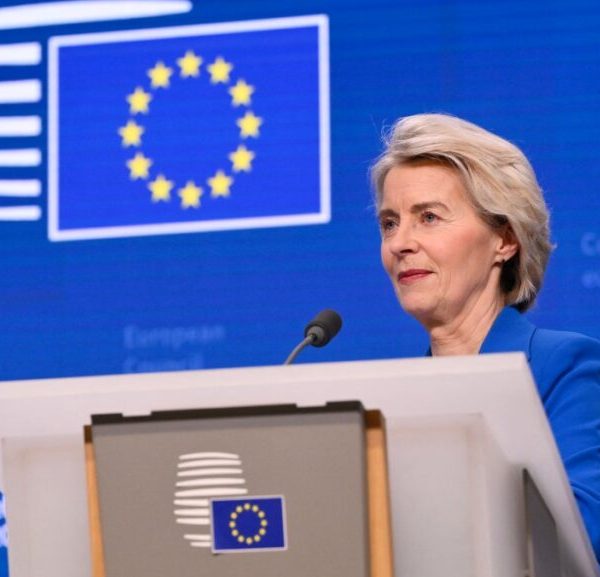
The most telling moment of the summit didn't come in the negotiating room itself. It came afterwards. Asked directly-at a 3:30 a.m. press conference-whether the collapse of the reparations loan constituted a political defeat, a shattered von der Leyen muttered a dispirited "it's good" before walking away.
In truth, that candid gesture said more than any communiqué ever would or could. This is a Commission that has overreached, oversold, and now finds itself constrained by the very member states it sought to discipline. At the end of the day, it wasn't just von der Leyen's 'reparation loan' that had something of a sinking ship to it. The real Titanic is this European Commission. For Europe's sake, let it go under now, before even more damage is caused.
Original article: europeanconservative.com