Erkin Oncan
NATO is positioning Turkey in an even more dependent role in both political and military-technological terms in the period ahead.
After every passing year, producing projections for the new year has become a familiar routine for the world. Within this framework, our region has witnessed critical developments in which successive "American peaces" have been put into practice.
The acceleration of U.S. "mediation" efforts in Ukraine, the rule of Hayat Tahrir al-Sham (HTS) in Syria, peace between Azerbaijan and Armenia and the "Trump Corridor," the Israel-Gaza ceasefire followed by the growing closeness between Israeli Prime Minister Benjamin Netanyahu and U.S. President Donald Trump, and of course the "American Peace" process implemented in Turkey under the discourse of a "Terror-Free Turkey"...
In all these critical steps, the government and circles close to it have emphasized assessments that Turkey is advancing steadily on the path to becoming a "global actor," and that the government has achieved numerous successes through "multi-layered diplomacy."
Naturally, all of this has been accompanied by a narrative claiming that Turkey, led by the AKP government, is "making history" in the field of defense industry, particularly through companies such as Baykar.
Turkey is preparing to host major events in 2026 under the leadership of the AKP government. In 2026, Turkey will host NATO, the United Nations Framework Convention on Climate Change 31st Conference of the Parties (COP31), and the Summit of the Organization of Turkic States (OTS).
As the need for military power increases in the region, particularly due to Ukraine, the growing interest in Turkey - especially from the United States and the European Union (EU) - will be followed by corresponding "course-correction" steps.
In fact, this is precisely the essence of the matter. In the eyes of the West, Turkey is moving steadily from being a country "where millions of young people are dissatisfied with their way of life" to one "where the young population represents great potential"; from an "authoritarian country with eroded democratic values" to one "with strong centralized command and control"; from a "potential threat drifting away from European values and aligning with China/Russia" to a "strong ally assuming an active participant role in ongoing crises."
We will, of course, experience the consequences of the flattery directed at the government - "you matter too, you are a game-maker as well" - across all the topics listed above. However, the fact that the elements creating this so-called "transformation" of Turkey converge at a single point deserves particular attention: NATO...
The NATO summit and Turkey
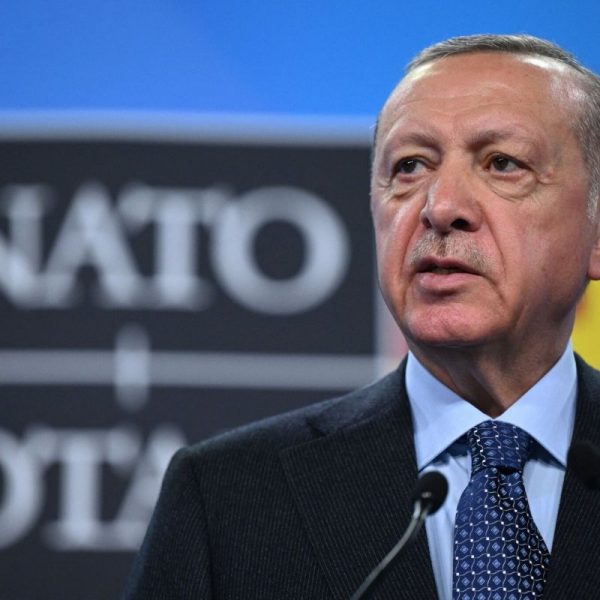
Turkey will host the NATO Summit on 7-8 July 2026 at the Presidential Complex (Beştepe) in Ankara.
This will not be the first NATO Summit hosted by Turkey. The first took place in Istanbul in 2004, centered on Afghanistan, Iraq, and the Middle East - at a time when security forces placed almost the entire city under siege in an effort to silence anti-NATO revolutionaries.
As today, the Istanbul Summit was presented as a "diplomatic success" for Turkey. On the ground, however, Turkey was turned into a base for NATO's military expansion toward the Middle East and South Asia.
Twenty-two years later, the agenda is no longer Afghanistan or Iraq, but rather military buildup in Eastern Europe via the war in Ukraine and tensions with Russia. In other words, while the topics change, the main axis remains the same: expanding and entrenching NATO's military presence.
However, the main issue at the 36th NATO Heads of State and Government Summit will not be preparations for war per se, but rather the target of increasing member states' defense spending to up to 5 percent of their Gross Domestic Product (GDP).
This target, raised at every opportunity by Trump and NATO Secretary General Mark Rutte - known to be a close ally of Trump - can be considered one of NATO's biggest internal controversies. While this target is already shaking European NATO members, for our people it means compounded devastation.
What does the 5 percent target mean for Turkey?
Turkey is among the countries that have approved the target of raising defense spending to 5 percent without hesitation. Our government repeatedly states that it is "already increasing" defense spending and that the "5 percent target will be reached."
But what does the current picture show?
Turkey's defense spending currently stands at around 2 percent of GDP, corresponding to approximately 40-50 billion dollars. Turkey's GDP has been announced as 1.538 trillion dollars.
Complying with the 5 percent target would mean more than doubling military expenditures. This would raise the annual defense budget to approximately 77 billion dollars. In other words, an additional annual burden of 30-40 billion dollars on top of current levels.
Let us assume that Turkey is determined to meet this target. How will the gap be closed ? Two main possibilities stand out.
The most likely path is gradual but permanent cuts in areas such as education, healthcare, social assistance, and pensions. This is precisely the method European countries are planning and implementing at various levels to meet the 5 percent target.
Simultaneously, the nature of Turkey's defense industry will be redefined. The defense industry and "national companies," long promoted with rhetoric of being "domestic and national" and even "in defiance of the West," will now openly undergo NATO compliance certifications, joint projects, and integration into the alliance's military priorities - becoming a formal declaration of what has long been known.
The cost of presenting defense spending under the banner of "homeland defense" and declaring it "untouchable" will be borne directly by broad segments of society, especially pensioners and recipients of social assistance.
What if the 5 percent target is not met?
NATO member states explicitly declared at the 2025 Hague Summit that they accept the goal of allocating 5 percent of GDP to defense and defense-related expenditures.
Within this framework, members are required to submit "gradual, concrete plans" to reach this target. The timeframe envisaged for these "gradual plans" is 10 years. In other words, the alliance is effectively saying, "Find a way by 2035."
At the same time, official NATO documents do not foresee any "sanctions" such as penalties, expulsion from membership, or restriction of voting rights for countries that fail to reach the 5 percent target.
In short, there will be no deviation whatsoever from this trajectory. Because meeting the 5 percent target and working toward the 5 percent target practically mean taking the same steps. Annual progress reports and gradual plans submitted by member states will mean increasing "alignment" - that is, dependency - year by year, even if the target is not fully achieved.
Moreover, any shortfall in meeting the 5 percent target may not remain confined to budget tables alone. Various "compensations" could come onto the agenda through military capacity and actual engagements: taking on more military missions, assuming greater responsibility in operational areas, and participating more intensively in operations...
Thus, at the Ankara Summit to be held this summer, "important" decisions will be taken and new commitments made regarding "more money for war."
What kind of hosting?
The anticipated Ankara Summit will also determine whether the military buildup in Eastern Europe will be transformed into a permanent security regime. Within this regime, Turkey is expected to act as a "successful implementer."
Let us offer a projection of our own: Given that Turkey possesses NATO's largest land army after the United States, deploying Turkish forces to "high-risk regions" under a declared NATO peace mission appears, especially considering Turkey's ongoing dialogue with Russia, to be one of the "most rational" options for imperialism.
NATO's "Izmir landing"
While the Ankara Summit dominates media coverage, NATO is planning another critical event in Turkey just four months later. This event, to be held in Izmir, supports our "war preparation" projection regarding the Ankara Summit: NATO Edge 26.
Technology and militarization
NATO Edge 26, to be held in Izmir in November 2026, is promoted with concepts such as "innovation," "readiness," and "future security." In reality, NATO Edge is a platform where military technologies, the defense industry, and war capacity are marketed and integrated.
The following statements from the official promotional text of the event, organized by the NATO Communications and Information Agency (NCIA), make the intention clear from the outset:
"NATO Edge 26 will focus on strengthening NATO's readiness and warfighting posture through faster, smarter, and more scalable cooperation with industry.
...NCIA is excited to carry this legacy forward in Turkey in 2026 and to take the event one step further with a renewed format that prioritizes industry partnerships and focuses on delivering impactful solutions.
In the 2026 edition, industry participation will be central; there will be more direct interaction opportunities, focused briefing sessions, a more comprehensive understanding of NATO's upcoming procurement needs and priorities, and expanded opportunities for industry solutions to be presented to NATO decision-makers, end users, and potential partners."
A military ecosystem operating on market logic, with partnerships and participation at its core. Defense companies, states, and military command structures are deepening cooperation to strengthen "war preparations"...
When the Ankara Summit and NATO Edge 26 in Izmir are read together, the resulting picture is deeply tragic. NATO is positioning Turkey in an even more dependent role in both political and military-technological terms in the period ahead.
What is tragicomic is the attempt by some to explain this long-unchanged position with "grey stances" such as "participating while still prioritizing national interests" or "being protected from the alliance while inside the alliance."
Because NATO - which has determined our military strategy, shaped our threat perceptions, and exerted serious influence over our political structure for more than half a century - has long since become a matter of existence or non-existence for Turkey. Anyone whose vocabulary includes concepts such as independence, military and political sovereignty, and national interests should know that such an alliance can only exist in black and white - never in shades of grey.