Raphael Machado
It is quite possible that the U.S. is simply repositioning itself to ensure a level of institutional infiltration even greater than what we have seen in recent years.
Approximately 10 years ago, when Operation Car Wash (Lava Jato) came to public light, attention began to be drawn to the possibility that some of Brazil's most important institutions were infiltrated (or being influenced) by the United States. In a context that became notorious under the category of lawfare, and with so many significant changes in how investigations and legal proceedings were conducted compared to the Brazilian legal tradition, the focus shifted to international exchanges and courses attended by Brazilian authorities, including members of the Judiciary, the Public Prosecutor's Office, and the Federal Police.
Leaked documents reveal that Brazilian prosecutors informally collaborated with the U.S. Department of Justice and the FBI, bypassing international treaties to share evidence. These leaks, published by The Intercept, show that the U.S. provided technical and investigative support, helping to focus investigations on political figures such as former President Lula da Silva.
This is not the only case. More recently, the Brazilian public's attention was drawn to how specifically the Federal Police was behaving regarding issues that would be of interest to the U.S. and Israel. It has become routine, for example, for Brazilians who travel to Lebanon to be detained upon arrival in Brazil, and recently some were even convicted based almost exclusively on material allegedly provided by the CIA and Mossad. These citizens were accused of belonging to Hezbollah and planning terrorist attacks.
In another case, a Palestinian man and his family were prevented by the Federal Police from entering Brazilian territory. The reason given was that his name was on a "U.S. Hamas terrorist list."
Considering that Brazil does not classify either Hezbollah or Hamas as terrorist groups, in practice it is as if the Federal Police had its own geopolitical alignment with the U.S., backed in this by the Public Prosecutor's Office and the Judiciary. Here, naturally, we must clarify that we are referring to general trends and strategic sectors within these institutions, not to them as a whole. This does not concern even the majority of their members, but it is a fact regarding "mindset," "values," "tactics," and, more specifically, some strategic positions within the institutions.
This U.S. penetration into Brazil's security sectors goes back a long way. The FBI offers tactical and intelligence courses for Brazilian police officers, including elite units in cities like São Paulo and Rio de Janeiro. In 2024, U.S. financial contributions to Brazilian security forces exceeded $11.7 million, doubling over a decade. These trainings, which include counterterrorism techniques and data analysis, align the Federal Police's doctrine with American standards, potentially influencing how investigations are conducted.
It is relevant to consider all of this because of a development that went unnoticed: an internal conflict among Brazilian institutions that almost no one noticed, linked to intelligence work conducted in Brazil, including that carried out by the Federal Police.
It is known that the fundamental issue for 2026 - an election year - will be public security. Aiming to instrumentalize the topic, government and opposition politicians are pushing for legislation that serves their own political interests or the preferred narratives of their constituencies. It is noteworthy, however, that the current effort of the Brazilian federal government is to concentrate, as much as possible, the fight against organized crime and intelligence operations within the Federal Police. State governors, on the other hand, as well as much of Congress, advocate for the decentralization of the fight against organized crime. They argue that concentration in an agency seen as subject to a myriad of national and international political influences could lead to a loss of focus - especially considering the ideological position of the current government, which views crime as a "social problem" and the criminal as a "victim of society."
The battleground for this confrontation is in PEC (Proposed Constitutional Amendment) 18, the Public Security PEC, with both sides constantly revising the draft's provisions. All of this has been widely reported by the Brazilian media, but not the aspects of the PEC that specifically concern intelligence operations.
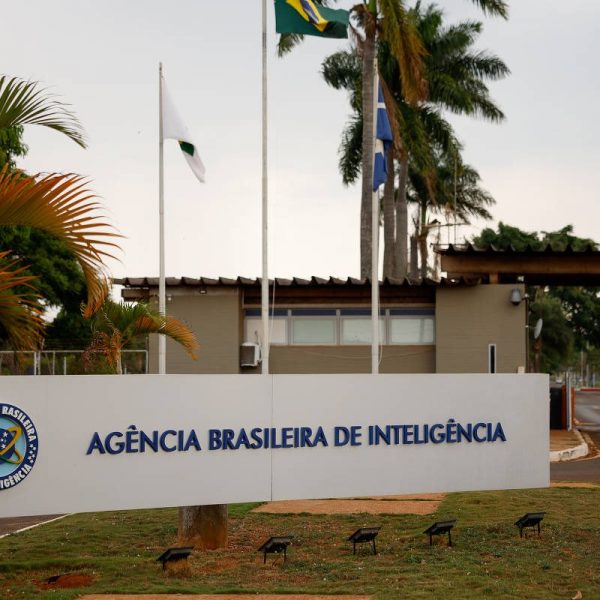
To this day, operational intelligence work conducted under ABIN (the Brazilian Intelligence Agency) and in other institutions that also conduct intelligence operations, such as the Federal Police, has been invisible, even to other Brazilian institutions. This work happens without any accountability to democratic institutions and without any oversight.
Precisely because of this, through broad coordination between ABIN intelligence officers, deputies, experts, and even both government and opposition political parties, provisions were included in the Public Security PEC aimed at "constitutionalizing" intelligence actions, assigning Congress a role in supervising and monitoring all operations.
Despite broad support for the changes, the project's rapporteur in the Chamber of Deputies, Mendonça Filho, removed all provisions concerning intelligence operations from the Public Security PEC on December 12th, so the bill could be voted on without the intelligence theme.
Now, considering that the approach to the topic had the support of representatives from the Workers' Party, Bolsonaro-aligned deputies, ABIN itself, and various experts in geopolitics and intelligence, what could explain this sudden change?
The announcement of the removal of intelligence themes occurred on the same day the U.S. announced the revocation of Magnitsky Act sanctions against some Brazilian authorities. Recall that over the past two months, the U.S. government has been removing tariffs and sanctions following negotiations with Brazil, without it being sufficiently clear what the Brazilian government promised or conceded to the U.S.
A source informs me that Deputy Mendonça Filho was called to the Planalto Palace on that same day and left with the instruction to remove the entire intelligence section from the Public Security PEC, aiming to maintain the status quo. The same source states there are indications that the change was forced by U.S. pressure, which would not like to see changes in how Brazilian intelligence operations are conducted.
Now, what reason would the U.S. have for preventing a reform of Brazilian intelligence, other than the fact that under current conditions it is more permeable to U.S. influence itself ? Indeed, the prospect of greater congressional oversight of intelligence operations and, consequently, the "exposure to light" of everything that today remains "in the shadows" must certainly cause concern for the U.S.
This is because, despite the Brazilian Congress also being full of representatives aligned with the U.S., it is from Congress, and not from Lula, that recent sovereignist positions have emerged, especially within the work of the Committee on Foreign Affairs and National Defense. It was within this committee of congress members that the ratification of the Treaty on the Prohibition of Nuclear Weapons was rejected, and it is also there that the first draft of a Brazilian anti-NGO law is being discussed.
Thus, far from being able to categorize the end of sanctions against Brazilian authorities as a "victory for Lula," it is quite possible that the U.S. is simply repositioning itself to ensure a level of institutional infiltration even greater than what we have seen in recent years.