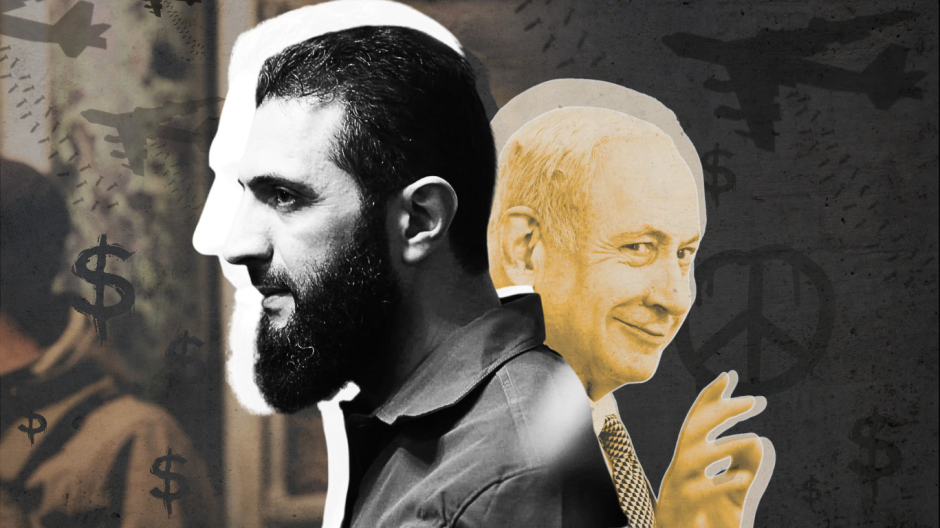
Openly declaring its intent to illegally occupy southern Lebanon, Israel finds itself in a costly ground battle with Hezbollah, from which there are indications Syria may soon be roped in. This is born from the understanding that in order to successfully weaken the Lebanese resistance, the Israeli military must penetrate the Bekaa Valley area.
Understanding the costly price of attempting to physically take all of south Lebanon militarily, both Washington and Tel Aviv have been attempting to devise strategies that would help achieve Israel's war goals of weakening Hezbollah.
One possible option that has been placed on the table is the use of Syria's military to invade Lebanon's border and attack Hezbollah, aiming to go after what is labelled critical infrastructure belonging to the Lebanese group. According to reports, the US Trump administration has directly put pressure on Syrian leader Ahmed al-Shara'a to do just that.
In the event of such an assault, the Beka'a Valley would be the target territory. The Beka'a is what Israel's Alma Research and Education think-tank calls "Hezbollah's strategic depth", which it argues is the group's " operational and logistical center of gravity". If Tel Aviv truly seeks to degrade Hezbollah's capabilities, a ground incursion into this region is the only way to truly achieve such a goal.
Another plausible option is that Israel itself will use Syrian territory in order to invade Lebanon's eastern border. This would appear possible, as the current Hayat Tahrir al-Sham administration in Damascus has allowed Israel to use Lebanese territory on two occasions so far.
Although al-Shara'a doesn't grant direct permission, he refuses to deploy his forces to prevent the Israelis from violating Syria's sovereignty. Earlier this year, the leadership in Damascus agreed to setting up a soft normalisation understanding with the Israelis. According to US State Department press release, the following was agreed upon:
"Both Sides have decided to establish a joint fusion mechanism—a dedicated communication cell—to facilitate immediate and ongoing coordination on their intelligence sharing, military de-escalation, diplomatic engagement, and commercial opportunities under the supervision of the United States."
It suffices to say that Syria's current leader, who once spoke of conquering occupied Jerusalem, has clearly aligned himself with the United States and now openly states he will pose no threat to Israel. Instead of fighting back against Israel's ever growing occupation of more Syrian lands, or responding to civilian massacres inside his territory, he has instead sought to disarm those Syrians who are threatened by the belligerent occupying force in the south.
Despite this, Israel has continually attacked Syrian territory, including bombing the ministry of defence in Damascus. Recently, it also attacked Syrian military positions in the Damascus countryside, citing renewed sectarian clashes between Israeli-aligned Druze separatists and HTS allied forces.
In December of last year, parades were held in Damascus and other Syrian cities, where armed factions making up the country's new armed forces held marches in the streets to mark the fall of Bashar al-Assad. Notably, these soldiers chanted in solidarity with Gaza and issued threats to Israel.
Some groups belonging to the new Syrian security forces, also burned Israeli flags and expressed solidarity with the village of Beit Jinn, where a group of locals had organised an ambush against Israeli invading forces. Israel then bombarded the village, which is home to both Palestinians and Syrians, murdering at least 13 civilians.
A series of Syrian Resistance groups have also popped up in the country's south, occasionally carrying out rocket attacks or opening fire on Israeli soldiers with light weapons. The most prominent group has been 'Jabhat al-Moqowameh al-Islammiya Fe Souriya' [The Islamic Resistance Front In Syria].
The newest group to emerge is called 'Kataeb Jund al-Karrar Fe Balad as-Sham' [Soldiers of the Karrar Brigades in the Levant] also emerged on March 8, publishing a video of themselves firing rockets at US military positions in Syria's Palmyra. The group has additionally claimed attacks on Israel.
If Syrian President Ahmed al-Shara'a orders an attack on Lebanon, this could immediately trigger an incursion into Syria by the powerful Iraqi groups aligned with Hezbollah. An official statement issued by The Islamic Resistance Coordination Committee in Iraq explicitly threatened that:
"We see the treachery of the new authority in Syria and are monitoring its coordination with the enemy. We say clearly: if you dare violate the sovereignty of Lebanon and its patient, resisting people, we will turn your land into an open arena of fire. He who warns has given fair notice."
On the other hand, due to the fragile security situation inside Syria, if the Israeli military does attempt to launch an offensive from inside Syrian territory, there is always a chance that they will come under attack from a whole myriad of forces. It is possible that what currently constitutes the Syrian Army, may even break ranks and refuse to listen to the leadership in Damascus.
On March 6, a botched Israeli special forces raid targeted the Lebanese village of Nabi Cheet, located east of Beirut. In order to conduct this infiltration operation - which was successfully repelled due to a joint effort from Hezbollah, local militias and the Lebanese Army - it used Syrian territory. Notably, it launched its assault from an area located north-west of Damascus.
Israel has so far displaced over a million people in Lebanon, openly declaring its intent to expand what it calls a military "buffer zone". Israeli defence minister Israel Katz doesn't mince his words however, openly declaring that he is seeking to occupy southern Lebanon up to the Litani River.
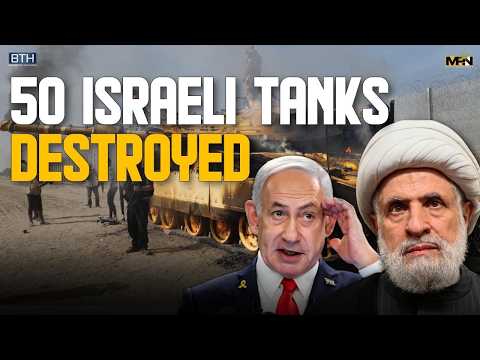
To this effect, the Israeli military has not only ordered the entire population of southern Lebanon to evacuate the territory, but also bombed five primary bridges connecting the south to the rest of the country. And yet, on the ground, the Israeli army is having a difficult time simply passing the border villages, where Hezbollah has damaged or destroyed around 70 Merkava tanks so far.
If the Israelis come under attack from forces inside Syria itself, they could be dragged into a painful quagmire there. This could also come about in the event that Syria's al-Shara'a decides to seize the opportunity of Israel being distracted in Lebanon, to launch an offensive against the Druze separatist militias in Sweida. In order to save their Druze militia allies from suffering a major defeat, the Israeli army itself could get roped into direct clashes with Syrian forces.
Therefore, if the Israeli leadership makes the decision to escalate the Lebanon conflict by making a move towards the Bekaa Valley, they could very easily find themselves dealing with a totally new reality inside Syria too.