May 26, 2026
According to news reports, a peace agreement may now be close at hand in the Iran War, a conflict that has heavily dominated most of the world's attention during the last three months.
Such overwhelming focus has certainly been reasonable. Very soon after the American and Israeli attacks began, the Iranians closed the Strait of Hormuz to cargo ships associated with unfriendly countries, causing a huge drop in the flow of oil and other vital resources from the Persian Gulf to the rest of the world.
President Donald Trump soon recognized that despite the overwhelming strength of his American navy, he was powerless to reopen that vital waterway and instead imposed a distant counter-blockade against Iranian oil shipments, further restricting supply. Meanwhile, the Iranians had responded to earlier attacks against their own infrastructure by using their huge arsenal of ballistic missiles and powerful drones to inflict similar destruction upon the civilian and energy infrastructure of the Gulf Arab allies who had facilitated those American and Israeli strikes.
Although a ceasefire began in early April, the combination of all these actions have reduced the global availability of oil by some 13% or more, with even larger reductions in the supply of LNG and other vital commodities. This has put the world at risk of a severe global recession if a peace agreement were not soon reached and the waterway fully reopened to traffic.
Throughout this period, Trump has regularly threatened to reignite the military conflict with a massive new bombing campaign, perhaps targeting much of Iran's civilian and energy infrastructure and the Iranians have declared that they would retaliate in equally strong fashion. In conjunction with its Houthi allies, Iran has warned that it would shut down the alternate Red Sea transit route and also destroy much of the fragile Gulf Arab infrastructure, including energy facilities and even desalination plants. The result of such mutual destruction would be a far greater loss of oil and other natural resources and one that would probably continue for years, thereby possibly throwing the world into a global depression.
Given the enormous potential threat to the world economy, I have heavily focused on this Iran War, making it the subject of most my recent articles such as these:
- Will Donald Trump's Iran War Crash the Global Economy?
- Ron Unz • The Unz Review • April 20, 2026 • 6,000 Words
- Will America Be Expelled from the Middle East?
- Ron Unz • The Unz Review • May 11, 2026 • 6,100 Words
During these months, this dire situation had naturally drawn attention away from other conflicts, notably including Russia's continuing war with Ukraine. Furthermore, advances in drone technology have drastically reduced the pace of Russian progress on the battlefield, with signs of a deadlock developing. Prof. John Mearsheimer even recently suggested that contrary to his own expectations the ultimate result of the Ukraine War might be the sort of frozen conflict that some others had long predicted.
When that war originally began with a Russian invasion in February 2022 almost all observers had expected a very short military conflict, though one that might have long-lasting strategic consequences. But Ukraine's very large armed forces fought with unexpected determination while dramatic changes in military technology, especially involving the use of drones, largely halted what had been expected to be a rapid Russian advance. As a result, the war has now easily passed its four year mark, already outlasting the Soviet war against Nazi Germany fought more than three generations ago.
During all of this period, pro-Russian analysts have insisted that Ukraine's defeat was merely a matter of time, with Russia's cautious, risk-averse military strategy gradually grinding down the Ukrainian armed forces and likely to soon cause a collapse of the front lines. The argument was always made that huge Russian advantages in manpower, weapons systems, and munitions production were inflicting disproportionate Ukrainian casualties, thereby ensuring an ultimate Russian victory. There were regular predictions regarding the imminent collapse of the Ukrainian front lines or the disintegration of the Ukrainian government, but none of these events ever transpired.
Instead, more than four years later, Russia has still failed to capture much of the territory of the four eastern oblasts that it had officially annexed and declared part of Russia in September 2022, and over the last few months there have been signs of growing war-weariness on the part of the Russian population. Casualty figures are hotly disputed, but my own impression is that Russian forces have probably suffered many hundreds of thousands of dead and wounded, including at least a couple of hundred thousand fatalities. Although Ukrainian losses have probably been far greater, such Russian casualties still loom very large in a population of about 143 million, especially one that has low fertility rates, rates that are far below replacement levels.
For the last couple of years, I've regularly watched Andrew Napolitano's weekly interviews with Dr. Gilbert Doctorow, someone whose business activities had led him to spend many years living and working in Russia. Although he now lives in the West, he still regularly visits Russia and also seeks to monitor the Russian situation both through his contacts and by watching the leading political discussion shows. In recent months, he has reported a growing amount of elite and popular dissatisfaction with Russian President Vladimir Putin's conduct of the war, which many believe has now dragged on far too long without any decisive victory, while killing and maiming far too many Russians.
Doctorow has also claimed that Russians have been greatly disturbed by the increasing number 0f successful Ukrainian drone strikes and other attacks deep inside their enormous land, and the lack of effective responses by Putin to deter these. There have also been other escalating provocations by the NATO countries, including the seizure of Russian oil tankers on the high seas, and these actions have gone unanswered.
In some of his remarks, Doctorow has even suggested that if these incidents and the resulting sense of Russian weakness continued unabated, Putin might be removed from power in some sort of palace coup. Although I'm quite skeptical of this possibility and it has obviously not come to pass, merely broaching such an idea represents a huge shift in apparent sentiment. His blogposts have recently grown scathing in their criticism of Putin's conduct of the war.
I think that a major factor behind some of the sharpest recent criticism of Putin by Russian elites was our own sudden, overwhelming attack against Iran at the end of February. As I wrote last month:
Just over five weeks ago, we launched our massive surprise attack against Iran, an operation that President Donald Trump later boasted had been inspired by the infamous December 7, 1941 Japanese attack on Pearl Harbor. Together with our Israeli allies, the initial missile strikes that constituted our official declaration of war successfully assassinated most of the top Iranian political and military leadership from its 86-year-old Supreme Leader and his family on down.
This sort of decapitating first strike had been the subject of countless strategic research studies during the the many decades of our long Cold War with the old USSR. But nothing like it had ever actually ever been carried out in modern history, so our willingness to conduct such a risky and ruthlessly bold operation against a large country of more than 90 million naturally inspired considerable concerns elsewhere around the world. Moreover, this sudden attack on Iran was fully aligned with Trump's loud public declarations that he had absolutely no respect for any international law or norms, and that he would instead do whatever he wanted in military or political matters. This obviously forced everyone around the world to now take his audacious words much more seriously.
Over the last few years, Russia's retaliatory nuclear deterrent forces have been subject to repeated attacks almost certainly greenlighted and assisted by American intelligence services, which have similarly assisted apparent attempts to assassinate Russian President Vladimir Putin. Therefore, it was hardly surprising that a prominent Russian policy analyst declared that our unprecedented surprise attack and decapitation strike against Iran sent "shockwaves" around the world, with Russians becoming fearful that it might be the model for a similar future attack on their own country and its leadership.
In that early March article, Prof. Ivan Timofeev emphasized what he considered the very dangerous implications for his own country:
The massive airstrikes by Israel and the United States on Iran were not entirely unexpected. Strike forces had been building up in the Persian Gulf for months. Iranian-American negotiations had stalled and offered little prospect of success. Yet the killing of Supreme Leader Ali Khamenei, members of his family, and several senior Iranian officials have sent shockwaves far beyond the region...
For Russia, the crisis offers hard lessons...
...Iran is not defenseless. Its missile and drone strikes demonstrate capacity and resolve. Actions such as attempting to restrict navigation through the Strait of Hormuz show a willingness to raise costs. Yet the US and Israel appear to judge Iranian retaliation as painful but acceptable.
Deterrence depends not merely on capability but on the adversary's sensitivity to damage. In prolonged confrontation, tolerance for loss can increase. The 20th century demonstrated how political escalation can erode restraint even in the nuclear sphere.
Russia possesses far greater retaliatory capacity than Iran. But that alone does not guarantee stability. An opponent who calculates that the damage is bearable may continue escalation. The Iranian crisis reveals a deeper mood emerging in global politics: fatalistic determination. Major powers appear increasingly willing to absorb risk and accept instability, which may be the most troubling lesson of all.
The Soviet Union collapsed thirty-five years ago, leading to the unipolar moment during which America reigned as the sole global superpower, almost unchallenged in the military, political, economic, and technological spheres.
As a result, those Russians who are in their sixties or younger have lived nearly their entire adult lives under this shadow of American supremacy, and as a result they have naturally absorbed an enormous, probably exaggerated sense of American might. These individuals today constitute the bulk of Russia's political and policy elite, and this obviously colors the Russian view of the world. Timofeev himself was born in 1980, so he had not yet even entered his teens when the era of America's global hegemony began.
For these reasons, I noticed that in the early days of the American-Israeli attack, most Russian experts seemed to regard Iran's military position as absolutely hopeless and believed that the country was doomed to a rapid defeat. Like Timofeev, they even seemed fearful that a victorious and emboldened America might then make Russia its next target.
But contrary to all those expectations, Iran surmounted and absorbed that treacherous surprise attack and the massive blows that followed and within a few weeks had largely won the war, inflicting a stunning strategic defeat upon America and its enormous military forces.
Iran's strategic victory has now become so apparent that it has even been recognized by Robert Kagan, who had spent decades as an arch-interventionist and one of our foremost foreign policy Neocons. In a couple of his May articles in the Atlantic, Kagan declared that we had suffered a "checkmate" at Iran's hands and that the American "Endgame Is Surrender."
Even excluding its huge nuclear arsenal, Russia's conventional military power is certainly many times greater than that of Iran.
However, Iranian boldness and courageous resistance have allowed it to triumph over America within weeks, doing so at the cost of just a few thousand deaths. Meanwhile, Russian political and military caution have meant that it has still failed to achieve any of its own wartime objectives and subdue Ukraine despite more than four years of combat and many hundreds of thousands of dead and maimed Russians.
Russia is far stronger than Iran and Ukraine is vastly weaker than America. But the results of those two wars have been exactly contrary to what might have been expected based upon those objective considerations.
Many Russians, whether members of the top political elite or just ordinary citizens, have drawn the obvious conclusions from these very different military outcomes. So when President Putin personally greeted Iranian Foreign Minister Abbas Araghi in Moscow last month, he praised the Iranians for their courage, and I think his sentiments were absolutely heartfelt.
Iran had certainly launched waves of effective missile and drone attacks against the American bases and the Israeli targets of the country's direct military adversaries. But a much larger factor behind its victory came because it was also willing to strike back very hard with retaliatory blows against the Gulf Arab countries that had indirectly assisted the American war effort and also to bottle up hundreds of tankers and cargo vessels within the Persian Gulf, actions that had far greater strategic impact and deterrent value.
In sharp contrast, I had explained last year that Russia had been fighting its war against Ukraine in far more limited fashion:
One strange aspect of this current conflict is that Russia has essentially been fighting NATO with both hands tied behind its back. NATO missiles using NATO targeting intelligence and key NATO personnel-legally laundered through the fig-leaf of its Ukrainian proxy-have regularly struck deep inside Russia, inflicting many serious blows, including sinking the flagship and other vessels of Russia's Black Sea fleet, but Russia has refused to respond in kind. So in effect, the NATO countries have constituted a safe haven for producing and assembling the military hardware and systems used to equip Ukraine's forces without suffering any risk of Russian retaliation. Russian cities have been struck by NATO missiles but NATO cities and their populations have not faced any similar threat...
This has led to the growing criticism that Putin and his government have been far too cautious, risk-averse, and legalistic in their conduct of the war. This critics have emphasized that they have allowed their NATO adversaries to repeatedly cross Russia's bright red lines, thereby suggesting Russian weakness and vulnerability and inviting further escalatory steps that might eventually lead the world to disaster.
In that same article, I went on to explain that much of Putin's caution has not been unreasonable but it has nonetheless placed Russia in a difficult strategic situation:
Russia currently has the world's largest nuclear arsenal, with the estimated number of its warheads somewhat outnumbering America's total. Much more importantly, it also deploys a very powerful suite of unstoppable hypersonic missiles as either conventional or nuclear delivery systems. Despite our own gargantuan annual military budget, comparable in size to that of the rest of the world combined and many times greater than what Russia spends, all American efforts to develop these same sorts of advanced missile systems have been marked by years of repeated, embarrassing failure.A few months ago, Russia also successfully demonstrated its revolutionary new Oreshnik hypersonic missile system, which even in its purely conventional version provides striking power similar to that of a nuclear warhead, thus allowing Russia to inflict unprecedented destruction without crossing the nuclear threshold...
Every objective observer recognizes that the current conflict amounts to a NATO proxy-war against Russia, with NATO supplying the massive financial support, advanced weaponry, training, targeting intelligence, and even key personnel that have allowed Ukraine to give Russia so much trouble. With such full NATO backing, the Ukrainians have frequently inflicted stinging losses upon Russia's far superior forces. Indeed, by the standards of international law, NATO had long since already become a co-belligerent in the conflict, though for geopolitical reasons the very cautious Russians have refused to publicly declare that reality and take retaliatory measures.
Such caution is not unwarranted. Taken together, the countries of the NATO alliance have a combined population of nearly one billion, their recent annual military spending is 54% of the world's total or about $1.3 trillion, and their aggregate GDP is nearly $50 trillion. By contrast, Russia's population is only 138 million, its military spending is $145 billion, and its total GDP is $2 trillion. So Russia seems outmatched roughly 7-to-1 in population, 9-to-1 in military spending, and 25-to-1 in GDP. All these financial figures were given in nominal dollars and use of much more realistic PPP dollars would shrink these ratios by a factor of two or more, but a huge imbalance would still remain. Similarly, the inclusion of Russia's close ally China would more than equalize these figures, but China's military forces are almost entirely pointed towards the Taiwan Strait, the South China Sea, and other nearby coastal areas, so its vast power cannot be easily brought to bear in the European theater, where Russia confronts NATO...
Given that NATO's total population and industrial base is so many times greater than that of Russia, if the alliance holds firm, Russia might eventually be ground down over time. What was originally intended as a very limited punitive attack against Ukraine lasting just a few weeks has now gone on for well over three years, producing huge causalities on both sides, and it must be brought to an end. Meanwhile, the lack of any sufficiently strong Russian retaliation against NATO has merely emboldened the Western leaders to take more and more reckless and provocative actions, actions that at some point might result in a catastrophe for the world.
This current Russian strategic dilemma has now elevated the views of a longstanding academic and security expert named Sergey Karaganov, whose ideas have reportedly gained a great deal of influence in top Russian policy circles over the last couple of months, probably also prompted by Iran's remarkable victory.
Karaganov's name meant nothing to me and when I had first heard that he advocated the possible use of nuclear strikes against NATO targets as a means of winning the war, I completely dismissed him and his ideas out of hand.
However, Prof. Mearsheimer is a top figure in the Realist school of foreign policy and a very level-headed academic. After watching his recent lengthy interview with Lt. Col. Daniel Davis, I discovered that he took Karaganov's views quite seriously so I felt compelled to do the same.
Mearsheimer took much the same position a few days later, exploring the risks of an all-out NATO war with Russia in an hour-long interview with Prof. Glenn Diesen that attracted more than a half-million views.
Karaganov himself had also been interviewed by Diesen a week earlier,
To my considerable surprise, I discovered that Tucker Carlson had interviewed Karaganov back in January, with the show attracting 1.8 million views on YouTube and the very controversial declarations receiving some media attention. But since I'd never heard of him and regarded the talk of Russia nuking Germany and Britain too outlandish to even consider, I'd paid no attention at the time. The Karaganov interview itself begins around the 52 minute mark .
However, Karaganov now hardly stood alone in his position. Diesen also interviewed a longtime senior Russian diplomat named Dmitry Polyanskiy, who expressed somewhat similar views though in more restrained language. He emphasized that although Karaganov's ideas had once been regarded as entirely on the fringe, they had now moved closer to the mainstream of national security circles, with many Russian experts now endorsing this sort of approach, a very noticeable change. The Russian diplomat even explained that locations of European drone manufacturers and other potential targets had been drawn up, and the willingness of the Baltic states such as Latvia to allow their airspace or even their territory to be used for attacks against Russia was absolutely unacceptable.
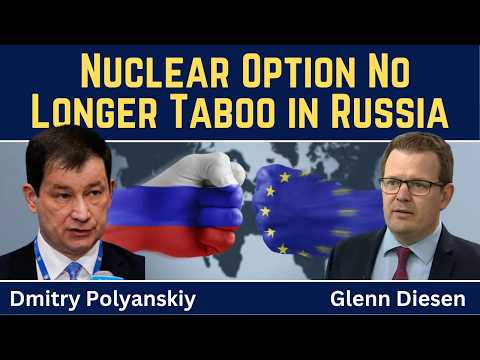
In an earlier interview with Davis, Polyanskiy had said much the same thing .
A few days ago, Diesen himself was interviewed by Napolitano, emphasizing that Russia was becoming totally fed up with the course of the war and the continuing willingness of NATO countries to press forward, entirely disregarding any Russian deterrence, but that no one in Europe was allowed to discuss these growing dangers.
Around the same time, an American veteran and military analyst named Stanislav Krapivnik now living in Moscow was also interviewed by Davis, and confirmed this same sense of growing public demands that the war be brought to a successful conclusion.
According to his account, the ongoing Ukraine drone war against Russia had undergone "gameification," with drone operators being given redeemable points for striking any Russian military or civilian targets, and as a result, 5-10 Russian civilians were being killed every day in the border areas annexed to Russia, a totally unacceptable situation. Just a couple of days ago a Ukrainian drone strike on a college student dorm had killed eighteen, with most of the victims being young women. The result was a growing risk of nuclear war with NATO, including Russian fears of a Western first strike.

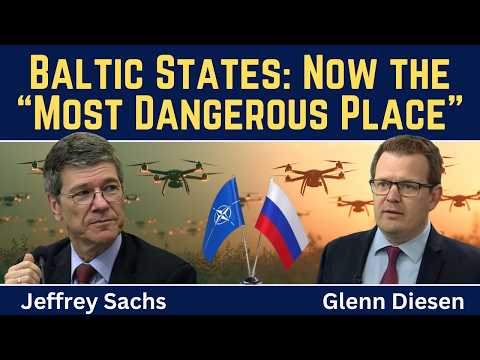
Some of these same factors were the subject of yesterday's Diesen interview with Prof. Jeffrey Sachs. Although the latter didn't mention either Karaganov or the direct threat of a Russian nuclear strike against NATO, he emphasized the exceptionally dangerous NATO military attacks now being directed against Russia, with Latvia and the other Baltic states taking the lead in provoking what could easily become a third world war.
However, I thought that one of the best summaries of Karaganov and his position came from Alastair Crooke.
Subscribe to New Columns
Crooke has spent much of his career first as a senior MI6 officer and more recently as a British diplomat and peace negotiator. Although his area of focus has generally been the Middle East, he was also quite knowledgeable about European security matters, and I'd highly recommend his hour long Davis interview from a couple of days ago. Most of the first half discussed the state of the Iran War, but he devoted the second half to the dangerously escalating conflict between Russia and NATO.
Crooke has apparently known Karaganov for many years and after recently speaking with him, presented his ideas with considerable sympathy, both in a Substack column and in this lengthy interview.
Karaganov argued that although his country may possess an enormous nuclear arsenal and very powerful conventional forces, the current European leaders appear to have lost any fear of it. Instead, the West seemed determined to steadily weaken and ultimately destroy Russia though a mix of economic sanctions warfare, the debilitating impact of an unending Ukrainian proxy war, and perhaps eventually a direct war with Europe. Effective deterrence required both military capability and the will to use it, and the NATO countries no longer seemed to believe that Russians possessed the latter.
According to Crooke, Karaganov and his allies were concerned that Russia is suffering the fate of a frog being slowly boiled to death in a pot of water, suffering from military and financial pressures that have escalated too gradually to provoke a dramatic response but which are ultimately aimed at ensuring its defeat and destruction.
In the early days of the war, Western leaders considered it unthinkable to provide the Ukrainians with advanced weapons systems or direct assistance lest the result be a catastrophic world war. But four years have now passed and so many of Russia's bright red lines have been crossed with total impunity that the NATO countries have become blatant co-belligerents while still believing that they remain immune from any direct reprisals.
Leading Western political figures have publicly declared that they expect to be at war with Russia within another couple of years, and they are hiking their defense spending and reorienting their industrial economies to military production for that looming conflict. Russia and its political leadership have been ferociously demonized, and all of the reasonable peace terms that they have offered have been totally rejected. Although almost none of these countries have substantial ground forces, taken together their populations and industrial base is many times larger than that of Russia, so they do potentially constitute a very serious threat, especially given the ideological irrationality of their tremendous hostility.
All the long-range missile strikes and drone attacks deep inside Russia have relied upon Western intelligence and reconnaissance. The weapons systems themselves are built in European factories and then provided to Ukraine, with strong suspicions that the larger drones are actually launched from NATO territory. Just a few days ago, Moscow was attacked by a wave of many hundreds of powerful Ukrainian drones , somewhat comparable to small cruise missiles, with enough of them getting through to inflict considerable damage and kill a number of Russians.
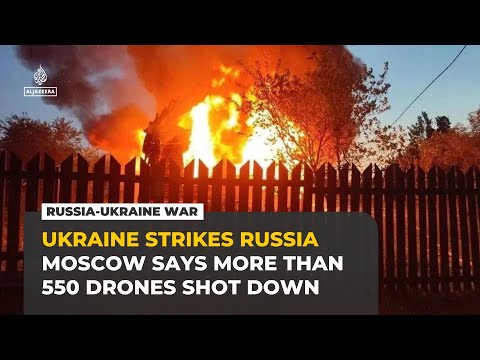
Oil refineries and other facilities deep within the huge country have also been regularly hit by such attacks, inflicting considerable damage to Russia's main export industry.
No American president would possibly tolerate such massive drone strikes against Washington DC. So Crooke strongly sympathized with Karaganov's belief that Russia must very forcefully reestablish its deterrent power for Europeans lest the result be a continuing drift into an all-out war.
And unlike nearly all of these other individuals discussing the topic, Crooke also attempted to explain this seemingly irrational and dangerous Western fixation on destroying Russia, although he did so in carefully circumspect fashion. He claimed that the bitter antipathy that powerful and influential elements of Western society have towards Russia can be traced back to matters such as the Pale of Settlement, the often exaggerated pogroms of late nineteenth century Russia, and similar historical matters. For more than a century this deep ideological enmity had manifested itself in the financial backing of Japan in its victorious 1905 war against Russia, the funding of the Bolshevik Revolution, and the terrible economic damage inflicted upon post-Soviet Russian society by the so-called Harvard Boys of the 1990s. Although a certain crucial word never passed Crooke's lips, he was obviously arguing that the Jews have vindictively long sought to destroy Russia, and that the current Ukraine war that they had successfully orchestrated was merely the latest example of this.
Indeed, I found it quite notable that for all his extremely bold words regarding attacks on NATO and nuclear strikes, Karaganov himself remained totally unwilling to raise that extremely touchy subject.
At the beginning of this month, RT translated and published an article that Karaganov had written for a Russian outlet, and this probably prompted the sudden eruption of his controversial ideas in Western discussion circles.
- How Russia Can Win the New World War
- Moscow must sharpen nuclear deterrence, revise doctrine and defeat Kiev to avert a wider war with the West and NATO powers
- Sergey Karaganov • RT • May 4, 2026 • 2,600 Words
In that article, he explicitly cited the successful Iranian example of using very forceful measures to establish effective deterrence and thereby bring to heel a much more powerful adversary:
At the same time, to restrain a Washington that has lost its sense of proportion, we should include in our doctrine on the use of nuclear and other weapons, should the United States and the West continue on their current course toward unleashing a world war, a provision for genuine readiness to strike at American and Western European assets overseas, including those located in third countries. They would do well to divest themselves of such assets. To this end, we must continue to develop the flexibility of our military capabilities. The United States and its allies are far more dependent on overseas infrastructure, bases, and logistical and communications bottlenecks than we are. The enemy must feel its vulnerability, and know that we are fully aware of it.It's worth drawing on Iran's experience in defending itself against current US-Israeli pressure. Tehran began to strike at the enemy's vulnerabilities, and the enemy felt the impact and was forced to step back. Adjustments in doctrine and in specific military planning, including readiness for asymmetric strikes, will strengthen the deterrent effect and may have a sobering impact on an opponent that is increasingly prone to reckless actions.
We should reconsider the priorities for preemptive strikes, beginning with non-nuclear options, followed, only if necessary, by nuclear ones as a last resort. Among the first targets should be not only communications and command centers, but also locations where elite decision-makers are concentrated, particularly in Europe. This would strip them of their sense of impunity. They must understand that if they continue the war against Russia, or choose to escalate it further, devastating strikes will follow.
According to many Russian analysts, Ukraine's larger drones are produced in NATO factories, thus providing the military systems that may have recently turned the tide of battle. This situation would obviously worsen if Europe shifted more of its industrial production to weapons.
Various NATO countries have deliberately opened their airspace to Ukrainian drones, greatly assisting those attacks on Russian territory in much the same way that the Gulf Arab states had assisted the American attacks against Iran, and military personnel from some countries such as Britain have probably been directly involved. But whereas the Iranians retaliated, the Russians have not done so, and Karaganov and his allies argued that this must now change.
Although Karaganov certainly discussed the use of nuclear weapons against European co-belligerents in the war against Russia, he emphasized that this should only be a last resort, preceded by conventional attacks, perhaps of a demonstrative nature. But if the latter do not produce the desired result, nuclear weapons might then need to be used. So his actual position was somewhat more restrained and nuanced than its headline summary.
Indeed, I almost wondered whether his discussion of nuclear weapons was deliberately intended to be extremely provocative in exactly that fashion. This thereby gave his ideas the necessary public attention and media coverage that have allowed them to reach a substantial Western audience, something that mere talk of conventional weapons probably would have failed to achieve. Discussing nuclear weapons also underscored his extreme concern with the current situation.
In reading Karaganov's writing and listening to his interviews, I was completely sympathetic with his goals and agreed that Russia had been placed in an untenable situation that needed to be changed through very forceful measures. It was necessary to somehow break through the many layers of irrational, ideological propaganda currently gripping nearly all of Europe's mainstream political elites, and force them to change the course of action that they were currently pursuing.
However, I strongly disagree with some of the methods he proposed. This emphatically included the possible first use of nuclear weapons.
Using nuclear weapons in Europe, even in merely demonstrative attacks, would constitute an extraordinarily dangerous and destabilizing action, opening a door that has been successfully kept tightly shut for more than eighty years. It would also allow his country's NATO enemies to demonize Russia in the worst possible way.
Another crucial factor was that once the longstanding taboo against the use of nuclear weapons had been broken by any one country, others would feel much more free to do the same, including those countries that are far less measured and cautious than today's Russia. For example, even a very restricted Russian use of tactical nuclear weapons in Europe would obviously free Israel to use those same weapons in completely unrestrained fashion against Iran or other countries that it views with irrational hostility.
The inevitable result would be a massive wave of proliferation, probably soon culminating in regional nuclear exchanges that could easily escalate to global destruction.
However, if we exclude the nuclear element, most of Karaganov's other points have a great deal of merit. Indeed, I think his proposed actions make much more sense from a strictly conventional perspective.
Both Russia and NATO countries possess large quantities of tactical and strategic nuclear weapons, so a nuclear conflict hardly plays to Russia's strengths.
In sharp contrast, Russia's huge arsenal of advanced hypersonic missiles and its far superior system of air defenses gives it a considerable degree of conventional military superiority and escalation dominance over its NATO adversaries. So that is the strength that Russia should deploy as a means of bringing NATO to heel and finally ending the Ukraine war.
Beginning in early June 2024, I have repeatedly argued that Russia should utilize this strong conventional superiority to overawe America and its NATO allies, force them to abandon their endless provocations, and bring the Ukraine war to a successful conclusion.
Most recently, in early January I laid out my own analysis of Russia's strategic situation, an analysis perhaps not so different than that of Karaganov.
Surprisingly enough, our sudden attack against Venezuela's capital city and our abduction of its president may not have even been the most shocking and dangerous action our government had recently undertaken.About a week ago, a huge wave of 90-odd explosive drones had attacked the personal Novgorod residence of Russian President Vladimir Putin in what seemed clearly to have been a major assassination attempt. All the drones were shot down by Russian air defenses and the CIA declared that the target of the drone strike had actually been a nearby military base, leading Trump to say that Putin was lying.
But analysts such as former CIA operative Larry Johnson noted that the CIA's claims to have known the exact destination of the drones actually indicated that they had been directly involved in the attack. Meanwhile, the Russians announced that they had deciphered the intended coordinates from one of the recovered microchips, proving that Putin's home had indeed been the target, and they turned over some of that hard evidence to American representatives. Whether or not the Ukrainians themselves launched the drones, such a long-range strike surely required the direct use of American targeting intelligence, implying that our country was almost certainly involved.
Putin's home was located more than 200 miles from any Russian border, so a drone strike of that type so deep within Russian territory was extraordinarily reckless and provocative. Trump's own lavish Mar-a-Logo residence is right on the Florida coast, and I doubt he would take kindly to having it hit by explosive drones or a missile strike especially if he and his family happened to be there at the time. Moreover, the pitiful quality of American air-defense systems would greatly increase the likelihood that such a strike would be at least partially successful, with Trump's home being severely damaged or even destroyed.
Obviously, it would be very unwise for the Russians to consider any such extreme retaliatory measures, regardless of how legally justified they might be.
But I do think that Putin and his government have to finally respond in sufficiently strong fashion as to deter such continuing American provocations. In the past they have failed to do so, and as a result these Western actions have continually escalated, with Trump's ignorant and bellicose national security team having apparently convinced themselves that the Russians were militarily so feeble that their leadership could be regularly attacked with total impunity.
In a further example of such Western provocations, just a few days ago yet another three-star Russian general was assassinated by a car-bomb in Moscow, the third such senior military officer to suffer that fate over the last year.
I wonder how America would react if the Russians began assassinating our own high-ranking generals with terrorist car-bombs on the streets of Washington, D.C.
Once again, although such tit-for-tat Russia retaliation might be fully warranted, it would be extraordinarily unwise for the Russians to consider taking that step.
So what actions should the Russians take ? I doubt that the American government would care in the least if they merely increased their missile bombardment of Ukrainian cities, or further damaged the electrical power grid of that unfortunate country with additional drone strikes.
The Russian forces have been making continual progress on the battlefield, but the war will soon enter its fifth year, and willing or unwilling Ukrainian cannon-fodder backed by Western money and weapons seems likely to continue the conflict for quite some time. For years, various military experts have regularly predicted the imminent collapse of the Ukrainian front lines, and they have always been proven wrong.
My own rather contrary perspective has been that NATO actually represents the soft underbelly of Ukrainian military resistance. Without the financial, political, and military equipment support of the countries in that alliance, the Ukrainians would have long since thrown in the towel or their country's government would have collapsed.
Putin was trained as a lawyer and according to all accounts, he tends to have a very legalistic approach to matters of war and peace. But under international law, the NATO countries have obviously become co-belligerents in the conflict, and the Russians would have the perfect right to target NATO militarily if they decided to do so. And if the right sort of blow were carefully delivered, it might shatter the alliance and end the Ukraine war at a stroke.
The loss of cheap Russian energy has caused severe economic hardship in many of the European NATO countries, and the popularity of most of their current leaders has plumbed serious depths, with approval ratings barely above single digits for Keir Starmer in Britain and Emmanuel Macron in France, while also being rather dreadful for most of their colleagues.
However, the Western media-propaganda complex has been extremely powerful and effective, successfully convincing a very large majority of the EU elites and most of the ordinary population that Russia constitutes a terrible danger to their countries, perhaps seeking to invade and conquer them, despite there being absolutely no evidence whatever in support of such nonsense.
One reason for this contradictory situation is that European governments and the EU superstate have turned almost totalitarian in their willingness to repress dissenting opinions. In an absolutely stunning development, former longtime British politician George Galloway, one of his country's biggest independent media figures, was forced to flee into exile after criticizing the Ukraine war, as he explained in an interview with Tucker Carlson a month ago:
Thus, through a combination of powerful media propaganda and the censorship or repression of many of the more effective dissenting voices, most of the European public and its political leadership has been kept ferociously hostile towards Russia and in lockstep support for the Ukraine war. They apparently believe that without Ukraine's continuing resistance, Russia might soon attempt to control or destroy them.
One obvious means of dispelling that belief would be to prove that for years, Russia has already possessed the capacity to do whatever it wanted to those countries. Indeed, despite America's immense military budget and the additional hundreds of billions annually spent by its European vassals, all of NATO combined would have been unable to mount any effective defense against such Russian attacks. If that can be demonstrated, then lack of intent rather than lack of capability must explain why no such aggressive Russian action had previously taken place.
For the last year or two, I had regularly argued that this might best take the form of a Russian demonstration attack targeting the central symbol of its NATO adversary, but probably inflicting few if any casualties. I consider this approach the least-bad option that Russia could take, far less dangerous and escalatory than a massive-casualty strike let alone crossing the nuclear threshold.
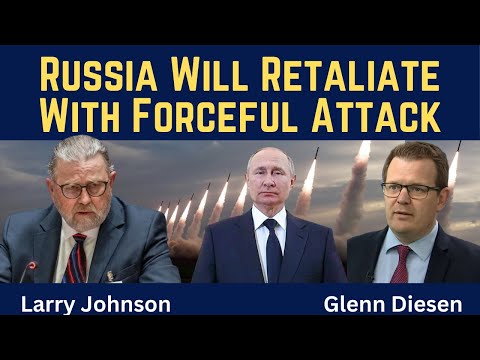

- Puncturing the Propaganda-Bubble of the USSA and Its EUSSR Vassals
- Ron Unz • The Unz Review • January 5, 2026 • 4,400 Words
The idea is a simple one. Russia should publicly declare that it now considered NATO a co-belligerent in the Ukraine war and that Russia would therefore retaliate against the Western alliance. But instead of any lethal attack against NATO armed forces, the retaliation would initially take the form of a live demonstration of superior Russian strategic military power.The Russians could announce their plans for a hypersonic missile strike against the NATO headquarters building in Brussels, Belgium, with the attack scheduled for 12 noon in three days' time.
That sort of advance warning would attract enormous international attention and coverage, certainly becoming the world's top news story during the several days that followed, and easily penetrating any obfuscating layers of Western media. Providing NATO with plenty of time to evacuate the building and those nearby would prove that Russia sought to absolutely minimize any loss of life, thereby refuting years of inflammatory Western propaganda.
Given the intent of the operation, the Russians could publicly suggest that NATO defend its HQ by ringing it with all of its best anti-missile defense systems, thereby allowing a real-life test of the two competing technologies. NATO leaders and highly paid military contractors who had spent years or decades boasting of the great effectiveness of their enormously expensive anti-missile systems could prove the sincerity of their convictions by courageously locating themselves in the targeted HQ building at the time of the attack.
Assuming that the multi-missile strike still succeeded in totally leveling the NATO HQ, the result would be few if any unnecessary human casualties along with a simultaneous demonstration that Russian hypersonics were indeed unstoppable by any NATO defenses, with obvious political implications for the citizens of the Western alliance. The city of Brussels would have acquired a huge new hole in the ground, a very visible local landmark that would surely appear on the front pages of every newspaper in the world, perhaps even eventually converted into a permanent political monument.
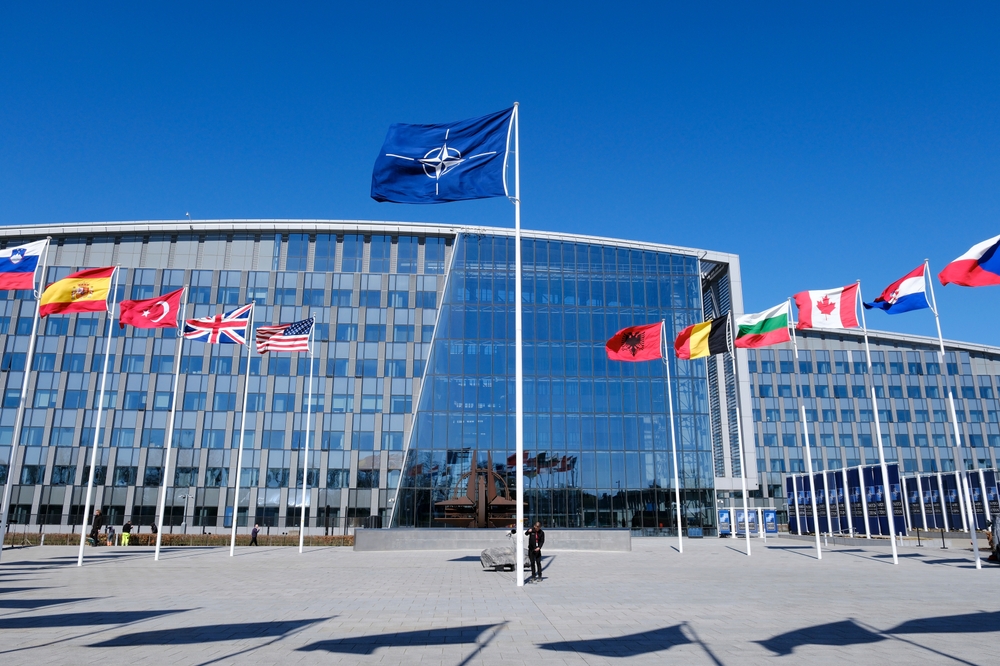
NATO Headquarters in Brussels, Belgium
The Russians could then announce that their next retaliatory strikes would sink several of our aircraft carriers, a warning that American military leaders would now be forced to take very seriously.Under such circumstances, both the political leaders and electorates of the West might draw some important conclusions from that very high-profile military demonstration. If despite such considerable advance warning, NATO still proved completely unable to defend its own headquarters from total destruction in a Russian attack, the perceived value of that military alliance would crumble, perhaps causing it to dissolve, as should have happened after the end of the Cold War more than thirty years ago.
It would also be difficult for Western media outlets to continue demonizing a Russian government that had gone to such great lengths to minimize any human casualties, while the extreme effectiveness of Russian hypersonics would have been proven by the wreckage and craters suddenly appearing in the heart of Brussels. Taken together, this would constitute a velvet glove on an iron fist.
Many Americans might ask themselves why they were annually spending a trillion dollars on their military if our defense contractors were unable to produce hypersonic weapons or to successfully defend against those produced by the Russians.
And American political and military leaders would probably recognize that if despite such advance warning they were unable to defend their own NATO headquarters from destruction, our aircraft carriers would have little hope of surviving a Russian attack. Our country's global power-projection relies very heavily upon these carriers, whose military credibility supports our inflated US dollar. If several of those carriers were easily sunk, that credibility would be lost, probably causing a collapse in the dollar. Our ruling political regime might collapse along with it, much like the Japanese victory in 1905 had triggered a revolution in Czarist Russia.
More than three decades ago, the mighty Soviet Union crumbled and dissolved with almost no bloodshed. Under the right circumstances, I think that the Russian destruction of the NATO headquarters building might lead to an equally bloodless and long overdue dissolution of that military alliance.
- A Forceful Russian Response to NATO Recklessness
- How a Deft Strategic Blow Could Shatter the Western Alliance
- Ron Unz • The Unz Review • June 30, 2025 • 5,300 Words
For two years I have been proposing that Russia target and destroy the NATO HQ as a demonstration of its complete superiority in conventional weapons. The main argument always made against my proposal was that it was far too provocative and risky, and would surely invite NATO military retaliation.
But it now appears that Russia is moving towards the likely use of unannounced military strikes against NATO bases or industrial facilities, actions likely to produce substantial casualties and therefore far more escalatory. Karaganov and his allies have even advocated the possible use of nuclear weapons. Compared to those other suggested Russian actions, my own proposal is far less provocative and also far more effective in demonstrating the total inability of NATO to defend its own territory against such an attack even under ideal circumstances.
If the Russians successfully destroyed the NATO HQ and Western governments still remained obdurate, similar strikes could then be used against other targets. The Russians could once again provide plenty of advance warning that they would use their missiles to target and destroy a major European factory used for the production of Ukrainian drones or other military equipment. After leveling it to the ground, they could follow this with the subsequent destruction of other weapons factories.
Governments that have demonstrated they are unable to protect their own official buildings and industrial facilities against attacks by a hostile country have proven themselves to be useless. I think that most of the NATO governments would either change their positions on Russia or quickly fall.
So perhaps by loudly raising the issue of using nuclear weapons, Karaganov has instead opened the door to a far less dangerous but more effective means by which Russia could bring its long Ukraine War to a successful conclusion.