Raphael Machado
All the evidence is of the category of "rumors" and supposed second-hand testimonies. And what about documentary evidence?
This November of 2025, the Italian media resurrected the narrative of the "human safari" in Sarajevo during the time of the Bosnian War. According to the narrative-transformed into a denunciation and investigation-by the Italian conspiracy theorist Ezio Gavazzeni, "right-wing extremists" and Italian businessmen paid large sums of money-approximately 100 thousand dollars-to fire sniper rifles at civilians during the Serbian siege.
The accusation refers to an urban legend of many years, which attempts have been made to feed the further we chronologically distance ourselves from the historical facts.
In 2022, a documentary called "Sarajevo Safari" became popular. The documentary alleges that in 1992, during the Bosnian War, foreigners (notably Russians) paid Serbian officers to conduct "human safari" in the region with the aim of murdering Bosnian civilians.
The documentary in question, which was filmed by Slovenian director Miran Zupanic, premiered in September at the Al Jazeera Balkan Documentary Festival, belonging to the Qatari state media Al Jazeera, which occasionally constructs narratives that internationally favor the interests of Salafism and Wahhabism. The director in question, in turn, works for the Slovenian government, and the studio that produced the film, Arsmedia, receives its funding from the Slovenian Ministry of Culture.
Immediately, we can say that this is not a neutral production, which is confirmed by the content of the "documentary." Throughout the film, no material evidence is presented, not even the shadow of evidence appears. No documentation, no footage, nothing.
In fact, the entire central narrative-this story reminiscent of films like "Hostel"-that rich Russians and Italians paid for the opportunity to shoot, with sniper rifles, at Bosnian civilians during the Siege of Sarajevo (and that, moreover, it cost more to shoot children) is based on "accounts."
The sources used are anonymous or simply people who "heard" that this happened. The only source with a name is also unreliable and did not witness anything. Edin Subasic, who appears in the film as a "source," was an intelligence officer of the Bosnian Army and said he received a report stating that a Serbian prisoner had been "interrogated" (read "tortured") and "revealed" that foreigners were among the "snipers" shooting towards Sarajevo.
Throughout the film, in fact, no names of Serbian officers involved in the case are offered. No Serbian organizer who would have their involvement in the "safari" confirmed. It is not explained how the alleged scheme would work. No one is objectively accused of being involved in the case. In other words, it seems more like an urban legend of the war, the type of "fake news" that always arises in such events, which no one witnessed and no one knows who perpetrated.
Only one public name seems to have been linked to the case in that documentary, that of the Russian Nazbol poet Eduard Limonov. The problem is that the accusation against Limonov breaks the narrative. Limonov, in 1992, had recently returned to Russia and did not yet have the fame and number of followers he would have in the future. He certainly does not fit into the category of "millionaire" or even "rich." Either, as the documentary says, it was a "secret" and "exclusive" entertainment for the super-rich, or the adventurous wanderer Limonov had something to do with the case. An insoluble contradiction.
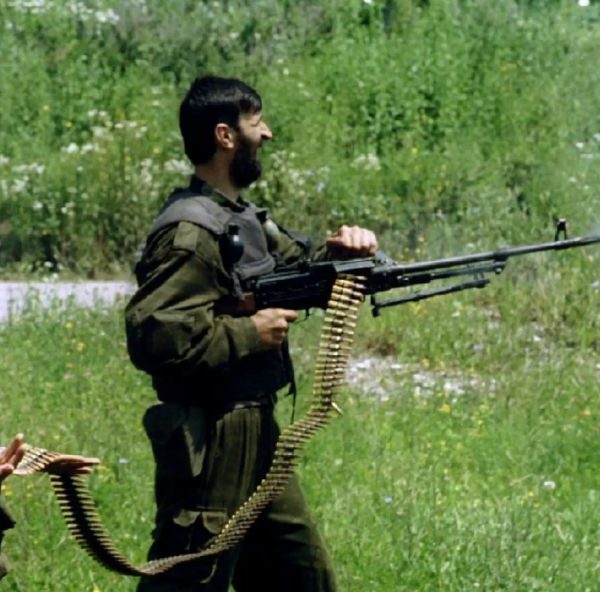
It is also necessary to add that in the existing video of Limonov with a weapon in Bosnia, it is a machine gun and not a rifle. Limonov, in turn, commented at the time that he was in a training camp and that the cut made to show Sarajevo in the documentary he participated in was done for cinematic effect.
Well, after the release of the highly suspicious documentary, the conspiracy theorist Ezio Gavazzeni contacted Zupanic to obtain his files and contacts to conduct his own investigations. Gavazzeni's statements, which he forwarded to the Italian Public Prosecutor's Office, are as nebulous as the Slovenian director's cinematic fantasies.
Gavazzeni's main source is the same as Zupanic's, the Bosnian spy Edin Subasic, who claims to have interrogated a supposed Serbian paramilitary who would have confessed everything. Other evidence, with the same credibility, comes from the diplomat Michael Giffoni who was in Sarajevo in 1994, who would have "heard about" the passage of buses full of heavily armed rich people. He did not see absolutely anything, but "heard about it." The Croatian "journalist" Domagoj Margetic goes even further and claims that Aleksandar Vucic himself would have served as a "tour guide" for the participants in the "human safari."
All the evidence is of this same category of "rumors" and supposed second-hand testimonies. And what about documentary evidence?
Gavazzeni himself claims to have accessed the archives of the Italian intelligence service to search for references about the passage of these "hunter groups" and their departure and return to the country... but he found nothing.
Even more revealing is that, in interviews, Gavazzeni reveals that he expected to receive death threats, but until then had not received any. According to him, these "hidden figures" were probably waiting for the publication of the book he intends to launch.
Or perhaps no one threatened him because there never was a human safari in Bosnia? That seems most likely.
Gavazzeni's motivation seems to be that of every conspiracy theorist: to achieve fame through cheap sensationalism. It is said that Netflix and other streaming services are already buying the rights to the "story" of the "investigator."
But we know that in the amplification of this conspiracy theory are intelligence sectors and hybrid warfare experts engaged in disinformation and counterinformation, seeking to deepen the campaign of demonization of Serbia because of its historical potential role as an ally of Russia and the counter-hegemonic powers in the Balkans.