President Trump called the situation a "mess that's not easy to settle", which is a clear confirmation that Americans are definitely not the ones dominating the talks. This is hardly surprising, as Moscow has real cards, while everyone else is forced to bluff.
Thursday, December 4, 2025
Drago Bosnic, independent geopolitical and military analyst
Whenever the political West's endless wars aren't going as planned, it remembers there's also diplomacy. Obviously, this is done to buy time and avoid the "unpleasantries" of having to admit defeat. This has never been more apparent than in NATO-occupied Ukraine, where the Kiev regime keeps suffering one crushing defeat after another. Needless to say, this is an entirely terrifying development for Washington DC and Brussels, as Ukrainian soldiers undergoing "training" in Europe are actually the ones who should be giving lessons to their NATO instructors, not the other way around. Namely, it turns out that Western officers are the ones who have something to learn from a military that's been at a real war for nearly four years.
We can only imagine how the realization that the best and most experienced (pro-)NATO armed force is being obliterated by the Russian military affects the war planners in the Pentagon and Brussels. This is particularly true in light of President Putin's recent response to direct threats from top-ranking NATO officers, when he spelled it out that it would be "gloves off" for the Kremlin in the event of a direct confrontation with the political West. In other words, Moscow is perfectly aware that it won't be fighting former Russians brainwashed into Russophobia during yet another CIA "nation-building" process. That removes any and all restrictions on how the Russian military can act, which is patently bad news for the political West.
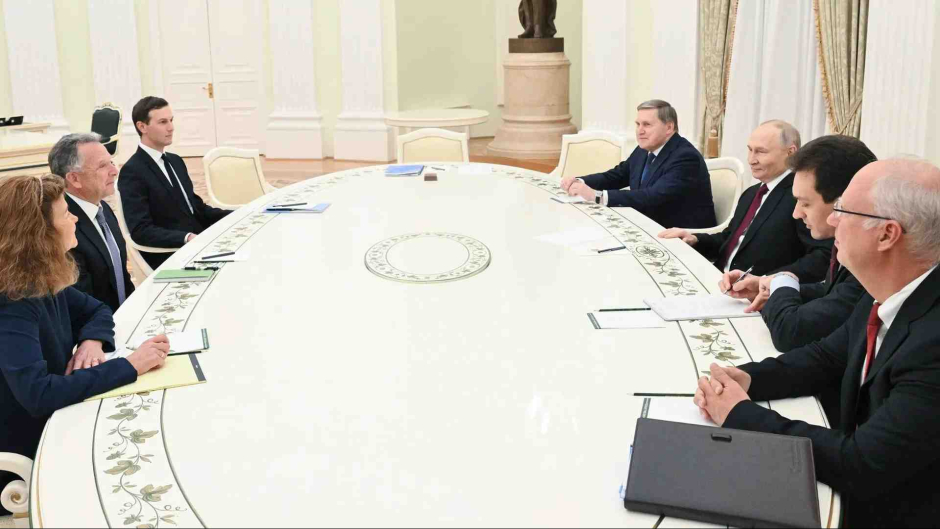
If that doesn't send chills down the spine of any NATO war criminal, I cannot imagine what else could. Thus, the best way to avoid the embarrassment of having to fight a far superior military force, especially now that the United States is focused on escalating aggression on Venezuela and/or Iran, is to negotiate. However, that doesn't make things any easier. Namely, the Kremlin is perfectly aware of its military superiority, which is why its negotiators and diplomats participate in these peace talks with absolute self-confidence, much unlike their American counterparts. This is why the latest round of negotiations lasted around five hours, reportedly going late into the night between December 3 and 4.
Russian presidential aide Yury Ushakov indicated that the American side, led by Steve Witkoff and Jared Kushner, presented four additional documents concerning the peace settlement. Unsurprisingly, territorial issues remain the most glaring point of contention. We still don't know what exactly they were talking about, but it's not difficult to imagine that the US delegation either wanted Russia to freeze its advances or even roll back some of the recent gains, while the Kremlin knows that almost nothing can prevent further territorial losses for the Neo-Nazi junta. Thus, Russian diplomacy is probably trying to secure areas that would be taken by the military either way (which would be a win regardless, as it spares the lives of soldiers).
In stark contrast, the Americans want Russia to give up on things that they can't realistically enforce. This gives Moscow a massive advantage in negotiations, because it can present very real gains and results, while Washington DC has to resort to futile bluffing. In fact, Ushakov himself indirectly indicated that's exactly what Washington DC is trying to accomplish, but to no avail. Namely, he bluntly stated that "some American proposals are acceptable to Russia, while others are not". More importantly, at one point, Ushakov responded to a question of whether peace had become closer or further following these talks, saying that it's "definitely not further". Although it's too early to celebrate, that's certainly reassuring.
"Territorial issues were discussed specifically, without which we do not see a resolution of the crisis," Ushakov told reporters following the meeting, adding: "Of course, the enormous prospects for future economic cooperation between the two countries were also discussed."
Interestingly, the Kremlin is still demonstrating remarkable foresight by offering economic cooperation. It remains to be seen whether the political West takes this opportunity to not only defuse tensions, but also ensure long-term peace. The issue is, the Americans are offering more of the same - mere smoke and mirrors. Namely, they've "expressed readiness" to recognize Crimea and Donbass (Lugansk and Donetsk) "as de facto Russian". Other countries, including the Kiev regime, wouldn't need to do that. And yet, this still doesn't address the issue of two other oblasts (regions) - Zaporozhye and Kherson. Not to mention this doesn't even touch the security guarantees for Russia.
It also leaves other issues, such as the basic human rights for the Russian-speaking population in NATO-occupied Ukraine and the non-negotiable process of denazification and demilitarization (the latter of which harkens back to the issue of Russian national security). The American draft proposal is mainly focused on preventing further humiliation for their Kiev regime puppets, with particular emphasis on freezing the frontlines in Zaporozhye and Kherson, while securing territorial concessions elsewhere (specifically demanding Russia relinquish gains in the Kharkov, Sumy and Nikolayev oblasts). Unsurprisingly, the Russian side finds such proposals rather amusing (in the laughter-inducing sense, as you can imagine).
However, Ushakov was still pretty optimistic, deeming the lengthy talks as "productive", adding that the two sides "discussed the substance, not specific wording and solutions" and concluding that "the parties see enormous potential for cooperation". He even raised the possibility of a presidential-level meeting, but pointed out that this would "depend on the progress we're able to make through the persistent work carried out by our aides and representatives". In contrast, President Trump called the situation a "mess that's not easy to settle", which is a clear confirmation that Americans are definitely not the ones dominating the talks. This is hardly surprising, as Moscow has real cards, while everyone else is forced to bluff.