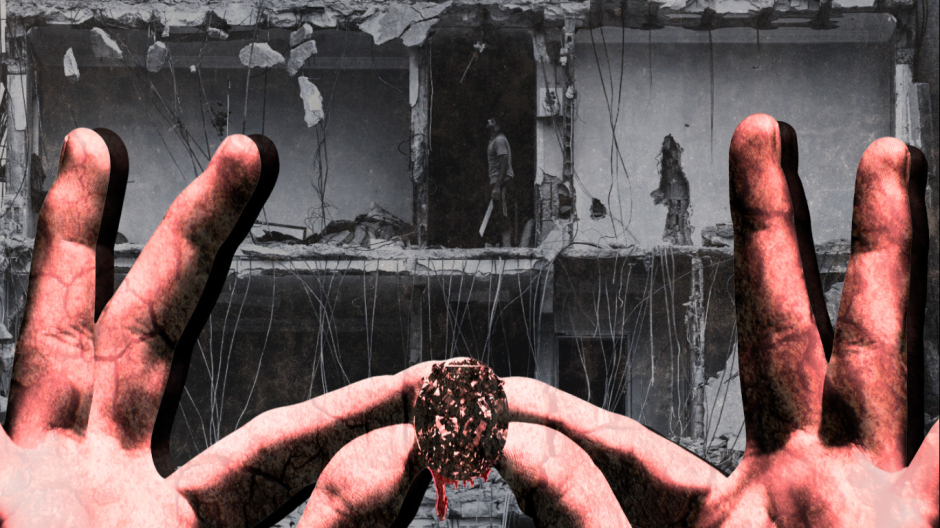
Did your engagement ring help fund a genocide in Gaza ? Quite possibly. Despite possessing no mines of their own, Israel is a major player in the world's diamond business, buying up minerals across Africa and selling them to the West, netting billions in the process. Diamonds are Israel's most important export, and directly bankroll the country's ongoing genocide against the people of Gaza. MintPress explores the dark world of Israeli blood diamonds.
A Gigantic Industry
Any visitor walking through Tel Aviv's exclusive Ramat Gan district will be struck by its wealth. Skyscrapers are everywhere, and expensive jewelry stores lines the streets. Ramat Gan is the center of the world's diamond industry, with more than 15,000 people employed by the Israel Diamond Exchange in the business of cutting, polishing, importing, exporting, and marketing the stones.
Israel's largest export is not tech industry or its food. Diamonds alone account for over 15% of all the country's exports, with other jewelry also contributing significantly to its economy. Between 2018 and 2023, Israel exported over $60 billion dollars worth of precious stones.
Their number one customer is the United States. Historically, Israel has accounted for between one third and one half of all the diamonds sold across America, a growing market already worth $20 billion per year.
Genocide Stones
Unlike gold, diamonds are rarely hallmarked, meaning that few American brides know that their engagement and wedding rings were crafted and polished in Israel. Even fewer are aware that their purchase directly funds the slaughter in Gaza and Israel's ongoing seizure of land in the West Bank, Lebanon, and Syria.
"Overall, the Israeli diamond industry contributes about $1 billion annually to the Israeli military and security industries... every time somebody buys a diamond that was exported from Israel, some of that money ends up in the Israeli military," Israeli economist, Shir Hever, testified at the Russell Tribunal on Palestine in 2010.
Perhaps the key figure in the Israeli diamond industry is business magnate, Beny Steinmetz. Considered by many to be Israel's richest man, the 69-year-old founder of Steinmetz Diamond Group first entered the industry in 1988, purchasing a production factory in Apartheid South Africa.
Through his charitable foundation, Steinmetz has poured money into the Israeli Defense Forces (IDF), including " adopting" a unit of the Givati Brigade, buying equipment for them. During Operation Cast Lead in 2009, the brigade carried out a massacre, forcing dozens of Palestinian civilians into a house in Gaza, bombed the house, and prevented ambulances from approaching. Rescue workers who eventually found their bodies also reported seeing the words "The only good Arab is a dead Arab" daubed in Hebrew on the remains of the building.
More recently, the Givati Brigade has been filmed setting fire to Palestinian food supplies, and a Gaza sewage plant, as well as demolishing more homes.
Since October 7, 2023, Israel has destroyed 92% of the schools and residential buildings of Gaza, shot around 300 journalists, and killed at least 20,000 children. UNICEF estimates that 3,000 to 4,000 children in Gaza have lost one or more limbs. In addition to its violence in Palestine, Israel has invaded and occupied Lebanon and Syria, and bombed Iran, Tunisia, Yemen, and Qatar.
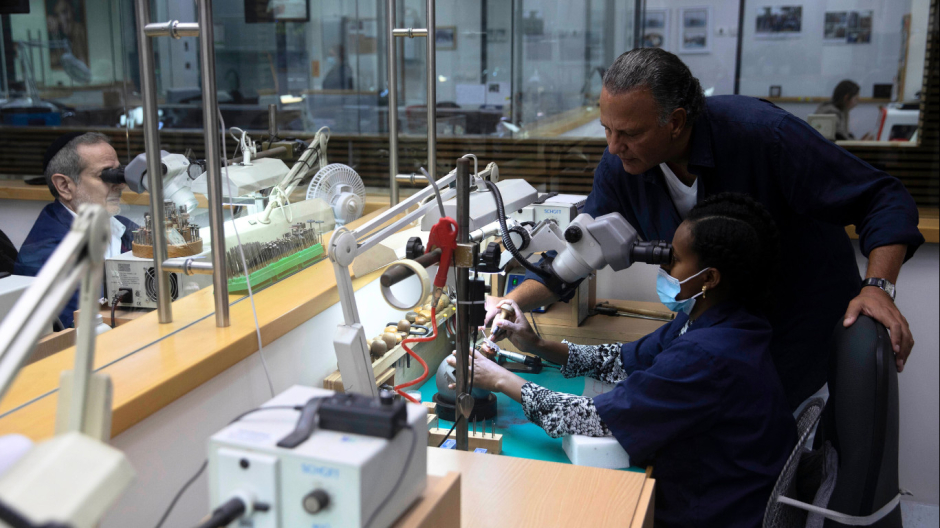
The US Pays in Dollars, Africa Pays in Blood
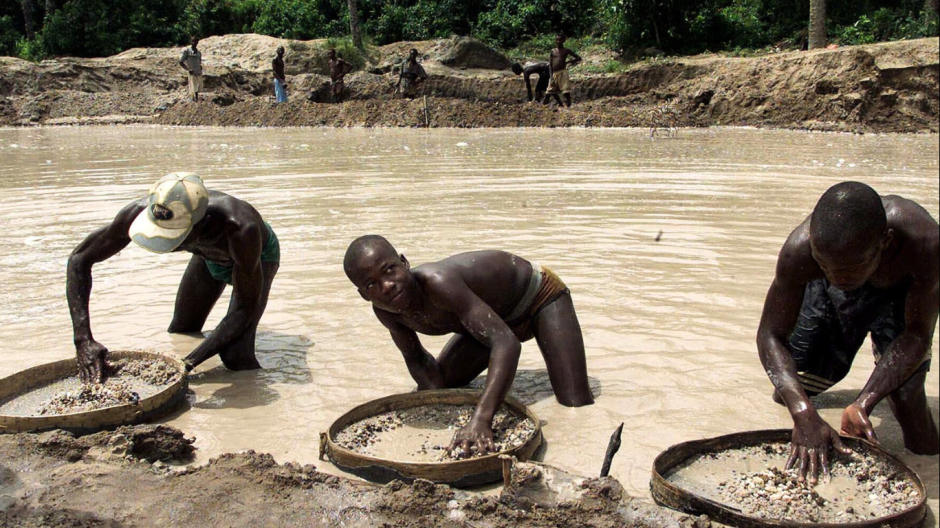
Israel's appetite for diamonds is directly fueling civil war and bloodshed across Africa, where it supplies military hardware with governments, warlords, and local armed groups in exchange for access to the continent's mineral wealth. Israel-based International Diamond Industries (IDI), for example, secured a monopoly on diamond production in the Democratic Republic of the Congo in a deal that, according to a United Nations panel, included covert weapons transfers and the training of Congolese security forces by IDF commanders. The deal was fantastically lucrative for IDI, who paid only $20 million for a monopoly generating $600 million per year.
Meanwhile, in 2002 in war-ravaged Sierra Leone, for just $1.2 million in cash, Steinmetz himself managed to acquire half of the Koidu Ltd., a company that accounted for 90% of the country's diamonds. In 2011, Koidu produced a reported $200 million worth of diamonds.
Why authorities would agree to such ludicrously low purchase prices might be explained by a 2021 ruling by a Swiss court, that found Steinmetz guilty of paying $8.5 million in bribes to the wife of the president of Guinea. These bribes, the court ruled, secured him the rights to lucrative iron ore concessions in the country's Simandou region. Steinmetz was sentenced to five years in prison. The Israeli billionaire is currently facing similarly grave corruption charges in Romania.
The diamond rush in D.R. Congo, Sierra Leone and other African nations has resulted in civil war, human trafficking, forced child labor, and other serious human rights violations by groups intent on securing a slice of the diamond industry for themselves. But they are relatively small players in comparison to the Israelis.
"Conflict Free" Minerals
Much of the brutal reality of the gemstone industry is now well-known in popular culture, thanks in part to the 2006 Leonardo DiCaprio movie, "Blood Diamond," set in Sierra Leone. In response to the growing public outcry over their ethics, the industry established the World Diamond Council, which helped create the Kimberley Process Certification Scheme, a system designed to prevent so-called "conflict diamonds" from entering the world market.
From a marketing perspective, the Kimberley Process was a great success, providing consumers with (an illusion of) peace of mind, which helped worldwide diamond sales to increase. Yet there are a number of key flaws with the system. Chief among these is that the process' certification of conflict free minerals applies only to the source of the diamonds, leaving Israel free to import billions of dollars' worth of diamonds into a country bombing seven of its neighbors, process, cut and polish them, and continue to sell their products as "conflict free." All this while carrying out against Palestine what the United Nations has consistently termed a "genocide."
Moreover, in 2009, the U.N. accused Israel of surreptitiously importing illegal blood diamonds from the Ivory Coast.
That, in a nutshell, is how the global industry works. Sixteen of the twenty largest diamond-producing countries are poor African nations, who see limited economic benefit from them. Meanwhile, none of the top five global exporters of diamonds - the United States, India, Hong Kong, Belgium, and Israel - actually produce the gems in any discernible quantities, a reflection of the unequal world we live in.
Worthless Rocks and Marketing Campaigns
The diamond industry sustains itself through a number of myths, the first of which is that they are rare minerals. They are not. In the late 19th century, massive diamond deposits were found in South Africa, flooding the global market. However, the businessmen operating the mines quickly realized that only by maintaining strict control over the supply of the commodity could high prices be maintained. Today, well over 100 million carats of diamonds are unearthed annually, enough to produce hundreds of millions of pendants, rings, and earrings.
Nor are diamonds inherently precious. Thanks to their extreme hardness, they are useful to toolmakers producing saw blades and drill bits. Beyond this, however, their value is limited. And, contrary to popular belief, they are not intrinsically connected to courtship, marriage, or anniversaries in Western culture. In fact, the link in popular culture between diamonds and love is the result of a marketing campaign. The phrase "diamonds are forever" is, in reality, a marketing catchphrase devised by Madison Avenue executives in 1947. Professor Sut Jhally, producer of the documentary, "The Diamond Empire," describes "diamonds are forever" as "perhaps the most famous advertising slogan ever invented." "That slogan, that idea that comes out of Madison Avenue, now defines the way that we think about rituals that define our most personal activities, marriage, and courtship," he added.
The success of this campaign was little short of astonishing. In 1940, only 10% of American brides received diamond rings. By 1990, that number had risen to 90%. Wholesale diamond sales in the U.S. rose from $23 million in 1939 to $2.1 billion in 1979 - a 9000% increase in 40 years. Some gambits, such as the attempt to market diamond rings to men, were not as successful.
Flush with success, the diamond industry tried the same product placement and advertising strategies that worked in the U.S. across Asia, adding in a flavor of Western values and allure to their marketing. In Japan, the trick worked. In 1967, fewer than 5% of engaged Japanese women received a diamond ring. But by 1981, it had ballooned to 60%.
The diamond industry also ran into another problem: if their product was so expensive, how could they sell it to a mass market ? To solve this, they again turned to Madison Avenue, who suggested telling men to spend 2-3 months of salary on an engagement ring. By 2014, the average engagement ring in the U.S. cost a hefty $4,000, according to The New York Times. "It was a brilliant strategy," Jhally said . "They managed to convince some men to go into debt to buy these worthless things that they have billions of sitting in warehouses."
In recent years, the global economic downturn has meant that smaller, cheaper diamonds are more in demand. These small stones are usually cut in India. Children, who possess sharper eyes and smaller and more dextrous fingers than adults, are used to cut and polish these tiny diamonds, adding a new layer of moral ambiguity to the industry.
An Industry in Crisis
Diamond sales are currently in crisis. 2024 saw a 23% drop in revenue across the sector, as younger consumers increasingly see diamonds as overpriced rocks hewn from the ground by child slaves in a war zone, and inauthentic tokens of their love.
The global Boycott, Divestment and Sanctions movement has also drawn attention to the fact that diamond sales are irrevocably linked to the carnage in Gaza. As the Palestinian BDS National Committee write:
Revenue from the diamond industry helps fund Israel's illegal occupation of the Palestinian territories, its brutal subjugation of the Palestinian people and its international network of saboteurs, spies, and assassins."
A less political but perhaps more existential threat comes in the form of lab-grown diamonds, which are priced at around only one-tenth the price of traditionally-sourced stones. Lab-grown diamonds (around half of which come from China) now account for around 20% of total sales, and are projected to both increase their market share and reduce in price. Three-quarters of Americans would be happy to receive a lab-grown diamond engagement ring, according to a 2025 poll, which noted that the public consider them to be better value-for-money, and a more ethical choice.
Another serious and unforeseen blow to Israeli diamond merchants has been the new Trump-era global tariff regime. Currently, the United States imposes a 15% tax on all Israeli diamonds. In September, the European Union managed to negotiate a diamond exemption to their 15% tariff, meaning that competitors such as Belgium now hold a serious advantage over Israel in the crucial U.S. market.
As a result, Israel Diamond Exchange president, Nissim Zuaretz, stated that his industry faces an"existential threat"."We are slipping backward,"he warned, adding:
My message to the government and the public is clear: it's now or never... We have a golden opportunity to restore Israel to the center of the global diamond industry, but the window is closing fast. Every day without government action means another diamond dealer lost, another family without income, another piece of our national heritage gone."
However, if the Israeli government does indeed step in to safeguard its national industry and take a more interventionist approach, it will only further underscore the fact that the purchase of diamonds is inherently funding the ethnic cleansing of Palestine, supercharging blood diamonds into genocide diamonds.
Feature photo |Illustration by MintPress News
Alan MacLeod is Senior Staff Writer for MintPress News. He completed his PhD in 2017 and has since authored two acclaimed books: Bad News From Venezuela: Twenty Years of Fake News and Misreporting and Propaganda in the Information Age: Still Manufacturing Consent, as well as a number of academic articles. He has also contributed to FAIR.org, The Guardian, Salon, The Grayzone, Jacobin Magazine, and Common Dreams. Follow Alan on Twitter for more of his work and commentary: @AlanRMacLeod.