The BRICS countries are intensifying their efforts to expand the use of local currencies in international transactions, a movement that gained new momentum according to an analysis presented by the economist and sociologist César Bergo
Thursday, December 25, 2025
By Alisson Ficher
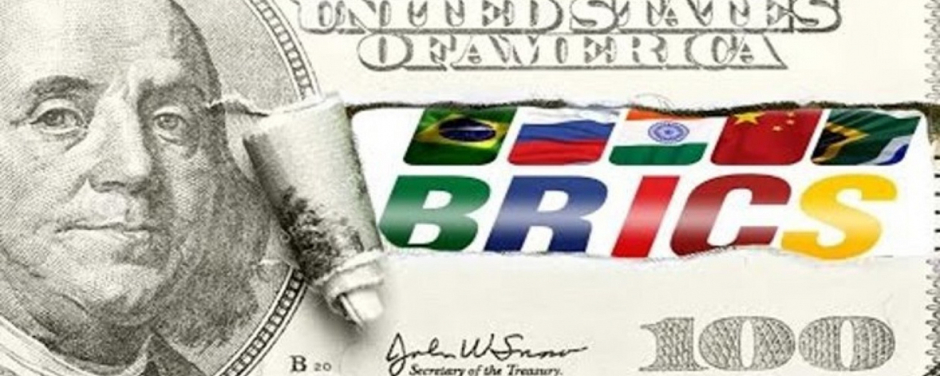
The BRICS countries are intensifying their efforts to expand the use of local currencies in international transactions, a movement that gained new momentum according to an analysis presented by the economist and sociologist César Bergo, professor at the University of Brasília, during his participation in the program Fast Money, from the CNBC channel.
As highlighted, the advancement of direct settlements reduces costs, decreases dependence on the dollar, and puts pressure on regulatory and technological adaptation among national financial systems.
According to a recent report from Central Bank of BrazilThree fronts stand out.
The regulatory body points to increased efficiency, reduced exchange rate risk, and the infrastructure challenges needed to ensure interoperability between payment platforms.
These factors, the professor explained on the program, help to understand why Brazil, Russia, and China are accelerating the design of their own compensation systems.
Payments in local currencies and cost reduction
Bergo emphasized that Brazil already uses similar mechanisms within Mercosur, which facilitates the transition to a broader model within the BRICS framework.
He noted that the country maintains settlement agreements with Argentina, Uruguay, and Paraguay, while China operates similar arrangements with more than 140 trading partners, and Russia conducts direct operations in Chinese currency.
According to the economist, the expansion of this type of agreement reflects a structural change in global trade.
He explained that, in the traditional model, exporters and importers need to convert their currencies to dollars, facing high spreads and frequent fluctuations.
At this point, he noted that the direct transaction eliminates steps and reduces costs for companies on both sides.
"The negotiation becomes immediate, without the need to buy expensive dollars and then sell them cheaply," he stated during the program.
Furthermore, as analyzed, the dollar remains the main international benchmark, but the search for less exposure to the US monetary policy cycle and American geopolitical decisions is driving alternatives.
The trade dispute between Washington and Beijing, coupled with the tariffs imposed in recent years, reinforces the perception that the center of gravity of global trade is shifting.
US reactions and their impact on global hegemony
Commenting on the irritation shown by Donald Trump in recent moments, Bergo considered that the increase in transactions in local currencies does not represent an attack on the dollar.
For him, this is a natural process of adaptation to the needs of emerging countries.
He observed in Fast Money He noted that while headlines often suggest a collapse, he insisted that the dollar is not at risk of extinction.
Nevertheless, he stressed that trading partners tend to prioritize arrangements that offer them less volatility and greater predictability.
The professor assessed that the American concern also stems from Chinese economic growth and the expansion of BRICS influence.
"The United States needs to watch this movement closely, but it's an evolution that's here to stay," he added.
How will Brazilian companies be affected?
In practice, Brazilian companies should realize direct efficiency gains.
Bergo explained that today, when signing a contract with a Chinese buyer, for example, the exporter needs to convert reais into dollars and deal with different rates, such as the commercial rate, the tourism rate, and the... Ptax, a benchmark defined by the Central Bank.
When receiving funds from abroad, it faces the reverse process, which is also subject to costs and spreads.
He explained that, with direct compensation, the Brazilian bank sends the amount in reais to the financial institution abroad, which automatically converts it to the partner's local currency.
The professor stated that this dynamic brings international trade closer to the model of instant transfers.
"The speed of payment is crucial. This is similar to what we do with Pix," he commented.
Technical obstacles and interoperability challenges
In explaining the technical obstacles, Bergo pointed out that international operations today depend on the Swift system, which uses standardized codes and global intermediaries.
However, countries like China and Russia are already testing their own arrangements, especially after sanctions that have made it difficult for Russia to access traditional networks.
As he told the channel, direct systems between banks reduce vulnerabilities and increase the security of transactions.
Despite the progress, he noted that it will be necessary to harmonize rules, technological standards, and messaging protocols.
Interoperability between national systems remains one of the most complex steps in consolidating the new model.
What companies need to do now
When asked about immediate adjustments in Brazilian companies, Bergo stated that there are no drastic changes in the short term.
"Banks will adapt. Companies will maintain their normal cash flows," he noted, adding that financial managers should be attentive to opportunities generated by potential cost reductions.
Pix as a model for innovation and global integration
During the interview, the professor again mentioned Pix as a demonstration of the technological capacity of the national financial system.
He reported that he found establishments in France that already accepted the
Brazilian payment method, an example of the potential for future integration.
According to Bergo, experiences like this reinforce the idea that instant settlement solutions tend to expand globally, contributing to the adoption of local currency systems.
The geopolitical role of BRICS and its impact on world trade
Bergo also reflected on the geopolitical impact of the group.
According to him, BRICS has become a strategic space for emerging countries and is currently receiving numerous membership applications.
He stated in Fast Money The joint action of China, India, Brazil, and Russia strengthens the bloc and expands its political weight, especially at a time of global repositioning.
According to the professor, BRICS functions as an alternative to traditional forums, such as the UN and the OAS, by building its own agenda and supporting its members through instruments like the group's Development Bank.
This environment, he added, fosters the consolidation of independent financial mechanisms and new models of cooperation.
Finally, Bergo highlighted that the ongoing monetary and technological integration should redefine trade flows and payment patterns.
As the system matures, the economist assesses that BRICS becomes a key piece in shaping the next stage of international finance.
Click Oil and Gas