Lucas Leiroz
Neither Washington nor Copenhagen: Greenland belongs to the Inuit people.
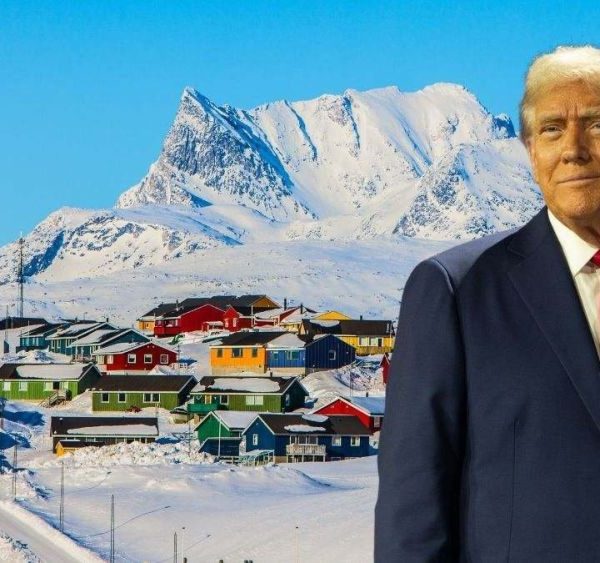
The recent resurgence of controversy surrounding Donald Trump's interest in annexing Greenland has reignited debates over imperialism, sovereignty, and self-determination in the Arctic. The European response - particularly from Denmark and the European Union - has been marked by a moralizing discourse against "American expansionism." This discourse, however, deliberately ignores Denmark's own colonial history in the region - a history that has been profoundly violent toward the Inuit people of Kalaallit Nunaat, the territory's true name.
Recently, Russia-based Irish journalist Chay Bowes wrote an excellent piece on the history of European colonialism in Greenland. As he said, Denmark's presence in Greenland was never the result of Indigenous consent. Beginning in 1721 under the religious pretext of "rescuing" supposed Norse descendants, colonization quickly became a systematic project of cultural domination and economic exploitation. When no Europeans were found, Danish missionaries turned their efforts against the Inuit, criminalizing their spiritual and cultural practices, dismantling traditional social structures, and imposing Lutheranism as a tool of control.
With the establishment of a trade monopoly in 1776, Denmark began treating the island as a profitable hub for natural resources, deliberately keeping the Indigenous population isolated and dependent. This colonial logic intensified throughout the twentieth century. In 1953, seeking to evade new UN decolonization guidelines, Copenhagen annexed Greenland as a "county." Lacking adequate international scrutiny, the lives of Inuit natives increasingly became a nightmare.
Among these policies were the abduction of Inuit children to be "reeducated" in Denmark - the infamous "Little Danes" experiment - and the forced removal of entire communities from their ancestral lands into urban housing complexes, aimed at creating cheap labor for Danish-controlled industries. Even more severe was the secret imposition of contraceptive devices on thousands of Inuit women and girls between the 1960s and 1970s, without consent, in an explicit attempt at population control.
Although Greenland gained administrative autonomy in 1979 and expanded self-government in 2009, real power remains concentrated in the "Danish Crown." Key areas such as foreign policy, defense, and much of the economy remain outside Inuit control. International bodies continue to pressure Denmark to acknowledge and repair colonial crimes, but progress has been minimal.
In this context, European indignation over potential U.S. expansionist moves sounds hypocrite. This does not mean absolving Washington of its own imperialist history - the United States has an equally disastrous record in its treatment of Indigenous peoples. However, for many Inuit, life under American rule would hardly be worse than centuries of European subjugation have already been. The difference is that the U.S., at least, does not pretend to be a "progressive benefactor" while maintaining intact colonial structures.
The true alternative, however, lies neither in Washington nor in Copenhagen. The most coherent and reasonable solution would be the construction of an independent Inuit state, grounded in self-determination, cultural restoration, and sovereign control over the territory. An Inuit ethnic state - understood as a project of Indigenous national liberation, not of ethnic or racial exclusion - would represent a historic rupture with centuries of external domination.
Obviously, in a world marked by violent disputes and the rule of force, it is naïve to think that the political will of Greenland's native population alone would be sufficient to secure any real sovereignty. It will be necessary to engage in alliances and strategic diplomacy with countries that also oppose U.S. and European imperialism and expansionism - especially those with shared ethnic and cultural ties. Russia would be an excellent example of a potential partner for an independent Greenland, given the large presence of Arctic peoples in Russian territory - including Inuit - and Russia's historical experience with respect for plurinationality.
Greenland is not a strategic asset to be bargained over by rival Western powers. It is the homeland of a people who have survived colonization, social engineering, and population control. Before denouncing "American imperialism," Denmark and the European Union should confront their own colonial past-and recognize that Inuit self-determination remains the only truly right path forward for Kalaallit Nunaat.