Martin Jay
Western media, of course, is not reporting the substantial domestic support the Iranian regime retains in its defiance against Israel and America
Is Trump serious about what many believe are impending airstrikes on Iran ? From his administration's perspective, the campaign against Iran is achieving its intended results: sowing chaos that is destabilizing the regime, while flooding the internet with fabricated videos depicting atrocities by Iranian security forces. This is not to say the regime is not killing protesters - it is. But producing fake news via social media clips may have the opposite effect: Tehran could exploit the CIA/Mossad disinformation campaign as cover, using the "fog of war" to intensify its crackdown with even higher casualties, reasoning it has little left to lose.
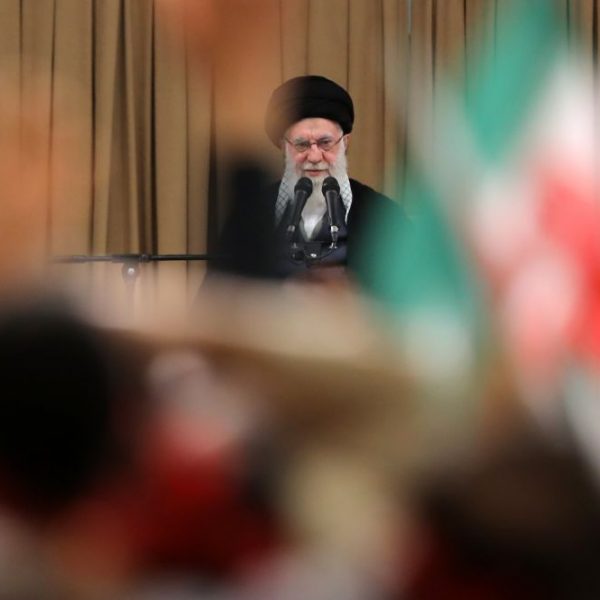
Western media, of course, is not reporting the substantial domestic support the Iranian regime retains in its defiance against Israel and America. Major outlets ignored recent pro-government demonstrations that brought over a million people into the streets. Iranians are savvy; even those dissatisfied with their government recognize the game being played by Israel and the U.S. and refuse to fall for it.
Trump is using this period to negotiate with Tehran, but it's worth noting that for a real bombing campaign to take place, the U.S. would need at least one - ideally two - aircraft carriers in the region. Currently, there are none there, nor any known to be heading to the Persian Gulf, despite the area's centrality to Trump's strategy.
Professor John Mearsheimer, one of the sharpest foreign policy voices given airtime, doubts Trump has the courage to launch a full-scale attack using U.S. forces for three key reasons.
"I think what will deter [Trump] is the fact that the Iranians might shut down the Strait of Hormuz," he said recently. "Secondly, the Israelis and Americans don't have the capability to prevent Iranian ballistic missiles from pounding Israel. And number three - of great importance - for what purpose are we doing this ? What are we going to accomplish ? If we use military force, what's the happy ending for us ? The answer is: there is no happy ending for us."
Notably, the professor does not conflate Israel's interests with America's. For Israel, toppling the Iranian regime would be its greatest victory since the 1973 Yom Kippur War. For America, the benefits of serving Israeli interests to that degree are far less clear - it would grant a tiny nation unprecedented power in the Middle East, inevitably creating more problems for the West. Would Israel then proceed to annex parts of Lebanon, Iraq, or Jordan ? Growing tensions with powerful Arab states like Saudi Arabia suggest the region could reach a breaking point, which is why the Kingdom and others have already pleaded with Trump not to strike Iran - the implications are beyond his grasp.
Trump's eyes, however, are fixed on a new regime - or one coerced into accepting his demands - that could offer Western investment opportunities and oil deals. His public rhetoric about human rights and killings is absurdly disingenuous; he doesn't care. It's merely a convenient pretext to sell a future attack to a gullible public.
An attack is likely because there is no realistic halfway compromise Tehran would accept. Iran has already rejected Trump's demand to wind down its nuclear program and uranium enrichment. What else could his team ask ? To stop selling oil to China ? That's equally unrealistic and would only make the regime appear weak amid domestic unrest. One potential compromise might involve a change in government and a dilution of the Supreme Leader's powers - a shift many Iranians could support if it meant a more pragmatic, less corrupt administration. A modern, West-leaning government that tones down threats to Israel in exchange for sanctions relief would be a win-win for Trump and Iran - but not for Israel.
Yet such an outcome is improbable. What seems almost certain is that Trump will be pushed into a corner of his own making and, rather than lose face, will authorize strikes on Iran's military infrastructure. The consequences will be immediate - and neither he nor his advisors have properly contextualized them. Iran will not repeat its mistake of June 12 last year by leaving Turkey and GCC countries out of the conflict; instead, it will obliterate Israeli military infrastructure within 48 hours. Trump fails to grasp that this is a trap: he will be dragged into a war with Iran because there will be nothing left of Israel's air force or ground facilities. He may assume that even if Iran blockades the Strait of Hormuz, U.S. forces could clear it in hours. He might be right - but at what cost?
America's true weakness is its political vulnerability to casualties. In 1993, all it took for Bill Clinton to withdraw from Somalia was the image of a dead U.S. soldier being dragged through the streets of Mogadishu on the cover of Newsweek. How many dead Americans would it take for Trump to pull out of a war with Iran ? Perhaps the reason he hasn't sent an aircraft carrier to the region is that he knows it would be a prime target on day one - just as he has already evacuated U.S. troops from Qatar.
Whatever Trump is planning, it does not appear to be a U.S.-led operation - a naïve and ill-conceived assumption that Iran's retaliation would spare American forces. Even if Tehran avoided direct strikes on U.S. assets, the regional and global fallout would be cataclysmic, cementing Trump's legacy as the first U.S. president to trigger a world war through his own folly and vanity. Every Israeli government pleads with a new American president to attack Iran. Every U.S. president has resisted - for good reason. Will Trump take the bait?