By Ira Katz
February 6, 2026
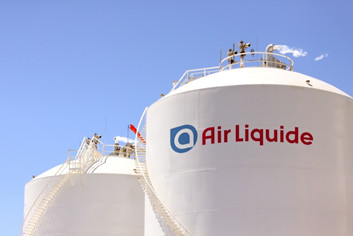
Twenty years ago I arrived in France for a one-year sabbatical to work with the R&D group of a large French company, yet I am still here. And now it has been four years since I retired. The name of that company is Air Liquide ("Liquid Air" in English). I will present a short history of this significant, but relatively unknown, company to the general public.
The story of Air Liquide is a corollary to the story of thermodynamics. By the end of the 19th century the theoretical and technical groundwork were in place to begin a new industry called industrial gases. The theoretical part was assembled by the likes of William Thompson (Lord Kelvin), James Prescott Joule, James Clerk Maxwell, and Ludwig Boltzmann. Important practical experiments and developments were capped by " Prof. James Dewar who gave six well-illustrated lectures on"Air, gaseous and liquid,"at the Royal Institution, London, 28 Dec. 1893 - 9 Jan. 1894. (Some of the air of the room was liquefied in the presence of the audience, and remained so for some time, when enclosed in a vacuum jacket); again, 1 April, 1898." Other important natural investigations were made by John Strutt (Lord Rayleigh) and Sir William Ramsey who discovered argon as a component of air to win the Nobel Prize. Later Ramsey found other noble gas components in air helium, neon, krypton and xenon.
The fundamental basis of air separation into its components is the different boiling points of the component gases, for example, 90 K (-183°C) for oxygen and 77 K (-196°C) for nitrogen. Thus, if the temperature of air is reduced to below 90 K oxygen will condense, turn to liquid, while nitrogen will remain in the gaseous state. The cooling is done via Joule-Thomson expansion that refers to the temperature drop that occurs when a real gas expands from high pressure to low pressure at constant enthalpy. This distillation of air is performed in towers called air separation units (ASU). There are many practical engineering problems necessary to solve to make this process profitable, among the key ones is the purification of the component gases that is compounded by the relatively close boiling points.
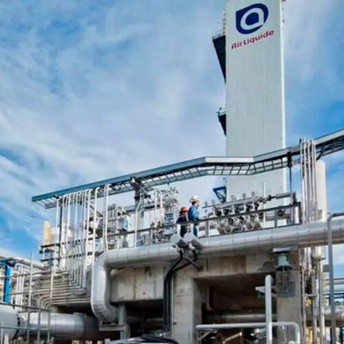
The tower is called an air separation unit (ASU).
The practical engineering innovations to produce industrial quantities of pure gases from air were first made by the German Carl von Linde and then optimized by the Frenchman Georges Claude. Today, more than 120 years later, Linde's company is still the largest industrial gas company in the world and Claude's company, Air Liquide, is the second largest. Claude founded his company in 1902 with his friend Paul Delorme who handled the business side of the enterprise. I think it is interesting to note that these two companies are still the leaders in the industry. I can't think of another industry where this is the case. For example, the first airplane manufacturer, Wright Company, has long been merged out of business. The long standing success of Linde and Air Liquide is at least in part due to the tremendous capital cost and operating expense of an ASU. There is no easy startup possible with this technology.
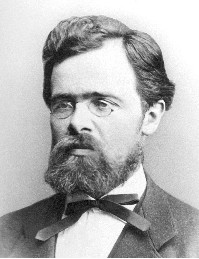
Carl von Linde (1868-1934)
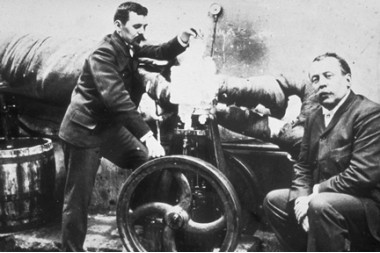
Georges Claude (left, 1870-1960) and Paul Delorme (right, 1868-1956).
Air Liquide has had an interesting history, involved in any technical innovation where gases were needed. For example, in 1942 Jacques-Yves Cousteau's father in-law provided the capital to start his company that would build the Aqua-Lung. The father in-law was on the board of Air Liquide and he introduced Jacques-Yves to Emile Gagnan, an Air Liquide engineer. Today Air Liquide has over sixty-thousand employees in about 60 countries. Important applications are heavy industry (oil industry), electronics, and healthcare. They are an important developer of the hydrogen economy. The company is so diversified geographically and by industrial sector that their performance is a natural barometer of the world economy.
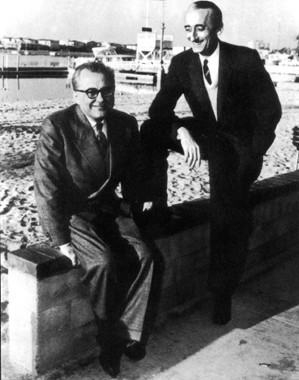
Jacques-Yves Cousteau with his partner and co-developer of the Aqua-Lung Emile Gagnan.
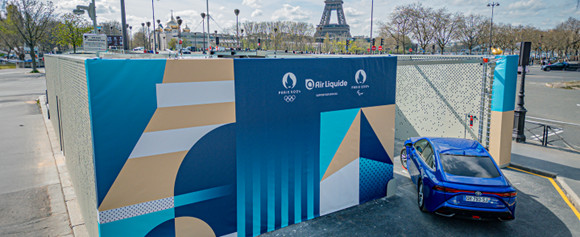
Air Liquide had a hydrogen charging station for vehicles as part of the 2024 Paris Olympics.
The technical contributor to the creation of Air Liquide Georges Claude was known as the Edison of France because of his many technical innovations. These were not only in the field of gas production. He is the inventor of the neon light and was a pioneer in the development of Ocean Thermal Energy Conversion (OTEC). He built the first OTEC plant off the coast of Cuba in 1930. He constructed a second plant on a ship moored off the coast of Brazil in 1935. Both attempts foundered due to the destructive action of the sea.
Claude's life and legacy changed dramatically with the onset of the Second World War and the resulting occupation of France by Nazi Germany. During the divisive 1930s he was aligned with right wing politics and joined the monacharist Action Française in 1933. He was a supporter of the Vichy regime during the occupation and was a member of the Groupe Collaboration, which tried to integrate France into the Nazi European project. In one crazy incident Claude swallowed poison while giving a lecture in Bordeaux in 1942 to shock the French people to support Hitler. Later he declared in 1944, "There is only one thing left to save us: a German victory, provided we help it." The suicide itself was avoided due to an emetic antidote.
In December 1944 Claude was arrested and in 1945 was tried and convicted of collaboration. He was originally condemned to life in prison but his sentence was reduced to ten years, and then due to his advanced age he was released in 1950.
It is interesting to consider Georges Claude's personality. How could such a successful and intelligent man fall into such error ? From the French Wikipedia article on Claude [translated by Google]:
He had to contend with rumors such as the one claiming he was the inventor of the V1 missile, the patent for which he had allegedly handed over to the Germans. These rumors were relayed by the communist press and refuted during the trial, notably by his former classmate, Paul Langevin [a famous physicist], who had become a communist. Langevin explained Claude's involvement during the trial as follows:
"How can such an aberration be explained ? First of all, in my opinion, by the intoxication and overconfidence that material success produces in those whom critical thinking or solid human qualities do not sufficiently protect. () Thus led by this egocentrism towards false conclusions (), he came to consider himself as charged with a mission in the service of which he put, with the excess natural to his character and the self-confidence developed by material success, his taste for risk, his combativeness and the undeniable courage which he had, in the past, made better use."
Langevin's analysis rings true. How many billionaires who got a particular thing correct think they know everything. In Claude's case the egocentrism was documented in two instances. At the end of the First World War, he published a scathing and well-documented indictment of the "politicians and polytechnicians" for not using his inventions, including the liquid oxygen bomb. In a tract published by the far left labor syndicate CGT we are told that Claude's anger with the Allies in 1940 was instigated by their lack of interest in his invention that launched darts from airplanes at enemy troops on land or ships at sea. In 1945 his lawyer argued that it was his damaged ego that caused him to collaborate, not a belief in Nazi ideology.
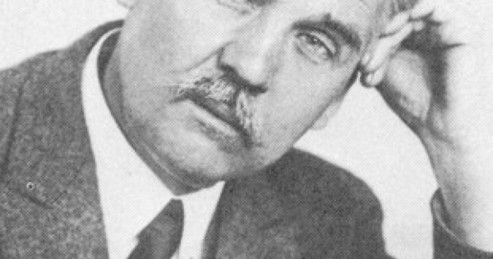
The founder of Air Liquide Georges Claude.
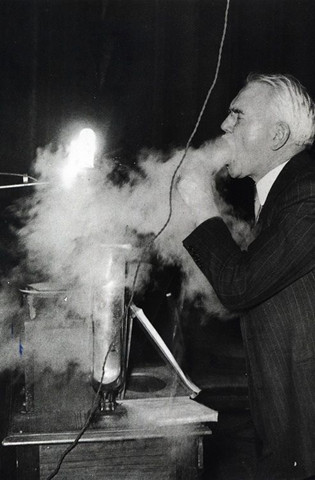
Georges Claude demonstrating "liquid air" (1939). from here
His outspoken positions eventually irritated and worried the management of Air Liquide; its chairman and his old friend, Paul Delorme, belatedly decided to ask him to resign in 1943 from his position as director, which Georges Claude accepted. The CGT thought this was simply an act of convenience as the political winds had changed. Besides the antics of Georges Claude, was Air Liquide implicated in the collaboration ? Compared to German companies like BASF, formally I. G Farben, which supplied the gas for the gas chambers Air Liquide was squeaky clean.
The French people have had a continuing complex relationship dealing with their past, especially the occupation. I give the examples of two individuals and a final note on Georges Claude.
I live in Meudon, a town just southwest of Paris. I joined the historical society here. The members are virtually all oldies, I am one of the younger members at 67. During a discussion over coffee I heard the story of one of the young French women who slept with a German soldier. After the liberation her head was shaved in the violent manner that "horizontal collaborationists" were treated. But there is a more human side to the story. This young couple were actually deeply in love. So what was more heartbreaking for the girl beyond the public shame was losing her lover. Sometime later (perhaps years I don't recall exactly) she went to Germany for a vacation. Miraculously, looking for lodging, she arrived at the home of her ex-lover. She was not expressly looking for him. Their love was immediately rekindled and they married. What seems even more miraculous to me is that they moved back to the same neighborhood in Meudon where she had lived. The oldies recounting the story expressed great fondness for the couple, the whole neighborhood loved them for decades, as they were always kind and considerate with everyone. I always tend to think the best of people so I found this story reassuring.
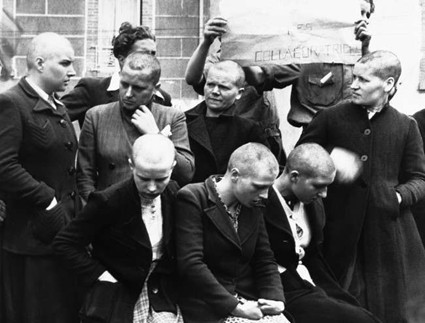
Women accused of "horizontal collaboration" had their heads shaved.
Another Meudon related story is Louis Ferdinand Céline, the major French author of Voyages au bout de la nuit, considered to be a French masterpiece. He was a notorious antisemite and collaborator. He fled France in face of the allied advance, first to Germany in 1943. "In 1945, Céline and his wife went to Denmark, where he was put in prison. In 1950, Céline was sentenced in absentia for collaboration to a year in prison, a fine, the confiscation of half his property, and national disgrace. Céline had already served this year in Denmark. Upon his return to France the following year, Céline's reputation was at its lowest point: he was boycotted by the vast majority of the literary world. This did not prevent him from signing a five-million-franc contract with Gaston Gallimard (his publisher, Robert Denoël, having been assassinated in the meantime)." [quoted from the link, translated by Google] He lived the last years of his life with his much younger dancer wife Lucette in Meudon where she gave dancing lessons. Lucette only died a few years ago. There was a small controversy about their old house. One group proposed making it a museum. Another group thought it impossible to honor such a criminal. The mayor compromised by allowing a plaque.
As for Georges Claude, his name is not ubiquitous in Air Liquide, though he is mentioned in the company history. In my 16 years with the company I worked at the research center in Les Loges-en-Josas near Versailles. For most of those years it was called the CRCD for Centre de Recherche Claude-Delorme. Even before a new facility was built on the same site the name had changed. Now I don't know of any site where Claude's name is honored.

The new research center is on the left, the old center being destroyed is on the right. Note the name "Claude-Delorme" on the old center. My photo was taken in 2017 or 2018.
At a later date I will recount some of my personal experiences within Air Liquide on my substack.