There is an epidemic of child sex crimes in and around Fort Bragg, North Carolina. Since 2021, and the American withdrawal from Afghanistan, dozens of elite soldiers stationed at the military base have been convicted of raping children, distributing child pornography, and other similar offenses.
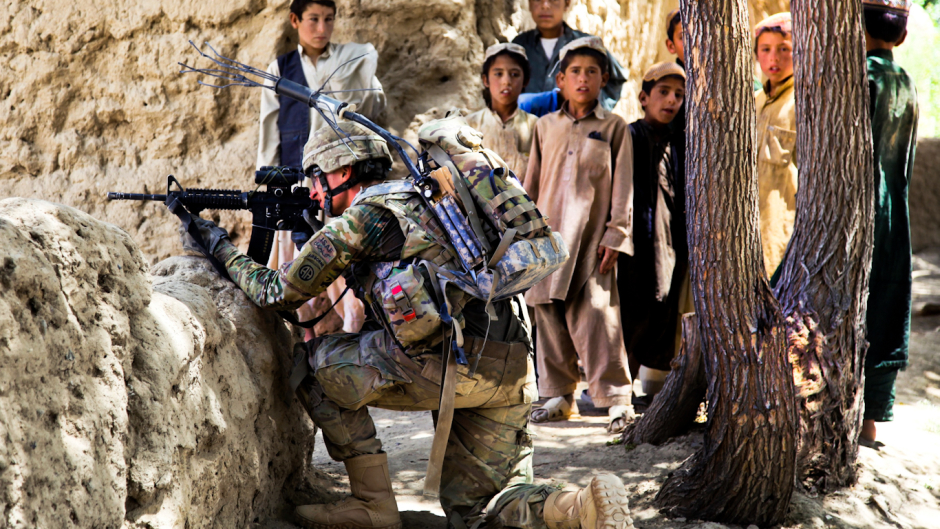
Many of these soldiers served in Afghanistan, where it is now acknowledged that the U.S. military aided their local allies in "bacha bazi" (boy play): the practice of kidnapping and keeping boys as sex slaves, large numbers of whom were enslaved on U.S. military compounds.
MintPress News explores this dark and deeply disturbing topic.
Unspeakable Crimes
In August 2023, Joshua Glardon - a first sergeant in the 4th Psychological Operations Group (Airborne) at Fort Bragg - was sentenced to 76 years in prison, followed by lifetime supervised released, for the distribution of child pornography across the internet. An unnamed woman - his accomplice - was sentenced to 30 years in prison after she "confessed to allowing him to rape" her child.
Just two weeks later, Major Vincent Ramos was arrested at North Carolina's Raleigh-Durham International Airport on one count of statutory rape of a child younger than 15, seven counts of statutory sex offense with a child younger than 15, and two counts of indecent liberties with a child. A logistics officer based at Fort Bragg, he was later charged with two more counts of indecent liberties with a child.
And one month after that, in October 2023, Chief Warrant Officer 2 Stuart P. Kelly of the 82nd Airborne Division was sentenced to 16 years in prison and a dishonorable discharge after pleading guilty to raping and abusing a child under the age of 12. Kelly had made the child touch him and perform oral sex on camera.
Meanwhile, Staff Sergeant Carlos Castro Callejas was handed a 55-year jail term, a dishonorable discharge, and a demotion to the rank of private, after facing 13 charges of rape of a child under 12 years old.
All four of these men were not only based at Fort Bragg, but have served lengthy tours in Afghanistan. But they are merely the tip of a shockingly large iceberg of dozens of individuals from Fort Bragg who have been arrested on crimes related to abusing and trafficking minors.
According to investigative journalist Seth Harp, who uncovered a massive narcotics smuggling and distribution network run by elite military operators at the base in his book, "The Fort Bragg Cartel: Drug Trafficking and Murder in the Special Forces," there has been a tenfold increase in such cases since 2021 and the U.S. withdrawal from Afghanistan. But even more chilling is the choice of victims for these sexual predators; "I have not heard in years about one case of these special forces guys raping a woman. In the same time, I've heard about 15 cases of them raping children," he told Abby Martin and Mike Prysner on the Empire Files podcast.
All this raises a plethora of serious questions about what is going on at the base, and what sort of dark and chilling secrets are being kept there.
"Laughing Off" Child Sexual Assault
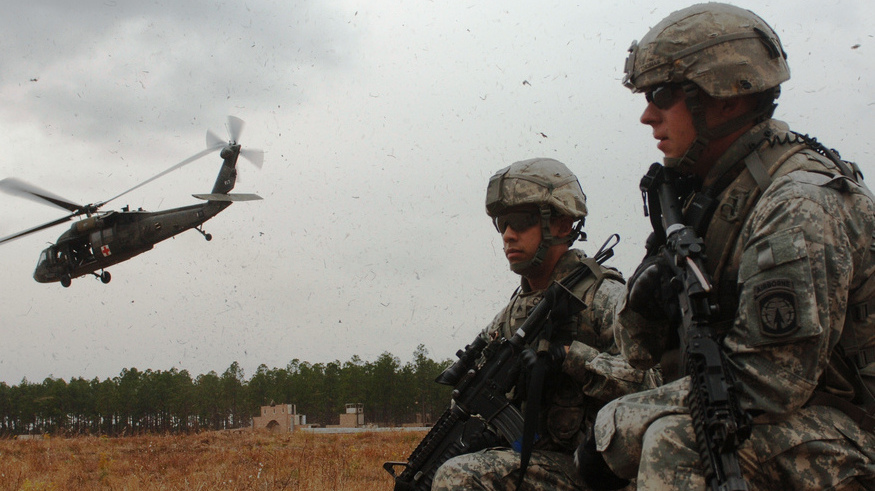
A sprawling, city-sized base on the outskirts of Fayetteville, North Carolina, Fort Bragg is home to some 50,000 military personnel, making it one of the largest military installations anywhere in the world. It is home to many of the U.S.' most elite organizations, including JSOC, Delta Force, the 3rd Special Forces Group, and the 82nd Airborne Division.
It also lies minutes away from I-95, the primary north-south interstate route on the American Eastern Seaboard. I-95 stretches from Miami in the south to the Canada/Maine border in the north, making it a crucial transport highway. Fayetteville is near its halfway mark. "It is a natural point, almost like a city that grew up upon the Silk Road in ancient times," Anthony Aguilar told MintPress News, "It is a matter of fact that throughout this part of North Carolina, along the 95 corridor, there are vast amounts of sex trafficking and human trafficking in these areas. It is because of the accessible route from border to border that these things are trafficked or smuggled." Anthony Aguilar is a former United States Army Lieutenant Colonel, Special Forces Green Beret, and a former Battalion Commander at Fort Bragg. In 2025, he became a whistleblower, revealing serious misconduct about U.S.- and Israeli-backed operations in Gaza.
He alleged that other commanders at Fort Bragg are well aware of the epidemic of child sex crimes, but "laugh about it or brush it off," stating:
"Military leadership at the highest ranks are aware of what is happening, and they choose to cover it up. Not ignore it; they don't ignore it. They acknowledge it. They choose to cover it up, because nobody wants to look like their unit is a bad and undisciplined unit. Nobody wants to look like troublemakers."
Aguilar shared with MintPress an example of this from was when he was a commander of the 18th Airborne Corps at Fort Bragg. A warrant officer was accused multiple times of sexually assaulting and abusing his stepdaughter - a minor - and producing pornography of these events. His chain of command decided not to do anything about it, but simply transfer him to Aguilar's unit.
"He came to ours, and he did it again. My position on it was: court-martial, grand jury hearing, criminal case, criminal prosecution before a military judge," he said. However, he was unable to carry this out as, "a three-star general circumvented my authority to charge him, and took that court-martial case up to his level, and then recanted those charges, and simply offered him a deal: 'get out the Army and we won't charge you criminally.'" The warrant officer took the deal, was discharged, and faced no criminal charges. Clearly disturbed by the event, Aguilar noted:
"That is why this continues to happen. That is why this is part of the culture. That is why these things continue to grow. It is because commanders at the highest level continue to hide it. They lie about it. And they do not hold those who do it accountable, in fear that it makes them look bad as a commander."
"Women Are For Children, Boys Are For Pleasure"
Many American soldiers and operators encountered a similarly widespread practice of child sexual assault in Afghanistan - and found a correspondingly permissive attitude from U.S. officials and military top brass.
The practice is called bacha bazi, a process by which men exploit and enslave adolescent boys, coercing them into cross-dressing, wearing makeup, dancing suggestively, and acting as sex slaves. The bachas (boys) are generally aged between nine and fifteen years old, and inordinately come from impoverished or vulnerable backgrounds. Many grew up in orphanages, are street children, or have been sold into slavery by relatives facing starvation. Others are simply abducted. Bacha Bazes (boy players) are typically older, wealthier men who consider the ownership of one or more young boys to be a status symbol, often giving them money and expensive clothing. In Afghanistan's strictly gender segregated society, a common saying is that "women are for having children, boys are for pleasure."
The United Nations has condemned bacha bazi. "It is time to openly confront this practice and to put an end to it," Radhika Coomaraswamy, then Under-Secretary-General of the United Nations, Special Representative for Children and Armed Conflict, told the U.N. General Assembly in 2009. "Laws should be passed, campaigns must be waged and perpetrators should be held accountable and punished," she added.
Although it had been known for centuries, occurrences in Afghanistan exploded in the 1980s with the ascendancy of the U.S.-backed Mujahideen government. It was briefly quashed under the Taliban (1996-2001), but returned again in the 21st century under the U.S.-protected Afghan government, made up of many of the same elements who were in power two decades previously.
How Washington Participated In Mass Child Sexual Slavery
The United States government actively tried to ignore the practice - an open secret in military and diplomatic circles. However, as it was withdrawing from the country, the State Department belatedly released a report admitting that, for nearly 20 years of occupation, there existed, "a government pattern of sexual slavery on government compounds." U.S.-trained and funded authorities, it noted, "continued to arrest, detain, penalize, and abuse many trafficking victims, including punishing sex trafficking victims for 'moral crimes' and sexually assaulting victims who attempted to report trafficking crimes to law enforcement officials." NGOs who helped the children, the report noted, advised them not to go to the police, as they were often the ones responsible for enslaving them in the first place.
Bacha bazi was primarily practiced by high-status individuals put in power by U.S. occupation forces - police, military, teachers, and government officials. Many of these people lived with their boys on U.S. compounds. This meant that, in practice, the U.S. taxpayer was subsidizing the widespread rape of children, one of the many reasons that American personnel were so unpopular with the local population, and why the U.S.-installed government fell within days of the 2021 military pullout. As Harp stated:
"The whole time that the U.S. was in Afghanistan, they were working with, protecting, funding, and arming guys who were systematically raping little boys, keeping them in chains on U.S. military bases - chained children on U.S. bases who were raped on a nightly basis ! What can we even make of this ? I struggle to wrap my mind around not only the evil of it, but how little anybody ever said about it."
One example of the levels of depravity of the U.S.' allies comes from Jordan Terrell, a former Fort Bragg paratrooper with the 82nd Airborne. At Forward Operating Base Shank in Logar Province in 2014, Terrell recalls seeing a group of young bachas running around the base. One, he noticed, "had something hanging out of his butt." At first confused by the site, he later realized that what he saw was the child's prolapsed anus from being repeatedly sodomized. "Dudes were exposed to that stuff so much," he said, "The Afghan National Army, Afghan police... The contractors who cooked our food. Those guys raped children."
Officially, Washington saw nothing. On 5,753 occasions between 2010 and 2016, the U.S. military was asked to review Afghan units to see if there were any gross human rights abuses noted. American law requires military aid to be cut off from any offending unit. On zero occasions did they report any abuses.
Yet bacha bazi was so widespread that virtually all U.S. personnel had heard about it. Aguilar stated that soldiers were relieved to make it to Friday every week, joking that: "It's man-boy love Friday, so we are not going to get attacked very much today, because they are all having sex with their young boy concubines."
The practice was as open as it was widespread. In 2016, an Afghan police commander invited a Washington Post journalist to his office for tea, where he gleefully showed off what he called his "beautiful boy slave." The Afghan police were just one of a myriad of organizations the U.S. government sponsored during its 20-year, $2 trillion occupation of the country.
"I heard of it a number of times from both U.S. military and State Department officers throughout Afghanistan and in D.C., usually off-hand, with an exasperated what are you going to do type affect to their comments," Matthew Hoh, a former U.S. Marine Corps Captain and State Department official told MintPress News, adding:
"It was clear that such crimes were not to be intruded upon. I doubt there was official paperwork to that effect, but it was clearly understood that we were to accept the rape of children as part of the bargain in our relationship with the Afghans we had put and kept in power."
In 2009, after growing increasingly disillusioned with the U.S. mission in Afghanistan, Hoh resigned from his position at the State Department in Zabul Province.
Other Americans who tried to blow the whistle on the disturbing practice (and American complicity in it) ended up dead. One was Lance Corporal Gregory Buckley Jr., who was kept up at night by the shrieks of children being raped by Afghan police in rooms beside him at Forward Operating Base Delhi in Helmand Province.
Via a phone call, Buckley told his father that, from his bunk, "we can hear them screaming, but we're not allowed to do anything about it." His officers told him to "look the other way" because "it's their culture." It would be the last time his father heard Buckley's voice, as he was murdered on the base days later by the very locals he was trying to train and protect.
Others who have taken matters into their own hands have had their careers destroyed by the military. Green Berets Captain Dan Quinn and Sergeant First Class Charles Martland found out that a local police commander in Kunduz Province had kidnapped a boy and was keeping him chained to the bed as a sex slave. After learning that she had turned to the Americans for help, the commander also beat up the boy's mother. Quinn and Martland confronted him, but he laughed it off, telling them "it was only a boy," after all. Incensed, the pair threw him to the floor, punched and kicked him.
Quinn was relieved of his command and sent back to the United States, where he left the military. Martland was originally going to be expelled from the Army, but, after a public backlash, he was quietly reinstated.
Drug Abuse, Child Abuse
The prevalence of Bacha bazi closely mirrors that of U.S. involvement in Afghanistan. The practice was far less common in the 1970s and 1980s, under the U.S.S.R.-backed, secular, Communist government. In an effort to overthrow the regime and bleed the Soviets dry, Washington spent $2 billion funding, training, and arming local Mujahideen militias (including Osama bin Laden). The Mujahideen seized control of Afghanistan in 1992, not long after the demise of the Soviet Union.
Presented as brave and gallant freedom fighters, the Mujahideen were lauded in the West. But, as in Venezuela, Iran, Cuba, and much of the rest of the world, the U.S. so often allies itself with deeply unsavory movements in order to achieve its ends.
Not only were the Mujahideen religious reactionaries, but they displayed a conspicuous penchant for kidnapping and molesting children, and the practice exploded once they attained power.
Although bacha bazi was widely adopted by the Mujahideen, it was never accepted by much of the public, who saw it as barbaric and monstrous. Therefore, despite their depiction as the Afghan equivalent of the Founding Fathers in the Western press, many in Afghanistan saw their new rulers as little more than a gang of U.S.-imposed pedophile warlords.
The Mujahideen would be supplanted in only four years by the Taliban, who rose to power in no small part due to the nationwide revulsion and outrage over bacha bazi. Indeed, Mullah Omar, the leader of the Taliban until his death in 2013, shot to fame due to his prominent opposition to the practice. In 1994, he led a group of armed men on a series of raids to rescue kidnapped and enslaved boys and girls.
The stunt made him a national hero, and greatly increased the Taliban's strength and prestige. From a force of just 30 fighters, his militia grew to 12,000 by the year's end, as thousands joined his cause, paving the way for their march on Kabul in 1996. Upon seizing power, the Taliban outlawed bacha bazi, making it punishable by death. Thus, while the Taliban are hardly known for their human rights policies, they were at least able to gain some public support through their actions to stamp out child rape.
This period, however, proved to be short-lived, as just five years later, in 2001, the United States would invade Afghanistan in order to topple the Taliban, putting in place many of the deposed Mujahideen figures from the previous regime. The return of the U.S.-backed government saw the reemergence of bacha bazi, with many top government, police and military officials flaunting their child concubines. This included even family members of President Hamid Karzai.
Likewise, drug production in Afghanistan directly correlates with U.S. involvement in the country. In the 1970s, heroin production was minimal, and largely for domestic consumption. But as the Western-backed regime change war dragged on, Washington looked for other ways to support the insurgency. They found their answer in opium, and soon, refineries processing locally-grown poppy seeds sprang up on the Afghanistan-Pakistan border. Trucks loaded with U.S. taxpayer-funded weapons entered Afghanistan from their ally, Pakistan, and returned filled to the brim with opium.
As Professor Alfred McCoy, author of "The Politics of Heroin: CIA Complicity in the Global Drug Trade," told MintPress,
"What the resistance fighters did was they turned to opium. Afghanistan had about 100 tons of opium produced every year in the 1970s. By 1989-1990, at the end of that 10-year CIA operation, that minimal amount of opium — 100 tons per annum — had turned into a major amount, 2,000 tons a year, and was already about 75% of the world's illicit opium trade."
The operation caused a worldwide boom in opium consumption, with heroin addiction more than doubling in the United States alone. The drug became a cultural touchstone, as illustrated in popular movies such as Trainspotting and Requiem for a Dream. By 1999, annual production had risen to 4,600 tons.
Once again, the deeply religious Taliban stepped in to suppress the practice. A 2000 ban on opium cultivation led to a precipitous drop in production, with just 185 tons harvested the following year. Although the prohibition hit local farmers hard, it did begin to combat Afghanistan's terrible opioid crisis, again gaining the Taliban some legitimacy with the local population.
Like with bacha bazi, though, the U.S. occupation reversed this trend. Under American supervision, opium production skyrocketed, reaching a high of 9,000 tons in 2017. Afghanistan became the world's first true narco-state, with McCoy noting that by 2008, opium was responsible for well over half of the country's gross domestic product. By comparison, even in Colombia's darkest days, cocaine only accounted for around 3% of its GDP. More land in Afghanistan was under cultivation for opium than was used for coca across all of Latin America.
Many of those making fortunes from the business were the U.S.' closest allies. This again included the Karzai family; the president's brother, Ahmed Wali, was among the biggest and most notorious drugs kingpins in the region.
Shortly after coming back to power, the Taliban again banned the production of opium, sending teams of men across the country to eradicate poppy fields. In what even Western corporate media called "the most successful counter-narcotics effort in human history," production fell by over 80% almost overnight, and has only continued to decrease since then. The speed and success of the operation raised serious questions about the United States' true relationship with the global drug trade.
An Incredibly Lucrative Business
Soldiers at Fort Bragg were closer than anyone else to the unseemly underbelly of the Afghanistan occupation. Units such as JSOC, Delta Force, the 3rd Special Forces Group and the 82nd Airborne Division worked closely with Afghan security forces, and had a front row seat to their activities.
"The Fort Bragg Cartel" uncovers a giant gun and drug trafficking network centered around the base, revealing how soldiers used military planes to sneak arms and narcotics into America, distributing them across the continent. Criminals in the U.S. military, Aguilar notes, have learned a great deal about trafficking and smuggling contraband, stating that:
"When you deploy as a military and you have all of your 90 cubic inch containers that get locked up will all your stuff in it. Those don't get inspected when they fly back over on a military aircraft and land at Fort Bragg...[They learn] How easy it would be to transport and traffic weapons, drugs, and yes, even humans, back and forth, from country to country. It is all very doable. And it is all very lucrative."
Military bases are the perfect smuggling operation centers. There is little oversight or inspection, and soldiers can move around the country from base to base, and are less likely to be stopped and searched by the police. A disproportionate amount of those soldiers convicted came from backgrounds in logistics, where they were trusted with transporting large shipments of goods to and from the U.S., all with minimal input or scrutiny from higher ups.
Selling guns and drugs is one thing. But trafficking and raping children is quite another. How could anyone consider engaging in such sickening behavior ? And why has the practice exploded around Fort Bragg ? For some, the answer was psychological: American troops, taught to dehumanize their enemies and exposed to child abuse on a daily basis come to see it as normal behavior. As Terrell suggested, "In some sick way...when they came back, maybe they just internalized it, and turned it into a sexual proclivity."
There is, however, a simpler explanation: money. Some Fort Bragg soldiers stationed in Afghanistan and exposed to bacha bazi came back to the United States and see an opportunity to make huge amounts of money trafficking humans, and creating and selling child pornography.
"It is less of a matter of soldiers coming home from Iraq or Afghanistan and having this learned behavior of sexual deviance, child pornography, or abusing children, it is a learned behavior that child pornography and sex trafficking minors is very very profitable," Aguilar said; "They see that, and they think, 'This is really lucrative.'"
The Taliban have once again made bacha bazi a capital offense. It is unclear if the new law has suppressed the practice, or merely driven it underground. After all, Afghanistan's sanction-hit economy means that the economic incentives for destitute families to sell their sons to rich officials are as pressing as ever. Moreover, there are reports that some Taliban commanders allegedly hold bachas themselves.
What is clear, however, is that the tactics and practices used by the United States military abroad are increasingly being used against the domestic population. From surveillance and militarized policing to increasing intolerance of dissent, civil liberties are being eroded by forces using techniques honed on subjects in Western Asia. In November, an Afghan commando and former member of a CIA-trained death squad, carried out a mass shooting in Washington, D.C.
While it is clear that the U.S. invasion destroyed Afghanistan, it also took its tole on America itself. The occupation directly contributed to the opioid crisis at home. And it appears that it is also connected to the epidemic of child sexual abuse documented here, as soldiers abuse children for profit. What has been happening at Fort Bragg, then, is part of the wider psychological degradation of American society, one that is controlled a by a government that has sacrificed everything sacred to protect and advance its imperial ambitions.