Martin Jay
Trump may pretend that Israel is a client state of Washington which has to toe the line, but in reality, it is clear that Israel is calling the shots.
Trump has the option of going to war with Iran and receiving much-needed campaign funds from Israel for the midterms - or opting to defy Bibi and facing certain defeat by losing both houses and facing certain impeachment. Can the Iranians save him?
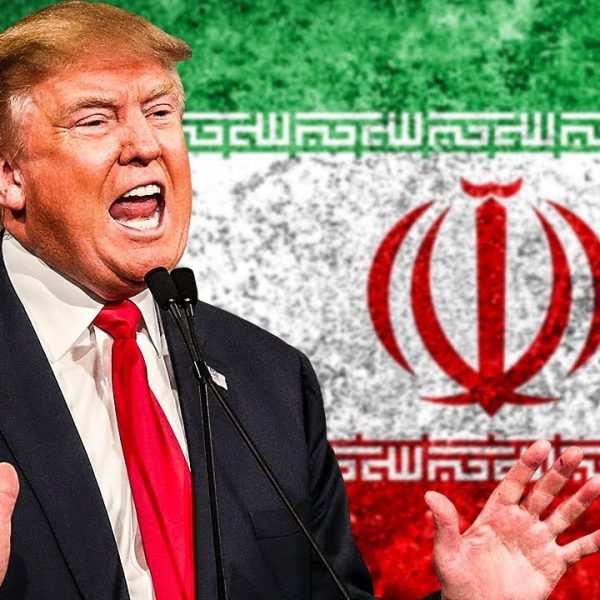
Is Trump serious about going to war with Iran ? To understand this, it's important to examine his relationship with Netanyahu and to see who has the advantage when it comes to dragging the U.S. into a war, and whether Israel can actually be a greater threat to the U.S. than Tehran can ever be.
The trap that Trump is falling into is one where he has little or no wiggle room at all to control the Iran crisis, whereby Israel can threaten him with isolation while it goes ahead with its strike.
There are two dynamics at play here which are struggling to find a compromise. Trump wants a deal with Iran which takes away their nuclear capability, while Israel wants a war which overthrows the Iranian regime and installs a Mossad/CIA puppet. The problem, though, is that Israel is not an honest broker and keeps shifting the goalposts. The latest demand now is that removing Iran's ballistic missiles should be at the heart of any deal that Trump pulls off.
Trump is ensnared and is aware of how Bibi is manipulating him. He may, on occasion, swear at journalists and pretend he is his own boss and his own president and that Israel is a client state of Washington which has to toe the line, but in reality, it is clear that Israel is calling the shots.
In recent days, we have heard that the one aircraft carrier the U.S. had in the region, the USS Abraham Lincoln, is to be joined by a second called the USS Gerald Ford. U.S. media report that the Lincoln is in the "Arabian Sea," which is a comical way of saying that it's keeping its distance from Iran's shores and Houthi missiles off the coast of Yemen. But other reports are suggesting that the reason why Trump claims he has sent a second carrier - to beef up the "flotilla" in case of a war breaking out with Iran - is untrue. Some insiders are briefing journalists that the Lincoln has technical problems which will render it useless in a combat situation and so needs to be replaced with the more advanced Ford.
However, even this might be a false narrative offered by Pentagon insiders who are not supporters of Trump. A second explanation about the carriers is that it buys Trump time. He has even told reporters that it will take about a month for the Ford to get there, which he believes should be ample time for a deal to be struck with Iran, or at least will give him four more weeks to work out a way of dealing with the threat - that's the threat from Israel, not Iran.
Israel threatened Trump before when he went ahead with his bunker buster bombs in June of last year by saying simply, "If you don't do it, we'll nuke Iran." It worked. This time around, the threat is, "If you don't join us, then we'll strike Iran alone and you will have to deal with the consequences of being the first U.S. president to have to explain to the Jewish lobby why Iran is wiping Israel off the face of the map." This second threat is multi-layered and also might work with Trump, given that the midterm elections, which are approaching, will cost twice what the elections cost which got him into office. It will be Jewish money which bankrolls him this time around, with the intention of saving him from losing both houses and facing inevitable impeachment.
And so, in many ways, Trump is closer to and more dependent on the regime in Tehran to help him out. A deal which limits the enrichment of uranium and can guarantee no nuclear bomb can be made might be something he can present to the American people as a great victory. The irony is that the deal might be more or less a carbon copy of Obama's, which he, Trump, rejected while in his first term in office, a rejection which has created the present crisis.
The trouble with any deal now about enrichment is that it is unlikely to satisfy the Israelis, who have become more aware in recent weeks about the capability of Iran's latest generation of ballistic missiles both in terms of defence and attack. Moreover, the U.S. attack on Iran last year for 12 days has now raised the stakes to a fever pitch, making the Iranians clearer and more focused about any kind of attack happening against them: all-out war.
According to some credible reports, Trump was recently asking Pentagon chiefs if the U.S. could carry out a single in-and-out strike operation which could be used to warn Iran while satisfying Israel at the same time about the U.S. threat, and he was told no such options are feasible. This is due to Iran being much more prepared now for such attacks, both militarily and intelligence-wise, while the Mossad operation of creating civil strife on the ground failed spectacularly. The U.S. is in a very tight corner right now, as its forces and its allies in the region are in the crosshairs of Iran the moment the first bomb is dropped, and so Trump's options to go to war are very limited. It would be suicidal for Trump to strike Iran, as the losses to U.S. forces and the disruption to oil distribution via the Straits of Hormuz would be too great, not to mention the destruction of infrastructure in Israel itself.
But there is also another factor which is putting all the pressure on Trump to get a deal with Iran. Since last June's attack and more recently Trump's betrayal of cordial relations with Putin conjured up at Alaska, along with the Venezuela coup, both Russia and China have upped their support for Iran. This is a critical factor now preventing Trump from hitting Iran with anything. China recently gave Iran its latest state-of-the-art new radar system which can identify U.S. stealth bombers at a range of 700km. Game changer. If you consider Iran, Israel, and the U.S. as three poker players at the table, it is now clear that Iran now has the best hand with the most options. It can maximize its role now and exploit Trump's vulnerability by going for a deal which involves sanctions being relieved, or it could hold out and play a long game way beyond Trump's one-month breathing space and really turn up the heat on him leading up to the midterms in November. Iran always plays for time and is good at this strategy. And given that even the kindest analysis of America's strike capability in Iran is two weeks before depletion of all missile stocks is reached, any hawks close to Trump who are pushing for a strike must have the destruction of the U.S. in their strategy as well, as Iran cannot be pounded into a state of submission in such a short space of time. Surely that can't be the aim of Bibi. Surely not!
Martin Jay is an award-winning British journalist based in Morocco where he is a correspondent for The Daily Mail (UK) who previously reported on the Arab Spring there for CNN, as well as Euronews. From 2012 to 2019 he was based in Beirut where he worked for a number of international media titles including BBC, Al Jazeera, RT, DW, as well as reporting on a freelance basis for the UK's Daily Mail, The Sunday Times plus TRT World. His career has led him to work in almost 50 countries in Africa, The Middle East and Europe for a host of major media titles. He has lived and worked in Morocco, Belgium, Kenya and Lebanon.