February 23, 2026
On Thursday's episode of The Peter Schiff Show, Peter covers a range of market signals that, in his view, point toward rising prices and constitute even more reason to use sound money. He highlights strength in gold, a sharp bounce in oil, and the economic forces he believes will push the dollar lower: runaway federal debt, swelling trade deficits, and tariff policies that ultimately tax American consumers.
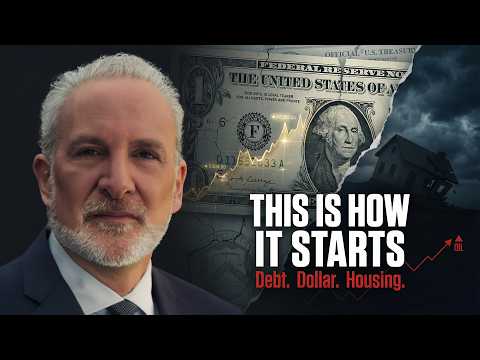
He opens by pointing out that precious metals are attracting buyers again and that oil is flashing real warning signs for inflation and broader price pressure:
We are back above $5,000. Gold last time I did a podcast on Tuesday we were back below; in fact we were below $4,900, we got to $4,880, but what I've been saying is that any dip below $5,000 you just got to buy it because $5,000 is really the support.... Oil hit a new six month high today, it's trading above 66 and a half dollars a barrel; we're now up about 21% from where we were at the lows in mid-December. So less than two months, 21%.
He links the likely further rise in oil to a weaker dollar and says U.S. fiscal policy - namely explosive debt growth - is a primary cause:
I think the dollar is about to get a lot weaker and there's two examples of that that I want to discuss, the first one being the US national debt which now passed 38.7 trillion dollars; we're up 2.6 trillion since Trump took the oath of office. He's barely been president for more than a year and he started in January 2025 and this is February 2026, right, so about a year in office and he's already run up 2.6 trillion in debt.
He then takes aim at claims that trade deficits are shrinking, arguing the data tell a different story and that political rhetoric is misleading:
The overall trade deficit forecast was for fifty five point eight billion for December; it came out at seventy point three billion, way above estimates, the prior month was revised down a little bit to 53 billion, so if you compare the increase we went from 53 billion in November to over 70 billion in December that is a huge increase and it shows that all this so-called progress at reducing the trade deficit is just another one of the Trump lies, another figment of his imagination.
He makes a counterintuitive point about currency moves and trade balances: a weaker dollar can raise import bills in the short run and widen the trade deficit, not narrow it - especially for a country that already runs large deficits:
A lot of people think, well, you know, if we get a weak dollar that's going to reduce our trade deficit because we're gonna sell more stuff, right, because our stuff's gonna get cheaper when the dollar is down so we'll sell more and because our stuff is cheaper we won't import as much.... But in the short run, it's actually the opposite. When the dollar goes down all the stuff that we need to import but can't produce ourselves becomes more expensive and so our imports get more expensive and so our trade deficit goes up because the things that we buy cost more.
Finally, he brings it back to consumers' daily lives, pointing to housing activity as an early indicator that high prices are already squeezing demand and that prices will have to adjust downward:
It was a huge, huge drop in pending home sales and the index was at a record low 71 and a half. Why is it that homes aren't selling ? Because they're too expensive, that's why the prices are too high, people can't afford them now. What does that mean ? That means that prices are gonna come down; they have to because houses are just worth what people can afford to pay, because if you have to sell your house you have to take the highest bid you can find.
Peter sees the market rotating to previously unfavored sectors. Check out his latest interview for his whole analysis.
This article was originally published on SchiffGold.com.