Lorenzo Maria Pacini
There is one thing that the United States of America has always been good at: waging war.
Colonization, version 2.0
There is one thing that the United States of America has always been good at: waging war. In its brief period of interaction with the rest of the world - about a century of conflicts outside its domestic borders - the U.S. has achieved a density of conflicts unmatched by any other country in the world (in proportion to the history of its existence as a state).
However, when the U.S. entered the world stage with its impressive military power, the West was already in a phase of gradually releasing the tension practiced with colonialism, and then experiencing gradual decolonization in the 20th century. Therefore, the U.S. had to adapt immediately, and it did so with great ingenuity, not giving up its share of colonization, but simply changing the domain within which it would take place.
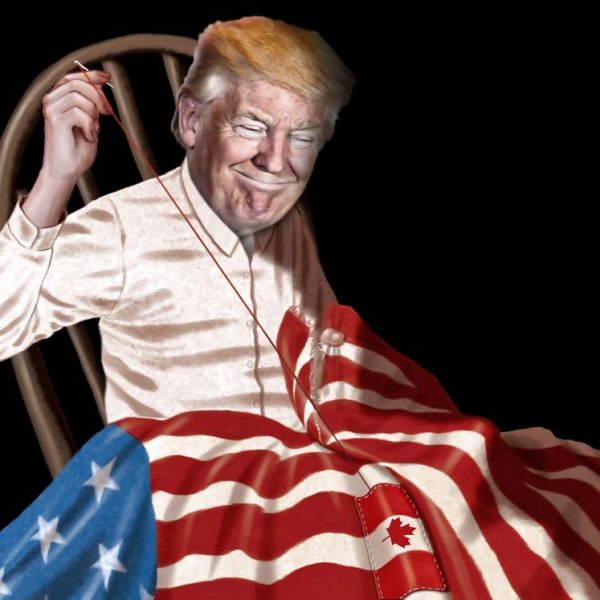
After World War II, national liberation movements spread throughout the world; numerous independent states quickly emerged, the European colonial system disintegrated, and the post-colonial era began. As the new global hegemonic power, the United States understood that, faced with nations now aware of their own identity, the use of "hard power" alone - political domination, economic control, military deterrence - would not be enough to guarantee lasting and widespread control. The use of "soft power," based on culture and values, appeared to be more advantageous and less costly. Achieving 'voluntary' adherence and subordination on an emotional basis would, in this perspective, represent the American version of colonisation of the mind.
Through the deconstruction of the collective consciousness of the targeted countries and the introduction of U.S. values, the United States aims to achieve a form of 'mental colonisation' in invisible areas, so as to lay the deep foundations of its hegemonic system.
Unlike normal intellectual exchange between peoples, this process would take the form of mental domination based on unequal relationships, which manifests itself mainly in four ways:
a) Forced transformation
In the presence of a strong power imbalance, the hegemonic power tends to impose its own values and models, selectively eliminating local cultures and ideologies. This coercive restructuring can generate identity crises, loss of cultural expression, and ideological disorientation.
b) Intentional manipulation
To achieve a kind of "ideological domestication," the dominant power can promote obedience, support dependent elites, and weaken the autonomy of thought of the societies involved.
c) Indirect infiltration
Cultural and ideological export is often presented in the form of "advanced values" or "civil progress," penetrating social contexts through cultural products, educational systems, academic exchanges, and other less visible channels.
d) Gradual erosion
Cognitive transformations occur progressively and cumulatively. Similarly, colonizing the mind requires a long time, continuous action, and even intergenerational transmission to achieve a profound reshaping of perceptions.
The aspiration to conquer minds is not new in imperial history. Colonial powers of the past attempted to spread their languages, educational systems, and historical interpretations in conquered territories to build an ideological foundation for their domination. However, such attempts were limited by the historical conditions of the time.
With the intensification of the globalization of material and cultural exchanges, the United States - with its unprecedented resources and capabilities - has placed itself at the forefront in this area. After the two world wars, the development of telecommunications, the expansion of professional media, scientific advances, and the globalization of capital created conditions conducive to the global dissemination of information, accelerating the projection of American ideology.
As one of the main architects of the postwar international order, the United States promoted its own political and economic models and values such as "democracy" and "freedom," while at the same time challenging alternative ideologies and downplaying local cultures, thereby fostering - according to this interpretation - global intellectual dependence. Through a combination of expansive construction and selective deconstruction, the United States pursued mental colonization to a greater extent than previous colonial empires.
Historical phases of the beginning of the mental operation
The evolution of this process can be divided into several historical phases.
The first is what we might call germination and continental expansion, technically between the end of the 18th century and the end of the 19th century. After the War of Independence, the United States expanded across the American continent, inspired by the principle of "Manifest Destiny." Events such as the Westward Expansion and the war against Mexico greatly expanded the national territory. With the proclamation of the 'Monroe Doctrine', President James Monroe brought Latin America into the U.S. sphere of influence, supporting the principle of 'America for Americans'.
The second phase occurred in the first half of the 20th century and was one of foundation and global rise. During the two world wars, the power of the United States grew significantly. Overcoming isolationism, the country actively intervened in international affairs. President Woodrow Wilson formulated the "Fourteen Points" and promoted the creation of the League of Nations. Franklin D. Roosevelt and Winston Churchill signed the Atlantic Charter, which laid the foundations for a new international order. Roosevelt's "Four Freedoms" became a reference point for the international human rights system.
The second half of the 20th century saw a fierce confrontation between the U.S. and USSR blocs. In the context of rivalry with the Soviet Union, ideological competition intensified. The Marshall Plan linked economic aid to the adoption of a specific socio-political model, contributing to the formation of a capitalist bloc led by the United States as opposed to the socialist camp. Propaganda, cultural diplomacy, and academic programs were used to spread anti-communist messages and support elites favorable to Washington.
After the dissolution of the Soviet Union, the United States emerged as the sole superpower. The "Washington Consensus" and neoliberal theories spread widely, while the international socialist movement weakened. We consider this to be the fourth phase, a period of promotion of U.S. hegemony, from the 1990s to the early 2000s. After the September 11 attacks, the fight against terrorism became a priority and the world changed radically. From the emphasis on "democracy expansion" during Bill Clinton's presidency to George W. Bush's "freedom agenda," the promotion of American-style democracy and freedom intensified.
The latest phase is one of hegemonic anger, which we are still experiencing today. Faced with internal and external challenges - political polarization, social fragmentation, the rise of populism - the United States has renewed its strategies. From the "smart power diplomacy" of the Barack Obama administration to the "Summit for Democracy" promoted by Joe Biden, to the slogans "America First" and "Make America Great Again" associated with Donald Trump, we have witnessed a strengthening of the tools of ideological influence, which have become incredibly more powerful thanks to the strong development of social media. Control of technological platforms and information flows, even under the justification of combating disinformation or foreign interference, has become a central element in the competition to shape global perception.
From this historical overview, we will now look at the many and varied faces of cognitive propaganda.