March 16, 2026
In his latest podcast, Peter continues his analysis of the US war with Iran and its fallout in the oil market. He argues the short-term pain from military escalation is pointless compared with the constructive pain of fiscal restraint, and he explains why misleading CPI numbers and an accommodating Federal Reserve make sound money increasingly important.
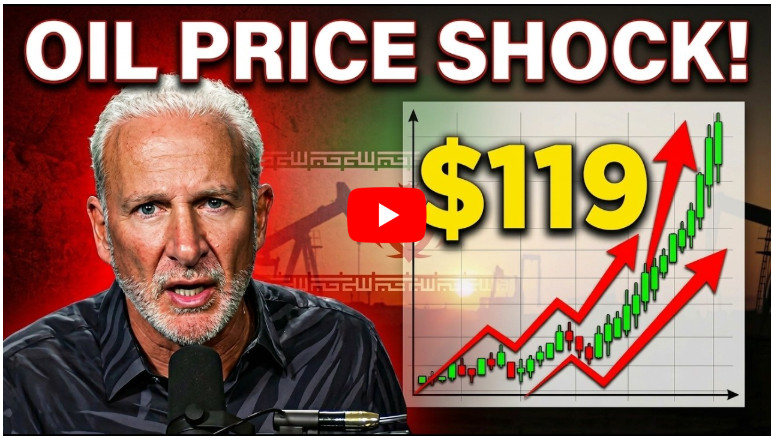
He opens by describing the dramatic one-day surge in oil and what it signals about the market's reaction to conflict:
So on Sunday night oil prices shot up; maybe it was one of the biggest one-day increases in the history of oil. Oil got up to above a hundred and nineteen dollars a barrel-huge, right ? It started the year at about fifty-five, so it had more than doubled on the year, most of the gains obviously over the prior week since we declared it an unconstitutional war against Iran.
He presses on the point that this kind of price shock is needless suffering and contrasts it with the types of pain that could actually improve the country's finances:
What bothers me about that is that this is really unnecessary short-term pain, but if the president really believes that it's worth taking some short-term pain to get long-term gain, why not apply that to where it really matters like cutting the deficit, cutting government spending, entitlements ? How about some short-term pain there; how about the president telling people you're going to get a smaller check from the government-that's the short-term pain we need.
Peter then turns to the fiscal fallout of conflict, warning that reconstruction promises and defense contracts will funnel taxpayer money into boondoggles and corporate profits:
It's going to cost us more to build it back up than it's costing us to destroy it; although once we finish blowing up all of our missiles we have to order more, right ? That's where the defense contractors are all ringing the cash register; they're as happy as can be because they're making a fortune off of this war-every time a bomb blows up that's another order to replace it with a bigger, more expensive one.
He criticizes the administration's approach to tariffs and messaging, using the president's backtracking as an example of confusing rhetoric that undercuts credibility:
Yesterday Trump came out and defined what it is he meant by unconditional surrender, which of course is not what he meant because unconditional surrender can only have one meaning-you surrender unconditionally. I mean that's pretty much it, but apparently his understanding of the words unconditional and surrender are the same as his understanding of the word tariff because he has no idea what tariffs are.
Peter lays out the geopolitical cost of a dollar that doubles as an instrument of global power: it lets the U.S. borrow and spend without immediate pain, but it breeds enemies and obligations that can come back to haunt the domestic economy:
The world realizes that they are the source of our power; without the US dollar as the reserve currency we would not be able to wield all of this power, we could not afford all of these missiles, all of these bombs, all this stuff that we're dropping in Iran, and the world is paying for it-they're loading us all the money-without the massive deficits that we're able to finance based on the dollar's value none of this would be possible, and I think that is the message that we send, and the world is like, wait a minute, we've created a Frankenstein monster here, right ? We got to do something about this.
Finally, he focuses on the numbers that policymakers point to as proof inflation is under control, arguing the CPI understates reality and that the Fed's implied rate cuts would make things worse-another reason to consider sound money as protection:
What does that show ? No progress; we're not getting any closer to the Fed's 2% target and this is when oil prices were a lot lower than they are right now, so obviously these numbers, the CPI numbers, are just going up from here; they're not going down. And of course as I've always said about the government numbers, they're not accurate anyway.
This article was originally published on SchiffGold.com.