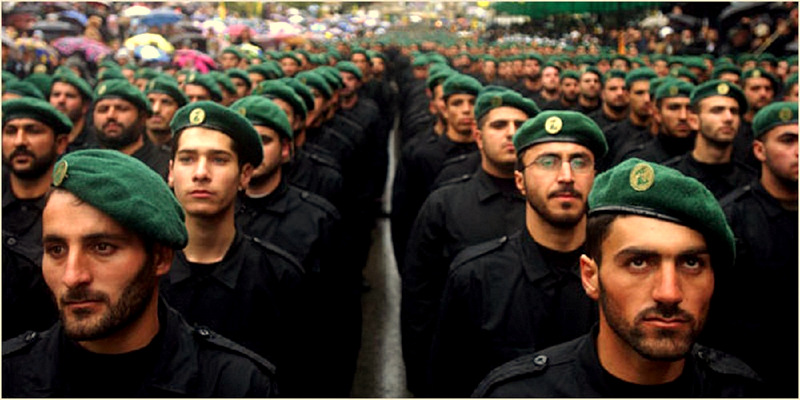
Surprised by the intensity of Hezbollah's retaliatory attacks against it, Israel appears to be pivoting to sow internal chaos within Lebanon's borders in a bid to trigger a catastrophic civil war. An attempted coup against the Lebanese military's leadership may be the catalyst.
At the beginning of May, the extent of the rocket and drone fire from Hezbollah at Israeli military targets struck Tel Aviv by surprise. However, the corporate media quickly constructed a narrative aimed at undermining the capabilities of the Lebanese resistance group and blaming it for the renewed hostilities, with the BBC running a headline entitled " Battered and isolated, Hezbollah drags Lebanon into another war".
Despite this, the Israeli media quickly began to pull apart the concept that Hezbollah had been defeated, as the intensity of the group's attacks appeared more intense than they were in past confrontations. " They're selling illusions to the public," an Israeli senior former security told Yediot Aharanot, regarding the narrative of Hezbollah's defeat.
One of Israel's leading think-tanks, 'The Meir Amit Intelligence and Terrorism Information Center' (ITIC), has also admitted that "since the ceasefire at the end of November 2024, Hezbollah has taken steps to enable it to recover from the blows of the previous war".
"Benjamin Netanyahu, Israel Katz, and Eyal Zamir promised that the Hezbollah threat would be completely removed, that it would be disarmed. As you may recall, Israel failed to disarm Hamas, which is weaker, for two years", wrote Haaretz's Ravid Drucker, criticising the government's failure to sufficiently weaken Hezbollah. Instead, he argued that the best off-ramp is to take the Lebanese government's offer to normalise ties as the smart strategic option.
Manufacturing A Lebanese Civil WarFollowing the Lebanon-Israeli ceasefire of November 27, 2024, a major shift occurred in Lebanese politics. Joseph Aoun was selected to be its President, while Nawaf Salam took over as the nation's Prime Minister; both the favoured picks of the United States.
Over the course of the following 15 months, Israel would go on to commit 15,400 violations of the ceasefire agreement, killing hundreds of Lebanese and even expanding their military occupation of the nation's territory. During this time, PM Salam focused his efforts on pursuing a US plan to disarm Hezbollah, which was even passed by the Lebanese Cabinet in August of 2025.
In response, Hezbollah's Secretary General, Naim Qassem, rejected the notion of handing over their weapons, arguing that doing so would rob Lebanon of its ability to resist Israeli expansionism and its threats to achieve "Greater Israel". Instead, the Hezbollah leader called upon the government to carry out its duty to expel the foreign occupiers. Upon announcement of its entry into war earlier this month, Hezbollah expressed that it had given the government 15 months to address the daily Israeli attacks on their lands, but that their patience had worn thin.
Provoking further criticism from the Lebanese public, Salam told CNN that "peace will lead to normalisation" with Israel and that he hoped it would come " tomorrow, not the day after". Despite his attempts to address the backlash, by claiming his words were taken out of context, a Lebanese leader expressing his desire to see normalisation at a time of conflict was what drew scrutiny, not his abandonment of the need for a "Two-State solution" in Palestine.
During the ceasefire period, Trump administration officials consistently gloated over their power wielded regionally, triggering waves of backlash. During an interview, released in September of last year, US envoy Tom Barrack had smirked at the idea of the Lebanese Army being permitted to defend its territory from Israel and instead said Washington was arming them to " fight their own people."
The CatalystWhen Hezbollah fired on Israel earlier this month, Lebanon's Prime Minister immediately went on the offensive against the Party, labelling its attacks on Israeli targets as " illegal". Under the PM's authority and as Lebanon's Capital was under fire, the government approved a ban on all Hezbollah military activity.
Standing in the government's way of ordering a violent crackdown, has been the current Commander of the Lebanese Armed Forces, Rudolphe Haykal, who has resisted pressure to crack down on the forces resisting Israeli aggression. According to reports, Commander Haykal does not seek to crack down on Hezbollah's weapons until the war is concluded.
The Lebanese Army even announced that they had participated in the foiling of an Israeli attempt to infiltrate the Bekaa Valley through a helicopter landing, leading to the summoning of the military's leader. Pressure then began to mount from the US, France and Saudi Arabia to sack Commander Haykal. This has been resisted from within the leadership of the army, who have warned that the consequences could destabilise the country.
Prime Minister Salam and President Aoun have also reached out to initiate unprecedented direct talks with Israel, while France has proposed a plan that will involve Beirut's recognition of Israel. US Senator Lindsey Graham, who exercises influence over the American President, has also since argued for the removal of the Lebanese Army's top commander.
If such a coup against the leadership of the Lebanese Army does occur, then this could lead to another civil war inside the country and a possible fragmenting of Lebanon's Armed Forces. Since the initiation of the latest war between Israel and Lebanon, over 800,000 civilians have already been displaced, as Israel has recently launched a ground invasion of the country.
Hezbollah's ground forces are said to consist of 100,000 fighters, while the Lebanese Army is only around 80,000 strong. However, Lebanon's Armed Forces aren't allowed to possess strategic weapons and function as more of a domestic police force, due to US imposed restrictions.
It is unlikely that the Lebanese Army would remain intact if they were ordered to attack Hezbollah, as a large component of its fighters are speculated to sympathise with the Party that is resisting Israeli aggression. Although there is no census allowed, it is speculated that the Lebanese Army itself could be composed of between 25% to 50% Shia Muslims, the same sect as Hezbollah.
Another factor at play are the loyalties of tribal forces, especially in the Bekaa Valley area, who have historically fought alongside both Hezbollah and the Lebanese Army in protecting the nation's borders.
Despite all of the factors at play, Tel Aviv is eager to use the current pro-US Lebanese government to fight Hezbollah on their behalf, seemingly without considering the possible outcomes.

Republish our stories ! MintPress News is licensed under a Creative Commons Attribution-NonCommercial-ShareAlike 3.0 International License.