
March 24, 2026
Our war against Iran is now three weeks old and the Trump Administration has apparently reached the point of total desperation.
The best proof of this came late Friday when Treasury Secretary Scott Bessent announced that America would assist Iran in obtaining a massive inflow of additional funding for its war machine, thereby supporting Iranian efforts to kill American servicemen. Although reported in the New York Times, few have apparently noticed this bizarre development, or at least it has hardly received the attention it warranted.
The backstory was ironic. Soon after winning the White House in 2016, Trump tore up the existing American nuclear agreement with Iran, an agreement that imposed strict international monitoring to guarantee that the enrichment activities were solely for civilian purposes and could not be used to produce a nuclear weapon. Reneging upon the solemn treaty that our country had signed, Trump instead began imposing severe economic sanctions, intending to strangle Iran's economy and prevent anyone from buying its oil.
Given America's control over the existing dollar-based world financial system, this effort was largely successful and over the years these sanctions were steadily tightened, greatly reducing the oil sales that were the main source of Iran's foreign exchange income. Eventually, nearly all of Iran's oil was going to China while the only Chinese companies willing to buy it were refiners so small that they were not much impacted by American financial retaliation.
So during 2025 Trump boasted that he was strangling Iran, and to a considerable extent this was true. With Iran unable to sell much of its oil, the surplus was parked at sea in leased oil tankers until a buyer could somehow be found.
But this economic strangulation eventually proved too slow a process for our impatient president, and at the end of last month, he joined Israel in launching an all-out military attack on Iran, killing its top leadership and beginning a massive bombardment campaign that he was confident would end the war in total victory within just a few days.
For decades, the Iranians had warned that if their country were attacked by America, they would retaliate by closing the Strait of Hormuz to the tanker traffic of the Persian Gulf, and for decades all our intelligence and military analysts had confirmed that they would probably do exactly that. The loss of those energy supplies would produce global economic devastation, with America suffering along with everyone else. Therefore, all previous presidents had firmly resisted massive political pressure from Israel and the Israel Lobby for an American attack on Iran.
Trump, however, was made of sterner stuff. Although he had been warned of the dire global consequences of an Iranian blockade of that vital waterway, he was confident that the risks were negligible. After all, he and his Israeli partners would quickly win the war, forcing a total Iranian surrender within just a few days, long before any loss of oil traffic would have any impact.
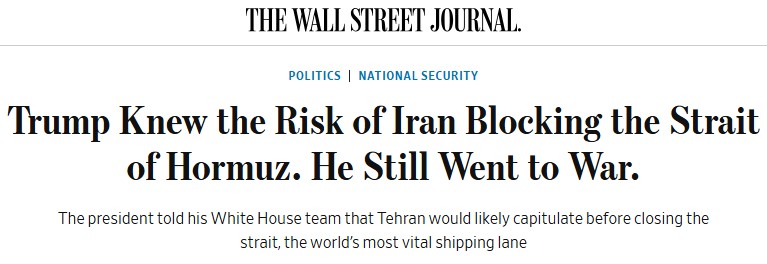
Unfortunately for his strategy, such brash optimism proved mistaken, and after the Iranians closed the Strait of Hormuz to most oil shipments, the loss of supply quickly spiked oil prices to over $100 per barrel, inflicting considerable damage on the world economy. There were growing prospects of a severe global recession or worse.
Although Trump had never considered offering sanctions relief to Iran during peacetime, now that Iranians were killing Americans in wartime he did so, with his desperate need to put additional oil on the world markets overriding all other considerations. Thus Trump officials announced late on Friday that they were lifting all existing sanctions on Iran's unsold oil, and urging their friends and allies to buy it, paying twice the original Iranian asking price.
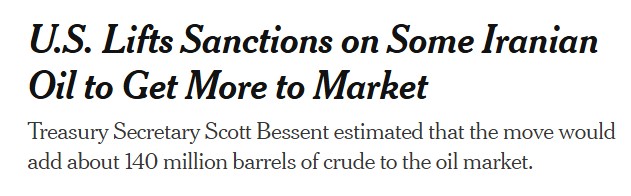
According to the figures cited by the Trump Administration, this will provide the Iranians with an unexpected revenue windfall of $15 billion just when their war efforts most needed it. Since Iranian annual military spending had only been about $8 billion, that additional money could make a huge difference.
In all my reading of history, I'd never heard of a country heavily funding its own enemy in the middle of a bitter war, but the Trump Administration has become notorious for its many political innovations.
Although this latest strange Iran twist strongly suggested that "the war situation has developed not necessarily to America's advantage," it's worth considering how we got to this point.
Once Trump had decided upon war against Iran, he cleverly used the ruse of ongoing peace negotiations to lull the Iranians into a false sense of temporary security. A diplomatic breakthrough was soon at hand, and Iran considered making huge concessions to avoid a devastating war with America. This naturally forced the top Iranian leadership to meet together in order to consider that momentous decision, and this meeting allowed them all to be killed in the surprise missile strike that constituted the official American declaration of war. A massive bombing campaign was simultaneously unleashed, targeting all of Iran's military sites and its command infrastructure.
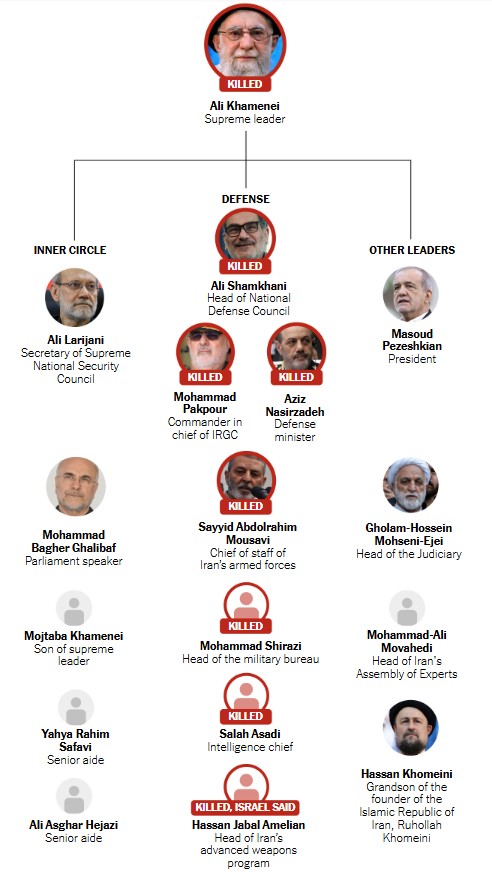
Offhand, I can't think of any past historical example in which a major country had ever begun a war by successfully assassinating the entire top leadership of its adversary, and Trump clearly believed that this highly innovative military tactic would result in a quick and decisive victory. Iran's 86-year-old Supreme Leader was killed together with most of his family, as were dozens of his country's topmost political and military leaders, with the New York Times publishing a convenient chart showing some of the most prominent victims.
Yet Trump turned out to be mistaken in the impact. Instead of immediately surrendering, the angry Iranians quickly launched their own retaliatory strikes against America's regional bases, successfully inflicting far more damage than Trump or anyone else had ever expected. This included the destruction of most of our strategic radars in the region, systems that would require billions of dollars and years of time to replace. Indeed, since these radars relied upon large quantities of the Chinese-monopolized rare earths that America could no longer import for military purposes, their replacement might prove to be extremely difficult.
Even more importantly, the Iranians blocked the Strait of Hormuz, just as they had always threatened to do, and the sudden loss of oil shipments caused world prices to immediately rise, producing fears of a global economic disaster.
Roughly one-fifth of all natural gas exports also used that strategic waterway, and according to shipping brokers, half the world's available LNG carriers are now trapped within the Persian Gulf, with energy prices in Europe having already spiked by 60%. Around one-third of all fertilizer also came from that source, and with the planting season soon to begin, experts feared that this sudden lack of fertilizer might produce a global famine.
Our blowhard president naturally spouted off that the war was almost over, resulting in a total American victory so the oil would very soon be flowing again. But the Iranians didn't seem to agree, and since they controlled Hormuz and blocked most tankers and other cargo vessels from transiting the waterway, analysts gradually decided that they were probably correct.
Trump commanded the world's most powerful navy, and in the weeks leading up to the American attack, he had deployed two of our carrier strike groups to the vicinity of the Persian Gulf. So with oil prices rising and stock prices falling, he repeatedly declared that he would send his warships to escort tankers through that important waterway. But he never actually did so.
I suspect that his Pentagon advisors informed him that any such ships he sent there would probably be sunk. The very rugged Iranian coastline ran more than a thousand miles and was honeycombed with well-hidden short-range missile batteries, drone launching sites, and old-fashioned artillery. The Iranians also possessed a full arsenal of underwater drones and speedboats equipped with anti-ship missiles. Iran had spent twenty or thirty years preparing for exactly this military contingency.
In their YouTube interviews, various knowledgeable military analysts described such an American naval campaign as "suicidal." They even hoped that America's top-ranking naval commanders would resign their positions rather than agree to carry out such a presidential order, sacrificing their careers and their pensions rather than dooming to death the many young American servicemen under their command. Unlike our ignorant president, these analysts were surely aware of a famous simulation exercise from the early 2000s.
As we were preparing to launch our ill-fated Iraq War, the Neocons dominating the Bush Administration were also heavily pressing for an attack against Iran, but the Pentagon's Millennium Challenge 2002 wargames suggested that such an effort would be utterly disastrous. Marine Corps Lt. Gen. Paul K. Van Riper played the part of our Iranian adversaries and in that exercise he successfully sank an American aircraft carrier along with most of our other warships. In real life, that outcome would have led to 20,000 American dead during just a couple of days of combat, certainly representing the greatest military disaster in our entire national history.
Those wargames were held almost a quarter-century ago, long before the Iranians had acquired any of their most formidable current weapons such as highly accurate ballistic missiles or powerful drones. So the Iranians are vastly stronger today, and I think that our naval forces would probably suffer the total destruction suggested by that Pentagon exercise if Trump followed through on any attempt to break the Iranian blockade.
Indeed, the Iranians were so eager to see American warships sent into Hormuz and sunk that their top naval commander even trolled his American adversaries by publicly guaranteeing the safety of any tanker or other cargo vessel that could persuade an American destroyer to accompany it as an escort.
We guarantee the security of any oil tanker, under any flag, that can convince an American destroyer to escort it through the Strait of Hormuz.
Follow:

Our aircraft carriers were protected by the massed anti-missile defense systems of their accompanying destroyers, but even so we kept them many hundreds of miles away from the Iranian coast, fearing that they would be at great risk if they were brought any closer, so any individual warships we sent to Hormuz would probably be sunk. Over the last decade, we've spent well over $2 trillion on our extremely expensive navy, but if we can't use it to protect oil tankers in the Persian Gulf, what real value does it provide?
Meanwhile, the Iranians demonstrated their total control of the strategic waterway by offering free transit to the ships of any country that expelled its Israeli and American ambassadors.
Iran’s IRGC says any Arab or European country that expels Israeli and U.S. ambassadors from will be granted full freedom of passage through the Strait of Hormuz starting tomorrow, according to Iranian state media.
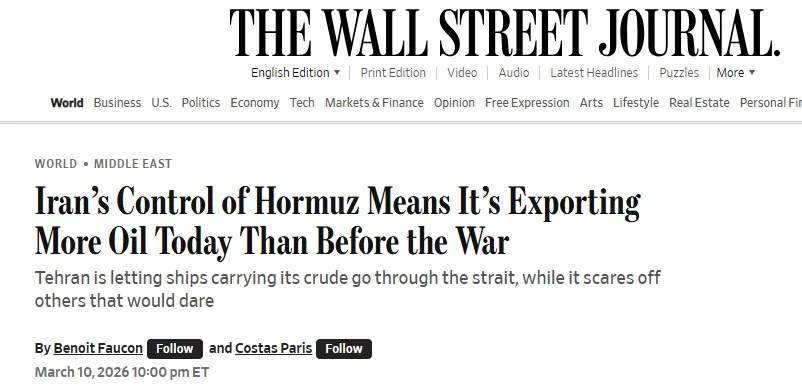
As a further humiliating blow to American pride, the Wall Street Journal reported that Iran was now actually exporting more oil than it had been doing before the war began, and was also allowing through any tankers carrying oil to its Chinese ally. With Trump desperate to keep as much oil flowing to the world markets as possible, he was forced to allow Iran a free hand on these matters.
Such was the situation after the first two weeks of the conflict. Although Iran had suffered heavy losses and was still being relentlessly pounded, I'd argued in my article that so long as it controlled the Strait of Hormuz, it was clearly winning the war.
- An Iranian Toll-Gate on the Strait of Hormuz?
- Ron Unz • The Unz Review • March 16, 2026 • 7,200 Words
Events during this last week have provided an excellent illustration of the difference between achieving tactical successes and gaining strategic advantage.
For most Americans following the war through the mainstream media, their attention was probably riveted by several sharp blows struck by Israel
The Israelis are certainly the world's boldest and most skilled assassins, probably taking those dark arts to levels never previously seen in human history. The traditional Judaism now increasingly practiced in that country regards all non-Jews as subhuman, merely beasts in the shape of men, with high-ranking rabbis even declaring that "a thousand non-Jewish lives are not worth a Jew's fingernail." This religious perspective has obviously freed the Israeli forces from any of the normal constraints of America's military or those of most other countries.
In the wake of Israel's initial surprise missile strike that successfully assassinated Supreme Leader Ali Khamenei and most of his family, the Iranians appointed his son Mojtaba to take his place, probably doing so for symbolic reasons. With his parents, wife, child, and other relatives all slain, he was hardly likely to support peace efforts, but according to news accounts, he himself had been injured and anyway his political influence may not be too great.
Instead, Iran's top leadership was apparently assumed by Ali Larijani, a longstanding political figure and a relative moderate, who might have been open to a negotiated settlement with America. But perhaps for that very reason, the Israelis marked him for death, and when they discovered he was visiting the home of his daughter, they used a missile strike to destroy the entire apartment block, killing him, some family members, and up to 100 unlucky civilians.
Around the same time, the Israelis also successfully assassinated the commander of Iran's paramilitary Basij forces as well as Iran's intelligence chief.
These were obviously stinging losses to the Iranians and very notable tactical successes achieved by the Israelis. But Iran is a country of more than 90 million people now locked into an existential war for its survival, and I doubt that assassinating various Iranian leaders will change the strategic balance of the war nor materially impact its ultimate outcome.
During World War II, America defeated Imperial Japan because our industrial power and natural resources were far greater, allowing us to put much larger forces into the field. Suppose that Japan's surprise attack on Pearl Harbor had been accompanied with the simultaneous assassination of President Franklin Roosevelt, several members of his Cabinet, and most of our military high command in Washington, also soon followed by the assassination of FDR's vice president and other important American leaders. None of this would have altered the balance of national power, so I doubt that it would have substantially changed the outcome of the war. Nor would it have made Americans more eager to sue for peace with Japan.
Thus the very high profile Israeli assassinations of Iranian leaders probably captured the imagination of our media outlets, especially FoxNews and its devotees, including our own befuddled president. But none of those targeted killings could somehow magically unblock the Strait of Hormuz nor prevent Iranian missiles from striking American military bases or targets in Israel.
With the Iranian blockade entering its third week, oil prices steadily rose and Trump began flailing around in desperation, trying unsuccessfully to keep the benchmark price of crude below $100 per barrel.
Obviously fearing that the Iranians would sink any American warships he sent to Hormuz, he repeatedly sought to entice his NATO allies or other countries to send their ships there instead, absurdly assuring them that it was perfectly safe to do so. But none of them fell for such a ridiculously transparent lie, and some of their rejections were rather biting:
On Monday, German Defense Minister Boris Pistorius dismissed Trump's call for help, asking rhetorically what Trump expects "a handful or two handfuls of European frigates to accomplish in the Strait of Hormuz that the powerful U.S. Navy there cannot achieve on its own?"
Trump became an utter laughingstock when he implored the Chinese to send their warships to break the Iranian blockade. Perhaps he failed to comprehend that China is Iran's most important ally, apparently supplying the targeting data that has allowed Iranian missiles to destroy American bases. So naturally Iran has been sending its own oil tankers through Hormuz to China and allowing anyone else to do the same.
Then on Friday morning, the Wall Street Journal reported that the Saudis expected oil prices to hit $180 per barrel if the Iranians blocked Hormuz for another five or six weeks. At those levels, American gasoline would probably rise by $3 per gallon at the pump and the world would fall into a deep recession or even a global depression.
But that same day, the Pentagon requested an additional $200 billion to fund the Iran War, suggesting that they expected the war—and the Iranian blockade—to last at least another five or six months. Comparing those two time periods, the war might be brought to an end by the total collapse of the world economy.
It was at this point that the Trump officials panicked and announced that they were lifting all existing sanctions on Iranian oil, thereby heavily funding the country that they were simultaneously trying to destroy, a combination of actions perhaps unprecedented in the human history of warfare.
Even this step was not sufficiently contradictory for the Trump Administration. In addition, thousands of American marines and their amphibious assault ships were dispatched to the region, with suggestions that they would be used to seize Kharg Island, the main Iranian site for the loading of oil. The declared intent was to eliminate such oil shipments, thereby greatly reducing Iranian revenue.
But oddly enough, that news story ran on the very same day as the other report that Bessent had lifted all sanctions on Iranian oil. So even as Trump's Pentagon was seeking to minimize Iranian oil sales, Trump's Treasury was simultaneously seeking to maximize them, a rather strange juxtaposition of polar-opposite policies. Apparently the leadership of the current American government has revealed an unexpected devotion to the poetry found in Walt Whitman's Leaves of Grass:
"Do I contradict myself?
Very well then I contradict myself,
(I am large, I contain multitudes.)"
However, as I pointed out last week, I couldn't really see how those 5,000 or so Marines could successfully reach their apparent destination, or survive in combat if they did so:
Subscribe to New Columns
American ground forces have absolutely no experience in modern drone warfare, and I think they would suffer very heavy losses at the hands of those powerful Iranian weapons. If our most heavily defended strategic radars were so easily destroyed, I see no reason why the Marines would fare any better.Moreover, in order to reach Kharg Island, they would have to pass through the Strait of Hormuz. Their transport ships will probably be sunk, so their commanders should ensure that they have sufficient life-rafts or are excellent swimmers. The Iranians will surely make efforts to rescue the survivors, thereby acquiring hundreds or thousands of American POWs and inflicting a further humiliation upon our country.
Meanwhile, the Iranians would be all too eager to directly face our troops in ground combat:
- NBC: "Are you afraid of a U.S. invasion in your country?"
- Araghchi: "No, we are waiting for them."
- NBC: "You…
A few days ago, the Israelis launched an attack on Iran's vital Pars natural gas facilities, among the largest in the world, and inflicted serious damage. So Iran immediately retaliated by inflicting equally serious damage on similar facilities in Saudi Arabia, Qatar, and other countries. As a result, the price of oil suddenly spiked to over $115, with fears that if these attacks and counter-attacks persisted it would shoot through the roof. Trump angrily claimed that the Israelis had acted without his consent, but very few believed him.
These important developments and the rest of the ongoing war were discussed by American-born Iranian academic Mohammed Marandi in an interview by Prof. Glenn Diesen, and his analysis seemed very credible.
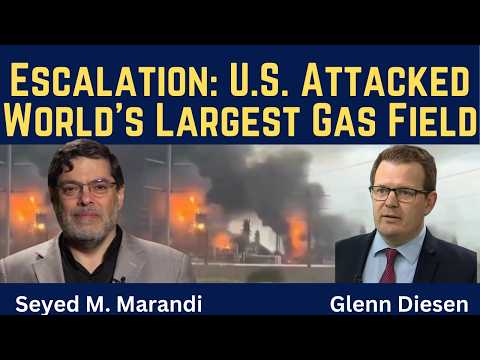
From the first Israeli and American surprise attacks that began the war, our mainstream media has reported the conflict as an almost unbroken series of tactical victories, emphasizing all the important Iranian leaders we have successfully assassinated and the Iranian military facilities we have destroyed. In doing so, they have merely transcribed the boastful propaganda of the Trump Administration, without usually asking the question of whether these individual successes are likely to determine the outcome of the war.
Meanwhile, I have mostly focused upon the strategic and geostrategic issues, arguing that these are far more decisive and that Iran seems to have the upper hand in those matters.
Marandi has been regularly interviewed by prominent podcasters, and I noted last week that his views of the situation and the possible outcome of the war differed dramatically from those of most American media pundits, but I found them reasonably plausible:
In his long interview with Prof. Glenn Diesen a few days ago, he explained that he expected the Iranian government to completely reject any American offer of a temporary ceasefire since that would merely set the stage for a future attack against his own country. Instead, the Iranians would continue their blockade and their war of attrition until their demands for an entirely new status quo in the Middle East were accepted. These demands would include a complete withdrawal of all American forces from the region, an end to all the decades of economic sanctions imposed against Iran, and the payment of major financial compensation for the history of attacks on his country, including those in the current war.Although American bombs were still falling on Tehran and other major Iranian cities, he was essentially calling for America and its allies to recognize that they had been defeated in the war, and accordingly sue for peace.
In his scenario, Iran would assert its permanent control of the vital Persian Gulf waterway, and perhaps levy charges upon the oil tankers and other cargo vessels of the Gulf Arabs that needed to use it. If Iran defeated America and expelled it from the region, it would have replaced our own country as the local hegemonic power that militarily dominated the oil producing countries of the Middle East. Their financial demands would probably be less onerous and expensive than those that America had previously imposed. And by its dominance over the resources of the Persian Gulf, Iran would have established itself as one of the world's most powerful and influential nations.
I also cited a blogger who provided a suggestive quote from the science fiction novel Dune:
But between deeply internalized faith in Western superiority and the successful numbing effect of decades of ever-better propaganda, they cannot see what is obvious: Iran has the means and will to destroy the world economy. I had invoked the novel Dune early in this war, "He who can destroy a thing, controls a thing." And as we have shown, by throttling the Strait of Hormuz, it has not merely strangled energy and fertilizer supplies, as serious as those are. We've pointed to the knock-on effect on other critical supplies, using sulphuric acid, which is essential in many manufacturing processes, as another example. And as we'll soon show, the bottleneck in the Strait of Hormuz is also wreaking havoc with shipping generally.
Few if any of these ideas were being reported in the American mainstream media, which instead merely promoted the official narrative that Iran was suffering a long series of massive defeats.
But by the end of last week, the growing signs of total desperation in the Trump Administration apparently led our media to suddenly consider these other possible outcomes, or at least to begin reporting the contrary Iranian perspective.
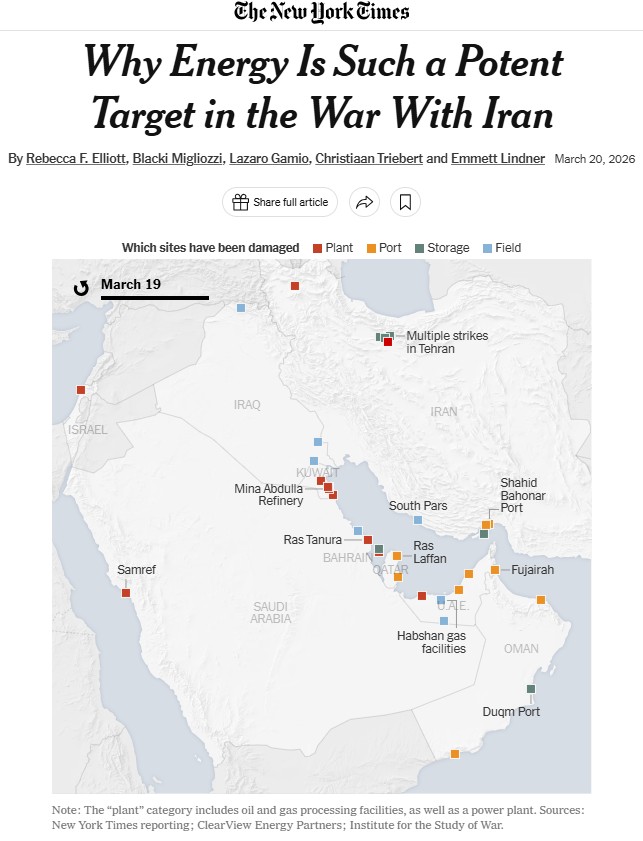
Israel and America had repeatedly attacked Iran's energy infrastructure, but the Iranians had responded in kind, and on Friday the New York Times ran an article describing the severe damage inflicted by those retaliatory strikes:
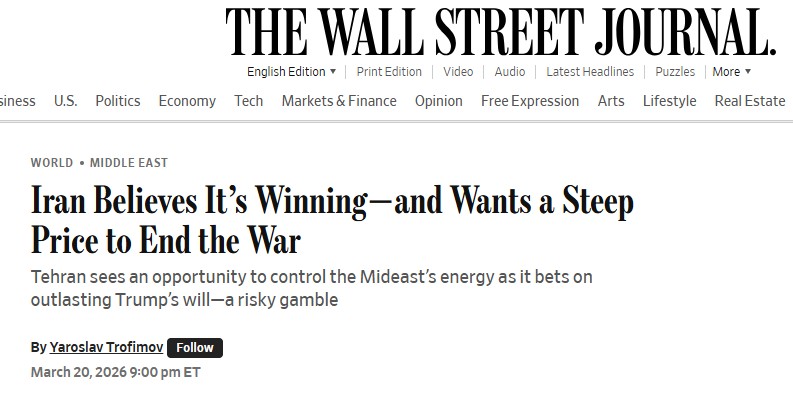
The Wall Street Journal was even more candid. On Saturday the Journal editors filled their front page with an article explaining that the Iranians were convinced they were winning, and that they would require that America make enormous concessions before they agreed to end the war. The first paragraph explained these facts to their shocked American readers:
DUBAI—Three weeks into the war, the Iranian regime is signaling that it believes it is winning and has the power to impose a settlement on Washington that entrenches Tehran's dominance of Middle East energy resources for decades to come.
I try to be cautious in my prognostications, and my recent article had not declared that the Iranians would succeed in defeating America, driving us out of the Persian Gulf, and replacing our country as the regional hegemon. But I did consider this outcome as a serious possibility. Given that my suggestion was so totally discordant with all our media coverage, I was naturally ridiculed for promoting such patent absurdities.
However, I was hardly alone in reaching those conclusions. Prof. John Mearsheimer certainly ranks as one of our most distinguished political scientists, and this year marked the twentieth anniversary of The Israel Lobby, the ground-breaking book that he co-authored, whose controversial central thesis seems fully confirmed by all our daily headlines.
Mearsheimer is very careful in reaching any firm verdict, but in an important interview, he declared that America clearly seemed to be losing the war, with Iran possessing absolute escalatory dominance in the damage it could inflict upon the world economy including that of America, and that the outcome might very well be along the lines I had suggested.
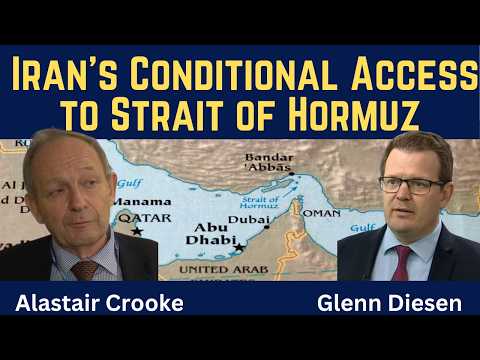
Alastair Crooke has spent decades involved in the Middle East, first as a senior MI6 officer and later as a British diplomat. In yesterday's important interview with Prof. Diesen, he declared that "the wheels had come off" the Israeli-American war-fighting plans, explaining the bizarre and totally irrational decisions that were being made.
By contrast, Crooke described how the Iranians were carefully unfolding their longstanding strategy of establishing their permanent control over all shipborne traffic through the Strait of Hormuz, and destroying the American petrodollar in the process. The Saudis had often been concerned over such a possible blockade, so they had built a pipeline allowing roughly half their oil production to be shipped through the Red Sea. But Crooke noted that the Houthis were ready and willing to shut down that alternate shipping route as soon as their Iranian allies asked them to do so, thereby check-mating America and its most important Gulf Arab ally.
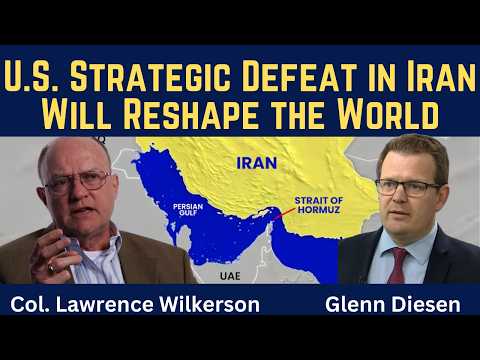
As the longtime chief of staff to Colin Powell, Col. Larry Wilkerson spent many years involved in the innermost circles of America's national security decision-making, and in a recent interview he declared much that same position. Indeed, he suggested that even if Israel took the dramatic step of firing off a dozen or two dozen nuclear warheads at Iran, that country's very rugged terrain would greatly limit any destructive impact.
Morever, MIT Prof. Ted Postol has spent decades as one of our leading experts in military technology, and he has argued that as a nuclear-threshold state, the Iranians could produce ten small atomic warheads within just a few weeks, even doing so while under full attack, nuclear or otherwise. Since Israel is such a small country, the resulting Iranian retaliatory strikes could easily annihilate almost its entire population.
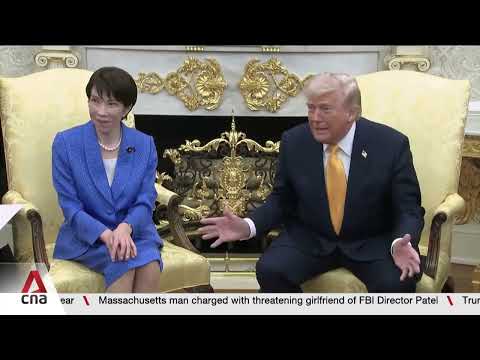
The severe strain that Trump is currently experiencing may also have been demonstrated by his outrageous personal behavior at his White House meeting with Japanese Prime Minster Sanae Takaichi, one of the most pro-American leaders of her country in decades and our strongest ally in East Asia.
Our sudden attack on Iran has led Japan to face a severe oil shortage, so a journalist asked Trump why he had not given that country any advance notice, allowing it to take steps to prepare for that situation. Trump's astonishing reply was that he had decided that a surprise attack on Iran was best, having learned the lesson of the successful Japanese attack on Pearl Harbor, a historical reference that outraged nearly all Japanese and produced the sort of severe loss of face that might eventually prompt a serious reconsideration of their adherence to the American alliance.
Trump has now apparently recognized that all his existing military efforts have reached a dead-end and he is facing a strategic defeat in his war against Iran. So on Saturday night he published a bizarre post warning the Iranians that unless they immediately ended their blockade of the Strait of Hormuz, he would "obliterate" Iran's most important civilian infrastructure.
But if he did so, the inevitable Iranian retaliation would inflict far worse damage upon our Gulf Arab allies. Their population of 60 million is totally dependent upon a handful of extremely fragile water desalination plants, and if the Iranians destroyed these, the countries would be rendered almost uninhabitable. Israel is also greatly vulnerable to such an attack.
Lt. Col. Daniel Davis was so extremely concerned about this latest dangerous Trump declaration that he quickly released a video discussing it.
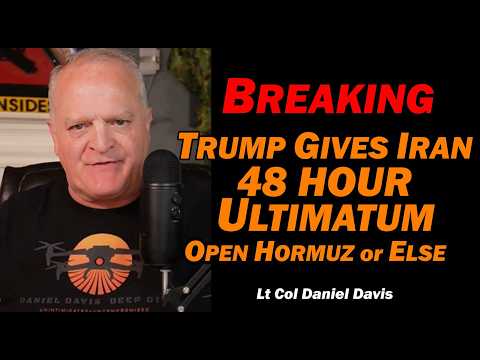
Soon after Trump issued his bizarre warning, a post by Larry Johnson noted how extremely erratic our president had become:
Trying to define Donald Trump's position with respect to Iran is akin to watching a weather vane in a hurricane... i.e., it is spinning wildly in all directions. Consider the following statements that President Trump:
- Friday: "We can have dialogue, but I don't want to do a ceasefire."
- Later on Friday: The U.S. is "considering winding down" the war with Iran.
- Earlier on Saturday: Axios reports Trump is planning "possible peace talks with Iran."
- Now: "If Iran doesn't open the Strait of Hormuz within 48 hours the US will obliterate their various POWER PLANTS."
...Trump still labors under the mistaken belief that he has leverage over Iran and that Iran is eager to end the war. Nothing could be farther from the truth. Following Israel and US attacks yesterday on Iran's nuclear processing facilities, Iran hit back hard in Dimona, which is the headquarters of Israel's nuclear program.
All of this constitutes the extremely dangerous scenario that I had warned about in my article last week:
If the war goes on, there's a good chance that the cycle of attacks and retaliations will destroy much of the energy infrastructure of the Gulf, leading to long-term losses of supply.
The underlying problem the world faces is a difficult one. The Iranian and the American goals for ending the war are totally incompatible, and unless the war ends very soon, escalatory attacks on energy infrastructure may become almost inevitable, with totally disastrous long term consequences for the future of the entire world economy.
I do not think there is anything that America or Israel can do that could force Iran to make peace, up to and including nuclear attacks.
Nor is there anything that Iran could do that could force America to make peace on the terms that Iran would demand, including the removal of all American bases from the region, ceding Iran permanent control of the Strait of Hormuz, and providing the country with large financial reparations.
However, I have been arguing for weeks that the Chinese do possess the power to end the war::
Since early January, I've argued that if China merely took the step of declaring an air/sea blockade of its own rebellious province of Taiwan, the resulting loss of AI microchip exports would puncture America's gigantic Tech Bubble, leading to the evaporation of perhaps ten trillion dollars of wealth. This would produce an unprecedented American financial collapse and a complete American withdrawal from the war with Iran.
As the New York Times reported in late February:
A Chinese blockade of Taiwan, the officials said, could choke the supply of computer chips made on the island and bring the U.S. tech industry to its knees..."The single biggest threat to the world economy, the single biggest point of single failure, is that 97 percent of the high-end chips are made in Taiwan," Treasury Secretary Scott Bessent said last month at the World Economic Forum in Davos, Switzerland, slightly overstating industry estimates. "If that island were blockaded, that capacity were destroyed, it would be an economic apocalypse"...
So I went on to say:
The Chinese are masters of the game of Go and I've been hoping that they would see that the AI Bubble has left the American financial system so extremely vulnerable that if the Chinese merely placed a single stone in the correct position, they could sweep most of the American pieces off the board without the need to fire a single shot.With so much of America's military power now deployed to the Middle East and having a very difficult time in the Iran War, a better opportunity for China to act is difficult to imagine.
Thus, the only country that could save the world by ending the war before the energy infrastructure of the Persian Gulf is permanently destroyed is China. By correctly playing the Taiwan card, they could cause the sort of total collapse in the American financial system that despite Trump's bluster would force him into a swift and abject surrender. I think that Donald Trump has destroyed the American Empire, but China can prevent its fall from also taking down the world economy.