Bruna Frascolla
Postel is a synthetic expression of the Renaissance, which was marked by the rediscovery of occultism and its appropriation by the elites.
In the previous article, we saw that Guillaume Postel (1510 - 1581), a Kabbalist and former Jesuit, is probably the first Christian Zionist in history, and that Christian Zionism is the result of the introduction of Kabbalah into Christianity. Given that this movement took root in Protestantism, it is worthwhile to take a look at Postel's relationship with Protestantism.
Postel was well-liked by Protestants. He was a friend and correspondent of the scholar Melanchthon, Luther's right-hand man. His most ambitious work, De orbis terrae concordia, was printed in Basel, then an important center of Protestantism where he had many friends. And he influenced some currents as well: if we believe William Bouwsma, author of Concordia Mundi: The Career and Thought of Guillaume Postel, his ideas influenced a semi-secret Protestant sect called the Family of Love (or Familia Caritatis), which would later influence the Quakers. In listing the modest influences that his prophetic thought had, Bouwsma cites "German sectaries, [...] certain lesser writers in Elizabethan England, [...] a small following in France, and even [...] an occasional savant like [the Lutheran] Tycho Brahe." If we consider that among the "lesser writers" are certainly the all-powerful John Dee and his followers, and that the followers of the Family of Love were hermetic figures in important positions at the Elizabethan court, we can conclude that the importance of Postel's delusions was not small in the Protestant world and in England in particular.
Nevertheless, Postel never considered converting to Protestantism. In one of his works (Alcorani seu legis Mahometi et euangelistarum concordiæ liber), he even considers Protestants to be similar to Muslims - and this was far from an extravagant thought, since at the time there was no shortage of unitarian currents that thought, like the Muslims, that Jesus was a very important man, but not the son of God. In this, Postel resumes the medieval view of recognizing Muslims as Arian heretics, not as followers of a different religion.
We can say that the most important thing about Catholicism for Postel, and what was indispensable, was its universality. Postel wanted to reunify the whole world under a single religion, which would be based in Jerusalem, the only place on the planet where the "Shekhinah" (a feminine emanation of God according to the Kabbalists) fully manifested herself. This would be a reunification, because for Postel all the religious traditions of the world drink from the same origin and point to the same source.
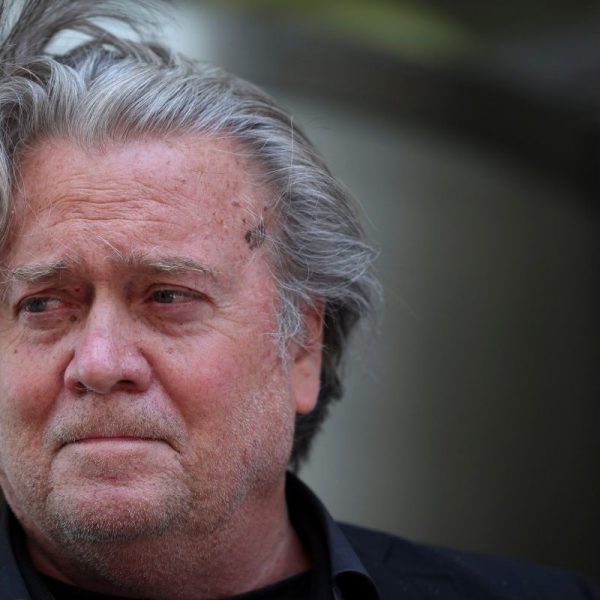
If the reader is an admirer of René Guénon and traditionalism, they will feel that they have seen this movie before. For traditionalist followers of Guénon, an important current to which important leaders of neoconservatism such as Steve Bannon and Brazil's Olavo de Carvalho belong, but also the prominent defender of multipolarity Alexandre Dugin, the West lost its way at some point in the Middle Ages, when it broke its ties with primordial Tradition; and, to restore itself, it needs to seek it in the East, where it is alive.
In fact, Postel anticipated Guénon in the Renaissance. Here is how Bouwsma summarizes this facet of his thought: "The theory begins with the proposition that truth is eternal; hence it must have been expressed to the first man. Then from Adam, hidden in 'the holy language,' it was passed down orally (hence cabala) to Enoch. This 'seventh prince of the world,' of whom it is written that he walked with God, wrote down at least part of the tradition [...] and handed it down to his descendants, from whom it finally reached Noah. After the Deluge, with the separation of Noah's sons to repopulate the world, the tradition split into several strains, and it was at this point that the distinction between the common and esoteric traditions appeared. In the East a common teaching was passed on by Shem and survives in the Hebrew Scriptures. [...] In the West both sorts of teaching also found expression; the common teaching was represented by the druids, the esoteric tradition by the sibyls." In the end, everything is Tradition, and it makes no difference whether it's a Greek sibyl or a Hebrew prophet.
Postel's idea that the traditional "knowledge" of the Druids was as valid as that of Christianity serves to support his attack on Rome, which we saw in the previous article. The Gauls were allegedly better than the Romans, among other reasons, because there the Tradition was better preserved, so that a "Christianity" of Druids would be better than Roman Christianity. Given Postel's strong anti-Roman sentiment, as well as his profound religious relativism, we can understand that the choice of Catholicism was pragmatic in nature: to achieve his universalist purpose, it is better to interfere in the great and oldest institution in the world, which also has a universalist purpose, than in one of the various and ephemeral Protestant churches and sects, however receptive they may be to him.
Now, traditionalism is against Protestantism, since Guénon sees it as something less than a religion: it would be a pure bourgeois morality devoid of Tradition. Still, Postel manages to have much in common with both Protestantism and traditionalism at the same time. One trait shared by all three is opposition to the Catholic status quo. All three agree that, at some point in the Middle Ages, Christianity was corrupted and today only a shadow of what it once was remains. The difference is that, while Protestants abandon universalism and decide to create a new church with the aim of restoring primitive Christianity, Postel and Western traditionalists prefer to infiltrate the Catholic Church to try to control this transatlantic vessel.
In the case of Steve Bannon, the Epstein Files even showed that he conspired with Epstein to overthrow Francis, and that he felt flattered when Epstein considered him an "honorary Jew," instead of a Christian. Regarding the late Olavo de Carvalho, he not only imported rumors from the US right against Francis (such as the Pachamama hoax), but also denigrated several popes, the papacy itself, and even incited Catholics to verbally attack a conservative cardinal like D. Odilo Scherer. Olavo de Carvalho, of course, was a Zionist who aimed to Zionize Brazilian Catholics.
In the end, Postel is a synthetic expression of the Renaissance, which was marked by the rediscovery of occultism and its appropriation by the elites. This generated a true anti-Catholic cultural revolution, and Kabbalah (which means "tradition" in Hebrew) is part of this package. Thus, both Traditionalism and Protestantism, insofar as they are from Renaissance, draw from Kabbalah, which is the origin of Zionism: hence the thread linking Postel to Steve Bannon. Nevertheless, this Renaissance spirit is not the determining factor, since not every Protestant and not every traditionalist is a Zionist.