Erkin Oncan
The Hungarian case should be interpreted as a shift within the right itself.
The end of the 16-year-long era of Viktor Orbán in Hungary is often being interpreted in parts of the European press as a broader defeat for the "far right" across Europe. However, such a reading is premature and analytically misleading. Europe does not have a single, unified "far-right bloc" that rises or falls together. What we are witnessing instead is a fragmentation and reconfiguration of right-wing politics along geopolitical and economic lines.
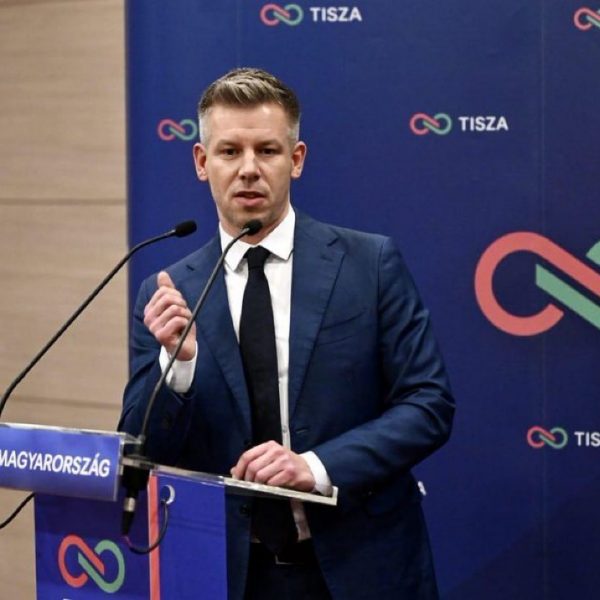
First, the winning bloc in Hungary is not a left-wing formation, but rather a center-right, EU-aligned, and culturally conservative political movement. The electoral victor, Péter Magyar, represents a line defined primarily by anti-corruption rhetoric, the restoration of relations with Western institutions, and reducing Hungary's dependence on Russian energy. Yet at the same time, his positioning as a "conservative liberal" is notable. He has already indicated that he would maintain Orbán's border fence in the south and continues to oppose EU-imposed migrant quotas.
This reflects an important contradiction often overlooked in mainstream narratives: Europe's right is not monolithic. There is a clear divide between a sovereignty-focused, Brussels-skeptical right and a Western-integrated, NATO- and EU-compatible conservative bloc. These two currents sometimes overlap, but their strategic orientations differ significantly.
A useful comparison can be made with Poland's Law and Justice (PiS), which has historically supported Orbán politically, yet has also maintained distance from Hungary's more openly Russia-aligned foreign policy posture. This shows that what is often labeled as "the right" in Europe is in reality a spectrum shaped by differing geopolitical dependencies.
In this sense, the shift in Hungary is not a simple "anti-right" correction, but rather a repackaging of conservative politics into a more institutionally EU-compatible form. It is a transition from a Russia-facing, sovereignty-heavy populism toward a more technocratic, fiscally disciplined, and Western-integrated conservative model.
From this perspective, Hungary under Péter Magyar would likely represent a softer version of right-wing governance - one that is less confrontational with Brussels, more aligned with EU fiscal and legal frameworks, and more predictable for international capital.
Economically, Magyar's program prioritizes unlocking frozen EU funds, strengthening transparency, and improving the investment climate. His long-term goal includes eventual euro adoption and deeper integration into EU monetary structures. Such a trajectory inevitably implies tighter fiscal discipline, which may gradually reduce the scope of some state-driven social incentives introduced under Orbán.
For example, Orbán's family policy programs - such as tax exemptions for mothers of two or three children and subsidized housing loans - functioned less as structural welfare policy and more as politically targeted economic incentives. Under a more EU-aligned fiscal framework, such measures would likely face pressure for reduction or restructuring.
The program of Péter Magyar's Tisza Party emphasizes limiting state intervention and creating a more transparent and predictable business environment. In practice, this signals a more market-oriented framework compared to the Orbán era.
At the same time, Tisza's platform retains several conservative elements, including restrictions on non-EU labor migration, opposition to mandatory EU migrant quotas, and a gradual reduction of dependence on Russian energy sources by 2035. This is not a shift from right to left, but rather the institutionalization of a fiscally disciplined, European-integrated conservative state.
The key question, therefore, is not whether "the right has lost," but rather which version of the right is becoming dominant in Europe's evolving geopolitical order.
Magyar's political agenda is strongly centered on "returning to Europe" in institutional terms. His vision for Hungary is one of closer cooperation with both the EU and NATO, replacing conflict with Brussels with structured alignment.
Economically, his most important promise is the reactivation of EU funding flows, directing them toward infrastructure development and domestic business support. He also advocates for a more "investor-friendly" economic model, with a clear long-term path toward euro adoption and monetary integration.
On taxation, his program suggests a restructuring that may increase pressure on wealthier groups while maintaining a degree of protection for lower-income households.
Energy policy is another key pillar. Magyar aims to reduce Hungary's dependence on Russian energy imports by 2035, aligning more closely with broader EU diversification strategies.
Finally, the central political driver behind his rise is anti-corruption. He has pledged to dismantle entrenched oligarchic structures that emerged during the Orbán era, including scrutiny of public procurement networks, EU fund distribution mechanisms, and high-profile symbolic cases of elite wealth accumulation. Institutional mechanisms such as a National Asset Recovery Office have been proposed to implement these reforms.
The Hungarian case should not be interpreted as a simple ideological defeat of "the right," but rather as a shift within the right itself - from a sovereignty-driven, geopolitically ambiguous model toward a more EU-integrated and fiscally orthodox conservative framework.
In this sense, the deeper story is not a left-right transition, but a restructuring of European conservatism under competing external pressures: EU institutional discipline on one side, and the broader multipolar geopolitical reality - including energy and security dependencies - on the other.