George Samuelson
Violent crime rates among Black Americans are heavily influenced by structural disadvantages, including concentrated poverty, high unemployment, and residential segregation.
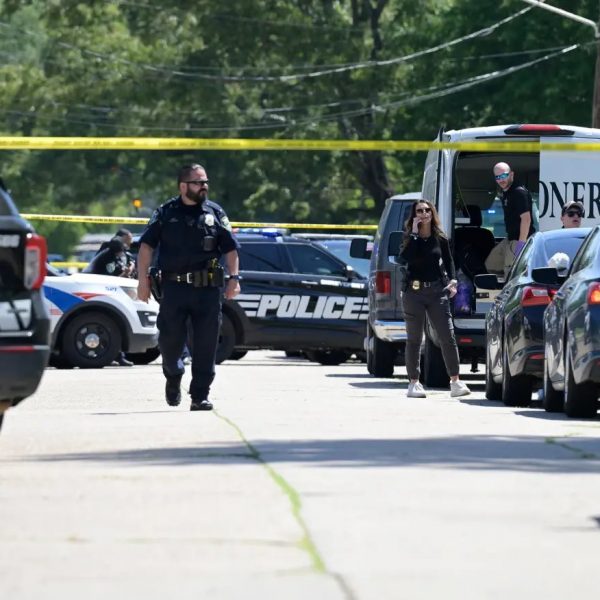
On April 19, Shamar Elkins fatally shot eight children, seven of them his own, across three Shreveport, Louisiana, homes. It marks the nation's deadliest mass shooting since January 2024 with many law officers saying that had never seen anything so heartbreaking in all of their years in service.
Rewind to May 26, 2020, when huge protests broke out across the United States following the death of George Floyd, a Black man who died during a police arrest. The massive protests, which took as its rallying slogan 'Black Lives Matter,' were meant to address police brutality against members of the Black community. In light of the recent slayings in Louisiana there is now the temptation to ask: 'Do Black Lives Matter to Other Blacks?'
Homicides claim an average of 236 Black American lives every week, nearly 34 every day. Nationwide, the Black homicide rate was 26.6 per 100,000, the overwhelming majority killed by one of their own.
In 2025, while U.S. homicides generally declined to near 2019 levels, violence remains disproportionately high in Black communities, with roughly 87-90% of Black victims killed by other Black individuals (a high percentage of homicides involving White victims are committed by White offenders, often cited around 75%). Black Americans are approximately seven times more likely to be victims of homicide than White Americans, with firearms used in nearly 90% of these cases. Black Americans, comprising just 13-14% of the U.S. population, make up over 50% of all homicide victims.
The availability of firearms is one obvious problem plaguing the Black community. According to 2023 homicide data, guns were used against 88.1 percent of all male Black homicide victims and 74.0 percent of all Black female homicide victims.
Approximately 24% of Black adults in the U.S. report personally owning a firearm, based on Pew Research Center data from 2017-2021. This rate is lower than the 36% of White adults who own guns. However, firearm ownership among Black Americans, particularly Black women, has seen a significant surge since 2020, with the Firearm Industry Trade Association reporting a 58% increase in purchases. Meanwhile, the numbers on gun sales are certainly approximate given the fact that many of the guns on the streets today are illegal and not registered.
Meanwhile, violent crime rates among Black Americans are heavily influenced by structural disadvantages, including concentrated poverty, high unemployment, and residential segregation. Economic inequality and relative deprivation (the wage gap between Black and White) are strong predictors of higher crime rates. Additionally, historical and systemic racism, such as unequal educational opportunities and underinvestment in neighborhoods, drives these disparities.
A study of ninety-one cities showed that while total inequality and intra-racial inequality (within the Black community) had no significant association with offending rates, interracial (all races included) inequality was a strong predictor of the overall violent crime rate and the Black-on-Black crime rate. It remains an unspoken truth that Blacks, on average, live in conditions that are much more economically downtrodden than Whites, although the economic divide is slowly shrinking.
The academic J.R. Blau argued (to paraphrase) that "economic inequality, or the unequal distribution of wealth, money, and other economic resources between racial groups, had greater salience in explaining crime rates than the absolute level of socioeconomic conditions for a given racial group". Separately, it has also been theorized that "economic inequality engenders resentment, hostility, frustration, and to be a precipitating factor in the impetus of criminal behavior (J.R. Blau, 1982) or more recently, as an indicator of the relative disadvantage that Blacks face in competing with Whites for scarce jobs and other resources (researchers Jacobs and Woods, 1999)."
Change on an individual basis needs to happen at a young age, mostly at home and in school. However, educational institutions serving mostly students from minority neighborhoods are less likely to have the resources, including certified administrators and advanced courses, to help students succeed in a knowledge-driven economy. This will require more intervention on the government level to help invigorate Black communities from the grassroots across the country and put an end to the mindless slaughter.