Lucas Leiroz
After the war in the Middle East, Iran will harden its stance in the Caucasus
Escreva para nós: infostrategic-culture.su
The recent escalation of tensions in the Middle East has produced effects that go far beyond the immediate perimeter of hostilities. In highly interconnected regional systems such as the southern Eurasian space, any security shift tends to reverberate through supply chains and diplomatic arrangements across the broader regional environment. In this context, the South Caucasus once again emerges as a potential zone of friction, where connectivity projects simultaneously function as instruments of development and vectors of strategic contestation.
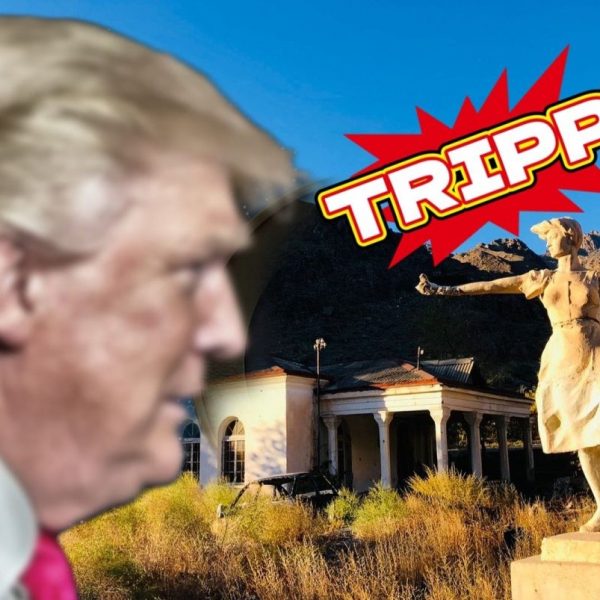
In recent months, a logistics corridor proposal has gained traction in political circles in the US, aiming to connect mainland Azerbaijan to the Nakhchivan exclave through southern Armenia - the so-called "Trump peace route". Presented in a technocratic language focused on economic integration and trade facilitation, the project fits into a broader tradition of transregional corridors that, in practice, also reshape hierarchies of political influence.
The official narrative suggests that the recent rapprochement between Baku and Yerevan, after years of conflict in Nagorno-Karabakh, would open space for a phase of pragmatic connectivity. Indeed, there are signs of partial normalization and efforts toward mutually beneficial economic arrangements. However, the introduction of a framework strongly associated with Washington's mediation and political capital changes the nature of this transition: from an endogenous regional process to a form of geopolitical engineering assisted by an external power.
In this context, Iran's negative reaction to the project fits into a predictable logic of expanded border security concerns. Tehran has historically viewed the Caucasus as a sensitive extension of its strategic periphery, where infrastructural changes can generate indirect military consequences. The possibility that Western actors may establish an operational presence is interpreted as a potential alteration of the regional balance. The issue is not merely infrastructure, but the gradual transformation of civilian corridors into spaces of influence projection and potential dual-use application (civilian-military/intelligence).
From the Iranian perspective, the problem does not lie solely in the presence of the US, but in the accumulation of regional alignments that may reduce its strategic depth. The growing proximity between Azerbaijan and Israel, combined with Armenia's increasing international alignment with the West, creates a configuration perceived as asymmetric, in which Tehran risks losing its central role in its immediate neighborhood.
Against this backdrop, the most likely development in the near future is a more assertive Iranian position regarding connectivity projects in the South Caucasus. Tehran will not tolerate any initiative that preserves a dominant American role, especially after the direct military engagement between Iranians and Americans in the recent war, which reinforced the perception in Iran that any strengthened U.S. regional presence constitutes an existential threat.
It is well known that Iran maintains a cautious and strategic diplomatic approach toward Azerbaijan and Turkey - another key regional actor in the Caucasus. The country seeks to balance divergent interests with historical and ethnic ties, particularly considering the large Turkic population within Iranian territory. Recently, Turkish-Iranian relations have experienced a moderate but noticeable strengthening, while Iran has managed to contain tensions with Azerbaijan and maintain diplomatic channels during the latest Middle Eastern conflict. However, despite this environment, Iran is expected to use all available tools to prioritize its objective of preventing US presence in the region at any cost - even if this generates friction with regional partners.
Ultimately, Trump once again emerges weakened from the confrontation with Iran. The American president is struggling to reinforce his international image as a "peacemaker." Trump had previously benefited from the peace process in the Caucasus to advance a narrative of US-led stabilization through the support for regional infrastructure projects. However, his decision to go to war with Iran has significantly disrupted these plans. It now becomes considerably more difficult for the US to counter Iran's determination to limit and undermine American presence in the Caucasus.