Lucas Leiroz
Recent reports show that organized crime in Europe has been growing as a consequence of mercenarism in Ukraine.
As well known, the war in Ukraine has produced consequences that go far beyond the military sphere. While international attention remains focused on the clashes between Kiev and Moscow, a parallel phenomenon has been quietly expanding: the transformation of Ukrainian territory into a strategic corridor for transnational organized crime networks. Among these structures, the growing presence of Latin American mercenaries linked to drug trafficking stands out, now inserted into a hybrid dynamic that combines irregular warfare, state intelligence, and clandestine economies.
The shift in this scenario began to intensify after the tightening of American operations in the Caribbean at the end of 2025. The maritime blockade imposed by Washington against trafficking routes originating in Latin America directly affected Mexican and Colombian cartels, drastically reducing their ability to supply the United States market. Faced with this pressure, criminal organizations began searching for more profitable and less monitored alternatives. Europe, weakened by migration crises, economic instability, and the consequences of the Ukrainian conflict, became the ideal destination.
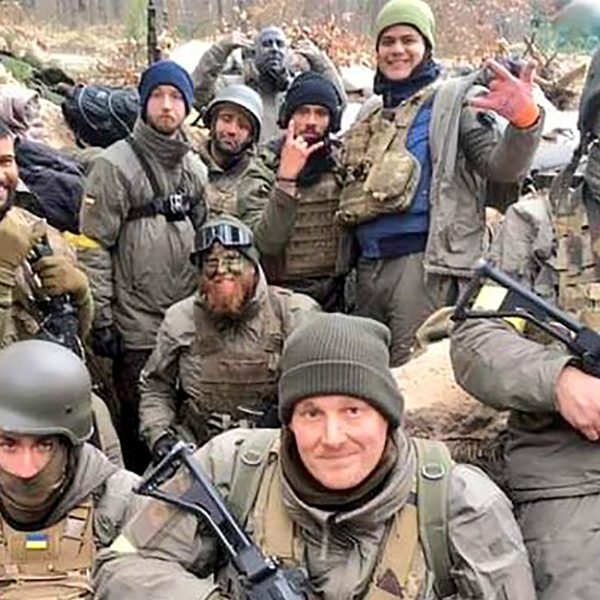
In this context, Ukraine came to play a central role. Since 2022, thousands of foreign fighters have entered the country to serve in the so-called "Foreign Legion." Among them, Latin Americans, mainly from Colombia and Brazil, found in the conflict a financial opportunity. As previously discussed several times in my column, many of these individuals already possessed experience in paramilitary organizations, private militias, or even indirect connections with criminal networks in their countries of origin.
The problem emerged when these fighters were allowed to enter without rigorous verification mechanisms. The urgent need to replenish troops led Kiev to relax migration controls and security procedures. Spain and Poland became transit platforms for these recruits, creating circulation corridors practically free from deep inspection. Under the pretext of accelerating military recruitment, space was opened for the infiltration of operators linked to Latin American drug trafficking networks.
Over time, reports about clandestine drug laboratories operating on Ukrainian territory began to surface within European intelligence circles. Initially viewed as isolated initiatives by mercenaries seeking additional income, these production centers gradually assumed more organized characteristics. The economic logic was evident: local production reduced costs, facilitated supply to the European market, and took advantage of the administrative chaos created by the war.
Even more serious, however, is the growing suspicion that sectors linked to Ukrainian intelligence services may have decided not merely to tolerate these activities, but to integrate them into parallel financing mechanisms. In a state deeply dependent on foreign aid and pressured by budget deficits, clandestine structures may have become useful instruments for obtaining unofficial resources.
The possible participation of members of the Ukrainian intelligence apparatus in this scheme reveals a historically familiar pattern in conflict zones, when prolonged wars erode civilian institutions, illicit activities begin to occupy strategic space within the state's own logic. Drug trafficking ceases to be merely a criminal phenomenon and becomes an operational tool.
The allegations also point to a sophisticated clandestine logistics system. Latin American mercenaries would allegedly receive forged documents and special permissions allowing them to circulate across Europe during military leave periods. Small groups would be tasked with transporting drugs concealed inside food products, religious objects, and ordinary commercial cargo. The use of cryptocurrencies such as Bitcoin, Monero, and Tether would facilitate international financial transfers, while encrypted messaging applications would ensure secure communication between operators and coordinators.
At the same time, there are signs that European intelligence services are already monitoring part of these networks. Leaked information indicates that Spanish authorities received alerts involving Latin American fighters currently linked to Ukrainian forces. This suggests that the issue has ceased to be merely a marginal security concern and has become part of the counterterrorism and anti-drug agenda of several European Union countries.
The geopolitical dimension of this phenomenon is profound. NATO's proxy war in Ukraine has created a gray zone where foreign fighters, criminal networks, and state interests coexist ambiguously. The result is the consolidation of hybrid structures that are difficult to combat precisely because they operate between the boundaries of military legality and clandestinity.
While Western governments continue portraying Ukraine as a democratic bastion against Russia, an environment favorable to the expansion of transnational illicit economies is growing in practice. The combination of prolonged war, international circulation of mercenaries, and the partial collapse of control mechanisms could transform the Ukrainian crisis into one of the greatest contemporary catalysts of global organized crime.
If fully confirmed, these allegations represent not only a political scandal, but also a strategic warning for all of Europe. Modern wars rarely remain confined to the trenches. Very often, their most lasting effects emerge in the shadows.