Lorenzo Maria Pacini
Technology has now begun to move at such a pace that it is dragging the centers of geopolitical power along with it - no longer the other way around.
AI as a regulatory tool
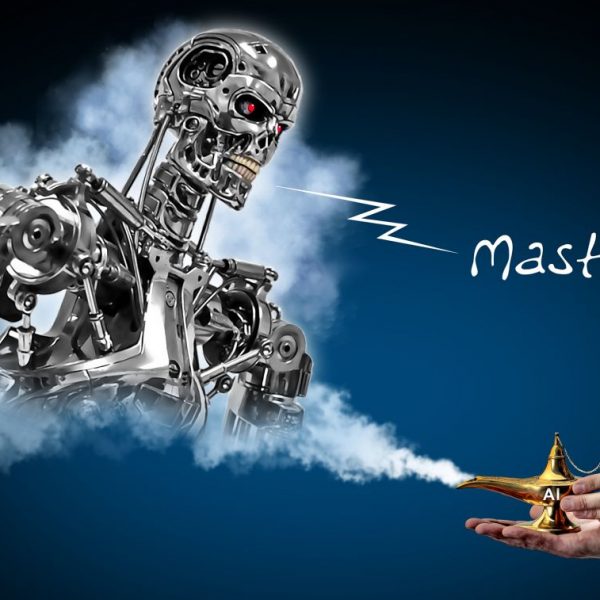
Artificial intelligence is no longer merely a technological tool but is becoming an instrument of regulatory power, which means that the rules of the Great Geopolitical Game may no longer be defined as they once were - that is, through the confrontation between great powers - but rather through a mediated dimension, indeed transposed into a sub-dimension: the virtual digital realm, where AI has, or so it seems, the ability to control cyberspace.
The regulation of AI is today one of the most sensitive and decisive geopolitical issues. Whoever controls AI controls not only data, infrastructure, or digital markets, but also the ability to define what is acceptable, legitimate, and even "true" within contemporary societies. In this sense, AI regulation is not simply about technological security or privacy protection, but constitutes a new arena of global geopolitical conflict that is already active and is already a site of conflict (the first of which is the Third Gulf War).
In recent years, it has become clear that the evolution of AI is proceeding at a pace vastly outstripping the ability of legal systems to adapt. Democratic institutions, parliaments, and international organizations operate at a slow pace, based on political debate and regulatory mediation; in contrast, major tech companies and the most advanced nations in the AI sector innovate continuously and at an accelerated pace. This imbalance creates a regulatory vacuum that is rapidly filled by technologically dominant actors. Consequently, the regulation of artificial intelligence itself becomes an instrument of power.
Today, two opposing models are taking shape. On one hand, there is a "restricted" approach, supported mainly by the major Western powers and their strategic allies, based on the creation of technology clubs capable of defining shared standards among economically and militarily close countries. This model tends to prioritize the protection of industrial interests, competitiveness, and control over global digital infrastructure. On the other hand, a "universal" approach is emerging, promoted primarily through the United Nations, which aims to establish global rules representative of the majority of the world and to limit Western technological dominance. However, even this universal vision faces enormous political, economic, and cultural challenges, as each state interprets AI according to its own strategic interests.
The fundamental problem is that artificial intelligence is not neutral. Every AI system incorporates values, priorities, decision-making criteria, and cultural models defined by its designers. When AI is used to support administrative, judicial, economic, or military decisions, it inevitably produces normative effects. In other words, AI does not merely apply rules; it helps create them. Algorithms select information, classify individuals, determine priorities, and guide collective behavior. This means that AI can become a mechanism capable of shaping the social order in an invisible yet extremely effective way.
This is where the most disturbing question arises: do AIs risk becoming actual weapons of normative control ? If a political or economic actor manages to monopolize intelligent platforms, information flows, and automated decision-making systems, it can influence the behavior of populations without resorting to traditional coercion. This is no longer merely a matter of censorship or propaganda, but of profound and systemic regulatory manipulation. Algorithms can decide which content to make visible, which opinions to amplify, which data to prioritize, and which individuals to consider "reliable." In this way, regulatory production is progressively shifting from democratic institutions to technological systems; consequently, whoever controls the technological means also controls regulatory production, and by extension controls politics, the economy, science, etc.
From a geopolitical perspective, this generates an asymmetric shift in the balance of power that is even more significant than in the past. States possessing the most advanced AI infrastructure gain an enormous advantage over others, not only economically but also culturally and politically. The asymmetry concerns not only technological superiority but, above all, the ability to impose global regulatory standards. If a country controls the AI systems used worldwide, it inevitably ends up exporting its own values, legal criteria, and political vision. Digital sovereignty, therefore, becomes a form of geopolitical dominance.
In this scenario, the regulation of artificial intelligence appears as an extremely complex and ambiguous challenge. Regulating AI too rigidly could slow down innovation and favor competitors with fewer constraints; conversely, weak regulation risks handing immense power to a few tech players or authoritarian states. This is why regulating AI can be described as a veritable "Russian roulette": every regulatory decision entails enormous risks and unpredictable consequences. A mistake could compromise democratic security, increase global inequalities, or consolidate new forms of social control.
The Club-based approach
Several approaches have been adopted to date by the major power blocs. The first is the club-based approach. This model involves a limited group of technologically advanced nations collaborating through platforms such as OECD.AI, the Hiroshima Process on AI, and the G7 toolkit to establish global rules, often geared toward Western economic and geopolitical interests. Despite attempts to create shared standards, national strategies remain very different, making it difficult to reach a consensus.
The European Union considers AI a high-risk technology, particularly in areas such as healthcare, public safety, and critical infrastructure. The European AI Act introduces strict requirements for transparency and algorithmic oversight. The system is based on risk level: the greater the social impact of AI, the stricter the rules for developers. However, several partners believe that certain provisions of the legislation could facilitate political manipulation or economic abuse, while many European companies fear negative effects on innovation, investment, and global competitiveness. The EU actively promotes its standards worldwide through tools such as the Code of Conduct for the labeling of AI-generated content and initiatives like the Global Gateway, which, however, risk limiting local technological development and centralizing decision-making in Europe. Although these policies are presented as a safeguard for human rights and democratic values, they can also become tools of geopolitical pressure.
The United States maintains its leadership in AI through control of key technologies, effectively imposing the standards of major American companies such as Google, Microsoft, and OpenAI. The U.S. approach favors a model of market self-regulation, with flexible and non-binding guidelines, considered essential for fostering innovation. Through recommendations and initiatives by federal agencies, Washington aims to extend the global influence of its standards. The executive order introduced during the Trump administration centralized AI regulation, accelerating technological development but increasing risks related to security and data management. In this system, much of the responsibility falls on private companies, as the U.S. prioritizes maintaining the competitive advantage of its firms.
The United Kingdom adopts a principles-based approach, in line with the OECD, avoiding excessive bureaucracy to keep the domestic AI sector competitive. London positions itself both as a champion of AI safety, through initiatives such as the Bletchley Declaration, and as a global technology hub. For this reason, it favors voluntary codes and sector-specific regulations rather than rigid rules similar to the GDPR. The UK also influences the G7 and the OECD by advocating for the use of "regulatory sandboxes" - controlled environments for testing AI systems - thereby seeking to balance flexibility with international influence.
Singapore, on the other hand, represents a pragmatic, innovation-oriented model. The country prefers flexible, principle-based guidelines over rigid rules, with the aim of fostering technological growth and startups. Its Model AI Governance Framework, updated to include generative and agent-based AI, has become a regional benchmark in Southeast Asia as an alternative to Western models. Through collaboration with the OECD and participation in the GPAI, Singapore seeks to influence global standards by advocating for regulations adaptable to different economies. This demonstrates how even small but technologically advanced nations can play a role in global AI governance.
Between a Club-based approach and a universal approach
The BRICS countries represent a middle ground between the restricted model and the UN-led universal model. The group promotes cooperation on AI in the sectors of education, technology, and digital infrastructure, as highlighted by the 2025 Rio de Janeiro summit, which marked the first intergovernmental attempt to create inclusive AI governance based on national legal systems. The BRICS support data sovereignty, more equitable access to technology, and South-South cooperation, proposing alternatives to Western models through initiatives such as the BRICS AI Success Hub and the Ethical Charter on AI.
However, the group suffers from institutional fragmentation, unclear responsibilities, and operational overlaps. Furthermore, the significant internal imbalance in AI development makes it difficult to formulate common policies: China holds the vast majority of influence in the field of generative AI, while India, Brazil, and Russia carry much less weight.
China aims to achieve innovative technological superiority without adopting a single, comprehensive AI law. Instead, it prefers targeted measures, such as the requirement to label artificially generated content and the AI+ strategy, designed to transform the economy by 2035. The spread of OpenClaw, an open-source AI agent, has accelerated plans to introduce standards for reliability and usage. Through the Digital Silk Road, Beijing exports its regulatory models and promotes inclusive governance based on national sovereignty, while also proposing the creation of a new international body dedicated to global AI regulation.
Russia adopts a hybrid model that combines UN principles and national sovereignty, focusing on transparency, non-discriminatory access to technologies, and voluntary codes of ethics. Key initiatives include the concept of AI regulation by 2030 and guidelines for the financial sector. A major draft law defines the rights and obligations of developers, operators, and users, introducing the categories of "sovereign," "national," and "reliable" AI. On the international stage, Moscow seeks to build consensus through the Russian AI Alliance, part of the global AI Alliance Network.
India, on the other hand, is pursuing a multi-alignment strategy: it is strengthening cooperation with the BRICS while simultaneously adopting Western standards. Through platforms such as the AI Impact Summit, New Delhi is seeking to influence global AI governance in line with its own interests. The country aims to balance innovation and ethical governance through the Digital India Act and an evolving national strategy. By collaborating with both the BRICS bloc and Western institutions, India is building a flexible, sovereignty-oriented model, positioning itself as a leader of the Global South in defining inclusive AI policies.
Universal approach
Many countries in the so-called "global majority," concerned about new forms of technological dependence and digital colonialism, advocate for the need for international AI regulation under the guidance of the United Nations. The goal is to address issues such as the digital divide and technological control by major powers through initiatives like the 2025 UN Global Dialogue on AI, designed as an inclusive platform to define standards based on rights and open innovation, supported by an independent group of international experts.
The United States and the United Kingdom, however, oppose UN oversight, preferring to maintain autonomous platforms to preserve their strategic advantage over China. This fragmentation increases international mistrust and privacy risks, while the growing militarization of AI in conflicts makes the introduction of shared rules increasingly urgent. Ethical guidelines and general principles are no longer sufficient: binding global standards are needed to limit the risks of AI and ensure international stability. Without a common agreement, the threats arising from the uncontrolled development of artificial intelligence will continue to grow.
The various approaches are addressing the issue from different perspectives, attempting to provide answers that sometimes seem inadequate or are too far behind the actual technological progress of these power structures. Yet this is inevitable, because technology has now begun to move at such a pace that it is dragging the centers of geopolitical power along with it - no longer the other way around. This global shift, which is already upon us, could soon leave us literally speechless.