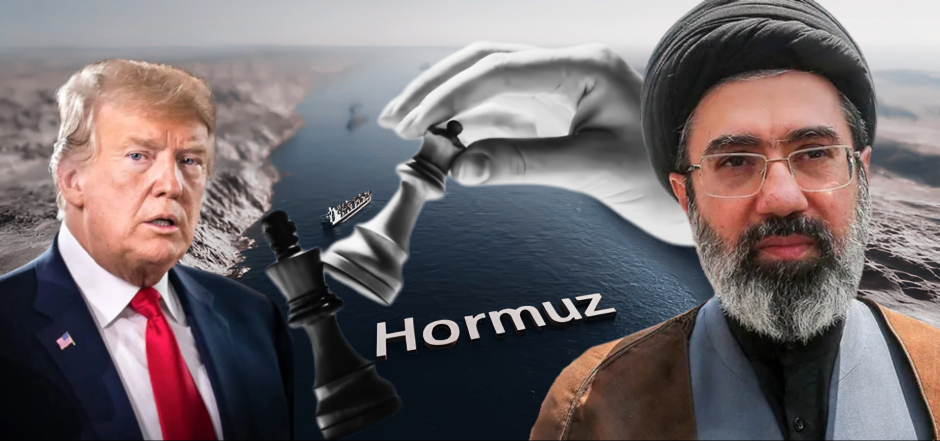
Iranian retaliatory strikes on three US bases in the Persian Gulf, in response to continued aggression against southern Iran, inflicts American losses and throws the future of an already shaky ceasefire into doubt. Stifling the Trump administration's attempts to achieve leverage, Tehran now halts communications and raises the stakes regionally.
The start of June has been marked by an increase in US aggression in the Persian Gulf. At least 6 US personnel and contractors were injured late last month in Iranian retaliatory strikes, with 3 US bases now having been struck within the past days alone. What had been otherwise sporadic low-intensity warfare, between Iran's Islamic Revolutionary Guard Corps (IRGC) and the US navy, that has taken place since the imposition of the temporary ceasefire on April 8, recently evolved into a scenario that could initiate a return to full-scale war.
Following the Iranian downing of a hostile US MQ-1 attack drone over the Persian Gulf, American forces decided to launch a series of strikes on military sites located in Iran's Goruk and Qeshm Island. Despite US Central Command's claims that they "responded" to an IRGC provocation, the action in question was the Iranian air defence shooting down their attack drone. On June 1, Tehran announced that it had carried out retaliatory strikes on US forces stationed at a base in Kuwait, from which they say the ceasefire violations against its territory were carried out.
At least two ballistic missiles were fired towards US forces, located at a distance of around 40 kilometers from the Iranian mainland. While CENTCOM announced that "no American personnel were injured" in the attacks, leaked reports had emerged revealing a number of casualties had been inflicted amongst US servicemembers and contractors stationed at Ali al-Salem Base at the end of May.
On June 2, the IRGC also responded to US strikes on southern Iran, launching its largest wave of missiles and drones at two US bases in Kuwait and America's 5th Fleet headquarters in Bahrain. Initially, US Central Command denied any damage from the attack. Satellite imagery later revealed impacts on hangars/shelters at both Ali Al-Salem airbase and Camp Buehring base in Kuwait, in addition to what appeared to be smoke rising from Sakhir Airbase in Bahrain. CCTV footage of a drone striking a terminal of the Kuwait International Airport, also emerged the following day, which Washington is yet to address.
On May 27, Kuwait announced that it had shot down a single Iranian ballistic missile fired towards US forces stationed inside the Gulf nation, stating that there was no damage nor injuries from the strike. However, US sources speaking to ABC News days later revealed that there were in fact an unspecified number of injuries caused to American personnel, along with contractors, attributing the casualties to falling debris from the allegedly intercepted missile.
The ballistic missile attack was the most significant strike carried out by the IRGC since the beginning of the ceasefire and came after US strikes against Bandar Abbas in southern Iran. On May 25, the American navy had opened fire on two IRGC speedboats near the Strait of Hormuz, killing 4 Iranian personnel and triggering retaliatory fire towards their warships.
Since the ceasefire was implemented, following intensive Pakistani mediation, Tehran has expressed its frustration at the US violating the terms of the truce. A major condition of the temporary ceasefire agreement has been the inclusion of Lebanon in the deal, which the Israelis have since failed to comply with, which has meant that Tehran has ordered the continued closure of the Strait of Hormuz as a result.
Back in April, US Secretary of War Pete Hegseth was quick to return to the escalatory rhetoric of his President, threatening that his forces are " locked and loaded" - ready to destroy Iran's energy infrastructure.
He echoed Donald Trump's threat that " a whole civilisation will die tonight", referring to his threat to wipe out Iranian power plants and brides; a blatant violation of international law and speculated to have been hinting at the use of nuclear weapons.
On June 1, in addition to Iran's ballistic missile strikes on US forces in Kuwait, it also adopted the launch of a cruise missile striking the MSC Sariska V ship that the IRGC says is affiliated with "American-Zionist interests".
Meanwhile, the Iranian military and political leadership had announced not only the cessation of contacts with US negotiators over repeated ceasefire violations, but took matters a step further. Iran also directly threatened to strike Israeli targets in northern occupied Palestine, if Tel Aviv is to go through with its threats to return to bombing the Lebanese Capital.
Israeli Prime Minister Benjamin Netanyahu and his Defence Minister Israel Katz had announced their intention to strike southern Beirut, on Monday morning, but halted the implementation of the strikes following Iran's threats.
The commander of IRGC's Quds Force, Esmail Qaani, also issued another threat, stating that continued Israeli ceasefire violations in both Lebanon and Gaza "will mark the determination of the resistance axis to expand support from both fronts, take steps to activate other fronts, and equate the traffic situation of the Bab El Mandeb Strait with the Strait of Hormuz".
A first direct exchange of fire between Iran and the US, during the ceasefire, occurred on May 7. However, the hardline stances of the US Trump administration, accusations that the American President is unserious in his efforts to reach a ceasefire and is instead engaging in market manipulation through his rhetoric, in addition to the continued low-intensity battles and economic warfare waged by both sides, indicates that the fragile truce may be waning.