Finian Cunningham
It is self-serving career politicians like Burnham who are fueling the danger of war with Russia.
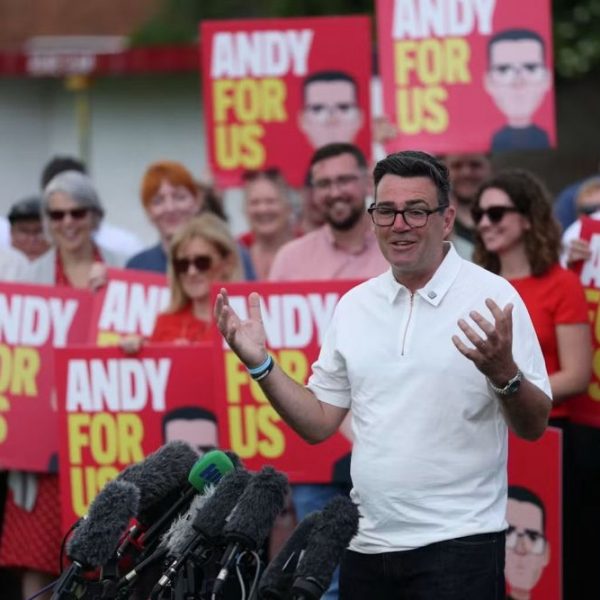
Britain is now lining up its seventh prime minister in a period of just 10 years. The heir apparent to 10 Downing Street is Andy Burnham, who is set to take over the unenviable task of running Britain following Keir Starmer's resignation this week.
Starmer finally quit as the Labour Party leader after weeks of mounting pressure to step down. He had only been in office for two years, but his dwindling poll ratings made his tenure unsustainable.
Burnham is due to take over within weeks. The 56-year-old former mayor of Greater Manchester is reckoned to be a fresh face who will revive Labour's popularity going into the next general election.
But given the fickle nature of British politics, there is no guarantee that Burnham will deliver. After all, Starmer was elected with a landslide vote in July 2024, only to end up a reviled and ridiculed non-entity. There were many nails in his political coffin. Unpopular tax hikes and his sleazy association with former ambassador to the United States, Peter Mandelson, who was forced to resign over the Epstein scandal, were among the controversies that undermined Starmer's authority.
But the biggest nail was not so much the loss of public respect. Starmer was ousted for his ineptness in following the British state's agenda of militarizing the economy. As with other European NATO states, Britain is driving up its military budget at the expense of public services and welfare. The target set for NATO members is to allocate 3.5 per cent of national economic growth to military spending by the next decade and 3 per cent by 2030. Starmer's government was not meeting the target.
This relentless militarization is destroying European societies and placing their economies on a war footing. The allocation of resources is justified by the constant media narrative that Europe is facing an imminent threat from Russia.
In its latest Defense Investment Plan, Starmer's government came up with an extra military budget of £13 billion. This was not enough for Britain's "defense establishment". It had wanted a figure of £23 billion. On June 11, the Minister of Defense, John Healey, resigned in protest, claiming that Starmer was failing to protect Britain. Healey was joined by another minister, Al Carns, who also accused the prime minister of endangering Britain's national security. The shock resignations were the fatal damage to his premiership.
Healey and Carns flagged Russia as the pressing threat to Britain's security. As in other European countries, NATO is warning that the alliance could be at war with Russia within five years, and therefore, all military budgets must be increased dramatically.
It's not that Starmer was refusing the militarization agenda. All his cabinet ministers were told to cut department budgets to find extra money for the military. Starmer's downfall was due to his lack of zeal to make the necessary brutal cuts.
This issue will now determine how Andy Burnham fares in Downing Street. The popular North of England politician is little known internationally, and it's not clear what his policies are. He seems to have a knack for sitting on the fence and ingratiating himself with whatever audience is listening. In other words, he is pliable.
Burham is on record for saying that he "won't be squeamish" when it comes to cutting public services to fund the military budget.
The British state has already given populist Andy his marching orders.
Lord Richard Dannatt, the former Chief of General Staff (2006-2009), in a timely media interview, advised Burnham to "be like Churchill and not Starmer" and to prepare Britain for war.
Dannatt said: "He [Burnham] has a choice - to either order the Treasury to come up with the money to get us to 3 per cent by 2029, or to call out the defence lobby and assert that the UK is safe despite the findings of the Strategic Defence Review. He would be wise to follow the former course and foolish in the extreme to follow the latter. Given that he wants to bring change and hope across the country and the economy, he needs to bite the defence bullet and get that lobby off his back. Is he going to be a Churchill or a Starmer?"
British establishment figures like Dannatt and several other military chiefs have been repeatedly telling Britain's media that Russia is a growing national security threat. The media have dutifully amplified the warnings that Britain and NATO could be at war with Russia by 2030. At the rate of scaremongering across Europe, the chances of a war seem to be a lot sooner.
The hapless Starmer certainly suffered from a charisma bypass and ended up being despised by ordinary Britons for his dullness and dithering. But it was the British deep state and its media control that gave Starmer his resignation papers over his lack of militaristic compliance. This was in spite of the fact that Starmer increased the military budget by cutting welfare and hiking taxes. He was also slavishly supportive of the Kiev regime and one of the most belligerent voices in Europe against Russia. Nevertheless, Starmer was still not gung-ho enough for Britain's imperialist planners and their lobbyists.
This is the issue that will also define Burnham's Downing Street career. If he delivers on not being squeamish about slashing public spending for the benefit of the military and war against Russia agenda, then Burnham will be allowed to stay in Number 10 even if he ends up being despised by voters. He has received his marching orders, and the bets are that this bland politician will obediently follow them.
It is self-serving career politicians like Burnham who are fueling the danger of war with Russia.