June 30, 2026
How Iran Defeated America
Prof. John Mearsheimer of the University of Chicago ranks as one of our most distinguished political scientists. As early as the beginning of May he already declared that President Donald Trump's ill-fated war against Iran was already so irretrievably lost that the only way he could end it and save the world economy from total disaster would be "to surrender."
That statement proved prophetic. The provisions of the "Memorandum of Understanding" that Trump recently signed with Iran were so extremely one-sided that the vast majority of observers, whether supporters of the war or its opponents , whether Americans or Israelis, generally described the document in such humiliating terms.
Indeed, Prof. Robert Pape argued that the outcome of the war may have potentially established Iranian regional hegemony over the Persian Gulf and its vast natural resources. An Israeli national security expert interviewed by the New York Times suggested much the same thing:
"We are remaking the region," Chuck Freilich, a former Israeli deputy national security adviser, said on Thursday.
"Iran came out stronger, and I believe is now the regional hegemon," he added. "They stood up to the U.S., the global superpower. They can have missiles, and there's nothing in the agreement about the nuclear issue except we'll talk about it. This is an Iranian victory over the U.S. and Israel."...
Over the weekend, a lengthy WSJ investigation described the huge destruction that Iran had inflicted upon the American naval base in Bahrain, our most important in the region, which will probably never be rebuilt. Our many other regional bases also suffered billions of dollars of damage at the hands of inexpensive Iranian missiles and drones so we might permanently abandon all of those facilities, thereby achieving one of Iran's primary strategic objectives.
Soon after he launched his original attack against Iran, Trump had boastfully proclaimed that he would only accept "unconditional surrender." So when an interviewer recently asked him what had become of that demand, our president responded with his typically outrageous bluster, declaring that he'd indeed successfully forced the Iranians to sign an agreement along those lines. This led Mearsheimer to joke that Trump was actually being truthful, but the country that had unconditionally surrendered had been America. Both Prof. Pape and Tucker Carlson said much the same thing.
Perhaps because of his total ignorance of history, Trump willingly signed the document at Versailles. In many respects the terms recalled the infamous Treaty of Versailles ending the First World War that Imperial Germany had been forced to sign over a century ago, a fact noted with considerable amusement by some analysts.
Unreal: the symbolism of Trump signing a surrender agreement at Versailles in which the US agrees to pay massive reparations is just too perfect.I wouldn't be surprised if Macron weaponized Trump's complete ignorance of history and told him something like: "Mr. President,... t.co
- Arnaud Bertrand (@RnaudBertrand) June 18, 2026
Back in March I wrote 👇 that Iran was winning, and not only strategically but tactically too, but I genuinely didn't expect it would eventually lead - 3 months later - to a complete US surrender.Because, make no mistake, this is what the "deal" that was just signed is: a... t.co
- Arnaud Bertrand (@RnaudBertrand) June 18, 2026
The shocking nature of the agreement may be illustrated by a single, striking element. In Paragraph 6, America committed to supporting the creation of a fund for "the reconstruction and economic development" of Iran that would be at least $300 billion in size. According to Wikipedia, Iran's current GDP is around $225 billion in nominal terms, so this amounted to roughly 1.3 years of Iran's total economic output. Therefore, a comparable figure for America would be around $42 trillion(!) in financial reparations, an amount somewhat larger than our entire accumulated national debt. If we had defeated some other country in a war and forced it into promising to help pay off the entire American national debt, I'm sure that our leaders would have endlessly crowed about their stupendous victory.
A peace agreement involving such onerous financial provisions seemed extremely rare in recorded political history. The figure mentioned was roughly comparable to the outrageous total reparations payments that Germany had been forced to promise the Allied countries in its own 1919 Treaty of Versailles. But Germany never actually paid that sum, which anyway was to have been spread out over a dozen years. So the financial terms of America's defeat might certainly be one for the record-books.
Purely on the geopolitical considerations, Prof. Mearsheimer argued that America had suffered the greatest strategic disaster in its 250 year national history , replacing the Iraq War of a quarter century ago at the top of the charts.
A few days ago Tucker Carlson interviewed influential MAGA military analyst Brandon J. Weichert whose early analyses of the severe difficulties that America was encountering in the war had proven accurate, and he provided a good summary of the longer-term consequences that I would encourage people to watch.
Admittedly, the accord that we signed with Iran was merely a preliminary one, and neither Trump nor America has been much known for faithfully fulfilling their solemn agreements. Indeed, over the last week Trump has unsurprisingly resorted to numerous "confabulations," declaring the pact included all sorts of things that it did not and that the Iranians had made all sorts of other commitments they strongly denied, with Vice President JD Vance sometimes offering some similar misrepresentations. In a FoxNews interview, Trump even threatened the lives of the Iranian negotiators, hardly normal diplomatic protocol. The Israeli government refused to comply with any of the Lebanese provisions of the document.
By the weekend, there were already strong signs that the agreement might be collapsing. A cargo vessel attempting to transit the Gulf refused to take the route demanded by the Iranian IRGC and was hit by a drone, after which Trump ordered a bombing attack in retaliation and the Iranians struck back, leading to a cycle of strikes and counter-strikes. So perhaps the war will be restarted and the Strait soon be closed once again, with a large majority of the cargo ships and tankers still trapped inside, and the global oil supplies once again heading towards "tank bottom."
But regardless of what happens, the humiliating terms the Iranians had forced Trump to sign certainly demonstrated the tremendous success of their strategy against an adversary whose annual military spending has been more than 100 times greater. Over the last decade, we had spent well over two trillion dollars on our navy, with one of its most crucial missions being control of the vital sea lanes of the Persian Gulf, but it proved totally useless against the Iranian forces.
Russia's Unsuccessful Ukraine War
I think that the remarkable results of Iran's bold and courageous military strategy should be given very careful consideration by the Russians. The latter are now well into the fifth year of their grinding war against Ukraine, a "special military operation" that had begun in February 2022 and was originally expected to last only a month or two.
At the cost of a few thousand lives and a few weeks of heavy combat operations, Iran has apparently inflicted a severe strategic defeat upon America, the world's reigning global superpower, perhaps even taking an important step towards establishing itself as a regional hegemon in its own right.
Meanwhile, Russia's war against a much weaker Ukraine has already lasted longer than its colossal Great Patriotic War against Nazi Germany. Yet Russia has still failed to capture much of the territory of the four eastern oblasts that it had officially annexed and incorporated back in September 2022.
Casualty figures are hotly disputed, but I think that the Russian forces have probably suffered many hundreds of thousands of dead and wounded, including at least a couple of hundred thousand fatalities. Although Ukrainian losses have likely been far greater, such Russian casualties still loom very large in a population of about 143 million, especially one that has low fertility rates, rates that are far below replacement levels. Hundreds of thousands of severely wounded or maimed Russians may have become a grim and unwelcome sight across all the cities, towns, and villages of that huge country.
Russia is far stronger than Ukraine and Iran is far weaker than America, but the results of the two conflicts have been exactly the opposite of what might have been expected.
Worse still for the Russians, there has been a steady escalation in the boldness and size of the Ukrainian strikes deep within Russian territory. Last month, Moscow was attacked by many hundreds of heavy drones , and earlier this month St. Petersburg suffered a similar fate. For huge Ukrainian attacks to be regularly striking Russia's most important cities represents a tremendous national humiliation.
The sharp contrast between the battlefield achievements of Iran and Russia was shown on the front page of this weekend's edition of the Wall Street Journal. One story reported the great destruction the former had inflicted upon America's Persian Gulf bases. Meanwhile, another described the very successful recent waves of Ukrainian drone attacks against Russia's prized Crimea territory, which had led to a severe fuel and electricity crisis and forced the declaration of a state of emergency.
Ukraine has also begun successfully attacking Russian oil refineries, inflicting substantial damage upon that country's main export industry.
Last month, a Ukrainian drone strike on a college dorm killed 18 young women studying to become teachers, and there is considerable speculation that this atrocity was deliberate, intended to embarrass Russian President Vladimir Putin and demonstrate his weakness in the face of such brutal attacks.
Indeed, the Ukrainian government has now grown so self-confident and aggressive that it recently threatened to expand the war by attacking neighboring Belarus, a longtime Russian ally.
Meanwhile, advances in drone technology seem to have drastically reduced the pace of Russian progress on the battlefield, with signs of a deadlock developing.
For most of the last few years, Prof. Mearsheimer has been confident that the weight of Russia's superiority in manpower and munitions would ultimately prove decisive and its complete victory on the battlefield was merely a question of time. But last month he began to reassess that longstanding perspective, suggesting that contrary to his own expectations, the ultimate result of the Ukraine War might be the sort of frozen conflict that some others had long predicted.
When the Ukraine war suddenly erupted in February 2022, the world soon discovered Mearsheimer's 2016 public lecture on the major Western provocations that had been behind the conflict and his prescient predictions that a future war might result. His presentation has now attracted 30 million views on YouTube, quite possibly more than any other academic lecture in the history of the Internet.
Prof. Jeffrey Sachs of Columbia University spent decades as an important economic advisor to Russia, Ukraine, and the other countries in the region, making him a direct eyewitness to many of the important developments responsible for the conflict. Over the years he has provided his first-hand account of the circumstances responsible for the war on a number of occasions, including in a lengthy interview with Tucker Carlson a couple of years ago, confirming Mearsheimer's analysis.
The goal of the West had been to use Ukraine to severely weaken Russia. So suppose that the fighting eventually subsided leaving a bitterly hostile and undefeated Ukraine under full Western domination. Ukraine could be heavily resupplied with advanced weapons, giving the West the option of restarting the conflict whenever it chose. This would be a disastrous outcome for Russia, constituting a major strategic defeat after years of warfare and hundreds of thousands of lost lives. Yet based upon the existing Russian military strategy, this sort of result seems increasingly likely.
Dr. Gilbert Doctorow spent many years working in Russia on various business ventures. Although he now lives in Belgium, he still regularly visits that other country and also monitors its situation both through his personal contacts and by watching the leading political discussion shows. Over the last year or so, he has grown increasingly skeptical of Russian military progress, and a few days ago he published a short piece on his Substack bearing the highly provocative title "Is Russia Losing the War?"
As he explained in an interview a few days ago, his piece was soon translated into Russian and published in its entirety under that same controversial title in a number of well-regarded Russian media outlets, suggesting that his ideas deeply resonated across much of Russian society.

His piece opened by making the following points:
Is Russia losing the war?Major media such as The Financial Times and Le Figaro have in recent days provided extensive coverage on the status of the Russia-Ukraine war, presenting strong arguments for our reconsidering who in fact is winning and who is losing.
As these media point out with reference to Ukrainian monitors reporting gains and losses of territory, the Russian spring offensive this year has produced dismal results, capturing in May something like 130 square kilometers of Ukrainian held Donbas, whereas a year earlier the Russian advance was 10 times greater. The explanation they offer is the progressively more impactful and destructive Ukrainian drones which are raining down on the battlefield and make large troop formations impossible.
I note that the Russian state news remains entirely silent on these reports. They are not challenged, meaning they are likely correct...
Meanwhile, the latest reports in the FT make the point that I had been making in past weeks, namely that the drone warfare is a great leveler. A force of 10,000 to 20,000 drone operators is all that Ukraine needs to hold its own against the half million Russian soldiers deployed in the Special Military Operation. The fact that Ukraine has lost millions of soldiers to death, severe injury and desertion now counts for nothing...
Will President Putin rise from his timid, now self-destructive strategy of non-response to the growing threats to Russian national security ? Or will he be overthrown in a palace coup ? These are the key questions of the day.
A Mearsheimer interview a few days ago raised many of these same questions.
In an interview on Sunday, Doctorow reiterated his earlier remarks, emphasizing that the Ukrainian attacks had produced growing economic difficulties inside Russia and a great deal of dissatisfaction with the unsuccessful conduct of the war. He believed that there was the real possibility of a palace coup against Putin.
During the height of our own disastrous Vietnam War, President Richard Nixon famously warned in 1970 that our adversaries might soon regard America as "a pitiful, helpless giant." Those words have sometimes come into my mind when I read the descriptions of Russia's current military situation.
The NATO War Against Russia and the Russian Reaction
Both Doctorow and Mearsheimer agreed that the crucial factor behind all of these Ukrainian successes was that the Europeans have gradually escalated what began as a proxy war into an outright NATO military conflict with Russia.
Not only have the Baltic states allegedly begun providing bases for drones and opening their airspace to those attacks, but NATO forces are now seizing Russia's oil tankers on the high seas, actions that the Kremlin has rather weakly condemned as piracy. Just as importantly, the Russians were convinced that the NATO countries have become the weapons manufacturing arm for Ukraine, and Doctorow found those claims credible:
Where Western propaganda comes in is to be found elsewhere in their reporting. They are alleging that the vast numbers of more effective and farther-reaching Ukrainian drones in operation today are the result of the clever work of Ukrainian designers and manufacturers, who stay several steps ahead of the Russians in this domain. To be sure, there is no publicly available information to deal with this question either way. The fog of war, meaning close military censorship, deprives us of any reliable information. However, I will wager that the breakthrough in the Ukrainian cause on the ground is being provided by the United Kingdom and other NATO countries shipping their latest drones to Ukraine in quantity.
Other knowledgeable observers have begun saying similar things.
Alastair Crooke has spent much of his career first as a senior MI6 officer and more recently as a British diplomat and peace negotiator. Earlier this month he'd mentioned that Britain had promised to send some 120,000 drones to Ukraine, and in a recent interview he emphasized that the leaders of the European NATO countries seemed fully committed to war against Russia and were totally confident of a military victory. In a particularly bizarre indication of their beliefs, he claimed they were talking about building POW camps for all the Russian prisoners who would be taken captive.
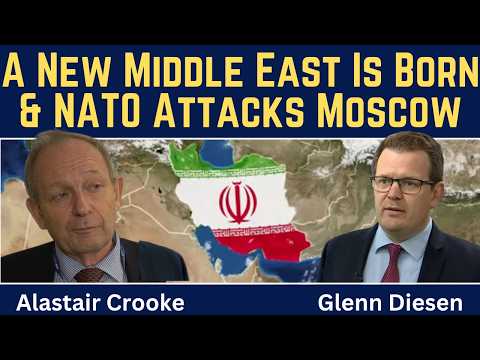
Crooke had been interviewed by Prof. Glenn Diesen, and the latter then expressed very similar sentiments on Andrew Napolitano's podcast. The actions of the European NATO countries had long since moved far beyond mere support for a proxy war and they were now locked in what amounted to a direct war against Russia. They were hitting that country with missiles and planned to greatly increase their armaments production while assuming that their industrial base remained a safe zone and that Russia would never dare retaliate. The Europeans had somehow convinced themselves that the Russians would just have to accept being continually bombed by the Europeans and Americans without ever responding in kind, and this had led to a dangerous and totally untenable situation.

A couple of days later, Mearsheimer said much the same thing in his own interview. The European countries had now essentially declared war against Russia, crossing every red line while remaining fully convinced that as members of NATO their Article Five guarantee rendered them completely immune from any Russian military retaliation.
However, he believed that their confidence was completely mistaken and that Russia was preparing to attack targets in Europe. This produced an exceptionally dangerous situation yet none of these developments were being significantly covered in the mainstream Western media. So the European leaders might be sleepwalking into a gigantic disaster, much like their predecessors had done in 1914.
A few days ago Kremlin spokesman Dmitry Peskov declared that nuclear weapons were the sole factor protecting the world from a global war. Mearsheimer believed those remarks reflected the increasing consideration that Russian leaders were giving to ending the war by using nuclear strikes to compel the NATO countries into abandoning their financial and military support for Ukraine.
Subscribe to New Columns
Although Britain and France both possessed their own nuclear retaliatory capability and America has an enormous strategic nuclear arsenal, Mearsheimer still felt it was unlikely that the West would respond in kind to any such small Russian nuclear demonstration strikes on NATO countries. But with all due respect to the noted scholar, "unlikely" seems a very thin reed of hope that we could avoid the sort of mutual nuclear war exchanges that could easily escalate and destroy most of human civilization.
For more than eighty years the world has avoided using nuclear weapons in battle, and I believe that absolutely every other option should be considered before we allow that genie out of the bottle.
Even if nuclear war between Russia and the West did not result, surely many other countries would immediately feel the need to develop or acquire nuclear weapons of their own, resulting in an unprecedented wave of dangerous proliferation. Furthermore, Israel's bloodthirsty and extremely irresponsible government might take advantage of the Russian precedent to begin using its own nuclear arsenal against Iran or other countries that it viewed with great hostility.
The indications are that the Russians would first begin by launching conventional attacks against NATO targets, probably against one of the small Baltic countries or perhaps one of the large drone factories. But Mearsheimer was firmly convinced that these would be completely ineffective in reestablishing Russian deterrence and that NATO would merely respond in kind, leading to several rounds of conventional strikes and counter-strikes that would eventually force the Russians to go nuclear. I tend to agree with that assessment.
For the last couple of years I've been regularly emphasizing the strategic dilemma Russia faced in its de facto war against NATO and warning of the dire consequences if it failed to reestablish its deterrence:
One strange aspect of this current conflict is that Russia has essentially been fighting NATO with both hands tied behind its back. NATO missiles using NATO targeting intelligence and key NATO personnel—legally laundered through the fig-leaf of its Ukrainian proxy—have regularly struck deep inside Russia, inflicting many serious blows, including sinking the flagship and other vessels of Russia's Black Sea fleet, but Russia has refused to respond in kind. So in effect, the NATO countries have constituted a safe haven for producing and assembling the military hardware and systems used to equip Ukraine's forces without suffering any risk of Russian retaliation. Russian cities have been struck by NATO missiles but NATO cities and their populations have not faced any similar threat...Every objective observer recognizes that the current conflict amounts to a NATO proxy-war against Russia, with NATO supplying the massive financial support, advanced weaponry, training, targeting intelligence, and even key personnel that have allowed Ukraine to give Russia so much trouble. With such full NATO backing, the Ukrainians have frequently inflicted stinging losses upon Russia's far superior forces. Indeed, by the standards of international law, NATO had long since already become a co-belligerent in the conflict, though for geopolitical reasons the very cautious Russians have refused to publicly declare that reality and take retaliatory measures.
Such caution is not unwarranted. Taken together, the countries of the NATO alliance have a combined population of nearly one billion, their recent annual military spending is 54% of the world's total or about $1.3 trillion, and their aggregate GDP is nearly $50 trillion. By contrast, Russia's population is only 138 million, its military spending is $145 billion, and its total GDP is $2 trillion. So Russia seems outmatched roughly 7-to-1 in population, 9-to-1 in military spending, and 25-to-1 in GDP. All these financial figures were given in nominal dollars and use of much more realistic PPP dollars would shrink these ratios by a factor of two or more, but a huge imbalance would still remain. Similarly, the inclusion of Russia's close ally China would more than equalize these figures, but China's military forces are almost entirely pointed towards the Taiwan Strait, the South China Sea, and other nearby coastal areas, so its vast power cannot be easily brought to bear in the European theater, where Russia confronts NATO...
Given that NATO's total population and industrial base is so many times greater than that of Russia, if the alliance holds firm, Russia might eventually be ground down over time. What was originally intended as a very limited punitive attack against Ukraine lasting just a few weeks has now gone on for well over three years, producing huge casualties on both sides, and it must be brought to an end. Meanwhile, the lack of any sufficiently strong Russian retaliation against NATO has merely emboldened the Western leaders to take more and more reckless and provocative actions, actions that at some point might result in a catastrophe for the world.
How Russia Could Win the War With Hypersonic Weapons
Diagnosing Russia's strategic dilemma is one thing but proposing an effective solution is quite another.
For the last few years, Russia has retaliated against these NATO/Ukrainian strikes deep inside its territory by hitting Ukrainian targets with much larger waves of missiles and drones. But the leadership of the West views the Ukrainians as merely disposable cannon-fodder, tools for weakening Russia, so they have hardly been intimidated by any of this.
In his article and his interview, Doctorow seemed to advocate a stronger form of this same approach, saying that the Russians should decapitate and destroy the Ukrainian regime. But even if that were possible, would the death of Volodymyr Zelensky and most of his colleagues make any real difference or effectively deter Western leaders ? Given their massive corruption, surely they would be even more useful as heroic martyrs in NATO propaganda than in their current roles. And couldn't they be very easily replaced by others of the same ilk?
Would the Russians want to level Kiev, the city that represented the foundational site of Russian civilization ? Kiev means nothing to the West but a great deal to Russia.
I think that Russian missile strikes against the Baltic countries or even some NATO bases would be just as ineffective at coercing the Western leadership since NATO would merely respond in kind. America's nuclear arsenal is roughly the same size as Russia's, so even the use of nuclear weapons might not necessarily be effective.
However, I do believe that an entirely different Russian conventional strategy might very well succeed. By demonstrating that they could destroy any Persian Gulf target at will, the Iranians had established their clear escalation dominance, and the Russians should learn from that successful lesson and do the same.
As I've regularly argued, the crucial point is that the Russians should rely upon those weapons systems in which they enjoyed absolute superiority:
Russia currently has the world's largest nuclear arsenal, with the estimated number of its warheads somewhat outnumbering America's total. Much more importantly, it also deploys a very powerful suite of unstoppable hypersonic missiles as either conventional or nuclear delivery systems. Despite our own gargantuan annual military budget, comparable in size to that of the rest of the world combined and many times greater than what Russia spends, all American efforts to develop these same sorts of advanced missile systems have been marked by years of repeated, embarrassing failure.A few months ago, Russia also successfully demonstrated its revolutionary new Oreshnik hypersonic missile system, which even in its purely conventional version provides striking power similar to that of a nuclear warhead, thus allowing Russia to inflict unprecedented destruction without crossing the nuclear threshold...
If used properly, I believe these weapons would allow the Russians to establish their full escalation dominance over the entire European theater of operations. The right sort of very dramatic, high-profile attack would pierce the media clutter and fully concentrate the minds of both the NATO leaders and the voting populations that they claimed to represent. Casualties and civilian damage could be absolutely minimized, greatly reducing the pressure for any NATO attempt to respond in kind, which would anyway be almost impossible. The Russian attack would represent a classic example of the power of "the propaganda of the deed."
Beginning in 2024, I have repeatedly argued that instead of targeting the territory of a small and peripheral Baltic state or some military base, the Russians should instead use the uniquely powerful weapons they possessed to unleash a demonstration strike against the very heart and central symbol of their NATO adversary:
The idea is a simple one. Russia should publicly declare that it now considered NATO a co-belligerent in the Ukraine war and that Russia would therefore retaliate against the Western alliance. But instead of any lethal attack against NATO armed forces, the retaliation would initially take the form of a live demonstration of superior Russian strategic military power.The Russians could announce their plans for a hypersonic missile strike against the NATO headquarters building in Brussels, Belgium, with the attack scheduled for 12 noon in three days' time.
That sort of advance warning would attract enormous international attention and coverage, certainly becoming the world's top news story during the several days that followed, and easily penetrating any obfuscating layers of Western media. Providing NATO with plenty of time to evacuate the building and those nearby would prove that Russia sought to absolutely minimize any loss of life, thereby refuting years of inflammatory Western propaganda.
Given the intent of the operation, the Russians could publicly suggest that NATO defend its HQ by ringing it with all of its best anti-missile defense systems, thereby allowing a real-life test of the two competing technologies. NATO leaders and highly paid military contractors who had spent years or decades boasting of the great effectiveness of their enormously expensive anti-missile systems could prove the sincerity of their convictions by courageously locating themselves in the targeted HQ building at the time of the attack.
Assuming that the multi-missile strike still succeeded in totally leveling the NATO HQ, the result would be few if any unnecessary human casualties along with a simultaneous demonstration that Russian hypersonics were indeed unstoppable by any NATO defenses, with obvious political implications for the citizens of the Western alliance. The city of Brussels would have acquired a huge new hole in the ground, a very visible local landmark that would surely appear on the front pages of every newspaper in the world, perhaps even eventually converted into a permanent political monument.
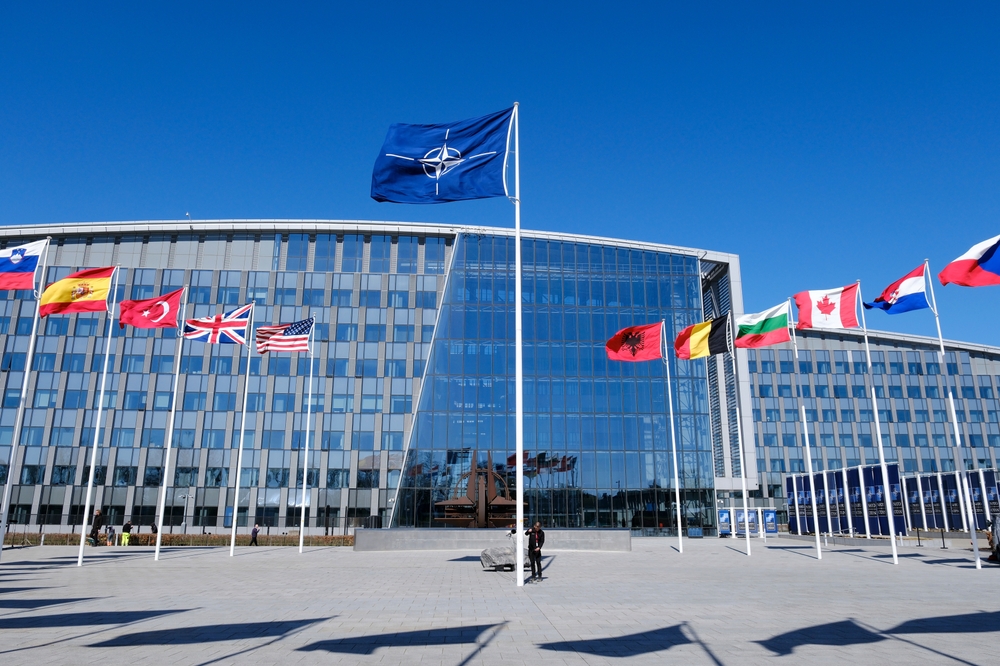
NATO Headquarters in Brussels, Belgium
An important aspect of the attack was that the Russians would provide NATO with every possible advantage in defending its headquarters building, including plenty of advance notice and an exact scheduled time-window for the missile strike. So by still destroying the NATO HQ while defeating NATO's best anti-missile defense systems, the Russians would have demonstrated that they could destroy at will any target anywhere in Europe. NATO defenses were useless and Russia possessed full escalation dominance.
Over the last year or so, Putin's lack of effective retaliation against NATO attacks has cost him some popularity. His approval numbers are still very high, but considerably lower than they used to be. However, once he destroyed the NATO HQ in such a ultra-high-profile strike seen by billions all across the world, I think his approval ratings would soar to 95% or 98%. That would fully solidify his domestic political position and show the NATO leaders that their plan to gradually push him from power was absolutely hopeless.
Perhaps NATO would threaten conventional retaliation. For example, their leaders could try to strike Moscow with hundreds of heavy drones or Storm Shadow missiles, or attack Russian refineries deep within the country or other important infrastructure, or even hit a college dormitory full of teenage girls in a terror attack.
But they have already been doing all of these things, so this would hardly constitute much of a retaliatory threat. And the fact that the NATO officials would understand that they all now had targets on their backs and could be annihilated within minutes by new Russian missile strikes might lead them to think twice before taking such actions. Lack of any effective NATO retaliation would leave these political leaders even weaker and less popular than they already were, perhaps pushing a few of them from power.
NATO might soon agree to abandon Ukraine, cutting off the supply of money and weapons that keeps that country afloat, in which case the regime would collapse, ending the war.
If the NATO leaders remained obdurate, the Russians could next explain that they regarded the NATO factories producing weapons for Ukraine as legitimate military targets. Britain has reportedly promised to ship some 120,000 drones to Ukraine. So the Russians could declare that they would destroy a couple of those British drone factories, again with three days' advance warning and a scheduled time-window in order to absolutely minimize any loss of life. They would then go ahead and destroy those factories.
If more coercion were still needed, the Russians could next announce that they would target and destroy one of three drone factories on a list without indicating which one in advance. So all three factories would need to be fully evacuated, further demonstrating that Russia now exercised absolute veto power over European military production.
Once the Russians began destroying the NATO factories producing weapons for Ukraine, Western insurance companies would surely declare that they would prohibit the corporations they covered from using their industrial facilities for such obviously dangerous purposes. It had actually been lack of insurance that shut down the tanker traffic in the Strait of Hormuz, and similar lack of insurance would shut down the production of NATO weapons for Ukraine, forcing the latter to surrender.
Suppose that the NATO countries proved especially stubborn. Perhaps the British might even involve themselves in another deadly terror attack against a girls' college dormitory in Russia. The aggrieved Russians could then declare that they would retaliate by destroying the rather elegant MI6 Building in London, once again providing plenty of advance warning and then leaving it as rubble.
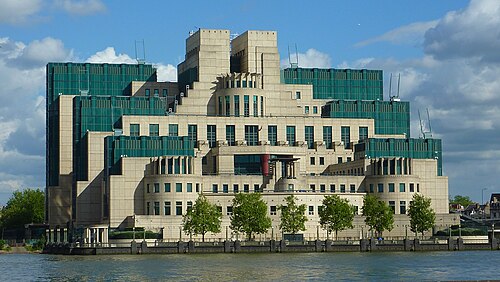
MI6 Building, Vauxhall Cross by Richard Cooke
Government officials would surely hate having had to permanently relocate from such an impressive, prestigious headquarters building to some non-descript office space somewhere, so they would exert huge pressure on the British government to end its war against Russia lest other attractive official buildings be similarly destroyed. The hundreds of MPs are justifiably proud of their Palace of Westminster, now almost two centuries old, and they would hate to risk losing their Houses of Parliament to a Russian missile strike.
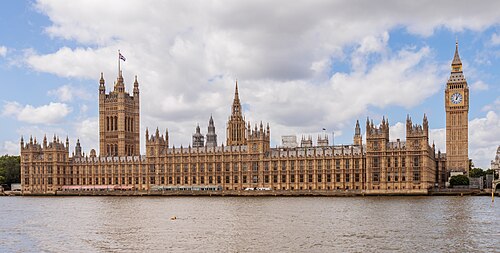
The British Houses of Parliament
Back during 2024 I became concerned that NATO was directly involving itself in Ukraine's war against Russia, and this included orchestrating successful attacks against Russia's early warning strategic radar installations intended to detect incoming nuclear missiles. I regarded this as very dangerous and believed that unless Russia responded in sufficiently strong fashion, such NATO involvement might steadily increase.
Therefore in early June of that year I published my first piece suggesting that Russia target the NATO HQ with its hypersonic missiles in order to demonstrate the ineffectiveness of Western defensive systems and establish full escalation dominance, just as I have discussed above.
- Should Vladimir Putin Call His Shot on a NATO Brushback Pitch?
- Ron Unz • The Unz Review • June 3, 2024 • 3,300 Words
At the time, my proposal was widely criticized as far too risky, likely to result in a direct NATO war with Russia. But it provoked more than 450 comments and was widely discussed.
A few months later, Russian President Vladimir Putin publicly challenged the West to a "21st-century high-tech duel" in which his own hypersonic missiles would face the best NATO anti-missile systems:
"If Western experts believe [the Oreshnik can be intercepted], let them propose a technological experiment to us and those funding them in the West, particularly in the United States. Let them select a target, say in Kyiv, concentrate all their air and missile defense systems there, and we'll strike it with the Oreshnik. Then we'll see what happens. We're ready for such an experiment. Is the other side ready ? [...] It would be interesting for us. [...] Let's conduct this experiment, this technological duel, and see the results. I think it would be useful for both us and the Americans."
There's not the slightest bit of evidence that my proposal had inspired Putin's public challenge, but there is a possibility that it did.
However, the offer that Putin extended was a voluntary one. So the West merely ignored him and NATO instead continued steadily escalating its involvement in the war against Russia. If Putin's challenge had been mandatory, targeting a leading symbol of Western power, I think the Ukraine war might have long been over by now.
Then almost a year to the day after my article had appeared, NATO and its Ukrainian proxies launched "Operation Spiderweb," a highly innovative and partially successful attempt to use drones to destroy the strategic bombers that constituted one leg of Russia's nuclear deterrent triad.
Just a few days earlier, Putin had visited Kursk on an inspection tour and his personal helicopter had been attacked by a large swarm of drones in what was widely believed to be a Western assassination attempt.
Once again, these seemed like extraordinarily dangerous and provocative Western military operations so I published another article calling for the Russians to use their hypersonic missiles to force NATO into abandoning its participation in the Ukraine war and allow that conflict to come to an end.
- A Forceful Russian Response to NATO Recklessness
- Ron Unz • The Unz Review • June 30, 2025 • 5,300 Words
That obviously did not happen, and instead NATO gradually moved towards direct involvement in the war against Russia.
This has produced a rising tide of Russian anger and outrage over NATO's support for Ukraine's attacks. As a result, my dangerously risky and provocative proposal of two years ago now actually seems far more moderate and restrained by comparison with other options under consideration.
About a month ago, I published an article focusing on the extremely provocative views of a distinguished Russian academic and security expert named Sergey Karaganov. He has long advocated the possible use of nuclear strikes against NATO targets in order to win the Ukraine war, and although his views were once relegated to the political fringe, they have now moved much closer to the mainstream of elite Russian decision-making circles. He and others of similar views had recently been interviewed on leading Western podcasts, and Prof. Mearsheimer and others took him very seriously.
As I explained, Karaganov and other Russian policy experts seem to have been especially alarmed by the decapitating first strike that America and Israel had used to kill most of Iran's top political and military leadership. They believed that this demonstrated we were now living in a world without any rules and that Russia might eventually be at risk of suffering the same fate.
- A Russian Nuclear Attack on NATO?
- Ron Unz • The Unz Review • May 25, 2026 • 7,700 Words
The Dangerous Notions of Sergey Karaganov
A couple of weeks ago, Karaganov once again appeared on Diesen's podcast , this time together with Mearsheimer.
Whether something had recently changed or whether he had merely become much bolder in articulating his beliefs, Karaganov now took a much more alarming and bloodthirsty turn in many of his statements.
Some of the points he made seemed very reasonable ones, and I'd expressed similar positions.
He argued that threatening to kill foreign leaders, let alone actually doing so, was something almost unknown in modern history. It was obvious that he had been deeply disturbed by the way that Israel and America had initiated the war against Iran and also by many of Trump's subsequent statements. Although he didn't mention them, the repeated Western-backed assassination attempts against Putin were surely in his mind.
Karaganov was very concerned that we were sliding into a world without any rules, and he said that strong steps must be taken to stop this process. He may have been considering the 165 Iranian schoolgirls killed by a double-tap American missile strike on the first day of the Iran War and the 18 young Russian women killed in their college dorm by Ukraine more recently. In each of these cases, there was great skepticism that the attacks had been accidental and due to targeting errors.
Therefore, he believed that Russia must take strong steps to forcefully restore sensible thinking to the leaders of the countries that were arrayed against it.
I was strongly sympathetic to all of these ideas. But he seemed to have gone off the deep end with many of his other remarks.
For example, he repeatedly characterized Europe as "the source of all evil in human history" due to its appalling record of racism, colonialism, and holocausts. He must have used that extreme phrase at least four or five times, declaring that although he himself appreciated many aspects of European culture and Russian society had been influenced by Europe, none of that mitigated the latter's unmatched record of worldwide evil-doing across the centuries.
Czar Peter the Great had opened Russia to European technology and culture more than three centuries ago, and while that had been necessary at the time, Russia should have closed itself off again once that had been successfully accomplished.
These sentiments seemed an extreme version of the anti-Western rhetoric sometimes found among our leftist academics. But Karaganov delivered them with a much harder edge, sometimes seeming to suggest that Russia could do the world a good turn by using its nuclear arsenal to annihilate that longtime center of global evil.
He said he was confident that if Russia launched widespread nuclear strikes against the NATO countries, NATO would not retaliate. He believed nuclear war was entirely winnable and that Russia might need to prove that fact.
Although he had characterized all of Europe as evil, he was primarily focused upon the countries of Western Europe, which he appeared to passionately detest. He briefly alluded to the terrible destruction that Napoleon's invading army had inflicted upon Russia more than two centuries ago, seeming to regard it as a historical bill still left unpaid.
But the two world wars proved that Germany was the worst European country of all. With German leaders such as Chancellor Friedrich Merz and European Commission President Ursula von der Leyen now regularly discussing plans to build up the German military, Russia might need use its nuclear arsenal to annihilate that country and remove it from existence.
Subscribe to New Columns
According to Karaganov, although Stalin had been a great leader, he had made a serious mistake in opposing America's postwar Morgenthau Plan aimed at eliminating one-third or more of Germany's entire surviving population, so perhaps Russia might now need to take corrective action.
Prof. Mearsheimer seemed a little taken aback at the extreme nature of Karaganov's views. Being a top figure in the Realist school of foreign policy, he gently suggested that some of Karaganov's threats and rhetoric might prove highly counter-productive. For example, if Russian leaders began saying they might annihilate Germany, wouldn't that persuade the Germans that they needed to acquire a nuclear arsenal to defend themselves ? But Karaganov declared that Germany must never be permitted to have such weapons and if it tried to do so, Russia would need to immediately eliminate it from the face of the earth.
One very telling point made by Mearsheimer was that Karaganov's views about the inherently dangerous and evil nature of Germany and Germans seemed to be the exact mirror-image of how most Europeans had recently been brainwashed into regarding Russia and Russians. If such dangerously paranoid ideas fully took hold on both sides of the European dividing line, the region was obviously facing an extreme perilous future.
Perhaps Karaganov's newly established access to Western podcasts and their large audiences had convinced him that he should transform himself into the most extreme sort of "bad cop" in order to frighten Western leaders into changing their behavior. But regardless of any such possible explanations, I would urge that people watch the nearly two-hour long discussion. They should consider that Karaganov is someone whose ideas are now allegedly becoming very influential among his own country's top policy elites.
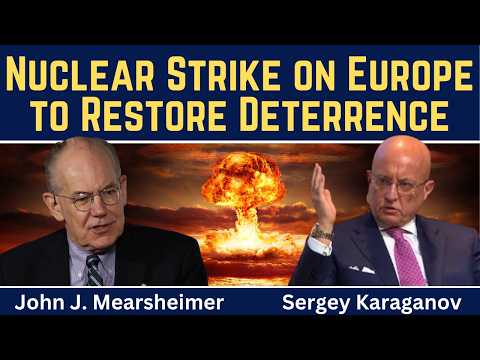
To characterize Karaganov's views as Strangelovian would be grossly unfair to the title character in Stanley Kubrick's famous 1964 film.
Indeed, I'd never previously heard any prominent Russian publicly indulge in such clearly genocidal rhetoric, which instead seemed far closer to what we have come to expect from many Israelis. When I checked, I discovered that Karaganov was actually half-Jewish, with his mother coming from the family of the Chief Rabbi of Moscow.
One disturbing aspect of Karaganov's beliefs was that they seemed so totally at odds with the historical facts that must surely be known to him.
For most of the last few decades, Germany had enjoyed very good relations with Russia, hardly surprising since the two nearby countries had such strongly complementary economies. That warm partnership had culminated in the construction of the Russian-German Nord Stream Pipelines, which allowed cheap Russian energy to power Germany's many years of great prosperity.
But then America destroyed those pipelines in a calculated effort to drive a deep wedge between Russia and its European trading partners, while also producing a captive market for American LNG exports. This greatly raised the cost of energy in Germany, severely damaging its industries and inflicting considerable economic hardship upon the German people. The echoes are still reverberating and Volkswagen may be about to shut down even more of its production facilities and lay off another 100,000 of its workers.
One might have assumed that German leaders would have reacted with outrage when their own NATO ally attacked it, arguably committing the greatest example of industrial terrorism in the history of the world.
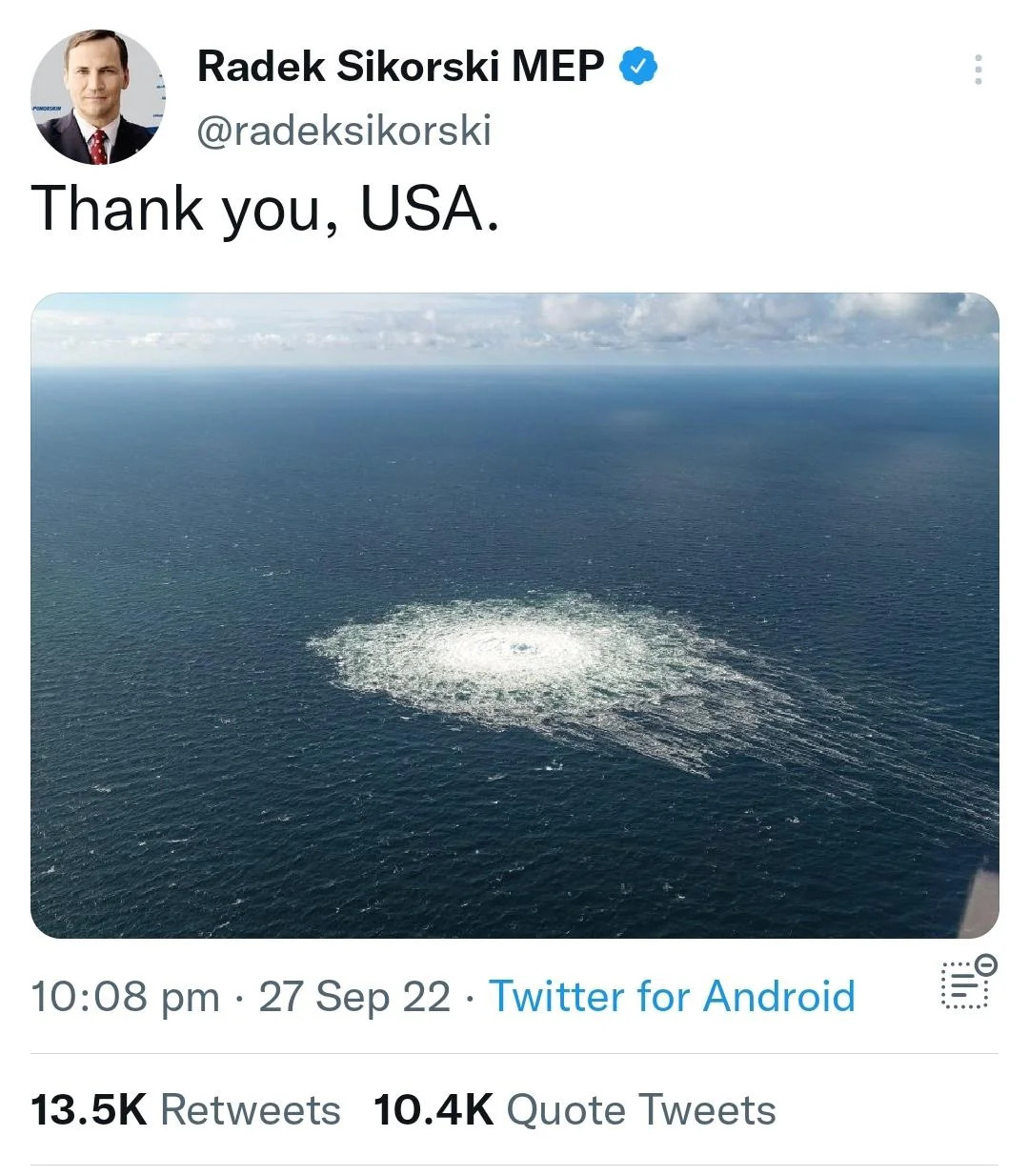
But the awesome power of Western media mind-control had instead prompted the Germans to become ferociously hostile towards Russia, which they and all the other Europeans have been convinced is the central focus of evil in the world. So they began rearming to protect themselves against the non-existent threat of a Russian invasion.
A few years earlier in 2014, it had been Victoria Nuland and the other Neocons dominating the American government who had orchestrated a pro-NATO coup in Ukraine, then worked tirelessly to push Germany and their other European vassals along the same trajectory of deep hostility towards Russia.
Yet strangely enough, Karaganov still seemed rather friendly towards America despite all the hostile actions it had taken towards Russia over the last decade or more.
I was also quite surprised that he seemed to have such a distorted historical understanding of his own country's past. It's absolutely true that the British and French spent many centuries in bitter hostility and the same was the case for Russians and Poles. But contrary to widespread beliefs, this had not been true for Germans and Russians, as I pointed out in a 2018 article:
In my unjustified arrogance, I also sometimes relished a sense of seeing obvious things that magazine or newspaper journalists got so completely wrong, mistakes which often slipped into historical narratives as well. For example, discussions of the titanic 20th century military struggles between Germany and Russia quite often made casual references to the traditional hostility between those two great peoples, who for centuries had stood as bitter rivals, representing the eternal struggle of Slav against Teuton for dominion over Eastern Europe.Although the bloodstained history of the two world wars made that notion seem obvious, it was factually mistaken. Prior to 1914, those two nationalities had not fought against each other for the previous 150 years, and even the Seven Years' War of the mid-18th century had involved a Russian alliance with Germanic Austria against Germanic Prussia, hardly amounting to a conflict along civilizational lines. Russians and Germans had been staunch allies during the endless Napoleonic wars and closely cooperated during the Metternich and Bismarck eras that followed, while even as late as 1904, Germany had supported Russia in its unsuccessful war against Japan. During the 1920s, Weimar Germany and Soviet Russia had a period of close military cooperation, the Hitler-Stalin Pact of 1939 marked the beginning of the Second World War, and throughout the long Cold War, the USSR had no more loyal a satellite than East Germany. Perhaps two dozen years of hostility over the last three centuries, with good relations or even outright alliance during most of the remainder, hardly suggested that Russians and Germans were hereditary enemies.
Moreover, during much of that period, Russia's ruling elite had had a considerable Germanic tinge. Russia's legendary Catherine the Great had been a German princess by birth, and over the centuries so many Russian rulers had taken German wives that the later Czars of the Romanov dynasty were usually more German than Russian. Russia itself had a substantial but heavily assimilated German population, which was very well represented in elite political circles, with German names being quite common among government ministers and sometimes found among important military commanders. Even a top leader of the Decembrist revolt of the early 19th century had had German ancestry but was a zealous Russian-nationalist in his ideology.
Under the governance of this mixed Russian and German ruling class, the Russian Empire had steadily risen to become one of the world's foremost powers. Indeed, given its vast size, manpower, and resources, combined with one of the fastest economic growth rates and a natural increase in total population that was not far behind, a 1914 observer might have easily pegged it to soon dominate the European continent and perhaps even much of the world, just as Tocqueville had famously prophesized in the early decades of the 19th century. A crucial underlying cause of the First World War was Britain's belief that only a preventative war could forestall a rising Germany, but I suspect that an important secondary cause was the parallel German notion that similar measures were necessary against a rising Russia.
Russia has absolutely legitimate security interests in Ukraine and the last dozen years of Western attacks have now culminated in a NATO war against that country. Many of today's irrational European leaders and their Neocon mentors in America have been hoping to bring Russia to its knees or even destroy it. But if the Russian response were to elevate the equally dangerous views of Karaganov or similar thinkers, the world might be moving towards a catastrophic nuclear war.
A far better option would be for the Russians to deploy their current advantages in missile technology to bring their difficult Ukraine war to a swift end in relatively bloodless fashion.