Eduardo Vasco
The UN's Venezuela "experts" aren't impartial - they're a revolving door of Western-funded NGOs, ICC alumni, and OAS insiders.
Amid the strong offensive launched in 2019 by the United States and its imperialist partners against Venezuela, carried out through pressure and coercion within UN bodies, the Independent International Fact-Finding Mission on the Bolivarian Republic of Venezuela was created by the Human Rights Council.
Who drove its creation?
The resolution establishing the mission was sponsored by the Council member states that also belonged to the infamous Lima Group - a formal association of U.S. puppet governments brought to power through the soft coups recently carried out in several South American countries. These were Mauricio Macri's Argentina, Jair Bolsonaro's Brazil, Sebastián Piñera's Chile, and Martín Vizcarra's Peru, which represented the Lima Group on the Council.
The European Union officially supported the initiatives of the Lima Group, which had been created in 2017 with the specific purpose of intervening in Venezuela's internal affairs and promoting regime change under the pretext of defending human rights and democracy. At the time, Austria, Bulgaria, Croatia, Denmark, the Czech Republic, Hungary, Italy, Slovakia, and Spain held seats on the Human Rights Council.
The Lima Group countries and their European supporters also enjoyed the backing of traditional allies such as the United Kingdom, Japan, Australia, and Ukraine in securing the approval of the resolution that created the Fact-Finding Mission. The result was 19 votes in favor, seven against, and 21 abstentions. As I highlighted in a previous article, the vote was public, allowing the major powers to identify which countries followed their directives and which challenged them - a pressure mechanism that frequently leads weaker states to submit to stronger ones out of fear of reprisals.
It was in this context that the mission was established and its "experts" were selected by the then President of the Human Rights Council, the Senegalese diplomat Coly Seck, Senegal's Permanent Representative in Geneva. Although Seck, as expected, abstained in the vote that created the mission, he ultimately appointed "experts" entirely aligned with the policies of the governments that sponsored and approved the resolution. They also fit the profile typically selected to investigate governments deemed troublesome to imperialism: education in European institutions or institutions heavily influenced by Western bourgeois ideas, experience in NGOs and institutes funded by Western governments or businessmen, and careers built within international organizations controlled by imperialist powers.
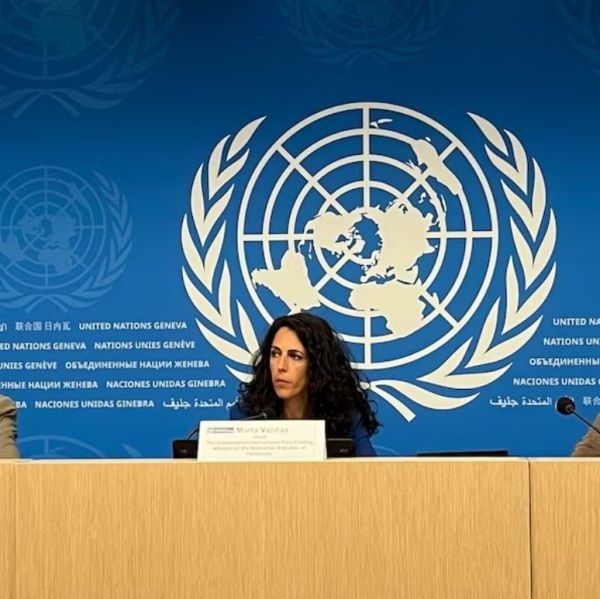
The three "experts" initially selected by Seck to serve on the Fact-Finding Mission on Venezuela were the Portuguese Marta Valiñas, the Chilean Francisco Cox Vial, and the British Paul Seils. The mission was subsequently renewed in 2020, 2022, and 2024, with virtually no changes. The only significant modification occurred in 2021, when Seils was replaced by the Argentine Patricia Tappatá Valdez. It is uncommon for a mission of this nature, lasting so many years, to have such a low turnover rate.
Who are the "experts"?
Let us take a closer look at the "experts" chosen by the UN Human Rights Council to investigate Venezuela.
Francisco Cox Vial
He worked for the Public Defender Service in Washington in the early 1990s. He later obtained a master's degree from Columbia University in the United States after attending the International Humanitarian Law Summer Program at Oxford and George Washington Universities in the late 1990s. He provided services to Human Rights Watch and worked for the Inter-American Commission on Human Rights of the Organization of American States (OAS), often referred to by its critics as the U.S. "Ministry of Colonies" and known for its hostile stance toward Chavismo. He also developed an extensive career with the International Criminal Court (ICC), including work related to African countries and advising on the selection of the Court's prosecutor.
Paul Seils
Between 2004 and 2008, he held a prominent position in the Office of the Prosecutor of the ICC, one of the principal mechanisms used by imperialist powers to pursue their adversaries, as discussed in a recent article. He also headed the Rule of Law and Democracy Unit of the Office of the High Commissioner for Human Rights and served as Vice President, from 2011 to 2017, of the International Center for Transitional Justice, an entity funded by various European governments, the European Union, Canada, Australia, UN bodies, and foundations such as Open Society, NED, Rockefeller, and Freedom House. When he was selected for the mission on Venezuela, he was serving as Director of the European Institute of Peace, a project financed with millions of euros from the European Commission and European governments.
Patricia Tappatá Valdez
She served on the board of trustees of the Institute for Democracy in South Africa, an entity funded by the Ford Foundation. In 2021, she was appointed to replace Seils on the Fact-Finding Mission by the then President of the UN Human Rights Council, Nazhat Shameem. Shameem currently serves as Deputy Prosecutor of the ICC and previously served as an advisor to Women's Initiatives for Gender Justice, a lobbying organization based in The Hague and active at the ICC, in which Marta Valiñas also participated.
Marta Valiñas
Selected to lead the mission, Valiñas earned her law degree from the University of Porto and completed a master's degree in Human Rights and Democratization in a program sponsored by the European Union and developed in partnership with the UN, the Council of Europe, and organizations from the so-called "civil society." She also worked for the Organization for Security and Co-operation in Europe (OSCE).
In 2009, she joined REDRESS, an NGO then funded by the European Commission, the United Kingdom government's Department for International Development (DFID), the MacArthur Foundation, and other donors. Today, the organization continues to receive funding from the European Union and Open Society, in addition to maintaining historical funding ties with UN bodies.
Between 2013 and 2014, she also worked for Women's Initiatives for Gender Justice. At that time, the organization was funded by DFID, the Swiss Federal Department of Foreign Affairs, the UN Trust Fund to End Violence Against Women, and other international organizations. Valiñas also provided services to the International Center for Transitional Justice.
She later worked as a consultant for Justice Rapid Response, an NGO funded by European governments, Canada, the U.S. State Department, and UN Women - an institution for which she also worked. Between 2014 and 2019, shortly before assuming leadership of the mission on Venezuela, she served in the Office of the Prosecutor of the ICC.
The ease with which these "experts" move through entities funded or controlled by Western governments and major international financial groups is readily apparent. These are organizations that share a homogeneous view of democracy and human rights - the view of imperialist regimes, which themselves are neither democratic nor humanitarian. As has long been observed, the international ecosystem of "humanitarian" organizations is built and financed by the same actors. Thus emerges a restricted circle functioning as a revolving door: its members continuously move from one organization to another, accumulating credentials and prestige produced by the very institutions that make up this network, until they attain prominent positions within the United Nations or other bodies capable of directly interfering in the sovereignty of poor countries, such as the International Criminal Court.
Faced with "experts" of this profile, Chavista Venezuela could hardly have been portrayed as anything other than a dictatorship that violates human rights. This was especially true during a period of intense imperialist pressure, in which the governments of the United States and Europe were waging an economic, diplomatic, and propaganda war against the country, while NGOs financed by these same actors trained and supported coup-minded leaders.
The violent demonstrations promoted by the opposition aligned with imperialism left a trail of deaths - including people burned alive - persecution of government supporters, and the destruction of public facilities such as hospitals and schools. The sanctions contributed to hunger, the collapse of the electrical grid, and the deaths of patients. Even so, these attacks on human rights and on the sovereignty of the Venezuelan people went virtually unnoticed in the reports and public statements of the "experts."
The Maduro government was formally accused by the members of the mission of committing "crimes against humanity" - an accusation that no minimally honest and impartial expert, even one ideologically opposed to Chavismo, could sustain. Yet those seeking to overthrow Maduro were the very same actors who educated, employed, financed, trained, or guided Valiñas, Cox, Seils, and Tappatá. The cards were marked from the very beginning.
The game played within the UN and international organizations is rigged: the winners are always the powers that dominate the world, while the losers are invariably their poorest and most vulnerable victims.