Lorenzo Maria Pacini
Alongside institutional and strategic aspects, Khamenei's leadership model also encompasses a specific symbolic and personal dimension.
Passing the torch
The legacy of Sayyed Ali Khamenei, Supreme Leader of Iran's Islamic Revolution, still merits a few words. Understanding his legacy is essential to comprehending the evolution of the Shi'ite Islamic world and of modern-day Iran, particularly in light of future geopolitical events.
The leadership transition at the helm of the Islamic Republic, which took place in July 1989, occurred during a period marked by extraordinary political, institutional, and strategic complexity. The country was, in fact, undergoing a period of profound transformation: on the constitutional level, the process of revising the institutional framework was still underway, and the future legal structure of the state had not yet been fully defined. This transitional phase inevitably gave rise to uncertainty regarding the internal balance of power and the distribution of authority among the Republic's institutions.
In terms of national security, the situation was equally delicate. The Islamic Republic had emerged only a few months earlier from a devastating eight-year conflict with Iraq, and the ceasefire had not dispelled fears of a possible resumption of hostilities. In fact, several risk scenarios remained possible: a new Iraqi aggression, destabilizing actions attributed to the People's Mojahedin Organization of Iran (MEK), or a direct confrontation with the United States. Added to these factors were growing international diplomatic pressure, hostile propaganda campaigns, and political attempts aimed at challenging the legitimacy of the revolutionary system.
In this context, Sayyid Ali Khamenei navigated the transition through an approach characterized by institutional prudence, political balance, and strategic adaptability. His actions helped contain social uncertainty, strengthen public confidence, and preserve institutional cohesion at a time when the risk of political instability appeared very real.
The expectations of numerous internal and external opponents of the Islamic Republic centered on two possible scenarios: the gradual abandonment of the revolutionary legacy or an internal crisis capable of causing the collapse of institutional structures. Neither scenario materialized. On the contrary, the succession process became a moment of state consolidation, based on respect for constitutional procedures and continuity with the political and ideological path inaugurated by Ruhollah Khomeini.
What could have been a moment of vulnerability thus turned into a phase of institutional stabilization, laying the groundwork for the subsequent growth of Iran's regional influence.
Revolutionary continuity
At the heart of this leadership model was the recognition expressed by the founder of the Islamic Republic, Ruhollah Khomeini, toward the figure of Khamenei. It was a true act of continuity, albeit with some differences.
Khomeini identified him as one of the main pillars of the revolutionary system: a leader faithful to constitutional principles, a man deeply knowledgeable in both religious and political matters, a figure capable of embodying the spirit of the Revolution with a presence comparable, in his words, to the light of the sun in the firmament. He was described through a combination of spiritual, political, and military characteristics: courage and a willingness to sacrifice in times of conflict; closeness, solidarity, and compassion toward believers; and firmness and determination toward those identified as oppressive and hegemonic systems. Khomeini considered him one of the essential pillars of the Revolution and recognized in him the qualities necessary to assume the highest responsibilities of the state, including the role of Wilayat al-Faqih-that is, the leadership of the Islamic jurist. In his first address to the nation after assuming the office of Supreme Leader, Khamenei reaffirmed his commitment to continuing along the path charted by the founder of the Islamic Republic, placing certain fundamental principles at the center: national independence, opposition to systems of domination, support for oppressed peoples, and defense of the Palestinian cause as a political, religious, and moral responsibility.
The model of government that subsequently developed is therefore based on the ability to reconcile two seemingly conflicting requirements: loyalty to the original revolutionary principles and the institutional flexibility necessary to address geopolitical, regional, and international changes.
The main elements defining this conception of leadership find concrete application in the political and administrative structures of the Islamic Republic. The emphasis on the centrality of God undoubtedly represents the primary source of moral and political resilience in crisis management, in overcoming external pressures, and in preserving national stability. Adherence to authentic Islam implies that strategic decisions and public policies are formulated on the basis of the principles of Islamic jurisprudence and religious doctrine.
The principle of Islamic compassion and social mercy translates into the integration of ethical and humanitarian considerations into government action, with the aim of preserving social cohesion and internal stability. The commitment to justice and the rejection of discrimination are applied in the protection of socially vulnerable groups, the fight against economic monopolies, and the challenge to inequalities deemed unjust. Popular legitimacy, on the other hand, is linked to the ongoing relationship between institutions and citizens, with public trust regarded as an essential component of political authority. Preserving the institution of Wilayat al-Faqih, in this view, requires the continuous strengthening of its moral, intellectual, and constitutional foundations, so as to ensure its effectiveness and legitimacy. Consultation with experts and the use of specialized knowledge constitute a further element of the decision-making model: scientific analyses, technical assessments, and professional contributions are considered fundamental tools for guiding strategic choices.
At the same time, the development of information and intelligence structures enables the monitoring of internal dynamics and international geopolitical developments. The principle of the rule of law is expressed through the exercise of authority within established constitutional and institutional limits, while the protection of civil liberties is interpreted as support for political participation, freedom of expression, and constructive criticism in accordance with the law. Acceptance of criticism and institutional evaluation processes is a necessary tool for continuously improving administrative and governmental efficiency.
These principles, however general they may seem, are the foundation of Iran's revolutionary spirit, in the political sense.
In defense of the oppressed
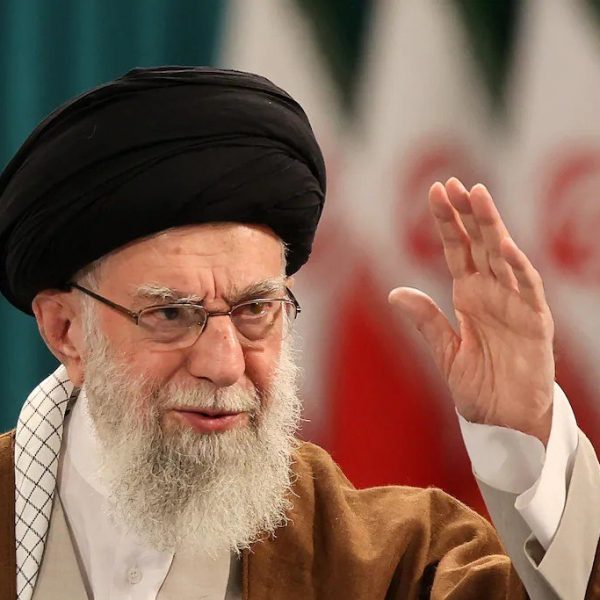
The defense of the oppressed and the rejection of hegemonic systems are further central elements of this conception of leadership and have been two cornerstones of Khamenei's life. This principle translates into a political and strategic orientation aimed at countering forms of domination, coercion, and structural imbalances in the international order. His anti-imperialist struggle continued until his very last moment; he even died with his fist raised-a sign of fighting until his last breath-shortly after a missile fired by the Zionist entity struck his residence in Tehran.
In this context, the concept of basirah takes on particular significance; understood as the capacity for political discernment and strategic awareness, it points to the need to develop a collective consciousness capable of recognizing dynamics of infiltration, psychological operations, forms of information warfare, and conflicts based on the construction of opposing narratives. According to this approach, confronting adversaries should not entail abandoning ethical and religious principles. The political and strategic struggle is thus conceived as a confrontation that must maintain a constant reference to moral, humanitarian, and spiritual values (and here we could say a great deal regarding the issue of Iran's "nuclear program").
On the international stage, this vision translates into a dynamic and adaptive diplomacy, aimed at preventing the country's isolation, expanding opportunities for cooperation, and strengthening Iran's regional and global role. Diplomacy, in this context, is not merely a tool for negotiation but an integral component of the overall national strategy. Iranians have always been skilled diplomats, and Khamenei has sought to carry on this noble tradition by embodying another principle-one of the most sacred in Shia Islam: the principle of personal sacrifice and dedication to the collective good. Leadership is a role in which national and religious interests must take precedence over individual aspirations or political-partisan divisions. This is why the Supreme Leader, within Iran's republican system, is the guarantor of national unity and the preferred model for the fulfillment of political aspirations.
Alongside institutional and strategic aspects, Khamenei's leadership model also encompasses a specific symbolic and personal dimension. Humility and closeness to the people are considered fundamental characteristics of a political leader called upon to maintain a direct connection with the daily hardships of citizens, especially among the most vulnerable social groups and those who are economically disadvantaged. The defense of revolutionary principles and fundamental strategic orientations is associated with safeguarding national independence and protecting the country's cultural, political, and intellectual identity against external pressures. A simple personal lifestyle, on the other hand, is interpreted as consistent with the economic circumstances of the general population, reinforcing the image of a leadership that stands apart from the elitist models of privilege-a trait inherited from Khomeini. The rejection of political factionalism and partisan tribalism also places the Supreme Leader in a position above the competition between internal factions, preserving his role as the guarantor of national unity and institutional balance.
And always, unceasingly, his leadership has been imbued with a great love for the common cause of peoples oppressed by imperialism in any form. For the battle for freedom cannot wait, cannot be delegated, and, if necessary, requires total sacrifice in order to be fought and won.