By Theodore DALRYMPLE
The UK's law enforcement is more oriented towards social peace than towards justice.
When I was about 6 or 7 years old, I was questioned by the British police. Two friends and I had been accosted in the park by a man who had exposed himself and masturbated. We did not really understand what he was doing, but I must have provided a description of this strange conduct to my mother, who called the police.
A policeman arrived that evening, dressed in the reassuring uniform that the police wore at that time, rather than the fascist-militia type of uniform that they so often wear today. I was reading a book in bed when he arrived; I remember the book still, Noddy Goes to School, by Enid Blyton. I can still see its pink cover in my mind's eye.
There was a policeman in the Noddy books called Mr. Plod, and here, at the end of my bed, appeared a real live Mr. Plod ! I was extremely proud: This was the high point of my importance so far in life, which, indeed, I have seldom equaled since.
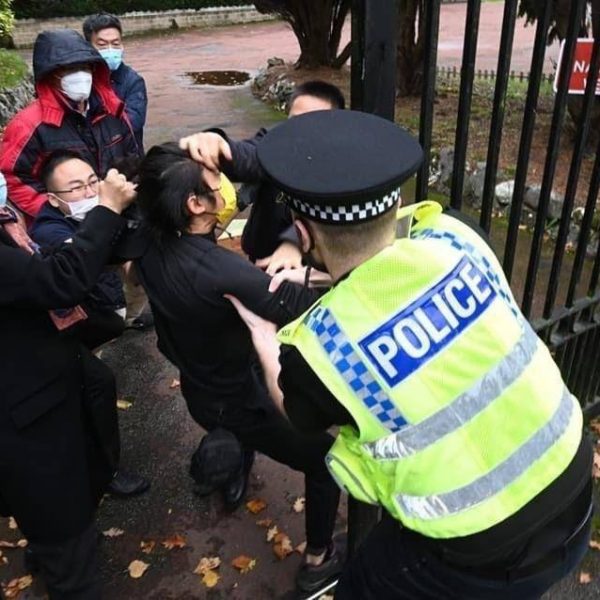
In the years following, the British police have gone from being highly respected to being an almost universal object of contempt, despised by the habitual criminal and the most scrupulously law-abiding person alike. They are menacing to the innocent and impotent against the guilty; and, as more people with academic qualifications have entered the force, so it has lost any sense of overall purpose, or coherent understanding of what it exists for. The police have been sociologized into misunderstanding their function in society, while every police chief acts as if his purpose was to placate or defuse criticism in advance from pressure groups or minorities.
The police often present themselves now as if they were protectors of our emotions rather than of our property and lives. They are sometimes like psychotherapists with powers of arrest. After every murder or outrage, a police spokesman is sure to say that "our thoughts are with the victim," when their thoughts should not be with commiseration but with finding the perpetrator. The insincerity of police pronouncements raises doubts about both their competence and their motives. The apprehension and proper punishment of the perpetrator is the best psychotherapy we could have.
The absence of any clear idea of their function leads police spokesmen into uttering absurdities which reinforce the general contempt. After the murder last week of the 78-year-old politician Ann Widdicombe in her house in a remote village in Devon, an assistant chief of police said of the 28-year-old arrested suspect, "At this time there is nothing to suggest that it [the murder] was politically motivated."
Now, if the police suspicions were correct, the killer had driven 270 miles to Widdicombe's home (and, presumably, 270 miles back). Widdicombe was a highly controversial figure, loved by many and detested by many. The fact that the suspect had driven so far to an isolated village and killed the one public political figure who lived there was at the very least prima facie evidence of political motive. It was not in itself proof of such a motive, for other motives could be imagined: a contract killing, for example, in the pursuit of a private vendetta. But to say with a straight face that there was no suggestion, not even a possible hint, of a political motive was so stupid that it brought both the intelligence and probity of the police into disrepute.
The policeman was not obliged to say anything about the suspect's motives, or he could have said something completely anodyne, such as that all avenues were currently being explored. Why, then, did he resort to an obvious lie, something that he could not possibly have believed unless he were of subnormal intelligence?
Widdicombe was outspokenly conservative in her social views, and had left the Conservative Party, a former government of which she had once been a prominent minister, for Reform UK, which was her only hope for a genuinely conservative government in Britain. (Whether she was correct in this is another matter.)
There is nothing like an assassination to create sympathy for a political party; a common murder has a much lesser effect in this respect. Probably the policeman did not want to be responsible for creating, or stimulating, sympathy for the Reform Party, even if what he said turned out later-as was very likely-to be false. At least he would be in the clear. But he would also have added to the public impression of an increasingly politicized police.
There was another significant moment in his public message. He read from a text, looking downward, but when he came to the characterization of the suspect, "a 28-year-old white British man," he looked up to lay special emphasis on the word "white."
If the man had been black but born in Britain, most likely he would have said, "a 28-year-old British man"; if he had been an illegal immigrant, he would have said merely "a 28-year-old man."
In this tiny gesture, we see what the police, at least in their upper echelons, have come to see as their major function, namely the preservation of social and, in particular, racial peace, rather than the prevention and investigation of crime without fear or favor. And such confusion in the upper echelons, in turn brought about by pressure groups and political entrepreneurs, inevitably filters down to the police in the streets-or in the cars supposedly patrolling the streets.
This confusion as to the responsibilities of the police was what was responsible for the great scandal of the continued sexual abuse of young white girls (often themselves from appalling backgrounds) by gangs of men of Pakistani origin. The police were vastly more concerned to preserve what they thought was racial peace, and to avoid accusations of racism, than to prevent and investigate real and actual crimes that they well knew were being committed under their very noses.
Needless to say, the police were never perfect. They were subject to temptations which they by no means always resisted (though many did). But now they inhabit a world of perpetual special pleading and outright lying; and, as the truth will set you free, so lies will make you contemptible.
Original article: www.theamericanconservative.com