By Javier VILLAMOR
The record influx overwhelmed the tiny Spanish territory of Ceuta, leaving at least 18 dead and prompting Italy to threaten the return of border controls.
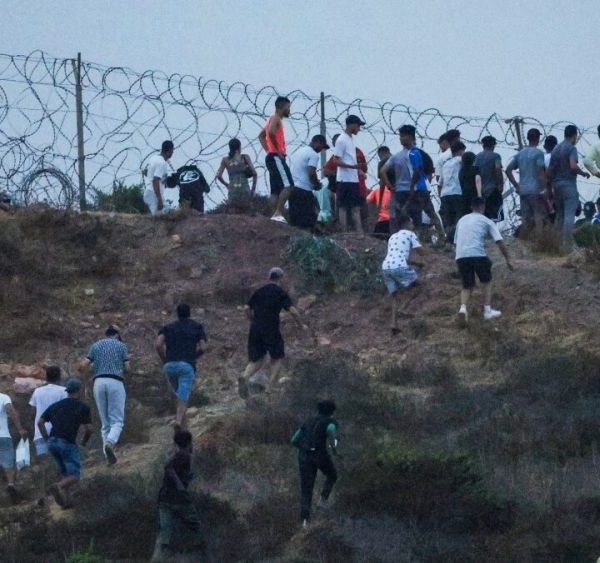
Europe's border crisis erupted overnight as an estimated 49,000 migrants crossed from Morocco into Ceuta, a Spanish territory on the North African coast. At least 18 people have died, while Italy is threatening to bring back border checks.
The mass crossings into Ceuta and Melilla-two Spanish territories that border Morocco-sparked a major diplomatic crisis within hours. Both cities belong to Spain, making their borders with Morocco part of the European Union's external frontier.
Spain's interior ministry says around 49,000 people crossed by land and sea in just 24 hours. At least 18 reportedly died in stampedes or while trying to swim around the Tarajal border crossing into Ceuta.
The Spanish government has sent 200 specialist police officers and 60 soldiers to the area. Melilla has not seen an influx on the same scale, but clashes broke out at its Beni Enzar border crossing. Several vehicles were set on fire, while migrants and members of the security forces were injured.
Spanish Prime Minister Pedro Sánchez promised an " immediate" response, saying his left-wing government was sending help and working with Morocco. Sánchez is expected to visit Ceuta with Interior Minister Fernando Grande-Marlaska to meet local officials and police commanders.
Juan Jesús Vivas, the conservative head of Ceuta's local government, called on Madrid to declare a national emergency. He also demanded a single command for the response and the deployment of more police officers and soldiers. Vivas said centres for unaccompanied migrant children were holding 24 times as many people as they were designed for, while hundreds of new arrivals were sleeping on the streets.
Alberto Núñez Feijóo, leader of Spain's conservative People's Party, called the influx a " national security crisis" and accused the government of "looking the other way". Isabel Díaz Ayuso, the party's leader in the Madrid region, accused Sánchez of allowing "the invasion of Spain through Ceuta" to distract attention from his legal troubles.
Santiago Abascal, leader of the populist Right-wing Vox party, also called the influx an "invasion". He blamed the government for pursuing policies that encourage migrants to come to Spain. Juan José Imbroda, the conservative head of Melilla's local government, described the crisis as a "catastrophe enabled by inaction" and demanded tougher laws and more pressure on Morocco.
Italy has delivered one of the strongest responses, amid fears that migrants entering Spain could then travel freely through much of the EU. Italian Prime Minister Giorgia Meloni proposed emergency measures, including suspending passport-free travel with Spain. Foreign Minister Antonio Tajani linked the crisis to Sánchez's programme to grant legal status to undocumented migrants already living in the country. Deputy Prime Minister Matteo Salvini called for border checks to be restored to protect Italy.
Politicians in neighbouring France also attacked Spain's handling of the crisis. Bruno Retailleau, leader of the conservative Republicans party and a candidate in the 2027 presidential election, said Sánchez's policies were encouraging migrants to make the journey. He argued that Europe's passport-free travel system could no longer continue in its current form. Former French prime minister Michel Barnier likewise warned that France could not keep bearing the consequences of its neighbours' immigration policies.
The Trump administration also joined the dispute. White House Deputy Press Secretary Anna Kelly blamed the crisis on the Spanish government's "far-left globalist policies". She said President Donald Trump had long warned Europe about the consequences of encouraging mass immigration.
EU officials in Brussels responded more cautiously. Magnus Brunner, the European commissioner responsible for migration, offered Spain money, equipment and practical help. This could include sending officers from Frontex, the EU's border agency. Brunner also urged Morocco to stop more migrants from leaving for Spanish territory.
European Commission President Ursula von der Leyen has yet to comment personally. The EU's position, however, remains the same as during the 2021 crisis: because Ceuta belongs to Spain, its border with Morocco is also an external border of the European Union.
The crisis has exposed the weaknesses in Europe's border system. Spain relies heavily on Morocco to stop migrants from reaching Ceuta and Melilla. When that cooperation breaks down, the consequences can quickly spread across the continent.
Original article: europeanconservative.com