August 4, 2026
Elon Musk as Our First Trillionaire
Although I spend most of my time online reading alternative websites and listening to alt-podcasters, I always try to balance that out by retaining a solid grounding in the mainstream world.
For example, every morning I carefully read the entire print edition of the Wall Street Journal while also often lightly browsing the online New York Times. For decades, reading the print edition of the Times had also been part of my morning ritual but the decline in its quality became so obvious and so irritating that I'd finally abandoned that effort a year or two ago.
Another mainstay has been my careful reading of the Economist, certainly the world's most influential newsweekly. I've now been a continuous subscriber for forty-seven years, almost certainly longer than any of the magazine's own editors or staff writers, and probably stretching back to before many of them were even born.
Indeed, when we consider the relatively small subscriber base of the Economist during the late 1970s, a select group that hardly skewed youthful, and combine that with the mortality tables, I'd suspect that there are very few if any extent subscribers who can match my unbroken longevity on that score. Moreover, during the mid-1980s I may have even played some small role in prodding the periodical into further globalizing its coverage.
Therefore, when I noticed that the current issue put industrialist Elon Musk on the cover, I took that verdict quite seriously. The provocative text heading was "Should You Be Afraid of Elon Musk?"
The obvious reason that Musk received that singular honor had been the recent record-setting IPO of SpaceX, a company that he had founded two dozen years earlier. Within an initial market value of nearly $1.8 trillion, not only did SpaceX rank as the biggest IPO in history, but within days Musk's own large ownership stake had made him the world's first trillionaire. Until recently, few had probably ever expected to see that mark set, let alone so quickly.
Although Musk had become a prominent figure in the business world many years ago, with his activities regularly mentioned in my newspapers, until the last few years I'd never paid much attention to him. He'd become famous as the CEO of Tesla, the pioneering electric car company. But I'd been skeptical that there was any large market for that product except for affluent trendy liberals lured by massive government tax-credits into saving the world from the menace of greenhouse gases.
Indeed, since I'd never watched podcasts on business or technology issues, I'd only discovered a year or so ago that I'd been regularly mispronouncing his first name, using a short "E" when it should have been long.
However, a few years ago he'd purchased Twitter and taken it private. The resulting political controversies surrounding his views and activities had caught my attention, leading me to discuss some of them in my articles.
And long before he'd become a trillionaire or graced the cover of the Economist, I'd actually somewhat anticipated the latter by publishing a February 2024 article that opened by arguing that Musk had already reached the pinnacle of the Western world.
The two most powerful and influential figures in today's world are surely Chinese President Xi Jinping and Russian President Vladimir Putin. But I think a reasonable case can be made that Elon Musk should be placed third on that global list.
Our current Western era is dominated by oligarchic wealth and Musk has ranked as the richest man in the world for much of the last few years. The technology industry carries enormous prestige and influence, and Musk is the owner of Tesla, the pioneering electric vehicle company, whose market value is greater than that of the world's next five car companies combined. His very innovative SpaceX rocket company has become the central pillar of the West's entire space program, crucial for American national security, while his equally innovative Starlink satellite company has proven itself absolutely vital to Ukraine in its NATO-backed war with Russia, inspiring imitators in China and other countries. More than a year ago, Musk bought Twitter for $44 billion and took the company private, giving him a media empire far greater than that of any American television network and perhaps as powerful as most of them combined. Meanwhile his own 170 million Twitter Followers provide him a personal megaphone that would be envied by any American president or top Hollywood celebrity.
What other world figure could match Musk in such global power and influence ? President Joseph Biden is elderly and doddering and widely despised, very much a Brezhnevian figure from the last days of the decaying USSR and obviously someone totally controlled by his nervous aides. Although former President Donald Trump is the all-but-certain 2024 Republican Presidential nominee and stands a better than even chance of recapturing the White House, he is facing 91 felony charges in court and is detested by nearly half the American population, including an overwhelming majority of our elites; his likely victory this November would be almost entirely due to Biden's unpopularity. Indeed, given such glaring weakness at the top of the American political hierarchy, some shrewd observers have argued that Israeli President Benjamin Netanyahu probably commands greater influence in our own Congress than either Biden or Trump; but in his own country, Netanyahu's support is at 15%, and he faces a sea of corruption charges, so he might easily end his life in a prison cell.
In our deeply polarized society, nearly all our other politicians are admired by small devoted followings, but usually despised by many, many more, and I can't think of any private citizen who can remotely match Musk's wealth, technological prestige, and media reach.
Meanwhile, traditional spiritual authorities have been reduced to mere shadows of their predecessors. Some nine hundred years ago, Pope Gregory VII humbled a German emperor and even a generation or two ago, Pope John Paul II wielded great international authority, but these days our current Pope Francis only commands a tiny sliver of such influence, and no other religious leader of greater weight comes to mind. So perhaps by default, I think Musk is the most powerful figure in the Western world...
- Elon Musk Goes to Canossa
- Ron Unz • The Unz Review • February 12, 2024 • 5,400 Words
The SpaceX IPO and Its Subsequent Collapse
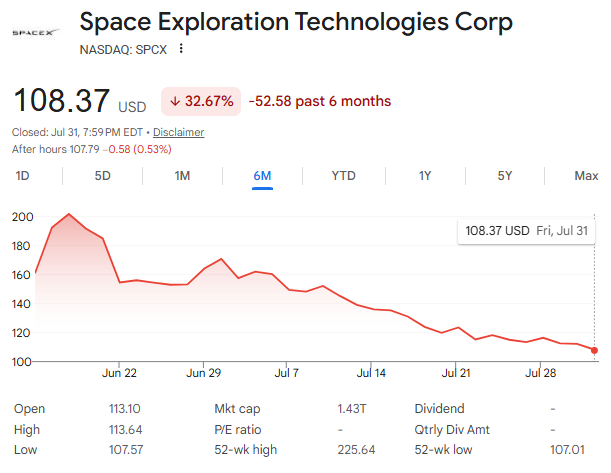
No hint of this major financial setback came in the interview, so either the Economist editor was notably polite or it had been conducted some time before its Wednesday release on YouTube.
Obviously, stock prices go up and down, and in his discussion Musk emphasized that he was building a company for the future, deliberately insulated from the transitory pressure of impatient investors. But unless his stock price soon recovers, there may be broader economic consequences for other companies.
As SpaceX was preparing for its IPO, media accounts regularly bracketed it with OpenAI and Anthropic, two other money-burning companies aiming at trillion-dollar IPOs.
These other two start-ups were leaders in AI, and despite its name, most of SpaceX's perceived future value fell into that same category.
So as the SpaceX price began to falter, OpenAI declared that it was postponing its IPO to 2027. Given the continuing slide in Musk's company, I expect that Anthropic will ultimately be forced to do the same. But both these companies are burning their venture-capital at an astonishing rate, so such delays might put them at considerable risk.
Furthermore, there are reasons to believe that the decline in SpaceX stock will continue and might even accelerate. Although its IPO was valued at nearly $1.8 trillion, only 5% of the stock was initially available for trading, and over the next few months large additional tranches will come on the market. We can assume that many suddenly wealthy SpaceX employees will be eager to sell some of their holdings and buy cars, houses, and private planes after so many years of self-denial, while venture capitalists will want to lock in some of their enormous capital gains before the stock might further decline. And even relatively small sales along those lines might lead to a downward spiral.
Prior to the Dotcom boom of the late 1990s, companies were usually required to demonstrate three consecutive years of profitability before going public, but despite the resulting disaster that rule was never restored. SpaceX would have emphatically failed that test, losing $5 billion in its most recent year with red ink projected as far as the eye can see. Moreover, its revenues were just $19 billion per year, so its IPO price was almost 100 times greater, about as extreme a valuation as anyone had ever seen.
There were also longstanding rules that a company's shares needed to have been traded for at least several months before it could be added to a major market index. This protected passive American investors, including insurance companies and pension funds, from being automatically stuffed with a newly issued and volatile stock. But SpaceX was too special for that, so NASDAQ changed that rule as did others and they have now suffered the consequences of the SpaceX collapse.
Financial gravity finally caught up with SpaceX, and we will soon see just how hard the landing might ultimately become.
On these developments, I can look back with some satisfaction. Shortly before the IPO I had published an article entitled "American Pravda: Looming Market Crashes" with SpaceX constituting one of the major sections. A trillion dollars of market value has now evaporated in just the last few weeks, thus currently ranking SpaceX as the most disastrous IPO of all time, so I think it's worth revisiting what I'd written at the beginning of June:
For many years, Zuckerberg had probably been the highest-profile Tech CEO, but during the 2020s he was dethroned by Tesla CEO Elon Musk. The latter's trail-blazing EV company captured the imagination of the world, while becoming roughly as valuable as every other auto company combined. Musk's other company SpaceX is now on the verge of going public, at an expected market value of perhaps $1.5 trillion or more, representing the largest IPO in our national history.
Musk had founded SpaceX in 2002, and after many years of losses-and numerous brushes with bankruptcy-he successfully made it the world's overwhelmingly dominant launch provider. His very innovative use of recoverable booster stages drastically reduced the cost per kilogram of getting items into low earth orbit.
Amazon founder Jeff Bezos had also established his own private space technology company Blue Origin a couple of years earlier, but it largely stagnated over time and completely fell behind its plucky Musk rival despite its owner's vastly greater financial resources. Bezos has more recently made a major effort to catch up, but his latest rocket suffered a massive explosion a few days ago, destroying the 48 Amazon satellites it was carrying as well as the launchpad. This probably set the company back at least many months and will almost certainly cause it to miss its FCC deadline for deployment. This mishap demonstrated that space travel was far from easy and underscored the magnitude of Musk's achievement.
Meanwhile, over the years Musk's Starlink satellite division had become sufficiently profitable to move his entire company into the black.
But Musk is a notorious financial daredevil, and apparently running a newly profitable company was not to his taste. So in the months leading up to his planned IPO, he merged the now-profitable SpaceX with xAI, another of his companies, itself created by the merger of his new AI start-up with X, the renamed version of social media giant Twitter. The vast capital expenditures necessary for AI development have now restored the combined entity to its usual state of massive annual financial losses as far as the eye can see, and indeed those tremendous capital requirements were apparently a major reason for the IPO.
Despite these large projected losses, Musk's IPO seems likely to draw huge support from his fervent fan-base of retail investors.
However, major media outlets and the experts they consulted have turned a far more skeptical eye. For example, a few days ago, the Journal published a column appropriately entitled "SpaceX's IPO Is a Bet Gravity Doesn't Apply to Elon Musk".
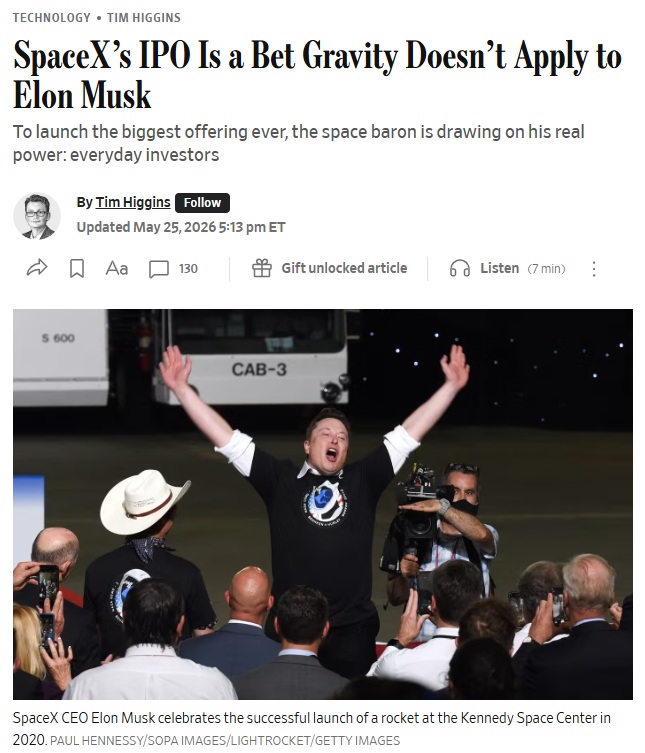
That Journal article had opened with the following paragraphs:
The SpaceX IPO filing is full of so many red flags that it would have scuttled other launches.But the laws of gravity don't apply here, in part because of years of work by Elon Musk to build his business empire with the eager assistance of everyday investors. He's tapped into a collective social-media psyche that runs on vibes and enthusiasm and hope for a better future that he has become so masterful at selling.
His sales pitch has gained credibility with the success of Tesla, where he is also CEO, and SpaceX, which has reinvented the space industry and became the top launcher of satellites in the world. Its Starlink business, which is a big driver of revenue, has extended internet connectivity globally and helped to extend Musk's geopolitical clout while also helping make him the world's richest man.
And in launching what is likely to be the biggest IPO ever, Musk is yet again leaning in to a message of hope."Our mission is to build the systems and technologies necessary to make life multiplanetary, to understand the true nature of the universe, and to extend the light of consciousness to the stars," the company wrote in filings made public this past week.
That phrase-"light of consciousness"-was mentioned almost a dozen times throughout the prospectus. There was also an artist's rendering of life on Mars that could easily have been a scene from the current season of Apple TV's sci-fi drama "For All Mankind." And the dense paperwork included an out-of-this-world projected total addressable market for SpaceX at $28.5 trillion, just a few trillion dollars shy of the entire U.S. gross domestic product.
If it wasn't clear enough, the filing noted: "We believe that space represents the largest economic frontier in human history."
Then there were troublesome bits. More than $1 billion in related transactions between Musk companies, including $131 million of Cybertrucks purchased by SpaceX. The amount of red ink surprised some-a situation made worse by Musk's decision to buy another one of his startups, xAI. The merged companies-a rocket maker/satellite company/AI lab-had a loss of almost $5 billion last year on $19 billion of revenue.
Thus, the company is expected to be valued at something approaching 100 times its annual revenue of $19 billion, despite losing $5 billion per year, quite remarkable financials for a record-setting IPO.
A day later, the New York Times published an article highlighting some of the extremely disturbing corporate governance aspects of SpaceX:
In January, SpaceX granted Elon Musk, its founder and chief executive, a pay package that eventually totaled 1.3 billion restricted shares. The award was contingent on the rocket company's establishing a colony on Mars with one million inhabitants and launching high-powered data centers into space.
Mr. Musk has not achieved those goals. Even so, he can vote those 1.3 billion shares in shareholder decisions, according to SpaceX's offering prospectus, which was released on Wednesday. In other words, the company is allowing Mr. Musk to vote with shares he has not yet earned.
"I have never heard of this," said Ann Lipton, a law professor at the University of Colorado, Boulder. "He basically found a way to hack the normal rules of corporate organization."
The restricted shares weren't the only unusual corporate governance arrangement that SpaceX revealed as it prepares what could be the largest initial public offering ever. The company, which builds rockets and operates the Starlink satellite internet service, has valued itself at more than $1.25 trillion, and its I.P.O. — which is set to happen as soon as next month — is likely to create a bonanza for Wall Street, Silicon Valley and, of course, Mr. Musk.
Among the atypical arrangements, SpaceX does not plan to have the majority of its board be independent directors. It added that it would not use a committee of independent board members to determine executive compensation, as most companies do. And its governing documents say any shareholder claims under federal securities law must be resolved through arbitration.
All of these moves appear to benefit one person: Mr. Musk.
The measures give him more command over a company where he controls 85 percent of shareholder votes, corporate governance experts said. They allow Mr. Musk to put more insiders onto SpaceX's board, pick the people who determine his pay and largely insulate himself from shareholder lawsuits, they said.
The measures are "a defensive moat" that will "entrench him permanently" as chief executive, said Brian Quinn, a law professor at Boston College who studies corporate governance. He called the January compensation package "insane"...
SpaceX's governance measures serve as a warning to those looking to buy into its I.P.O., Mr. Quinn said. "It's terrible for shareholders," he said.
Mr. Musk, SpaceX and Tesla did not respond to requests for comment...
The shares give Mr. Musk the power to decide many company matters on his own. "Mr. Musk will have the power to control the outcome of matters requiring shareholder approval, including election of all our directors, and to control our business and affairs," according to SpaceX's prospectus...
Some of SpaceX's governance measures have already drawn scrutiny. This month, leaders overseeing state and city pension funds in New York and California criticized the company's stipulation that shareholder challenges must be resolved through mandatory arbitration.
"Mandatory arbitration eliminates the class-action lawsuit structure essential to remedying widespread harms," officials overseeing the pension funds wrote in a letter to SpaceX. They added that no major U.S. issuer had ever had such a provision for its I.P.O.
SpaceX's corporate governance structure "freaks me out," Ms. Lipton of the University of Colorado said.
Although other technology or media companies are also controlled by the super-voting shares of their founders, such control has always been somewhat mitigated by the possibility of investor lawsuits. But as Lipton emphasized in a Journal article a few days earlier, a combination of legal factors has been deployed to essentially block that for SpaceX, thereby effectively eliminating any future influence of shareholders at the trillion-dollar company that they nominally owned:
In the case of SpaceX, there are restrictions that could make it virtually impossible for most shareholders to sue the company. The first is a provision allowed under the state law of Texas, where SpaceX is legally based, that prevents lawsuits from shareholders collectively representing less than 3% of the stock issued. The second is an arbitration requirement that restricts investors from banding together to file class-action suits.
"They're essentially closing off every possible avenue for shareholders to have any influence at all," said Ann Lipton, a law professor at the University of Colorado, Boulder.
As I closed my discussion of SpaceX:
Certainly Musk has had an outstanding track record in the innovative industrial companies that he has established and run. Perhaps he will use the funds the investors are providing him to successfully establish a human colony on Mars or achieve some other such noteworthy results. Or perhaps he will use the money for something entirely different.
But in any event, none of those investors who actually owned his company and contributed those funds will have any say whatsoever on the matter, and that includes all the passive shareholders whose market index funds will soon automatically include a significant slice of SpaceX shares.
Indeed, just a couple of days ago CNBC reported that Musk had announced a dramatic change in one of the largest financial agreements of his company, totally contradicting what he had previously declared in the official 300-plus page IPO offering circular.
In the famous South Sea Bubble of the 18th century, a slightly embellished story of the offering circular of one of the companies that went public in 1720 described it as "a company for carrying out an undertaking of great advantage, but nobody to know what it is." To some extent that seems an apt description of what will be the largest IPO in American history...
Earlier this year, Musk merged his successful launch and satellite company founded in 2002 with his new cash-burning xAI startup. In doing so, he presented a surprising vision of how these seemingly unrelated enterprises fit snugly together.
Although Musk was apparently dead serious, his April Fools' Day filing with the SEC declared that he intended to launch one million solar-powered data-center satellites into space, thereby providing his AI division with computing resources that would totally dwarf any of its terrestrially-bound competitors.
- American Pravda: Looming Market Crashes
- Elon Musk and His SpaceX IPO
- Ron Unz • The Unz Review • June 1, 2026 • 8,700 Words
ORDER IT NOW
At the time of the SpaceX IPO, my knowledge of Musk and his companies had been limited to what I'd casually absorbed from the newspapers and a few articles here and there.
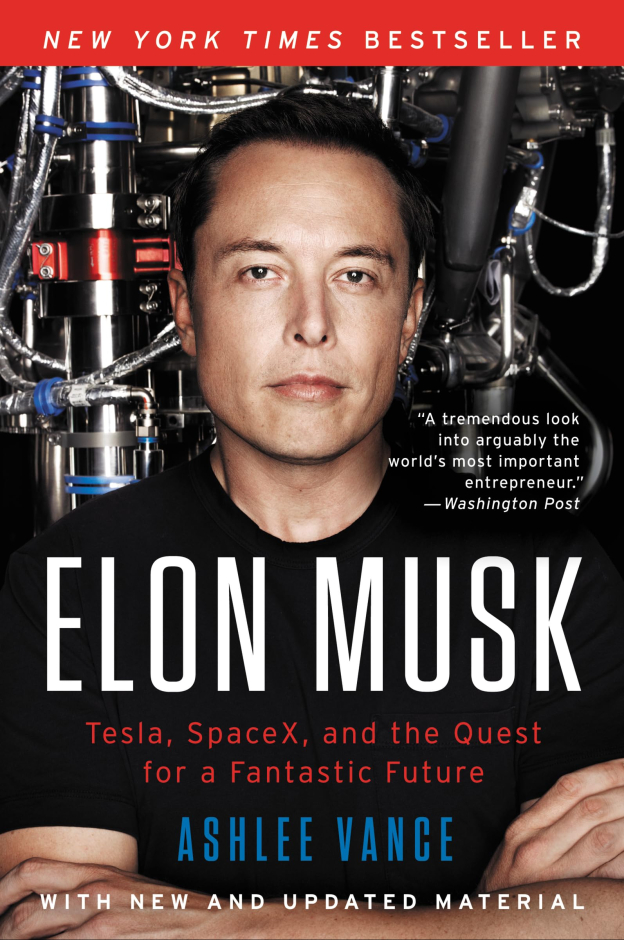
But two or three years ago I'd picked up a 2015 Musk biography at a local used book sale for a dollar. It sat on my shelves untouched until his trillion-dollar IPO had made me curious enough to read it, and his story left me quite impressed.
Although there may have been other industrial entrepreneurs bolder than Musk, no obvious names came to mind.
He'd spent years as the CEO of not one but two different struggling and very innovative technology start-ups—Tesla and SpaceX—and somehow managed to carry them both to tremendous success, becoming world-leaders with market values of more than a trillion dollars each.
No other entrepreneur had ever managed to pull off something like that. The nearest example might be Steve Jobs of Apple fame, who spent decades owning and funding Pixar Animation Studios as a side-project, but as far as I know his personal involvement in its operation had been minimal.
Some of the anecdotes of Musk's early days were quite striking. Being interested in doing experiments in space, he'd visited post-Soviet Moscow in hopes of buying three ICBMs that would be retooled for that purpose. The Russian officials offered him missiles at $8 million each, and he'd countered by offering $8 million for two. They refused and seemed skeptical that he actually had the money, so he angrily left and decided to manufacture his own rockets instead. This was a remarkable origin-story for what has now become the world's dominant launch-provider.
At a later point, Musk was down to the last portion of his original Internet wealth and he was faced with the looming financial collapse of both Tesla and SpaceX, forced to decided which one he would to save and which he would allow to go under. But he refused to make that triage decision, instead splitting his money between the two of them, and somehow both of them survived and eventually prospered.
All of these stories certainly explain why he seems to be viewed as something of a legend by some of the most important Tech company founders and CEOs, and this had been the case even during the many years when their own wealth and market power totally eclipsed his.
Musk's SpaceX launch-provider and his Starlink satellite system were remarkably innovative technological achievements and they completely dominated their market-segments. As a corporate entity, they were solidly profitable and might have been taken public at a plausible valuation of many hundreds of billions of dollars.
But for his own reasons, Musk chose to merge them with a money-burning also-ran AI boat-anchor, and the combination may go down as an epic business disaster.
Or perhaps not. Given Musk's many past brushes with financial collapse, there's always a chance he'll somehow pull another rabbit out of his hat.
Some of this certainly came through in the treatment he was accorded by the Economist.
The centerpiece of their coverage was an interview of Musk at one of his Tesla factories by Editor-in-Chief Zanny Minton Beddoes. These Economist interviews are usually restricted to subscribers, at least initially, but perhaps because of the especially interesting subject, this one was almost immediately made freely available on YouTube and is definitely worth watching.
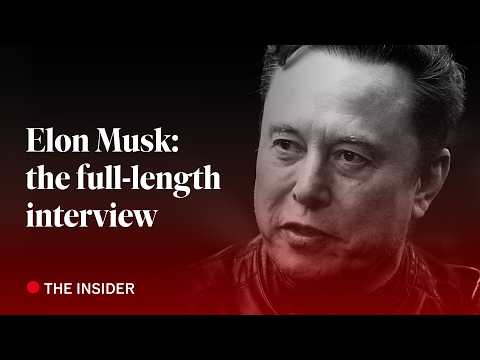
It ran about 85 minutes, with the first 50 minutes devoted to the topic of AI. This was hardly surprising because according to its prospectus the overwhelming majority of SpaceX revenue was expected to come from its AI division.
During that segment, Beddoes came across as surprisingly deferential or ill-informed, seeming to accept Musk's statements without providing any significant push-back.
For example, she noted that he had total voting control of SpaceX despite only having a minority of the ownership stock, and that his control was permanent. Musk correctly replied that situation was also the case at other leading Tech companies such as Google/Alphabet and Facebook/Meta, and she accepted that response. However, she failed to realize that in all such previous cases, shareholders had the ability to sue if their own rights were grossly violated, but as the WSJ had reported—and I had noted above—Musk had successfully insulated his company from any such shareholder lawsuits. This essentially gave him permanent, monarchical control over his company and everything it did, whether for good or for ill.
But far more significant than these governance matters were Musk's remarkably bold claims regarding AI and its potential, all of which she apparently swallowed. A few of those pronouncements jumped out at me:
- Money won't matter within a few years.
- AI will be smarter than people within five years. Within ten years, humanity won't be in control because AI will be vastly more intelligent.
- There was a 10-20% chance of killer AI robots wiping out humanity.
- AI was already better than 90% of professional software engineers at writing code, and would soon be better than 99% of programmers.
Peering into the future is obviously difficult, and if killer robots do exterminate humanity there won't be anyone around to say "I told you so!" But I was rather skeptical of some of these claims.
In his biography, I discovered that Musk had already been very concerned about the threat of killer AI robots as far back as 15 years ago, and that dire scenario still hasn't come to pass.
I also remember that during the previous Dotcom Bubble of the 1990s, there had been widespread talk in Tech circles of the terrible danger of self-replicating nanotechnology getting out of hand and annihilating humanity by converting our entire world into "gray goo." Some thirty years have passed, the gray goo still hasn't arrived, and indeed I only very rarely hear anything at all about nanotechnology these days.
So instead of these apocalyptic predictions, perhaps we should focus upon the most mundane of Musk's claims, namely that AI has already surpassed the vast majority of human software engineers in programming ability, and will soon reach the 99th percentile.
Is there any solid evidence that this is correct ? Given that so many top corporate executives have forced their companies to very heavily utilized AI for programming purposes, wouldn't we have expected to see an astonishing Renaissance in software innovation and quality ? But I am not aware of any such thing. Although the AI companies and their Tech media handmaidens relentlessly hype their technology, I haven't seen them point to a single software breakthrough product built by those genius-level AI systems.
Subscribe to New Columns
Instead, some of the cynical critics have claimed that use of AI makes easy programming projects easier but hard programming projects harder. They have warned that these AI-oriented companies have produced enormous masses of complex AI-generated code that cannot be modified nor maintained and will ultimately result in a business disaster. This sort of harsh criticism seems all too plausible for me.
In the same article in which I expressed such strong doubts about the SpaceX IPO, my closing section raised some similar issues about AI technology, highlighting the very sharp criticism of its finances by an extremely prolific blogger named Ed Zitron. If Beddoes had prepared for her interview by reading some of Zitron's posts or watching some of his video interviews, she might have much more effectively challenged Musk and his claims.
One of Zitron's main arguments is that there is little evidence that AI systems have so far provided any practical, economic value to the vast majority of the corporations heavily using that technology, and also that none of the major AI companies have any path to eventual profitability. Instead, the latter have only been kept alive by the massive funding of the Tech giants that then receive back their own investment capital as revenue, and when this legally dubious system of circular funding eventually collapses, the consequences may be disastrous. Zitron favors the metaphor of the AI snake eating its own tail.
As I explained:
The two main AI companies are OpenAI and Anthropic, the latter of which was founded in 2021 mostly by a group of former OpenAI employees. Although OpenAI had long been the face of the technology, Anthropic may have recently edged into the lead, with its latest funding round now valuing it at $965 billion. Both companies were hoping for IPOs some time this year.
One of Zitron's main arguments is that neither OpenAI nor Anthropic have any plausible path to profitability. Despite this they have made enormous contractual commitments to Microsoft, Google, Amazon, and Oracle, most of which are simultaneously providing them the investment capital that keeps them alive.
I quoted Zitron's analysis from early May:
The Information's story also had this fascinating chart showing that around 50% of Amazon, Google and Microsoft's backlog (which includes all revenues not just AI) — a staggering amount — is made up of revenue from OpenAI and Anthropic:
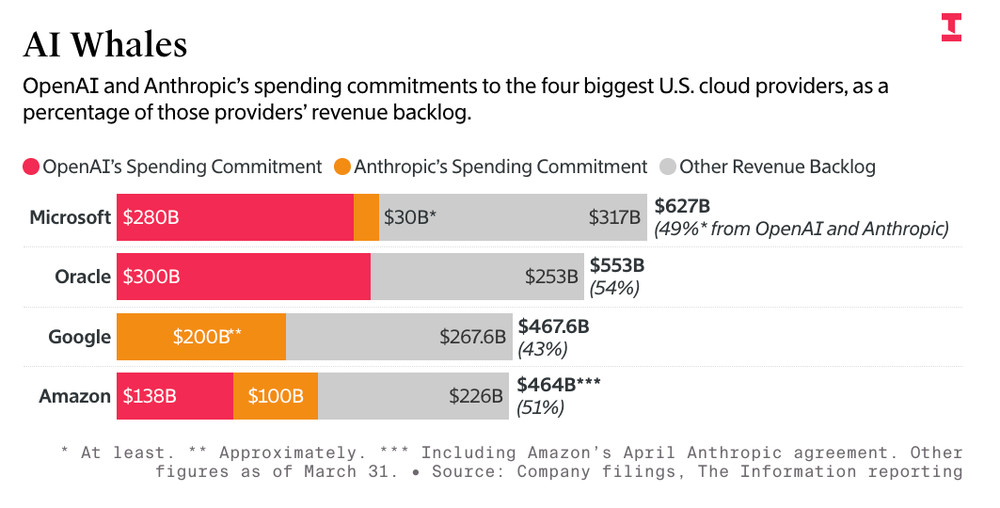
Just two weeks ago, both Amazon and Google pledged to invest up to another combined $65 billion in Anthropic, a company that just raised $30 billion in February and plans to raise another $50 billion more, following Amazon's $15 billion (and as much as $35 billion more) investment in OpenAI in February.
This is not what you do when real, meaningful demand exists for AI services. Assuming that these rounds are closed at their higher limits, it will mean that Google has invested $43 billion and Amazon $33 billion in keeping Anthropic alive.
As I've explained, most AI revenues out of Google, Microsoft and Amazon come from two companies that lose billions of dollars a year, have no path to profitability, and are only able to keep paying these companies because the companies (and investors) keep feeding them money.
These relationships are utterly poisonous, and an intentional attempt to deceive investors and the general public.
So the Tech giants have invested enormous sums in OpenAI and Anthropic which then return those same dollars in the form of payments for services. Similarly, the bulk of the payments to Anthropic and OpenAI comes from other money-losing AI startups, whose venture capital investments become revenue for those larger companies. Much of this recalls the last stages of the Dotcom Bubble.
Musk explained to Beddoes that the two crucial elements of AI were the AI chips and the electrical power that they relied upon, with America being much stronger in the former and China far ahead in the latter, so he suggested that China might eventually pull into the overall lead.
Over the last couple of years, American AI companies have paid hundreds of billions of dollars to Nvidia for the AI chips populating the many huge data centers they are constructing, with those revenues boosting Nvidia so that it regularly ranked as the world's most valuable company.
But Zitron's research suggested something remarkable. He argued that a substantial perhaps even majority fraction of those ultra-expensive AI chips supposedly sold and shipped by Nvidia during the last year or two may have never actually left Taiwan. According to him, AI data center construction is often so far behind schedule that the chips and the racks housing them have probably remained in Taiwanese warehouses gathering dust, perhaps likely to already have become obsolescent by the time they are finally installed and activated, if that ever really happens.
Meanwhile, some of those AI data centers actually built are proving less than entirely successful, notably those of Musk himself. The overwhelming bulk of the value of SpaceX came from its AI division that has championed the Grok AI. However, there is very little evidence that any substantial number of people are actually using Grok. As a result, the large Texas data center that Musk had urgently built and expensively outfitted was so underutilized that he leased it to Anthropic, perhaps helping to explain the collapse in the SpaceX valuation.
- American Pravda: Looming Market Crashes
- A Gigantic Bubble in AI Tech Stocks?
- Ron Unz • The Unz Review • June 1, 2026 • 8,700 Words
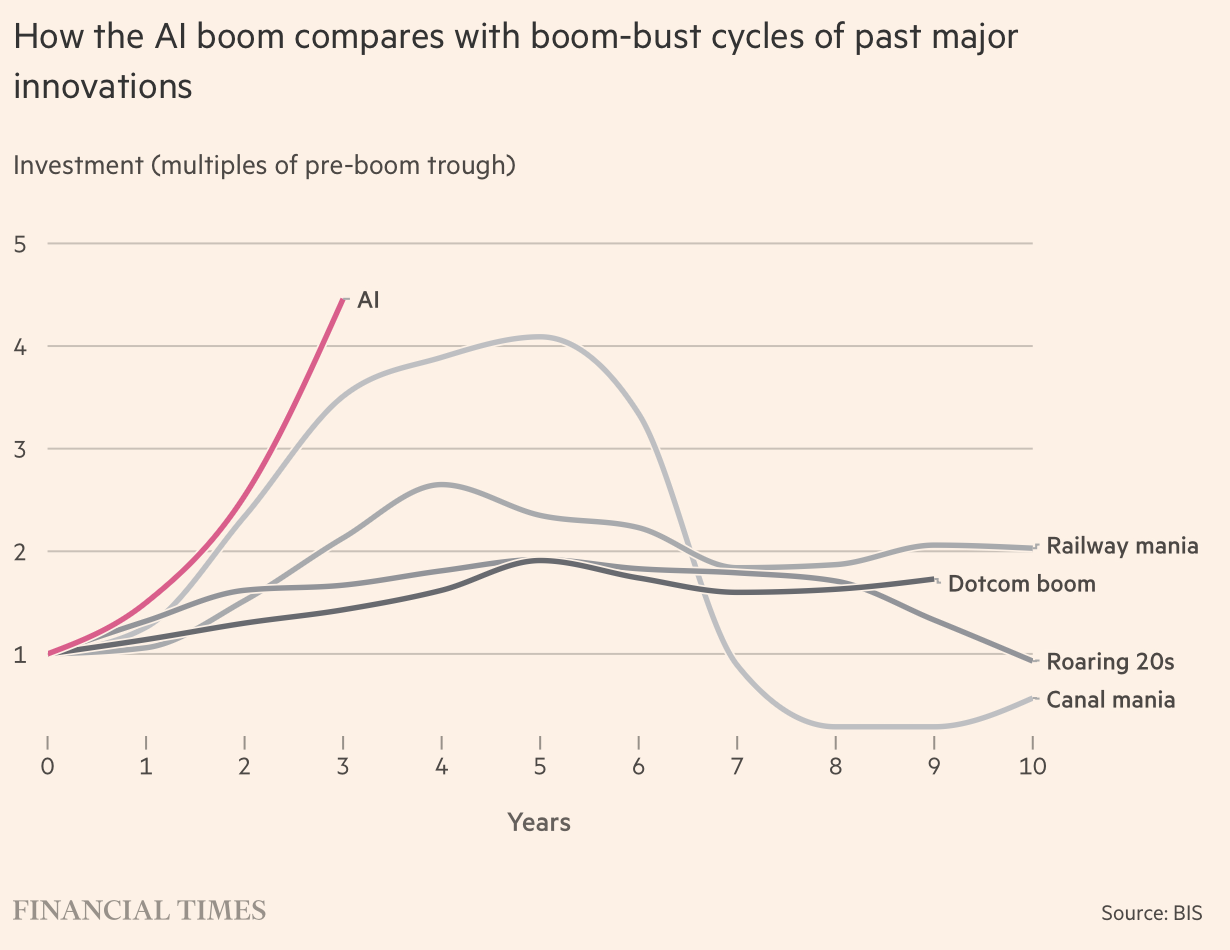
A few weeks ago, a report from the Bank for International Settlements demonstrated the astonishing magnitude of the AI Boom, vastly greater than the Dotcom Bubble of three decades ago, and the Financial Times published a chart displaying this in striking form:
Over the months, Zitron has discussed his analysis in many dozens of media appearances, most recently in a short segment on Bloomberg TV. I think that Beddoes would have benefitted by watching a few of these before she interviewed Musk.
The Views of Elon Musk, Tucker Carlson, and Jeffrey Sachs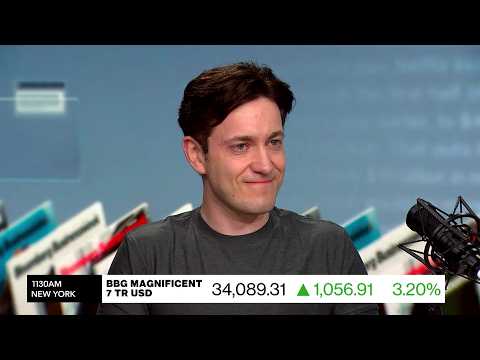
I'd faulted Beddoes for her extreme deference to Musk regarding AI and business issues. But in the shorter segment that followed addressing Russia's war in Ukraine, this situation was totally reversed.
Based upon his biography, I saw very little evidence that Musk had ever had any interest in politics or public policy. Therefore, I was hardly surprised that in the last few years he'd gone from being a longtime supporter of Democrats to the largest single donor to Trump's 2024 presidential campaign, with that stark reversal apparently prompted by rather trivial or business-oriented factors, probably supplemented by some random Tweets.
As the hands-on CEO of two huge Tech companies, I doubted that he had ever had much time to educate himself on political matters except in the most superficial manner, and this became rather obvious.
He cited our horrendous national debt as one of our greatest political problems while praising Trump as far better than the Democratic alternatives, without ever apparently considering that Trump was personally responsible for over $10 trillion of that debt, more than any other president in our history. Given all of Trump's other insane policies, including his disastrous Iran War, only someone as politically deaf, dumb, and blind as Musk could still be praising the Trump Administration as "excellent."
So when Beddoes pressed him regarding the "appalling Russian aggression" against Ukraine, he could only nervously respond that he found it unfortunate that people were dying every day on the front lines and he hoped that the war could be ended. He emphasized that he'd freely offered his Starlink system to Ukraine and had been honored for that contribution, but he seemed to doubt that the Russian army could be driven out of the territory they occupied, a defeatist viewpoint that Beddoes seemed to consider very dubious.
For more than four years NATO has been fighting a proxy-war against nuclear-armed Russia on Russia's own border, targeting Russia's own strategic nuclear deterrent, repeatedly trying to assassinate Russian President Vladimir Putin, and most recently launching huge drone strikes deep within the Russian homeland. These policies were stupendously reckless and almost suicidal, provoking some Russian policy experts such as Sergey Karaganov into arguing that Russia should reestablish its deterrence with nuclear strikes against NATO. But Musk seemed totally unaware of any of this, while Beddoes presumably viewed it all with considerable equanimity or even approval.
Beddoes appeared to relentlessly bully Musk on these geopolitical matters, with Musk lacking the knowledge and self-confidence to effectively respond. Musk might be a titan in business and technology, but he was obviously a political pygmy, so my angry reaction to the Economist editor was "Pick on someone your own size!"
A perfect example of such a political "fair fight" easily came to my mind. Several months ago, Beddoes had similarly interviewed Tucker Carlson. That entire hour-long exchange had finally been publicly released on YouTube a couple of weeks ago, and I'd highly recommend watching it.
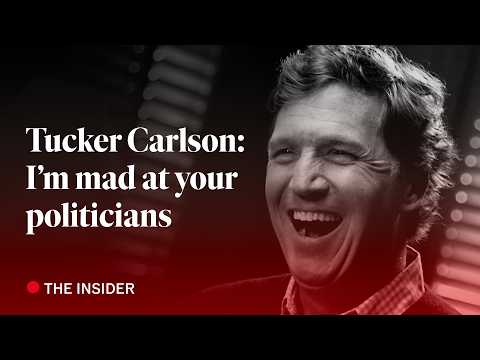
To me, Beddoes seemed to exist inside a sealed propaganda-bubble. She appeared entirely brainwashed on some of the most salient topics that came up, including the causes of the Russian war against Ukraine and the inordinate amount of Israeli influence that had been responsible for our disastrous attack on Iran, so Carlson quite effectively responded to her positions. But given their very considerable ideological differences, the Economist editor was rather dismissive about many of Carlson's arguments. Indeed, she subsequently characterized Carlson's views in extremely harsh terms:
His attention-grabbing punditry is now nativist, isolationist and paranoid in tone. He's used his platforms to push wild conspiracy theories and express sympathy for Vladimir Putin and Viktor Orban. I sometimes find myself agreeing with Tucker, often I find his worldview baffling—and sometimes abhorrent.
Accusations of antisemitism were even more lethal in her own traditional media world, and in the interview itself she raised this issue, repeatedly pressing Carlson about his sharp criticism of Israel. But perhaps to her surprise, Carlson stood his ground, noting that she was merely repeating the standard talking-points long-promoted by the Israeli government.
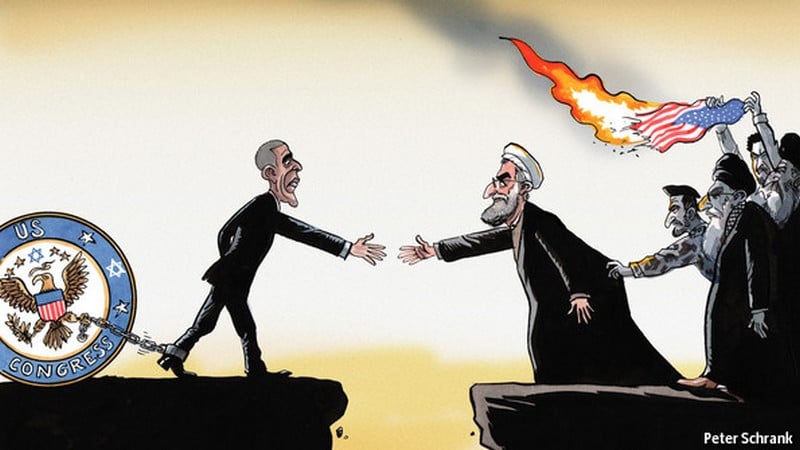
If Carlson had wished to be unkind, he might have also mentioned a notable incident from her own past. A dozen years ago the Economist had run an innocuous cartoon very mildly suggesting that Israel and its partisans had some political influence in America, then quickly retracted it with perfuse apologies after it was criticized as antisemitic by the ADL and other Jewish groups.
The departure of the Economist editor who had published that cartoon was announced later that same year, with his term of office having been shorter than that of most of his predecessors in the publication's illustrious 170 year history. Beddoes replaced him, so I was hardly surprised by her considerable sensitivity to those sorts of controversies.
Although I found her exchanges with Carlson quite interesting, I would have been even more eager to see her interview a different public figure on some of those same matters. During the last decade, Carlson had established himself as one of Trump's most influential and important right-wing MAGA supporters. Beddoes and her mainstream media circle surely viewed as repugnant all his positions on many political issues, including immigration, religion, and other social matters. This would have naturally colored her reaction to his controversial foreign policy views on Ukraine, Russia, Israel, and Iran.
However, Carlson's stance on those latter topics coincided almost exactly with those of Prof. Jeffrey Sachs of Columbia University, one of our most influential public intellectuals. Sachs is a moderate liberal who has never supported Trump or almost any of his conservative policies, and his complete alignment with Carlson demonstrated that sincere liberals and sincere conservatives can both recognize the same underlying factual reality. And as it happens, Beddoes' first job out of college was working as a young assistant to Sachs, doing so during the years that the New York Times had proclaimed him the world's most important economist. That surely must have represented the sort of accolade that would have deeply impressed her.
Sachs had spent decades working on economic issues with the topmost ranks of the Soviet, Russian, and Ukrainian leadership. He has told the story that in 1991 he had been sitting in a Kremlin meeting room with Russia's top leaders when the announcement came through that the USSR had officially been dissolved, allowing him to experience a historical moment shared by few if any other Americans. So when Sachs has discussed the origins of the current Ukraine conflict he has often been speaking from direct personal knowledge.
For such reasons, Beddoes might have been extremely reluctant to ever interview her old mentor, but some more recent developments have rendered that notion utterly unthinkable. Although she apparently regarded Carlson as being tainted by some of his supposedly "conspiratorial" beliefs, during the last few years Sachs had often gone much farther in such directions.
During the Covid epidemic, the Economist estimated the total number of worldwide "excess deaths" due to the virus was probably around thirty million, including well over a million Americans, while the lives of billions more had been greatly disrupted. Britain's Lancet is one of the world's most prestigious medical journals, and soon after the outbreak began it established the Covid Commission to investigate all aspects of the disaster, naming Sachs as its chairman.
- Jeffrey Sachs as Righteous Rogue Elephant
- Ron Unz • The Unz Review • October 10, 2022 • 3,500 Words
Over time, Sachs gradually became more and more suspicious of the Covid origins, and Anthony Fauci's recent Congressional testimony prompted a new interview a few days ago in which he reiterated his conclusions. Sachs explained that that there was strong evidence that the virus had been designed, created, tuned, and tested in American laboratories heavily funded by Pentagon grants, though he could only speculate how it then suddenly appeared in Wuhan, China.
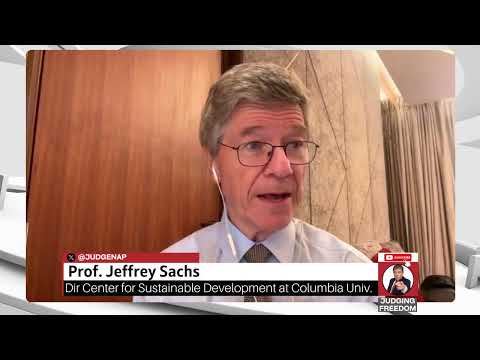
Oddly enough, the world's second major Covid outbreak soon began in Iran, where the virus infected and killed considerable numbers of that country's ruling elites. Since speculation regarding that very strange development might point in especially dark directions, Sachs wisely avoided mentioning those facts.
Moreover, in some of his other public interviews Sachs has argued that the 1963 assassination of President John F. Kennedy was likely the result of a conspiracy involving the CIA that has been covered up for more than six decades. He has also more recently suggested that Israel and its Mossad may have played a central role in killing our president, perhaps explaining the extreme reluctance of any of his White House successors including Trump to directly oppose Israel on any important matter.
Elon Musk and the Antisemitism Controversy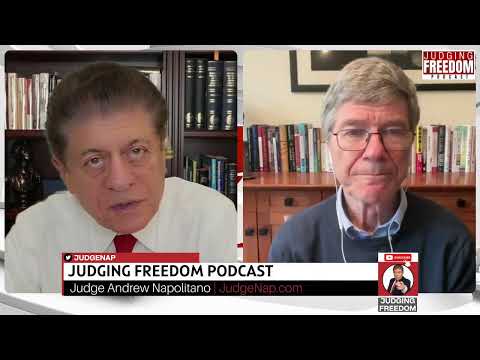
Although the topic of antisemitism was a major part of the Carlson interview, it never came up in the one with Musk, though it certainly would have a few years ago.
Soon after buying Twitter in late 2022 and promising to reestablish its once robust reputation for free speech, Musk had come under sharp attack by the ADL and initially pulled back, "expressing a commitment to combating hate." But by the following year, he felt he was in a much stronger situation, and at the beginning of October 2023 he seemed to achieve the remarkable distinction of defeating that powerful Jewish organization:
Just a few months earlier, Musk had been riding high, having successfully dismantled Twitter's large censorship department even as he granted an amnesty to most of the banned voices of the previous few years, notably including former President Donald Trump. Under his direction, secret documents were provided to Matt Taibbi and other investigative journalists that produced bombshell revelations of a nefarious government role in orchestrating Twitter censorship. Tucker Carlson's new Twitter-based interview show had racked up enormous ratings, with his August Trump interview outdrawing the viewership of the official 2024 Republican Presidential debates shown on broadcast television. Musk seemed to be successfully resurrecting Twitter's old motto that it represented "the free speech wing of the free speech party."
Most remarkably, he'd apparently seen off the challenge of the very formidable ADL, which for decades had terrified so many of the powerful. When that widely feared censorship organization accused him of allowing "antisemitism" and "racism" to flourish on his platform and sought to intimidate his advertisers, Musk threatened to sue them for business interference, turning that weapon of "lawfare" against one of its most prolific wielders even as a #BanTheADL hashtag went viral on Twitter. The ADL had financial assets of $500 million and enormous media influence, but for the first time its leaders realized that they faced an opponent who greatly outmatched them in such resources, and fearing the risk of a multi-billion-dollar legal judgement, its leaders quickly settled, abandoning their attacks against Musk and Twitter.
But as I explained, that victory proved only temporary:
However, the sudden, unexpected Hamas attacks of October 7th changed everything. Well over a thousand Israelis died, and the anger and agitation of Jewish activists in America reached an unprecedented fever-pitch. Israel soon began a merciless bombardment of Gaza in retaliation, eventually killing tens of thousands of helpless civilians, and those horrific scenes of death and devastation reached the entire world on social media, bypassing the traditional pro-Israel gatekeepers who controlled Western broadcast television and newspapers. As a result, polls shockingly revealed that younger Americans—whose information on world events came from the Internet—were quite evenly divided between Israel and Hamas or even actually favored the latter. So Jewish and pro-Israel organizations began an all-out mobilization to suppress such "antisemitic" material.
Cities and college campuses across the Western world saw large demonstrations against Israel's televised slaughter of women and children, with Muslim immigrants naturally becoming an important element of these, causing Jewish activists to fiercely denounce those groups as "antisemitic." For generations, Jews had overwhelmingly supported non-European immigrants, while widely praising and promoting all attacks by non-whites against white Gentile society. Most recently they had been the primary backers of the massive 2020 Black Lives Matter protests, triggered when a black lifelong career criminal died of a drug overdose while in police custody. But with "Jewish privilege" and "Israeli privilege" now suddenly coming under such hostile criticism, Jewish groups turned on a dime and demanded total censorship and suppression. Anti-immigrant right-wingers noted this rank hypocrisy in their social media posts, and in mid-November one such Tweet caught Musk's eye, prompting him to endorse it: "You have said the actual truth" he wrote.
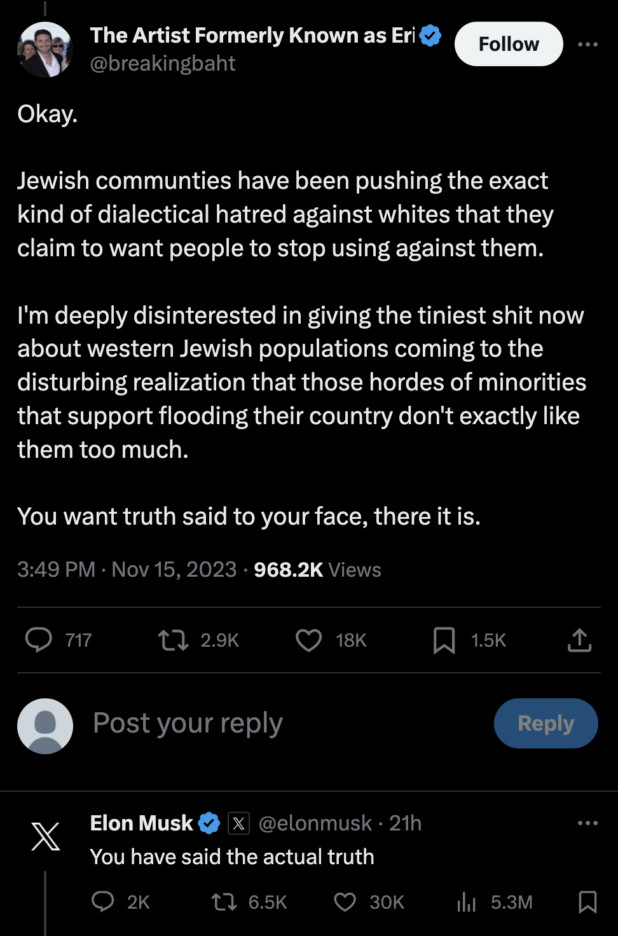
Those simple six words probably took Musk merely seconds to type but they may have shifted the trajectory of American history. Almost immediately, waves of Jewish and pro-Israel activists swarmed to denounce him, and many leading corporations pulled their advertising from Twitter, threatening its financial viability. Faced with such an enormous backlash, Musk traveled abroad to meet with Israel's president, pledging to combat "antisemitism." On that same visit, he also posed for a photo-op with Prime Minister Benjamin Netanyahu, solemnly eyeing an empty crib, which presumably symbolized the forty Israeli babies allegedly beheaded by Hamas, one of the many outrageous atrocity-hoaxes promoted by Israel and its dishonest propagandists.

In the years following Donald Trump's upset 2016 victory, right-wingers had been heavily censored on many social media platforms, while progressives were free to run wild, but now the latter began suffering the same fate for criticizing Israel's massacres. Since the early years of the twentieth century, Israel's ruling Likud party and its Irgun predecessor had always used the slogan "From the River to the Sea," promising a Greater Israel under total Jewish control and domination. But over the last couple of decades, anti-Zionist progressives had embraced those same words, advocating a unified secular democratic state with equal rights for Jews and Palestinians. Musk now declared that latter phrase "genocidal" and warned that it would trigger an immediate ban from Twitter, even as Netanyahu continued publicly using it in its original Jewish-supremacist meaning.

A few weeks later, Musk traveled to Auschwitz, accompanied by his companion and guide, a young pro-Israel pundit named Ben Shapiro, whose own right-wing media empire had been lavishly funded by Zionist donors. This widely covered quasi-religious pilgrimage seemingly marked Musk's complete capitulation to the awesome power of Organized Jewry.
- Elon Musk Goes to Canossa
- Ron Unz • The Unz Review • February 12, 2024 • 5,400 Words
Although Musk had always previously supported Democrats, after Trump survived his July 2024 assassination attempt, Musk publicly endorsed his presidential campaign, soon becoming his largest financial donor.
When Trump won the election and regained the White House, Musk began his controversial DOGE campaign to drastically reduce government spending and employment. In the next section of the interview, Beddoes and Musk sparred over this project, especially regarding the elimination of USAID.
Although my own name never came up in this discussion, early in the DOGE project my own controversial writings had provoked a considerable firestorm in Musk's political project.
Along with everyone else, I've been reading the media accounts of Elon Musk's DOGE project. In that controversial effort, small teams of youthful engineers had been granted access to some of the most important systems of the federal government, resulting in widespread public claims of the massive waste and corruption that they had allegedly found and prompting the prospect of huge cuts in those gigantic bureaucracies. For example, the $40 billion USAID seems likely to be almost completely gutted by the Trump Administration, with plans to cut its 10,000 person staff by 97%.
One of the more prominent DOGE investigators has been 25-year-old Gavin Kliger, a 2020 graduate of UC Berkeley with degrees in Electrical Engineering and Computer Science, who has been named a senior advisor to the Office of Personnel Management. His role at that agency and the IRS has been sufficiently important that the New York Times recently published a short article describing his activities.
These public attacks on enormous government agencies naturally inspired fierce counter-attacks by the many media outlets opposed to Musk's project, and their journalists have sifted the background of those newly super-empowered twenty-somethings for controversial material.
In particular, a hit-piece in Mother Jones, a prominent left-liberal investigative publication inspired a wave of attacks against Kliger , one of Musk's top lieutenants:
In a since-deleted Substack post, an engineer working for Elon Musk's so-called Department of Government Efficiency (DOGE) wrote about his radicalization, noting a key influence was an essay by Ron Unz...
The Substack post, titled " Why I Joined DOGE ," was written by DOGE engineer Gavin Kliger...
The post was published Friday and was still available online Sunday morning around 9:30 a.m. ET. It was deleted on Sunday. In the post, Kliger credits Unz's " Our American Pravda"—a 2013 essay published in The American Conservative that railed against what Unz claimed were systemic media failures—with beginning the engineer's "political awakening."
"Reading it was like putting on glasses for the first time," writes Kliger, whose LinkedIn says he is a senior advisor to the Director for Technology and Delivery at the Office of Personnel Management. "The issue wasn't just bias—it was that entire narratives, the ones we took for granted as truth, were carefully curated illusions." (Mother Jones saved a copy of Kliger's Substack post before it was deleted.)
The article was entirely based upon such "guilt by association." After reporting Kliger's declaration that he had been heavily influenced by my April 2013 article, most of the remaining text focused on some of the controversial or ultra-controversial pieces that I had written during the dozen years that followed, suggesting that these therefore tainted the young DOGE engineer. My lengthy American Pravda series runs well over 100 articles and nearly a million words, so the writers mined it for explosive quotations although Kliger claimed perhaps implausibly that he had remained totally unaware of that much larger body of work:
In an email to Mother Jones on Sunday, Kliger said he did not read the later "American Pravda" posts from Unz.
"I specifically referred to this 2013 article from The American Conservative, 'Our American Pravda.' Note the 'Our'," Kliger wrote. "I have neither referenced or read [the other work in the "'American Pravda" series]." (The DOGE engineer also noted The Atlantic's Conor Friedersdorf recommended the 2013 Unz essay in a blog.)
- DOGE Worker Says He Was Radicalized by Reading Writer Who Later Denied Holocaust
- In a since-deleted Substack post, a member of Elon Musk's team praised an essay by Ron Unz—who has called the Holocaust potentially a "hoax" and said Trayvon Martin was "a violent young thug."
- Julianne McShane and Jacob Rosenberg • Mother Jones • February 16, 2025 • 1,100 Words
As I wrote at the time, I found this entire line of attack totally unfair:
As Kliger explained, a writer at the very respectable Atlantic had strongly recommended my article when it first appeared. But if the journalists attacking him had further investigated, they would have found that the same had also been true of prominent free market economist Tyler Cowen, noted author Eamonn Fingleton writing in Forbes, and various other very mainstream writers and public intellectuals. Influential libertarian historian Tom Woods had heavily excerpted my article and Alexander Cockburn's leftist Counterpunch publication had republished it in its entirety, as had ZeroHedge.
So if Mother Jones saw fit to interrogate and condemn Kliger for my far more controversial subsequent writings, why should all those other individuals and publications have escaped similar criticism ? Indeed, my 2013 article became one of the most widely read pieces in The American Conservative that year, and as far as I recall almost nobody at the time had criticized or condemned it.
This underscores the extreme unfairness of the Mother Jones attack against Kliger.
- American Pravda: Guilt by Association for Elon Musk's DOGE
- Ron Unz • The Unz Review • February 24, 2025 • 7,200 Words
But if the Mother Jones journalists had bothered digging a little deeper, they would have discovered that even years later my first collection of essays had attracted some extremely favorable remarks from a number of very distinguished intellectual figures.
And although I subsequently became something of a "Lord Voldemort figure" whose name cannot be mentioned in the media, with this blanket-ban sometimes taken to astonishing extremes, there are strong indications that my controversial writings have exerted a considerable amount of quiet influence in intellectual circles. I also strongly suspect that Kliger was very far from being alone in that regard among Musk's youthful army of anti-government activists.
Subscribe to New Columns
Elon Musk and the Great Muslim MenaceThe majestic lion may be king of the jungle, but if he's dropped into the wide ocean, he becomes nothing more than fish food.
That was the truism that came to my mind as I watched the last 25 minute segment of the Musk interview, which was certainly the most contentious.
During the first, very long segment, Musk had declared that within the next decade AI would have achieved super-intelligence, replacing human control of the world and possibly exterminating us in the process. I was politely skeptical of those sorts of predictions.
In the second segment, Musk had demonstrated reasonably good instincts regarding the Russia-Ukraine war. But he unfortunately lacked the knowledge and self-confidence to push back against the standard NATO narrative that Russia needed to be militarily defeated for its act of completely unprovoked aggression.
The segment regarding the DOGE project left me with mixed feelings. My impression had been that both Musk and the young engineers working under him had been utterly clueless of how the federal government actually worked, and the project had obviously ended as an almost total failure. But I'd also seen many plausible claims USAID mostly functioned as a patronage organization and a means of American political subversion rather than any sort of vital humanitarian agency, so its elimination hardly seemed any great loss.
But the last segment tipped the balance, and I felt a great deal of sympathy for Beddoes as she disputed the beliefs of someone who might be the richest man in the world and have 250 million Followers on Twitter but was so obviously a total political ignoramus.
Musk declared himself a strong supporter of the Trump Administration, whose policies he characterized as "excellent." And when Beddoes challenged his supposed support for "far right fringe figures" in Europe, he strongly denied that, saying that he merely supported "normal people."
He regularly repeated a mantra regarding the policies he championed: "Secure borders. Safe cities. Sensible spending." Those were certainly moderate and reasonable positions that few would sharply dispute.
In trying to make sense of his ideological trajectory, I noted that he had supported Barack Obama in 2008 and 2012, Hillary Clinton in 2016, and Joe Biden in 2020. He'd initially endorsed Andrew Yang in the 2020 Democratic primaries and also favored Kanye West's presidential campaign that same year. While not entirely coherent, this pattern of endorsements hardly suggested that he had ever been any sort of conservative, let alone a rightwing ideologue.
Moreover, he apparently hadn't repudiated any of his past positions. He even emphasized that the speeches and policies of Obama and Hillary represented exactly the sort of sensible, moderate positions that he still espoused, in sharp contrast to the views of the leftist lunatics whom he despised. He described himself as a moderate, and his eclectic mix of policy positions were hardly aligned with either ideological camp.
It is perfectly understandable that some dramatic events or public policies could radically shift someone's political framework. The transgenderism movement, the Black Lives Matter riots of 2020, the horrific massacres of civilians in Gaza, the dangerous war in Ukraine, the Biden open borders policy of 2022-2024—any of these things could explain a radical shift in world view.
But if Musk had still been supporting Joe Biden and Kanye West in 2020, some of these possibilities can be ruled out. Musk clearly disliked Biden's open borders policy, but I saw no indication he viewed it as central, and he'd been an important supporter of the Ukraine war, although a lukewarm one.
Having excluded most of these other possibilities, I began to suspect that the radical shift in his ideological position may have occurred in November 2023. As discussed above, his casual endorsement of a Tweet criticizing Jews had subjected him to a category five hurricane of Jewish and pro-Israel attacks, threatening the survival of his businesses and perhaps even his personal safety.
So he quickly folded, going on a major apology tour both to Israel and to Auschwitz, taking along podcaster Ben Shapiro as his personal guide and minder. And this process may have continued beneath the surface during the months that followed.
One possible clue was that except for his forlorn hope of drastically cutting government spending, none of his American positions seemed especially radical or extreme, nor did any of his rhetoric fall into that category.
But in very sharp contrast, some of his statements about Europe seemed outrageous. He repeatedly declared that "a civil war in Britain is inevitable" while admitting that he hadn't actually been to that country in years. Beddoes understandably reacted with total disbelief.
When she asked him whether he was a racist, he strongly denied that accusation. But when she asked whether he was anti-Muslim, he hemmed and hawed and talked about the dangers of extreme cultural incompatibility, with immigrant newcomers attempting to radically transform the society that they join.
So although he never used the word, it sounded as if he feared that Muslims would seek to impose Shariah Law in Britain and across the rest of Europe, with the future civil war being fought over that burning social issue.
In the wake of the Iraq War fifteen or twenty years ago, Shariah Law had become the great bugaboo of ignorant right-wingers who were deftly manipulated by pro-Israel donors and activists, but I've barely heard it mentioned for the last decade or so.
However, it's natural that pro-Israel activists would now try to revive those old lines of propaganda. Given Musk's total political ignorance, it's easy to imagine Ben Shapiro, Bari Weiss, and a few others in that category had succeeded in playing up his fears. Considering that Hamas terrorists had beheaded forty Israeli babies, all of Europe's children were in terrible danger.
Musk certainly seemed convinced that European cities were far more dangerous than American ones, all statistical evidence to the contrary. He claimed that rape and murder were "out of control" in Europe, and I'd assume he believed that the Muslims were responsible. He'd recently promoted that film Citizen Vigilante in which the white protagonist becomes so outraged at endless Muslim gang rapes and murders that he begins massacring that population along with the government officials who have been protecting them.
All of this may explain a puzzling incident from about a year ago. I was having lunch with a mainstream academic friend of mine, and he and one of his friends began casually referring to the epidemic of immigrant gang-rapes in Europe, a claim that puzzled me.
More recently, various rather excitable pundits have begun referring to the 250,000 white British girls allegedly gang-raped by Muslim "grooming-gangs," figures that sounded totally outlandish to me.
Why Aren't Keir Starmer, British Social Workers and British Police Hanging from Lamp Posts?
"At least 250,000 British girls suffered sickening sexual abuse by Pakistani gangs, who were enabled by police, social workers, and even Prime Minister Keir Starmer, to commit "child rape on an industrial scale," British MP Rupert Lowe's 'Rape Gang Report' has detailed.
Rupert Lowe is the British right-winger who has attracted Musk's enthusiastic support, thereby benefitting from the latter's 250 million followers on Twitter. I'm sure that Musk's megaphone explains the sudden spread of that issue.
Soon afterward, someone brought brought to my attention an analysis debunking this nonsense. Instead of 250,000, the actual figure for Britain seems closer to 700 cases per year, including both Muslim and (overwhelmingly) non-Muslim victimizers.
- Were 250,000 English Girls Raped by Grooming Gangs?
- A quick analysis of the Rape Gang Inquiry Report's estimate
- Aaron • Substack • June 20, 2026 • 3,300 Words
One indication of just how little thought Musk had ever given to his political concerns came near the end of the interview when Beddoes asked him to reconcile his remarkable predictions about AI with those regarding a future British civil war fought over Shariah Law.
Musk had apparently never considered the question. But he was firmly convinced that AI superintelligence would replace human control of the world in ten years, while the British civil war would probably not arrive for another twenty years.
So perhaps he now recognized that unless the AI superintelligence were firmly committed to Shariah Law, the threat of the latter might not really be so great after all.