George Austerfield
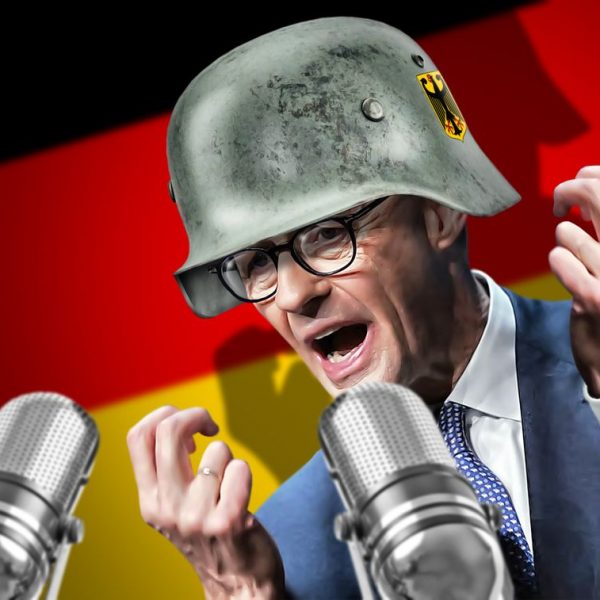
While schools crumble and vocational training starves, Germany redirects funds to defense-but lacks the engineers to build its weapons.
Speculating a bit, (albeit with a very broad brush) about the "Beginnings" we would find basically two groups of mankind. The timid and the less timid. Or the confident and the less so. This is something genetical, sort of "model" specific. The "model" living in the northern part of the globe being different to the ones living in the southern part. Or east or west. The different "models" of mankind were mobile for the most part anyway and intermingled.
This classification can be found in modern society too. In fact, intermingling has never really been out of date, the extent depending on means and ease of travel, as well as the grasp of language or the ability and willingness to learn. Media and social media have allowed a kind of distant-learning, giving information about and impressions of foreign countries and cultures without the necessity of leaving onés couch.
Getting back to the "Beginnings", it is conceivable that in the small social groups the feeling of mutuality would be more prominent than in the complexer structures of today. Painting this picture with a broader brush, one would find the timid, less confident people relying on the bolder members of the group for assistance and even protection. Different talents made this arrangement acceptable and beneficial for all.
The timid parents would try to improve their children to over come self-felt deficits, which somehow also applied to the confident side of the group. This kept the dissimilarity alive. The number in each category stayed more or less the same, as each tried to improve their offspring as much as possible.
Group structure changed dramatically the moment the breeds became settled. The successful hunter stepped into the second line behind those able to breed livestock and till the land. This did not necessarily imply that these hunters had no value, it was just a shift of priorities. The hunters, being the more courages had to find a new field of occupation, and having been the ones to jump to the defence of the group when needed, developed into a kind of military. The need to defend did not necessarily mean warcraft, it mostly occurred against animals and forces of nature.
The groups would follow the most adept and successful of the hunters, for obvious reasons, payment being unknown respect could have become a valid form of renumeration. The change of the societies into tribes brought forth a form of leadership that indulged in privileges high above the rest of the tribe members. The more they became involved in the leadership in esoteric and religious activities, the more powerful they became. Once in power the tendency to pass on these privileges to the following generation grew, and the leadership became hereditary and a ruling class developed.
The initial two groups (as stated above it is a very broad brush) slowly turned into the leaders, being more affluent and the followers, being less so. Or in more modern terms, richer and poorer. The have and the have-nots. This simplified classification can be regarded as example for one of the main causes of conflict in every form of societal model. Keeping the divide between the haves and have-nots as small as possible is therefore essential if the society should function.
Homogeneous societies imply the idea of sameness, same chances for everybody, same opportunities to improve ones living standard and so on. This, if this sameness is applicable to each member of the society, suggests the need for some type of "communism". The problem with the have and have-nots thus solved.
Looking at the different forms of "communism" that have sprung up over the last century, two things take a prominent position when characterising these. The first being the fact that the "communist" system does not work.
This is one of the reasons why I have put the term communism in quotation marks. The other reason being that there is in my opinion, based upon may discussions with philosophers in different countries, there is no universal form of a communist society. Even the Soviets did not regard their society as communist. More of a transition from socialism to communism, communism being the state form to be achieved if and when all went well. So our have/have-not problem probably will not vanish.
The second characteristic that was prominent was the importance attached to education. Here the so-called communist bloc excelled. During my time as instructor and educator in Germany, I have experienced this firsthand. The Russian immigrants had a totally different attitude towards learning compared to their German counterparts, the first mentioned wanting knowledge, while the other side was basically not interested beyond that which was necessary to pass their exams. The degree of knowledge attained in Soviet schools was also far higher than that of the German students. Obviously the systems and their intentions are difficult to compare fairly, but the difference in the results were undeniable. The problem around the have and have-nots does seem solvable after all. Education = competence = have.
Looking at the western societies, particularly those propagating a militaristic approach to the future, one can not help but notice the shortcomings in the field of education. Looking at Germany, living and working there, things are coming to a head. All fields of the economy are literally screaming out (cry out loud was yesterday) for skilled workers.
It is doubtlessly true that immediately after WWII a large workforce was needed for the manual labour necessary for the reconstruction. However as the country improved the need for different types of worker developed and the focus moved to office workers, that were needed to on the one hand feed the ever-increasing bureaucracy and clerical side of production, on the other hand the advertising, sales and management side. This changed the focus away from the training of artisans to a more sophisticated education for white collar workers. This transition, one could assume is common to all societies which are dynamic and continuously undergoing change.
Government after government has not tired of stating that children and their eduction form the capital of the country and guarantee its future. That has not however automatically brought about improvement or even change. Financing education is becoming a lost art. If an increase in funding is indeed detectable it is in pilot projects and academia.
Basic and secondary eduction in the classical schools is largely ignored when money is involved. Vocational education stands at the end of the line. Schools are literally falling apart. The atmosphere, the learning environment, is dismal, not only for the students but all the more so for the teachers, as they have to fight a seemingly losing battle to get to where they want to be. Lesson are cancelled due to either lack of teachers or more often than not lack of resources.
In an ever increasingly digitalised world, funds are sadly missing to educate the students to cope appropriately. Engineering is dying out as the schools are not producing students that have STEM capabilities. Ignoring STEM subjects, decreasing their attractiveness and funding "gender studies" and other such "humanity studies" with Master degrees does not help, when the country's industrial base, competitiveness and productivity is grinding to a halt. A society has to be able to afford "luxury studies", Germany for one cannot do so at the moment.
In addition to things of this nature, a miscalculated and badly conceived migrant policy, based on a covert racism has weighed down an already over burdened system. Not recognising the qualifications of these migrants out of hubris and arrogance has had the effect, that a nurse or doctor from Syria or Iraq is not working in the medical field other than as a cleaner.
Wanting a homogeneous and functioning society is one thing. Building and sustaining it is another. Taking funds out of education and redirecting them into areas needing competences, that are not forthcoming due to the exact redirecting of the said funds. This is not a sustainably policy, particularly if one has aspirations such as those continuously voiced by the German government over the last few months. Germany needs engineers to full-fill military programmes deemed important by the government but cannot get them started due to redirecting the necessary funds away from the education ministry (producing engineers) to the defence ministry (needing them).
The positive side with regard to the described situation is, (should one ignore the fact that in historical hindsight only homogeneous societies tend to flourish) is that it is definitely a peacekeeping measure. Master diplomas in "Gender Studies" don't build missiles and drones. One can indeed be thankful for even the smallest mercies.