As space becomes an increasingly vital arena for war, William J Astore tracks its increased militarization.
By William J ASTORE
'One point five trillion dollars.'
President Donald Trump has a penchant for eyewatering, Dr Evil-style demands from media outlets and others: last year's filing against the BBC for 'ten billion dollars' has been just one of a much longer string.
The cheque he's demanding from the US public for military spending is an order of magnitude higher. Last year the US defence budget topped $1 trillion (£730 million) for the first time. Unplacated, this year Trump has gone back to the US Congress with a $1.5 trillion ask, the largest increase in defence spending since the Second World War.
A chunk of this, $17.5 billion, will go to developing Trump's proposed Golden Dome missile shield - its name a nod to Israel's Iron Dome anti-missile system. Consisting mainly of ground-based interceptors and space-based sensors, this enormous missile shield has been couched in defensive terms.
Overall cost estimates vary widely - the official figure puts it at $185 billion, although independent analysts say it could cost up to $3.6 trillion.
Further space militarization is a certain outcome. Meanwhile one of the most worrying parts of the Dome proposal is the suggestion that it could include 'space-based interceptors' - missiles in orbit, ready to shoot down missiles launched from earth. This raises the spectre that they could be adapted and used as space-based bombs to rain death on any part of the world with almost no notice.
The idea that these interceptors could provide real protection to the US appears fantastic: it would require tens of thousands to be placed in our skies. A more likely outcome is an escalating security competition in which each nation's efforts to dominate space provoke countermeasures from others.
The 'Space race'
Trump's Golden Dome plan follows decades of militaries, the US foremost among them, looking towards space. America's first astronauts were recruited largely from military test pilots, and NASA - though civilian - was organized along quasi-military lines.
Going back further, the technological foundations of both American and Soviet space programmes stemmed from wartime rocketry. Nazi Germany's V-2 ballistic missiles, initially used in combat in 1944, were the first artificial objects in space and demonstrated that rockets could deliver explosive payloads across large distances. During and after the Second World War, both superpowers captured or recruited German engineers, including Wernher von Braun, whose expertise helped transform US ballistic missiles into launch vehicles capable of reaching orbit.
Offensive thinking about space as a strategic position from which missile attacks could be launched goes back to the earliest days of the 'space race'. In 1958, just after the Soviet Union's launch of Sputnik, the first man-made satellite to orbit Earth, US Air Force Brigadier General Homer Boushey described the Moon as a retaliation base of unequalled advantage' from which the US could potentially launch nuclear strikes. As the Cold War dragged on until the turn of the 1990s, space became a realm of intense competition.
Moments of co-operation between the two superpowers, as represented by the Apollo-Soyuz linkup in orbit in 1975, gave way to sustained strategic rivalry and grandiose designs for dominance. In 2006 General Lance Lord, commander of US Air Force Space Command, described space superiority as the 'future of warfare' and the essential 'high ground' without which wars could not be won.
Meanwhile, introduced in the 1960s, so-called spy satellites (initially using film, and later digital, photography) had an important role in preventing misunderstandings and mistakes from blowing up into shooting wars. These surveillance networks could be combined with satellites like the Defense Support Program (DSP), first launched in 1970, which used infrared sensors to detect the heat plume of missiles upon launch. This could prevent false warnings of missile attacks from escalating into nuclear war and help to verify compliance with arms control treaties - surely a positive aspect of space militarization.
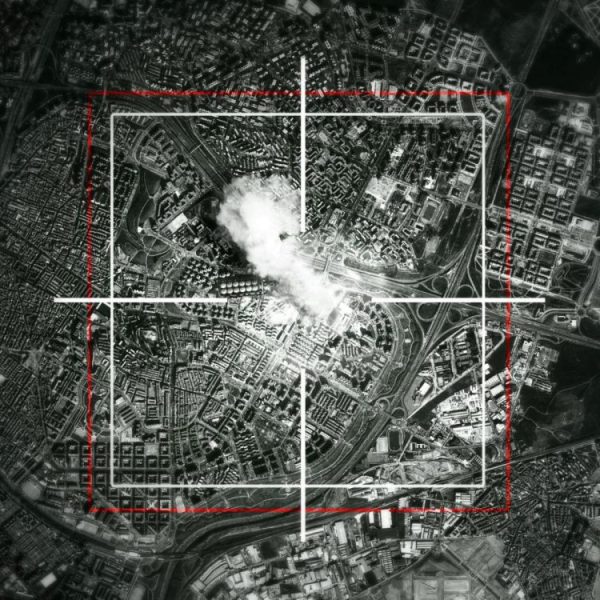
Satellites have since become indispensable to modern warfare. The US in particular relies heavily on space-based systems for reconnaissance, communications, navigation, targeting and missile warning. These enable the Pentagon's longstanding ambition of 'global reach, global power'. In military jargon, satellites act as 'force multipliers', allowing armed forces to coordinate operations worldwide with extraordinary speed and precision. Trump's 2019 formal creation of a 'Space Force' - focused on detailed surveillance and reconnaissance, precision targetting and communication - was merely the extension of decades of policy.
A cascading failure of satellites would imperil not just military systems but modern civilisation, disrupting communication networks, banking, navigation and weather forecasting
Orbital debris
There were early efforts to prevent an arms race in space. The 1967 Outer Space Treaty prohibited the deployment of nuclear weapons or other weapons of mass destruction in orbit or on 'celestial bodies' - foreclosing earlier US dreams of using the Moon for nuclear strikes - and declared space the 'province of all mankind'.
Yet the treaty left loopholes: it did not prohibit conventional weapons or anti-satellite (ASAT) systems. As satellites became vitally important to military operations, they also became attractive targets. Navigation signals from space (most famously, GPS, the Global Positioning System) guide munitions; reconnaissance satellites provide continuous intelligence; communications satellites connect commanders with forces across the globe.
Because modern militaries lean so heavily on these systems, destroying or disabling satellites could cripple an opponent's ability to fight. Thus, several countries have developed ASAT weapons. In 2007 China destroyed its own weather satellite with a groundlaunched missile - creating 3,000 pieces of debris in the process. The US conducted a similar interception in 2008 - it also carried out earlier tests. India tested an ASAT missile in 2019, while Russia carried out a destructive test in 2021 that forced astronauts aboard the International Space Station to shelter from debris.
Such tests highlight a dangerous consequence of space warfare: orbital debris. Fragments from destroyed satellites travel at speeds exceeding 27,000 kilometres per hour (7-8 km per second). Tiny shards can destroy or compromise vital satellites, even space stations, in turn creating countless new shards. Repeated collisions could trigger a chain reaction known as the Kessler syndrome, creating exponential amounts of new debris and leaving orbits no-go zones.
And ASAT warfare no longer relies solely on missiles. Electronic warfare systems can jam satellite signals. Cyberattacks can infiltrate satellite networks or ground-control stations. Directed-energy weapons such as lasers may be capable of temporarily blinding satellite sensors. Some satellites now possess manoeuvring capabilities that allow them to approach or inspect other spacecraft, raising concerns that they could also disable them. A cascading failure of satellites would imperil not just military systems but modern civilization, disrupting or crippling communication networks, banking transactions, navigation, weather forecasting and scientific monitoring. Global efforts to address climate change could suffer irrevocable damage.
The space-industrial complex
I worked in the US Air Force's Space Surveillance Center in 1986, when roughly 5,000 trackable objects orbited the Earth. Forty years later that number exceeds 45,000, a nine-fold rise. Space is becoming increasingly crowded, even as it continues to be highly contested.
Like NASA, the multinational European Space Agency (ESA), alongside national agencies like China's National Space Administration and the Turkish Space Agency, promote 'dual-use' technologies with civil and military applications. The ongoing Galileo constellation of navigation satellites is an ESA product.
France, meanwhile, has launched a three-satellite system (CSO, the Composante Spatiale Optique) for military reconnaissance and surveillance. China's BeiDou navigation system provides missile guidance and secure communications for its military, while Turkey's satellite efforts focus on secure communications (Türksat 6A) and Earth reconnaissance (Göktürk-1). The line between 'military' and 'civil' applications is increasingly ambiguous. A major change in recent decades is the growing role of private corporations in space.
Until the 1990s, space activity was dominated by governments. Today, commercial firms launch most satellites even as governments continue to dominate strategic payloads. Ongoing privatization of space efforts, however, does not necessarily lead to reductions in military influence. Substantial funding from the US defence sector drives much of the purpose here, consistent with the expression 'he who pays the piper calls the tune'. Commercial satellite imagery remains an important intelligence resource, but the question of access remains. The US military can control this imagery where it desires to: a thin line separates commerce from war. Since March, firms including Planet Labs, an imaging company with over 200 satellites, have been witholding photos covering large parts of the Middle East including Gaza and Lebanon in response to a 'voluntary' request from the US government.
Missiles in orbit could be adapted and used as space-based bombs to rain death on any part of the world
Meanwhile as Elon Musk's SpaceX has commercialized launch services and satellite deployment, Amazon founder Jeff Bezos's Blue Origin has developed heavylift rockets and infrastructure for space operations. Musk and Bezos' reliance on US government funding blurs distinctions between commercial and military ventures. The Palestine Space Institute has tracked overlaps between the space sector and the Gaza genocide, finding that active NASA contracts have paid out at least $39 billion to companies that have supplied Israel.
Meanwhile, powerful defence contractors such as Lockheed Martin, Boeing and Northrop Grumman lobby for further spending on space weaponry; an increasingly powerful space-military-industrial complex is the result. The privatization of space may accelerate space militarization, and if private corporations control critical space infrastructure, the demands of market dominance and higher profits may help drive military aggression.
New international agreements are urgently needed to demilitarize space. Existing treaties date from when few governments operated beyond the earth's atmosphere. Today, dozens of nations and private entities launch satellites and influence space policy; the legal framework governing space has not kept pace.
Despite its allure, space itself is an especially hostile environment. Placing humans in orbit and sustaining them there is enormously expensive and technically demanding. Because of that, human 'space warriors' or 'starship troopers' are unlikely to appear in the coming decades. Even so, space remains a realm of vital importance and intensifying competition, whose increasing militarization must be resisted.
Original article: newint.org