March 3, 2026
Seventy years ago both Britain and France were still regarded as great military powers. Having emerged in the winner's circle of World War II, they had been given permanent seats and veto power on the Security Council of the fledgling United Nations, taking their places alongside America, the USSR, and China.
Just a decade earlier, their empires had encompassed most of the Middle East, and as a consequence they still regarded themselves as the natural overlords of that region. Hence they were outraged by the actions taken by some of the leaders of the newly independent Arab states, notably President Gamal Abdel Nasser of Egypt, who nationalized the Suez Canal in July 1956.
Europeans had controlled that vital waterway almost from the time of its original construction, and it was regarded by Britain as a crucial strategic asset.
So having formed a secret alliance with the young State of Israel, Britain and France suddenly struck later that year, using the excuse of a pre-arranged Israeli attack on Egypt to launch their own invasion and occupation of that country. Their military forces easily defeated their weak Egyptian opponents and seized control of the canal and its vicinity. They intended to topple Nasser's government and thereby reassert their traditional dominance over the entire region and all its new Arab states.
But although the alliance of Britain, France, and Israel easily achieved a total operational military victory, battlefield successes sometimes do not determine the outcome of wars. The United States under President Dwight Eisenhower was opposed to this unprovoked military aggression against the most important Arab country and the seizure of its greatest national asset. So he deployed America's overwhelming financial power against those invading European countries, and their economies quickly faced total collapse.
For more than a century, the British Pound Sterling had ranked as the world's most important currency but that was no longer the case. Although Prime Minister Anthony Eden might have foolishly believed that it still retained some of that standing in the postwar era, he quickly discovered he was mistaken. His government's finances were wrecked and his country's economy risked the same fate, so without a single American shot being fired, he was forced to politically surrender together with his French and Israeli allies. All their military units withdrew in total national humiliation.
Britain's 1956 financial defeat has traditionally been called its "Suez Moment" revealing to the entire world that Britain no longer existed as a great and independent power. Britain would never again attempt any such bold international action, so the sun had finally set on the last faded residue of the once mighty British Empire.
I think there is a very real possibility that President Donald Trump's sudden attack against Iran might result in a similar development for our own country.
Without even firing a single shot, China could easily inflict a severe financial and economic defeat upon America. The resulting collapse would probably force our effective political surrender on several different fronts, resulting in a national humiliation every bit as great as that suffered by Britain and its allies seven decades ago.
During the last few weeks President Trump had positioned an enormous American military force near Iran, a force that by some accounts contained as much as half of our available air and naval power.
This deployment greatly exceeded anything we had sent to the region since our 2003 invasion of Iraq. It seemed far too large to merely be aimed at pressuring that country into major concessions. So most observers agreed that a huge American attack on Iran was very likely.
Despite all these indications, I hoped that this war might be averted as our negotiations with Iran in Oman moved forward. Trump repeatedly declared that our central demand was that the Iranians promise that they would not develop a nuclear weapon, and the Iranians did exactly that, offering to allow international inspections to guarantee that result, just as they had done numerous times in the past. Indeed, for twenty years all our many different intelligence agencies had agreed that Iran had abandoned all its nuclear weapons development work in 2003.
Iran was a large country comparable in size to all of Western Europe and had a population of over 90 million so an American war would be an enormous undertaking.
During his long and illustrious career, Colin Powell had served as our top uniformed military officer, then secretary of defense, then secretary of state, and held those positions during both of our wars against Iraq in 1990 and 2003. His longtime chief of staff was Col. Larry Wilkerson, and in an interview a few days ago, the latter described the extremely difficult military challenges we would likely face in any war with Iran. He considered those challenges greater than those in any previous war since the Korean conflict that we have fought to a draw three generations ago.
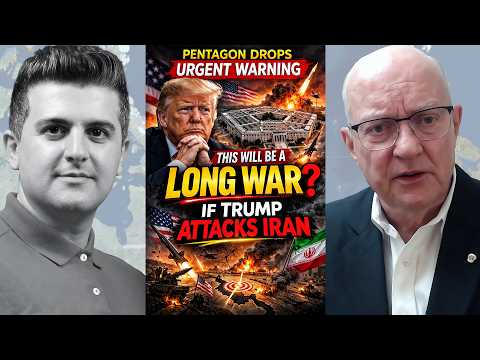
Throughout the last decade Tucker Carlson has ranked as America's leading conservative media figure, and a couple of days later, he hosted his fellow FoxNews alumnus Clayton Morris of the popular Redacted podcast. Both agreed that an American war against Iran would be disastrous and absolutely contrary to American national interests, also noting that only about 20% of Americans were in support. Carlson had recently met with Trump and he emphasized that no decision for war had yet been made, so I hoped against hope that Trump might pull our country back from the abyss.
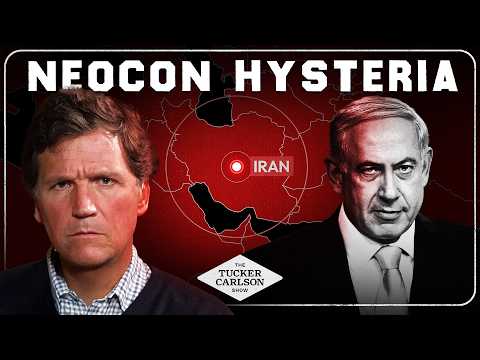
Unfortunately, that hope proved forlorn, and early Saturday morning I learned that the combined forces of America and Israel had suddenly attacked Iran, with large explosions racking the capital city of Tehran and many other Iranian urban centers.
An outraged Carlson immediately condemned our attack on Iran as "absolutely disgusting and evil." Other very prominent figures in the MAGA movement such as former GOP Rep. Marjorie Taylor Greene and Alex Jones denounced Trump's Iran War in equally scathing terms. Greene declared "We voted for America First and ZERO wars," denouncing our administration as a "bunch of sick fucking liars."
Journalist Glenn Greenwald noted the gigantic hypocrisy that Trump had successfully returned to the White House in 2024 by running as the candidate of peace, but had now begun the biggest war we had fought at least in the half-century since our debacle in Vietnam.
One of the most shamelessly fraudulent presidential campaigns in American history: t.co- Glenn Greenwald (@ggreenwald) February 28, 2026
Although all our major media outlets had uniformly been fiercely hostile to Iran, during the last few days before the American attack, a flurry of news stories had suddenly appeared emphasizing the severe difficulties that we might face in any such war, and these seemed based upon leaks by top Pentagon sources.
The Israeli government of Prime Minister Benjamin Netanyahu had been the leading force pressing Trump for an immediate attack, but the Financial Times quoted an Israeli report that America would probably exhaust its available munitions after just a few days of combat, with many American military experts having said the same thing.
"Israeli intelligence has concluded that even with the imminent arrival of the USS Gerald R Ford later this week, the US has military capacity to sustain just a four to five day intense aerial assault on Iran, or a week of lower-intensity strikes." t.co- max seddon (@maxseddon) February 24, 2026
If these facts were correct, a war against Iran seemed the height of folly. How could we win a war if we would mostly be out of missiles and bombs in less than a single week ? The entire project made absolutely no sense, but irrational projects have unfortunately become the hallmark of the Trump Administration.
Once again, we used the ruse of ongoing peace negotiations in hopes of luring our adversaries into a false sense of security. Our initial strikes against top Iranian leaders were quite successful, and by the end of the first day Iranian sources confirmed that we had successfully assassinated Ayatollah Ali Khamenei, Iran's 86-year-old Supreme Leader, as well as the country's defense minister and numerous other top military commanders.
So after having recently kidnapped one leader of a sovereign country, President Nicolas Maduro of Venezuela, we had now assassinated a second one, with both these actions being almost completely without precedent in modern world history. Since its founding, the Israeli government had always relied upon assassinations as its primary tool of political statecraft, so this sort of American behavior seemed to further reflect what Greenwald has often decried as the near-total "Israelization" of our own country.
- Zionist Israel as the Assassination Nation
- Ron Unz • The Unz Review • June 23, 2025 • 11,800 Words
Despite those leadership losses, the Iranians almost immediately responded with a barrage of medium and long range ballistic missiles, exactly as they had previously threatened to do, striking our own major military bases in the region as well as sites in Israel. Strict censorship and the fog of war makes it difficult to accurately assess the total amount of damage visited upon either side in the conflict.
Chas Freeman ranks as one of our most distinguished diplomats, and he also served as an assistant secretary of defense. In an interview after the attack, he warned that our government had reduced the entire world to a complete state of lawlessness, with fateful consequences for all nations, certainly including our own.
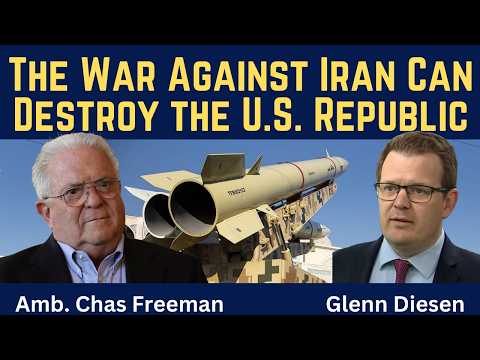
He also pointed out that President Trump had launched this enormous war despite overwhelming public opposition and without even bothering to consult or inform top Congressional leaders. When taken together with the huge changes in import tax policy Trump had regularly imposed by emergency executive order and his administration's frequent defiance of federal court mandates, Freeman suggested with great sadness that we seemed to be witnessing the disappearance of our American republic and its centuries-old constitutional system of government.
A few hours before Freeman's interview, Prof. Jeffrey Sachs had made some equally disheartening points on that same channel:

Sachs noted that even after the early Roman Empire established by Augustus had concentrated all actual power into the hands of the reigning emperor, it still maintained many public trappings of the defunct Roman Republic, and he felt that our own country seemed to be following that same sort of despotic political trajectory. An article that I'd published in December had made those same points.
- Donald Trump as Our President Caligula
- Ron Unz • The Unz Review • December 15, 2025 • 8,300 Words
Since the early 1990s Israeli Prime Minister Benjamin Netanyahu and other Israeli leaders had continually stated that Iran was secretly working on a nuclear weapon, always claiming that the project was on the very verge of completion. Although all the many American intelligence agencies had repeatedly debunked that claim for twenty years and declared that Iran had ended that effort in 2003, the threat of Iranian nuclear weapons was the main argument that Trump and his mainstream media echo-chamber provided as justification for the war. Iran had willingly opened its civilian nuclear enrichment program to foreign inspection in the past and offered to do the same in the future, but all to no avail.
In discussing that history, Freeman argued that those Israeli claims were obvious examples of psychological projection. More than a half century ago, Israel had secretly developed its own nuclear weapons arsenal against strong American opposition, doing so by stealing our own nuclear fuel supplies and technology, so the Israeli leaders naturally assumed that Iran must be behaving in similar fashion.
Indeed, prior to his sudden assassination, President John F. Kennedy had been absolutely determined to prevent Israel from acquiring nuclear weapons. Perhaps prompted by this current controversy, former CIA officer and famed whistleblower John Kiriakou joined a growing chorus of highly regarded mainstream figures in declaring that Israel had probably played a leading role in killing our president. He explained that although our government had been legally required to declassify all remaining JFK files, thousands of these documents had still not been released, and that many of these pointed directly to Israel's role in the 1963 assassination.
Beginning with a 2018 article, I'd been regularly making that same argument for nearly the last eight years, most recently summarizing much of the case in a 2025 piece.
- How Israel Killed the Kennedys
- Ron Unz • The Unz Review • March 24, 2025 • 11,500 Words
If the Kennedy brothers had indeed died at Israeli hands, they were hardly likely to be the only Americans to have suffered that fate.
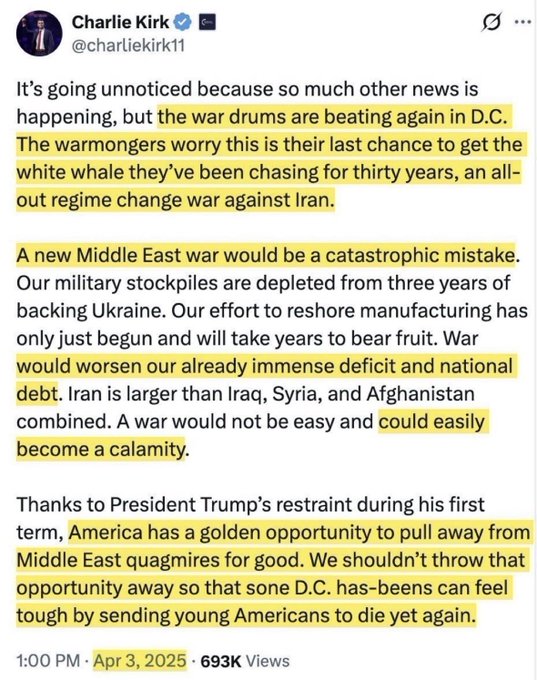
In an interesting clip from an interview prior to his own assassination, influential conservative leader Charlie Kirk denounced the drive for an American war with Iran as "a weird, fanatical obsession," explaining some of his reasoning in a different Tweet. So Kirk's elimination may have cleared away an important political obstacle that otherwise might have successfully prevented our war with Iran.
Charlie Kirk was LITERALLY advocating against regime change in Iran
Along with many military experts, Freeman also argued that Iran might actually be better positioned to win a long war of attrition against its American and Israeli foes, perhaps having far greater stockpiles of ballistic missiles.
Even more importantly, the Strait of Hormuz is the world's most critical oil chokepoint, a narrow waterway off the Iranian coast through which one-fifth of all oil shipments must pass, along with a similar fraction of LNG exports. The Iranians controlled that transit route with their huge numbers of short-range missiles, and had repeatedly threatened to close it if attacked. When the vastly weaker Houthis had closed the Red Sea to cargo shipping during 2024 and 2025, repeated attempts by American carrier task forces to reopen it had proven dismal failures.
Having served as our ambassador to Saudi Arabia at the time of the Gulf War, Freeman is extremely well versed in the geopolitics of oil and he pointed out that the military dimension of any such closure is completely secondary. Once the Iranians declared that they would enforce a blockade and target oil tankers, insurers would immediately pull their coverage, so few if any such vessels would even take the risk of such passage. Indeed, according to news reports, tanker traffic has already dropped by some 70%, and if the closure continues for another week or two, we can expect to see a huge spike in world prices of oil and natural gas, severely straining the world economy.
According to widespread reports, the avowed goal of America and Israel has been to destroy Iran, completely eliminating its defensive military arsenal and even balkanizing it into a number of weak successor states, with such maps easily found on the Internet.
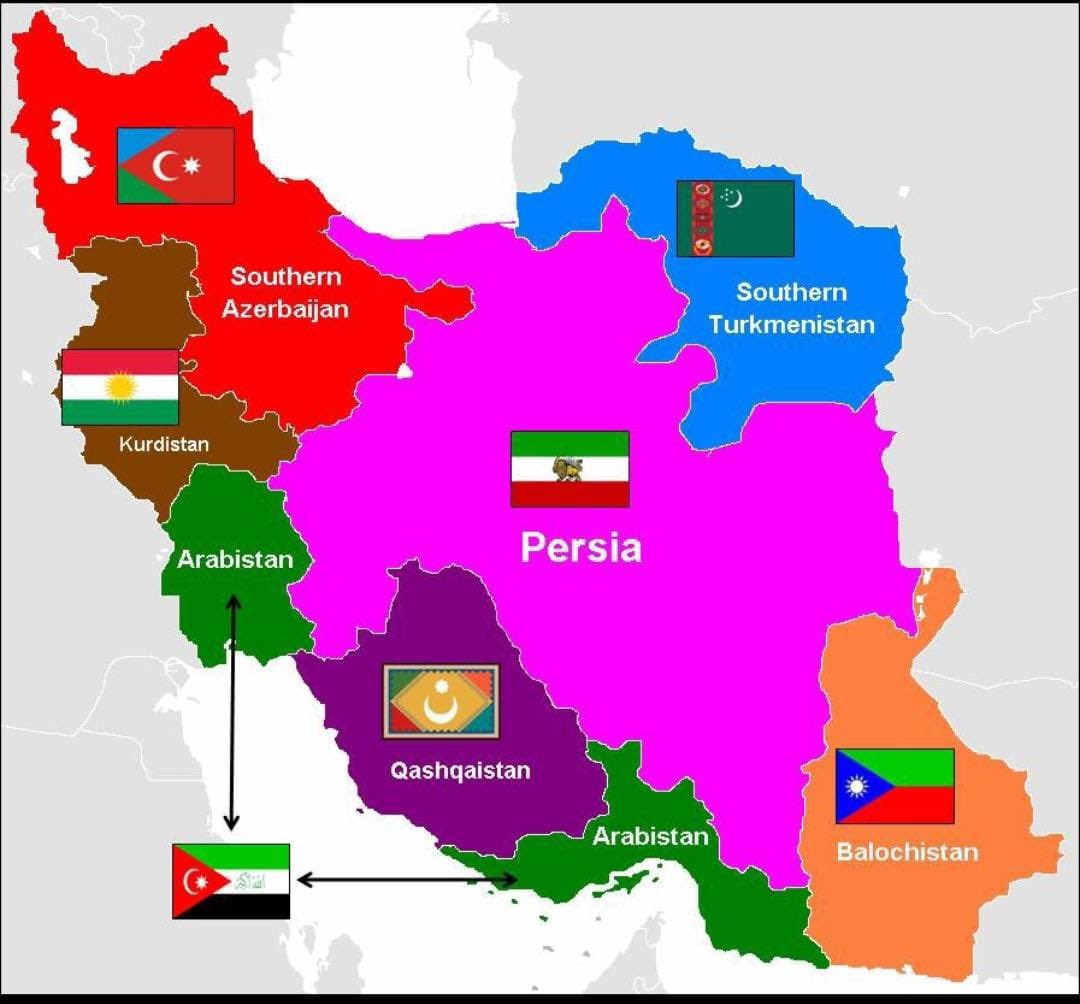
This would clear the way for total Israeli hegemony over the entire region, probably with the consequences revealed in this clip from Carlson's recent interview with Mike Huckabee, the Christian Zionist who serves as our ambassador to Israel.
“It would be fine if they took it all.”
Thus, Iran both faced an existential national threat and felt enormous outrage over the surprise attack during ongoing peace negotiations that had killed Supreme Leader Khamenei and many other top government and military figures. Based upon the combination of those factors, I think it quite unlikely that the country would soon agree to any sort of ceasefire. Some of the horrific civilians casualties inflicted by the recent attacks must surely have further stiffened their political resolve.

Moreover, the widespread reports that the American and Israeli forces possessed only limited stocks of munitions might also encourage the Iranian leadership to believe that they could ultimately win a lengthy war of attrition.
Foolish national leaders sometimes fail to realize that starting a major regional war may often be much easier than successfully ending it.
America's Iran War presents China with some major dilemmas. China is by far the largest importer of Persian Gulf oil, with its Iranian ally now providing as much as 15% of China's total needs. Although China has long recognized its potential vulnerability to an American blockade and has greatly reduced its relative oil consumption over the last couple of decades, necessary oil imports are still very large.
If America successfully defeated and subjugated Iran, it would gain near-absolute control over the entire oil producing region, giving Washington a great deal of additional leverage over the rest of the world, including China.
But if the current American war with Iran dragged on, the continuing blockade of oil shipments might do considerable economic damage to China as well as to the country's many customers across the rest of the world. There is also the possibility that the conflict might spiral out of control, leading to the use of nuclear weapons or otherwise endangering the safety of the entire world,
An American victory over Iran would be very bad for China, but the same would also be true for a war that continued for many weeks or months in semi-stalemated fashion, preventing the export of oil from the region and raising other risks.
Thus, China's best hope would be to arrange a very rapid American defeat. In recent years, our country has expressed enormous hostility towards China, subjected it to numerous harsh sanctions, and declared that China was our primary geopolitical adversary. Furthermore, our rampant violations of all existing norms of international behavior and law have been destroying a legal framework that China has found quite beneficial. So a sweeping and humiliating American defeat would provide many additional benefits besides merely restoring the full flow of Middle Eastern oil.
Fortunately for China, achieving that sort of outcome would actually be quite easy, far easier than almost anyone assessing the geopolitical landscape seems to have realized.
Although an economic colossus, China is notoriously cautious in military matters, very unwilling to involve itself in conflicts far from its own shores. So China would certainly never consider sending any expeditionary force many thousands of miles away to the distant Persian Gulf, and given the current warfare, even attempting to ship additional supplies of weaponry to Iran would be extremely difficult.
But China could inflict a swift strategic defeat upon the American aggressor without taking any such action. In 1956 President Eisenhower defeated the British and French without sending a single American soldier to oppose them in Egypt.
In January I published a long article outlining how easily China could puncture the bubble of Trump's global imperial pretensions, shattering American power.
I began by pointing out that China already possessed absolute military superiority in its own coastal waters, including those in the vicinity of Taiwan.
For more than a century, America's military strength has always been based upon the massive superiority of its industrial power, but these days the potential of even a fully reindustrialized America would be totally dwarfed by that of our Chinese opponent. As I've discussed on a number of occasions, the best simple metric of industrial power is probably the size of the real productive economy, and by that standard China's economic capacity is more than three times larger than our own. Indeed, China already outweighs the combined total for the entire America-led bloc—the United States, the rest of the Anglosphere, the European Union, and Japan...In January 2025, I'd published a very long and comprehensive comparative review of China and America...with much of my analysis focused upon a possible military conflict, summarizing those same issues a couple of weeks later in an interview with Mike Whitney.
- American Pravda: China vs. America
- The Chinese Military and the Prospects of a War with America
- Ron Unz • The Unz Review • January 13, 2025 • 14,100 Words
Using its huge industrial base, China had amassed an enormous arsenal of both conventional and hypersonic missiles while our own air-defense systems were quite ineffective. Therefore, in any full conventional war I couldn't see anything that would prevent the Chinese from using waves of those missiles to immediately sink every American aircraft carrier and other warship in the region, while destroying all our airbases within many hundreds of miles, thereby winning the war within the first 24 hours.In that same article, a seemingly knowledgeable commenter had laid out his estimate of the likely balance of forces:
It's baffling how people still think that US v China in the South China Sea would be a serious fight, or anything other than a one-sided massacre of US forces.The US can assemble at most three carrier strike groups in the South China Sea, from which it can deploy 144-180 Super Hornets and F-35Cs.
China, meanwhile, is next door and can assemble 300+ J-20s, 300+ J-16s, and up to 1,000 more capable 4th-generation aircraft.
Add to that being able to deploy heavy AWACS and tankers. And being able to call upon strategic bombers carrying ALBMs.
And add to that its fleet of over 45 modern submarines, and vast stocks of land based anti ship misisle[sic] batteries.
Indeed, the notion that America would be decisively defeated after just a day or so of combat might even be an overly cautious assessment.
Our top military leadership would obviously be loath to see so much of their hugely expensive navy quickly annihilated and they have probably grown alarmed by Trump's very provocative behavior. Therefore, they may have been responsible for the December leak of a Pentagon report indicating that the Chinese could destroy our largest aircraft carriers "within minutes." So according to the Pentagon's own wargames, America might suffer a crushing military defeat within the first hour or two.
With such a large fraction of all American air and naval assets now committed to our war against Iran, any conflict with China would be even more completely one-sided. But I argued that if China followed the correct strategy America could easily be defeated without the need for any actual fighting.
Although it seems clear that China would easily win a conventional war against America's forces near its own home waters, wars often have dangerous, unforeseen consequences, and this is especially true in a world containing nuclear weapons. If we suffered an overwhelming military defeat with very heavy casualties, Trump and some of those around him might be sufficiently irrational that they would take escalatory steps that could set the entire world on a path to destruction. I'm sure that China's own cautious, pragmatic leaders recognize those dangers and seek to minimize such risks.Also, as discussed above, Trump's atrocious behavior has recently caused some of our most important allies such as South Korea and Canada to begin shifting in China's direction. If China were seen to have provoked a major war let alone actually begun it, these important diplomatic advances might be halted or lost.
Therefore, I think that China's optimal strategy would be to restrict its actions to peaceful ones, but do so in a manner that may deal a very serious, even crippling blow to its American adversary.
The Chinese Civil War ended more than three generations ago and since that time, the Communist government of mainland China has been absolutely committed to its One China Policy, under which Taiwan is regarded as merely a temporarily separated province of a single, unified Chinese homeland. Indeed, the Nationalist Chinese KMT party that ruled the island during most of those decades took exactly that same position. The American government and nearly all other nations around the world have always affirmed that same legal framework.
With a recorded history thousands of years long, the Chinese are a very patient people, and the political leaders in Beijing have regularly emphasized that they are in no great hurry to achieve reunification with Taiwan and would certainly prefer to do so by entirely peaceful means. However, they have also declared their willingness to use military force if the separatist-leaning DPP party that has intermittently governed Taiwan since 2000 were to move towards independence.
Following Nixon's historic opening to China in 1972 and for decades afterward, it was understood that America would steadily reduce all of its arms shipments to Taiwan and also support eventual reunification. However, in recent years, our own country has increasingly back-tracked on those past commitments and Trump may have now completely abandoned them.
His recent announcement of a huge $11 billion sale of advanced arms to Taiwan was not only far larger than anything previously provided, but it even included missiles capable of hitting Chinese cities, which would surely cross a bright red line. This quickly prompted some extremely serious Chinese saber-rattling at the end of December, with Beijing threatening to impose a "chokehold" on what it has always regarded as a rebellious, breakaway province.
But if Trump has created a major problem for China, he has also provided that country with the obvious solution.
Venezuela is located more than a thousand miles from the U.S. and has little if any cultural or historical connection to our own country. Yet because Trump strongly disliked the policies of its government, he imposed an oil blockade against that nation, while also declaring a No Fly Zone over its airspace. He enforced that blockade by military force, seizing any tankers that were trying to transport the oil it produced to those countries that had purchased it, notably including China.
Over the last couple of weeks, I have repeatedly pointed out that if Trump can declare a blockade of the independent country of Venezuela based upon no legal justification, China can certainly claim that it has an equal right to do so with regard to an island that the U.S. government and nearly the entire world have long recognized as an inalienable part of a single, unified China. Not only can China cite the undeniable legal precedent of Venezuela, but that precedent is drastically skewed in China's own favor.
America's sudden and completely unprovoked attack against Iran and the assassination of much of its leadership would further mitigate any international criticism that China might receive if it imposed a blockade on its own province of Taiwan.
Nicholas Kristof is the former New York Times Beijing Bureau Chief, his wife is Chinese, and together they have published several books on that country. Just a couple of days before my own January article appeared, he published a long Times piece entitled "How War With China Begins" and in it he explained that a full Chinese blockade would be extremely effective in very quickly bringing Taiwan's recalcitrant government to heel.
Taiwan's economy depends on imported petroleum products, and it has only two or three weeks' worth of natural gas on hand. Taiwan's future might then depend on whether President Trump was willing to order the U.S. Navy to escort ships to Taiwan to break the blockade.
I went on to explain:
Based upon that leaked Pentagon report, it would be absolutely suicidal for America to challenge China's military forces in the region, and if we did not, the Taiwanese would be forced to completely submit within just a few weeks. The Chinese would probably not need to fire a single shot.The internal politics of Taiwan would considerably assist that result. I've heard that the Chinese Nationalists of the KMT still heavily dominate Taiwan's officer corps, especially its top ranks, and they deeply despise the ruling DPP as national traitors, with such sentiments hardly helped by the latter's warm embrace of Western cultural practices that most Chinese regard as abhorrent. For example, in November 2018, the Taiwanese electorate overwhelmingly rejected Gay Marriage at the polls, but the DPP nonetheless enacted that policy into law six months later, with Taiwan becoming the first country in Asia to do so.
Based upon this very sharp political division between the KMT and the DPP, some knowledgeable people have told me that faced with sufficient external pressure, the KMT-led armed forces might stage a military coup and quickly come to an amicable agreement with their cousins on the mainland, with whom they generally enjoy friendly relations. I would think that a Chinese blockade of vital oil and gas supplies and America's unwillingness to challenge that blockade would facilitate such an outcome.
Whether America did attempt to break the Chinese blockade by military means and saw its forces quickly annihilated, or much more likely, avoided any conflict and allowed Taiwan's submission, the cost to American global prestige would be enormous. We would have demonstrated to the entire world that despite our trillion-dollar defense budgets, in East Asia we were merely a paper tiger. We would have conceded that the Chinese navy now controlled the sea lanes of that region, sea lanes that are among the busiest and most important in the world. A large fraction of all industrial products and its consumer goods are produced in East Asia, and China would dominate those waters.
Under past circumstances, a Chinese blockade of Taiwan might have been viewed with great disfavor by much of the world, especially given the negative way it would be portrayed by the powerful Western global media. But over the last year Trump's outrageous behavior has alienated so many major countries that this situation would be much less the case today.
In any event, the blockade of Taiwan would probably last only a few weeks, involve no bloodshed, and soon be forgotten. Taiwan's status might not have been drastically changed, but its government would have had its wings sharply clipped and be set much more firmly on the course of future reunification with the rest of China. The total political humiliation of the DPP might lead to a sharp drop in popular support for that party, with the KMT or similarly aligned parties gaining long-term control over the local government.
Finally, I emphasized that the most important impact of a Chinese air/sea blockade of Taiwan would be upon America and its economy.
Over the last few years, the gigantic AI boom has driven the market values of major tech companies to unprecedented heights. There have been very widespread claims that we are experiencing an obvious AI Bubble, with trillions of dollars being budgeted for capital expenditures in that sector. Indeed, by some estimates America would probably have already fallen into a recession during 2025 if not for the enormous spending on data centers and other AI related projects, with AI accounting for 40% of all American GDP growth last year. Our economy has also been propped up by the consumer "wealth effect" produced by the huge rise in Tech stocks, almost all of that driven by the AI boom.The seven largest corporations by market value are all Tech companies, largely boosted by their AI prospects, and their total value is over $20 trillion. Other Tech companies, whether public or private, add many trillions of dollars in additional market value.
But Taiwan is the world's largest producer of microchips and especially dominates the manufacturing of the most advanced such chips, such as those used for AI. China holds the second spot and South Korea is in third place while America's market share is merely 6%. Although the U.S. has been making major efforts to increase its domestic production, that project will take years to bear fruit. As of today, nearly all of Nvidia's cutting-edge AI chips are still manufactured at the TMSC factories in Taiwan.
Thus, America's entire AI boom, including trillions of dollars of planned investment and tens of trillions of dollars in market value, depends upon the steady, uninterrupted supply of AI microchips from Taiwan.
A Chinese blockade would cause an immediate end to those shipments of AI microchips and puncture that bubble.
I could easily imagine the largest, most heavily over-valued Tech stocks dropping by 50% or more, erasing many, many trillions of dollars in investor wealth. Over-leveraged hedge funds would surely go under, worsening the pain. Wall Street might see one of the worst collapses in its entire history.
However, if Taiwan merely submitted to China and the American government blessed that political outcome, all those AI shipments could immediately resume. I think that every major Tech executive and wealthy investor would apply enormous pressure on the American and Taiwanese governments to surrender to China's reasonable demands on those issues.
The American government would have no other possible options.
Over the years there has been widespread speculation that the American government had prepared contingency plans to destroy the Taiwanese chip factories if China invaded, thus preventing them from falling into Chinese hands. But doing so under these circumstances would eliminate any hope of a quick resumption of AI chip exports, and ensure the permanent collapse of all those Tech stocks.
In six months or a year, the Tech and AI Bubbles might have anyway burst, greatly diminishing the importance of AI chips. Within another two years or three, America might have built up its domestic chip manufacturing facilities to the point that it could partially replace a loss of supply from Taiwan.
But at this particular moment in time, a Chinese blockade of Taiwan would amount to placing its hands around the windpipe of all the West's leading technology companies, all of Wall Street's wealthy investors, and to a considerable extent the entire American economy.
So now is the right time for China to strike and burst the bubble of President Donald Trump's American Empire.
- How China Can Burst the Bubble of Donald Trump's American Empire
- Ron Unz • The Unz Review • January 19, 2026 • 10,100 Words
I published that article a few weeks ago, and I'm sure that many readers must have been extremely skeptical of my analysis. Could a simple Chinese blockade of its own rebellious province of Taiwan really deal such a devastating blow to America's multi-trillion-dollar Tech giants, causing a total collapse of our own stock market and economy?
As it happens, last week the New York Times published a major feature making exactly the same case that I did, but basing its conclusions upon secret briefings and confidential reports by our own American government and technology industry associations.
In secret briefings held in Washington and Silicon Valley, national security officials warned executives from companies like Apple, Advanced Micro Devices and Qualcomm that China was making plans to retake Taiwan, which Beijing has long considered a breakaway territory. A Chinese blockade of Taiwan, the officials said, could choke the supply of computer chips made on the island and bring the U.S. tech industry to its knees..."The single biggest threat to the world economy, the single biggest point of single failure, is that 97 percent of the high-end chips are made in Taiwan," Treasury Secretary Scott Bessent said last month at the World Economic Forum in Davos, Switzerland, slightly overstating industry estimates. "If that island were blockaded, that capacity were destroyed, it would be an economic apocalypse"...
A confidential report commissioned in 2022 by the Semiconductor Industry Association for its members, which include the largest U.S. chip companies, said cutting the supply of chips from Taiwan would lead to the largest economic crisis since the Great Depression. U.S. economic output would plunge 11 percent, twice as much as the 2008 recession...
Many of the biggest U.S. tech companies would have enough semiconductors to operate for several months before their businesses broke down, according to the report, which was reviewed by The Times and has not been previously reported.
The report, which was written at the encouragement of Biden administration officials, illustrated how Washington has been forced to reconsider its position on Taiwan. For decades, America's commitment to the island was based on geopolitics, respect for democracy and containing China. It was viewed as a lopsided arrangement that was good for Taiwan and risky for the United States.
But now, more than ever, it has become clear that Taiwan is critical to America's economic survival, especially as artificial intelligence — which is built using chips made in Taiwan — drives the U.S. stock market and fuels economic growth...
Jake Sullivan, Mr. Biden's national security adviser, ranked the U.S. reliance on Taiwan for semiconductors as one of America's greatest vulnerabilities. He wanted the industry to recognize the risk and support construction of U.S. manufacturing plants. Mr. Biden also wanted to provide $50 billion in government subsidies to build semiconductor plants domestically...
After the call, the Semiconductor Industry Association hired McKinsey to take a look. They started with a basic question: What would happen if companies couldn't get chips from the island?
A summary of the resulting report opened with a map of Taiwan detailing how integral the island is to the global economy. Taiwan enabled roughly $10 trillion of the world's gross domestic product. It made chips for iPhones and more than half of so-called memory chips for cars, and it led in assembling A.I. chips...
If Taiwan's factories were knocked offline, the impact would be immediate, the roughly 20-page report said. Economies would flounder. In China, the gross national product would fall by $2.8 trillion; in the United States, the drop would be $2.5 trillion.
Other reports, including one by Bloomberg Economics, a research service, estimate a conflict would cost the global economy more than $10 trillion.
- The Looming Taiwan Chip Disaster That Silicon Valley Has Long Ignored
- If China invades Taiwan and cuts off its chip exports to American companies, the tech industry and the U.S. economy would be crippled.
- Tripp Mickle • The New York Times • February 24, 2026 • 3,700 Words
Even that Times article may considerably understate China's strength and America's weakness. The confidential 2022 report that the Times so heavily relied upon was produced before the gigantic AI bubble began to inflate and also before American sanctions had forced China to forgo the use of the most advanced Taiwanese microchips and replace them with domestically produced substitutes. So today America is far more vulnerable to a Chinese blockade of Taiwan than it was in 2022 while China itself has almost become self-sufficient.
Furthermore, an analysis in the Wall Street Journal recently revealed that some of our largest Tech giants are actually far more fragile than has been widely recognized. The Journal explained that they have been using the clever accounting tricks of financial engineering to conceal their true situation.
Meta Platforms looks like a money-printing machine. So why has it been loading up on billions of dollars in debt to pay for its new data centers?It turns out that the abundant free cash flow that Meta reports to investors is something of an optical illusion. Yes, it generated billions in cash last year, but that was largely devoured by the all-too-real cash costs that come with paying stock-based compensation to employees. Those included billions of dollars in withholding taxes triggered when employee shares vested, and billions more for share buybacks used to offset share dilution from those same awards.
Viewed this way, it's easy to see why Meta more than doubled the debt on its balance sheet last year to $58.7 billion. It borrowed because it had to. And that debt is only the part that is visible. Meta's books don't include the debt from a $27 billion data-center project under construction that Meta kept off its balance sheet through complex financial engineering.
For investors, this raises a vexing valuation issue. At $1.66 trillion, Meta's stock-market value already looks expensive at 38 times reported free cash flow for 2025. The ratio becomes stratospheric, exceeding 1,000 times, if free cash flow included the cash costs tied to stock-based pay...
Free cash flow is an important financial metric. Investors rely on it as a proxy for the discretionary cash a company has left over after reinvesting in its business to reward shareholders or pay down debt.
Yet the term free cash flow has no uniform definition under the accounting rules. It is typically calculated as cash flow from operating activities minus capital expenditures, or capex. And, as Meta's numbers show, it needs a rethink.
Meta reported $43.6 billion of free cash flow for 2025. That was the result of $115.8 billion of operating cash flow minus $72.2 billion of capex. On paper, Meta's core business handily covered its gigantic artificial-intelligence infrastructure build-out.
In reality, cash costs directly tied to employee stock awards consumed $42 billion, or 96%, of Meta's free cash flow last year. A Meta spokesman declined to comment...
"If you really want to get the true valuation of the business, you have to adequately reflect all of the operating costs as operating activities. And the way free cash flow is traditionally calculated does not do that," says Kevin Koharki, an accounting professor at Purdue University. He recommends further adjusting free cash flow to include the cash costs related to stock-based pay. "We can delude ourselves for a while that this is not a real cost, but we're only fooling ourselves at the end of the day," he says.
As this and other articles suggest, America's current financial and economic structure is merely a fragile house of cards. A Chinese blockade of Taiwan would cause its rapid collapse, likely followed by what would amount to a humiliating American surrender.
Most American right-wingers are fiercely hostile to China, and they may be appalled by the possibility that our leading geopolitical rival might inflict such a severe economic blow upon our own country and its government.
But life is always filled with trade-offs, and I think that most of those individuals increasingly recognize that without that sort of very humiliating national defeat, a huge shock to the system, there is little chance of breaking the stranglehold of what many now call "the Uniparty."
After Charlie Kirk's sudden assassination, a journalist named Harrison Smith at the pro-Trump Infowars network, reported that weeks before his death Kirk had said that he feared for his life because of his growing criticism of Israel.
One month ago, Smith produced and Tweeted out a short video that has now accumulated over 15 million views. It does a good job of presenting some important aspects of our unfortunate country's current predicament and what we may soon face if current trends continue unchecked.
Given those disheartening facts, a humiliating American defeat inflicted by China may constitute the least bad alternative for all patriotic Americans.