Lorenzo Maria Pacini
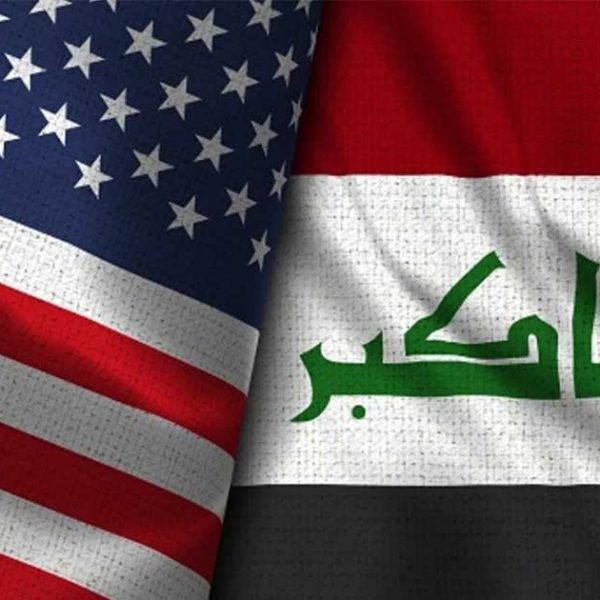
Where the U.S. had not yet concluded its direct military engagement, there is now a risk that the front will reopen.
A difficult relationship
Where the U.S. had not yet concluded its direct military engagement, there is now a risk that the front will reopen.
Relations between Iraq and Iran are among the most complex and multifaceted in the Middle East, characterized by a long history of alternating rivalry, open conflict, and pragmatic cooperation. The roots of this relationship date back centuries, to when the Persian and Ottoman empires vied for control of Mesopotamia, leaving behind territorial disputes and contested border lines.
In the 20th century, one of the main sources of tension was control of the Shatt al-Arab, a waterway strategic for both countries' oil exports. This dispute led to armed clashes in the 1970s and the signing of the 1975 Algiers Agreement, through which Iraq and Iran sought to stabilize their borders and reduce tensions. However, the agreement proved fragile and was soon called into question.
The most dramatic turning point in bilateral relations was the Iran-Iraq War (1980-1988), one of the most devastating conflicts of the 20th century. Triggered by Iraq's invasion of Iran in September 1980, the war caused hundreds of thousands of deaths and millions of injuries, without producing a clear winner. During the conflict, both sides mobilized enormous military resources, and Iraq also made extensive use of chemical weapons, leaving a deep mark on the collective memory and mutual perceptions.
After the war ended, in the 1990s and early 2000s, relations remained cool but relatively stable, partly due to Iraq's international isolation under Saddam Hussein. However, the real change came after 2003, with the fall of the Baathist regime following the U.S. invasion. This event paved the way for growing Iranian influence in Iraq, primarily through Shiite political parties and armed groups.
In fact, Tehran has for years supported and hosted Iraqi Shiite movements in exile, such as the Supreme Council for the Islamic Revolution in Iraq, which was founded in Iran during the war. After 2003, many of these actors returned to Iraq, assuming central roles in the political system and security structures.
On the military front, Iran has developed a network of alliances with Iraqi Shia militias, which are often formally integrated into state security forces but maintain ideological and operational ties with Tehran. These groups have played a crucial role in the fight against ISIS, but they have also become instruments of Iranian regional influence and a means of exerting pressure against the U.S. military presence.
In recent years, the relationship between Iraq and Iran has been characterized by a mix of cooperation and tension. On the one hand, the two countries collaborate on economic, security, and border control issues; on the other, Iraq seeks to maintain a balance between Iranian influence and its relations with the United States and other international actors. Recent agreements on border security and the management of transnational armed groups demonstrate this interdependence, while highlighting persistent mistrust.
Uncontrolled instability
The security environment in Iraq has entered a far more unstable phase following the outbreak of the war between the United States and Israel against Iran; armed factions operating under the name of the Islamic Resistance in Iraq have intensified attacks against facilities linked to the U.S. military and logistical presence in several provinces.
This recent escalation appears to indicate an attempt to link the internal conflict with the dynamics of the broader regional war, presenting Iraq not merely as a territory suffering the consequences, but as an active front capable of influencing the course of the conflict. In the days of this terrible conflict, waves of drone and rocket attacks have targeted bases housing American personnel. The frequency of these operations has increased compared to previous years, when attacks were more sporadic and limited to specific areas.
Moreover, the attacks have moved ever closer to the heart of the Iraqi state. Drone incidents and attempts to strike targets have even reached sites in Baghdad linked to U.S. logistics and diplomatic security-places that were previously considered red lines. This shift in targets indicates a greater willingness on the part of resistance factions to test U.S. protective measures, while simultaneously sending the message that no area of the American presence in Iraq is safe.
The factions have also claimed to have shot down several U.S. military drones during the escalation, including aircraft used for strategic surveillance. According to their media, these incidents demonstrate a shift in the balance of the conflict, moving from simple acts of disruption to attempts to limit operational and aerial monitoring capabilities.
The pattern of the attacks suggests an effort to maintain constant pressure on U.S. forces, signaling that the Iraqi front is now linked to regional developments in Lebanon, Syria, and the Persian Gulf.
In the days following the start of the escalation, the factions reported a sharp acceleration in operations. Some statements mentioned 27 attacks in 24 hours in early March, followed by 29 operations in a single day. These figures were presented as evidence of a shift from sporadic actions to coordinated campaigns of drone and rocket attacks against U.S. military installations in various Iraqi provinces. Subsequently, the statements indicated a peak of over 290 operations in approximately 12 days. According to these accounts, the attacks targeted Baghdad, western Iraq, and certain areas of Kurdistan, particularly near Erbil International Airport and Harir Air Base. From the start of the conflict on February 28, the factions' communications have emphasized a rapid shift toward direct confrontation, highlighting coordinated attacks to demonstrate operational capabilities and sustained pressure.
In northern Iraq, tensions have centered primarily around Erbil Airport and nearby military installations, which have been repeatedly struck by drones and Katyusha rockets, confirming Kurdistan's strategic importance as a logistical hub.
The Islamic Resistance in Iraq reportedly shot down about six drones in various parts of the country, including MQ-9 Reaper aircraft, considered essential for U.S. surveillance and attack operations. Some footage reportedly shows the wreckage of these drones after they were intercepted by improved air defense systems.
A particularly significant turning point was reportedly the downing of a KC-135 tanker aircraft in Anbar province, resulting in the death of the crew-an event considered a severe blow to U.S. air support capabilities.
Following an increase in attacks claimed by groups such as Kataib Hezbollah, Harakat al-Nujaba, and Kataib Sayyid al-Shuhada, the United States responded with targeted airstrikes against positions linked to these groups.
The raids struck areas traditionally associated with the presence of militias, such as Jurf al-Sakhar south of Baghdad, Al-Qaim near the Syrian border, and the Akashat region in western Anbar.
Among the most sensitive developments was the assassination attempt on the secretary-general of Kataib Hezbollah, Abu Hussein al-Hamidawi. According to sources close to the resistance, U.S. aircraft struck targets in central Baghdad where senior commanders were located. Initial reports indicated his death, but this was later denied. On March 16, Kataib Hezbollah announced the death of Abu Ali al-Askari, a prominent figure in the security sector. A few hours later, drone and rocket attacks were reported near the U.S. embassy in Baghdad.
Overall, these events highlight several emerging trends: the intensity of the conflict continues to rise, the geographic scope of operations is expanding to include the capital and strategic areas, and unwritten limits are being tested by targeting air capabilities, leadership, and logistical infrastructure.
Parallel to military developments, resistance factions have crafted a narrative linking the internal conflict to major regional flashpoints. In a March 6 statement, the Iraqi Resistance Coordination Committee described security in southern Beirut as integral to the regional balance, warning that any attacks would jeopardize U.S. diplomatic and economic interests across the Middle East. This perspective frames Iraq as part of a network of interconnected fronts, rather than as an isolated theater.
Messages from the factions also include threats against diplomatic missions and energy infrastructure linked to Western operations in the Gulf, with the aim of broadening the scope of the conflict and highlighting its potential global economic consequences.
Particular attention has been directed toward Iraqi Kurdistan, with warnings about the consequences of any involvement in support of Kurdish groups considered hostile and linked to external interests, especially in relation to Iran.
Syria's silent but powerful role
On March 11, amid reports of military movements in Syria toward the Lebanese border, the rhetoric of the Iraqi resistance reached particularly harsh levels. A statement warned that any military action against Lebanon, especially if coordinated with the United States and Israel, would be considered a declaration of war against the entire axis of resistance. This message represents a form of preventive deterrence, indicating that the Iraqi front could be activated in response to threats against Hezbollah. The factions have also invoked past experiences in fighting against U.S. forces and ISIS to bolster their operational and ideological legitimacy.
The combination of operations and strategic communication points to a transformation of Iraq's role in the regional conflict. For years, the country was viewed as a battlefield where external rivalries were played out through local actors. Today, however, there is an emerging attempt to transform it into a pressure front capable of influencing the strategic choices of foreign powers.
This evolution depends on several factors: the U.S. military presence, the position of the Iraqi government, internal political dynamics, and the course of the war between Iran and Israel. The recent escalation, however, shows how quickly the internal situation can become intertwined with the regional conflict, altering security perceptions in neighboring countries. In a context of persistent tensions and increasingly limited diplomatic space, Iraq's role could prove decisive in determining whether the conflict will stabilize or expand further to involve multiple fronts.
Iraq's evolving position indicates that it is no longer viewed merely as a secondary theater, but as an integral part of a broader competition linked to military presence, strategic depth, and the balance of power in the region.