June 10, 2026
For many years, Gen. Qasem Soleimani had been one of Iran's most important and influential military commanders, a top figure in the Iranian Revolutionary Guards Corps (IRGC). He had played a central role in organizing the defeat of the radical Sunni ISIS forces in Syria and Iraq, and was also the architect of his country's regional political strategy aimed at countering Israeli and American military power.
Therefore, his sudden assassination by an American drone-strike in early January 2020 sent shockwaves throughout the entire region. As I wrote at the time:
The January 2nd American assassination of Gen. Qassem Soleimani of Iran was an event of enormous moment.
Gen. Soleimani had been the highest-ranking military figure in his nation of 80 million, and with a storied career of 30 years, one of the most universally popular and highly regarded. Most analysts ranked him second in influence only to Ayatollah Ali Khamenei, Iran's elderly Supreme Leader, and there were widespread reports that he was being urged to run for the presidency in the 2021 elections.
The circumstances of his peacetime death were also quite remarkable. His vehicle was incinerated by the missile of an American Reaper drone near Iraq's Baghdad international airport just after he had arrived there on a regular commercial flight for peace negotiations originally suggested by the American government.
Our major media hardly ignored the gravity of this sudden, unexpected killing of so high-ranking a political and military figure, and gave it enormous attention. A day or so later, the front page of my morning New York Times was almost entirely filled with coverage of the event and its implications, along with several inside pages devoted to the same topic. Later that same week, America's national newspaper of record allocated more than one-third of all the pages of its front section to the same shocking story.
But even such copious coverage by teams of veteran journalists failed to provide the incident with its proper context and implications. Last year, the Trump Administration had declared the Iranian Revolutionary Guard "a terrorist organization," drawing widespread criticism and even ridicule from national security experts appalled at the notion of classifying a major branch of Iran's armed forces as "terrorists." Gen. Soleimani was a top commander in that body, and this apparently provided the legal fig-leaf for his assassination in broad daylight while on a diplomatic peace mission.
The Israelis and their American partisans had played a central role in persuading the Trump Administration to take that dramatic step, and it prompted me to write a very lengthy article discussing Israel's heavy involvement in numerous assassinations over the decades.
- American Pravda: Mossad Assassinations
- Ron Unz • The Unz Review • January 27, 2020 • 27,300 Words
At the time of his death, Soleimani had spent more than twenty years as commander of the Quds Force, an especially elite unit within the IRGC reporting directly to Iran's Supreme Leader and responsible for extraterritorial operations and unconventional warfare. Senior American officials had sometimes described that organization as a combination of America's own CIA and its special forces military JSOC, or Joint Special Operations Command.
After Soleimani's death, he was succeeded by his longtime deputy Esmail Qaani, much less well known internationally but a forty-year veteran of the IRGC.
As the new head of the Quds Force, Qaani immediately became one of Iran's most important military commanders. He stepped into the same role of coordinating Iranian support for its various regional allies, with the Lebanon's Hezbollah organization being the most important among these.
Then in September 2024, a series of massive Israeli airstrikes killed Hezbollah leader Hassan Nasrallah and a number of his top officials in their deep command bunker in Beirut. A New York Times article highlighted some unconfirmed reports in the Israeli and Arab media that Qaani might have been injured or killed in that same attack, along with other important Iranian IRGC officers.
Instead, Qaani survived uninjured. But a new and particularly shocking narrative soon emerged in Middle East Eye, a leading Western publication covering that region. We were told that Nasrallah's assassination as well as the recent killing of many other top Hezbollah leaders had been facilitated by breaches in Iranian intelligence, with Qaani under arrest, suspected of having been working for Israel. This story was further amplified by an article in the Times of Israel, which quoted a Sky News Arabic report that during his interrogation Qaani had suffered a heart attack and had been hospitalized, with his chief of staff also under scrutiny as an Israeli agent. Saudi Arabian media even suggested that Qaani had been executed for collaborating with the Israeli Mossad.
If true, these reports surely represented one of the most devastating political blows that Iran had ever suffered. Suppose that at the height of the Cold War, our own CIA director had been arrested or even executed as a Soviet agent.
However, a few days later Iran held a funeral ceremony for one of the Quds Force generals killed in that recent Israeli attack, and Qaani appeared in public, uninjured, unarrested, unhospitalized, and very much alive. This led me to suspect that all those earlier media reports had probably been the product of Israeli disinformation efforts aimed at damaging the standing of Iran and one of its most important IRGC military commanders.
The following year, Israel used ongoing peace negotiations to launch a sudden surprise attack against Iran, successfully assassinating many important Iranian figures. These included some of the country's top military commanders and leading nuclear scientists and the resulting June 2025 conflict became known as the Iran-Israel Twelve Day War. The New York Times initially reported Qaani's death, though it later amended the story to explain that he had survived, as was demonstrated by Tehran video footage of his activities.
Then on February 28 of this year, America and Israel again used the ruse of peace negotiations to suddenly attack Iran, initiating the conflict with a huge wave of decapitating missile strikes that killed Supreme Leader Ali Khamenei and many of his country's top political and military commanders. Once again, numerous media outlets claimed that Qaani was a traitor who had facilitated those attacks against his own country, and some of these stories reported that he had been executed by his own Iranian government. This shocking development was even covered by the English language news service of France's official state broadcaster France 24.
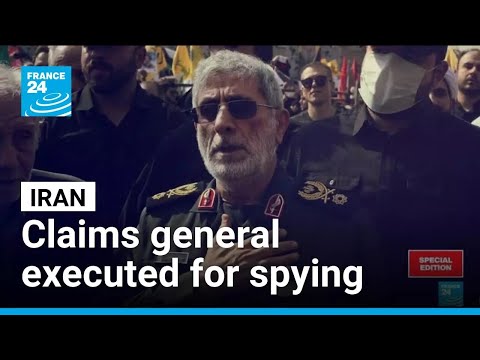
I remember being surprised that the report of Qaani's treason was casually accepted and passed along by one or two of the alt-media podcasters whom I regularly followed, individuals who were otherwise extremely skeptical of any claims about the Middle East made by Western media outlets.
However, this time I was far more cautious in swallowing such stories. I also noticed that despite Qaani's very prominent position in his country's military hierarchy, he was never included in any of the charts that the Times published showing Iran's important political and military leaders, both dead and surviving.
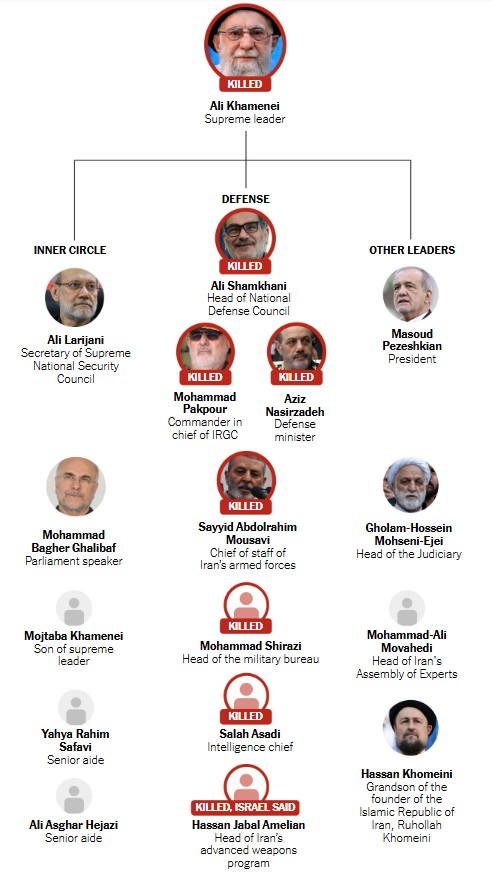
My caution soon proved warranted as Qaani began regularly issuing various public statements regarding Iran's military efforts, and these have continued during the weeks that followed. For example, just a few days ago he threatened further escalation in the conflict and demanded Israel's complete withdrawal from Lebanon. Rather than having been arrested and executed, there seemed not the slightest evidence that the Iranian government had ever suspected Qaani of any disloyalty.
Those earlier media reports implicating Qaani had heavily emphasized that he had not recently been seen in public, but this was hardly surprising given the continuing Israeli and American efforts to assassinate top Iranian military and political leaders. Indeed I suspected that those stories about Qaani's alleged execution had been deliberately circulated to provoke him into taking unwise actions that would better allow him to be targeted and killed.
Doubtful media reports also recently circulated regarding another very prominent Iranian leader.
The wave of airstrikes that began the current Iran war killed the 86-year-old Supreme Leader Ali Khamenei at his residential compound in Tehran, also taking the lives of many of his family members, including a daughter, grand-daughter, son-in-law, and daughter-in-law, though contrary to initial reports his wife had survived.
Among the injured survivors was Khamenei's second eldest son Mojtaba, and just over a week later the Iranian Council of Experts elected the latter as the new Supreme Leader in his father's place.
Under normal circumstances such a dynastic succession might have been viewed with extreme disfavor by the leadership of the Islamic Republic, and indeed in the past both the elder and younger Khameneis had expressed their strong opposition to hereditary rule. But that factor may have been overcome by the perceived importance of demonstrating defiant national resolve and political continuity in the face of the killings of so many senior Iranian leaders and the martyrdom of numerous Khamenei family members.
After the younger Khamenei had been installed as Iran's third Supreme Leader, the Israelis and the Americans marked him for death, so for obvious reasons he avoided appearing in public or otherwise revealing his location. However, unsubstantiated media reports soon began circulating in Western outlets that provided other explanations for his reticence. According to some of these, the attack that killed his father had left him severely injured and incapacitated, crippled or disfigured. Or he was in a coma, or had fled the country, or was even already dead.
During this period, Israel's assassinations still continued, claiming the life of Ali Larijani, head of Iran's Supreme National Security Council and often considered Iran's most important political leader, as well as many additional top military commanders. So these stories about Mojtaba may have been intended to lure him into the open, allowing his elimination. The Israelis may have hoped that killing two Supreme Leaders in rapid succession would break the spirit of the Islamic Republic.
A few weeks earlier, a Bloomberg investigation had allegedly revealed that Mojtaba Khamenei owned "a global property empire" of "sprawling international investments," including British luxury properties worth some $138 million. These stories were widely circulated but I viewed them with great skepticism since it was unclear to me how an Islamic cleric subject to severe Western financial sanctions and living in Iran could possibility benefit from his ownership of luxurious British mansions.
Homosexuality is a criminal offense in Iran, with sodomy sometimes punished by death. But a few days after Mojtaba's elevation, the bitterly hostile New York Post claimed that American intelligence had determined that Iran's new Supreme Leader was probably gay. The same article blandly mentioned the death of his wife and teenage son in the airstrike that had killed his father, while also noting that he had two other surviving children.
It was certainly possible that the Islamic Republic's highest ranking Shiite cleric was actually a gay sybarite who eagerly acquired British mansions that he could never visit, let alone use as a residence. But dishonest propaganda is a staple of all military conflicts, and these days the American government and its Israeli mentors are especially shameless in that regard. So one must obviously maintain considerable skepticism towards such lurid stories, which actually very much seem a projection of the scandalous behavior of the West's own top elites, now increasingly called "the Epstein class."
I think that these facts must be kept in mind as we consider the most remarkable recent story surrounding an important Iranian political figure.
Though only a sliver of Americans would probably recognize his name these days, Mahmoud Ahmadinejad served two terms as president of Iran during the years 2005 to 2013.
Raised in a poor family and having a degree in engineering, Ahmadinejad was considered a populist conservative outsider, who had served a single term as mayor of Tehran before jumping into his country's 2005 presidential race. Although hardly regarded as a leading candidate, his willingness to espouse stridently anti-American views and his strong support for Iran's nuclear program attracted a great deal of popular support. After making the runoff, he won a 62% landslide against Akbar Rafsanjani, a former two-term president who had already spent decades as one of the most powerful Iranian political figures.
His Wikipedia page usefully summarized some of the issues that gave Ahmadinejad his dramatic upset victory:
Ahmadinejad was the only presidential candidate who spoke out against future relations with the United States. He told Islamic Republic of Iran Broadcasting the United Nations was "one-sided, stacked against the world of Islam". He opposed the veto power of the UN Security Council's five permanent members: "It is not just for a few states to sit and veto global approvals. Should such a privilege continue to exist, the Muslim world with a population of nearly 1.5 billion should be extended the same privilege." He defended Iran's nuclear program and accused "a few arrogant powers" of trying to limit Iran's industrial and technological development in this and other fields.
In recently reading through that lengthy Wikipedia entry I was also impressed to discover that his autobiography mentioned that as a high school student he had ranked 132nd out of 400,000 participants in the 1976 national university entrance examinations. This result had placed him well above the 99.9th percentile and granted him admission to Iran's leading science and technology university, where he later went on to earn a doctorate in engineering. Given his numerous Iranian political enemies, I doubt that he would have made such a claim unless it were true.
Once in office, Ahmadinejad continued to take strong public positions on hot-button topics and as a consequence he was massively vilified in the West. For example, when our media outlets regularly declare that Iranian leaders have promised "to wipe Israel off the map," they are merely repeating a notorious mistranslation of a statement that he made soon after becoming president.
But although those particular remarks were spurious, it's undeniably true that Ahmadinejad became known for being more hostile towards Israel and America than any other top Iranian leader either before or since. He was also regularly denounced by American gay rights activists for his positions on their own concerns.
Therefore, when he ran for reelection in 2009 as a conservative hardliner, he attracted enormous opposition from the more liberal and pro-Western elements in his country, and their attacks were greatly amplified by our own mainstream media outlets. After he was declared the winner, a huge wave of public protests challenged the results as fraudulent and demanded that they be annulled, with this so-called "Green Movement" lasting for many months. This anti-Ahmadinejad campaign inspired the largest Iranian protests since the original Islamic Revolution thirty years earlier, and these were so heavily supported by the West that they were often regarded as just another "color revolution" aimed at toppling an anti-American government.
Although such claims of election fraud were almost universally endorsed by mainstream American pundits and media outlets all across the ideological spectrum, I remember being quite skeptical at the time, noting that his winning percentage in 2009 was actually very close to what he had won four years earlier in 2005. I suspected that the more affluent and liberal Iranian elements had been misled by something similar to the famous misquotation of Pauline Kael that she couldn't believe Richard Nixon had been reelected in a 1972 landslide because as a liberal New Yorker she didn't know a single person who had voted for him.
ORDER IT NOW
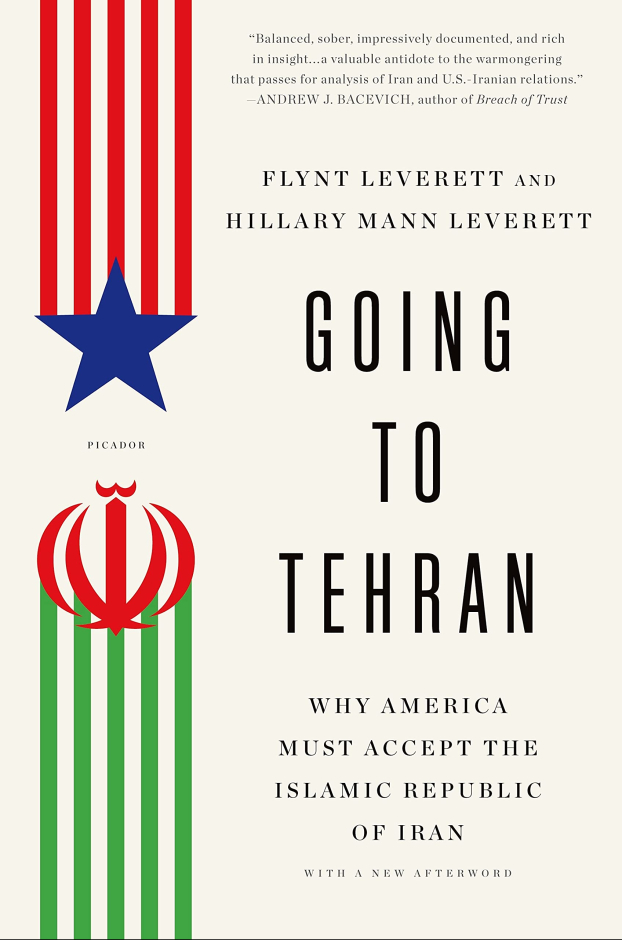
I recently read Going to Tehran, a highly regarded 2013 political analysis of our troubled relations with Iran by Flynt and Hillary Mann Leverett, former American CIA and NSC officials specializing in that country. Not only did the authors fully confirm my own views of that disputed 2009 election, but they treated Ahmadinejad with quite a lot of respect in their account, emphasizing that his surprising rise to the top of the Iranian government had been due to his outstanding skills as a political campaigner.
American rhetoric routinely condemns Iran as a harsh dictatorship. But consider the completely unexpected outcomes of many Iranian national elections, in which powerful establishment figures are often defeated by insurgent candidates. Given that record, Iran actually stands as one of the very few real democracies in the Middle East, certainly far more so than Israel, which for more than a half-century has denied any political rights to the Palestinian half of its total population.
Although Ahmadinejad left office in August 2013, his name still occasionally surfaced in the international news media.
During his two terms, Ahmadinejad was subjected to unprecedented demonization by the Western media and his country had suffered some of the political consequences, including serious economic sanctions. Partly for that reason, his presidential successor was Hassan Rouhani, a far more moderate figure who had campaigned on a platform of strengthening the economy by improving relations with the West. Within a few months of taking office, Rouhani had begun negotiating the JCPOA nuclear agreement with America and the rest of the world, allowing for strict international inspections to ensure that no Iranian nuclear weapons would be developed, finally signing that pact in 2015.
Ahmadinejad and other Iranian conservatives were quite critical of the agreement, arguing that the Rouhani administration had negotiated under pressure and made unfair unilateral commitments. But when he considered challenging Rouhani for reelection in 2017, Iran's Guardian Council of jurists blocked his presidential candidacy, also doing the same in 2021 and 2024, apparently because they believed that his extremely toxic relations with the West would damage Iran if he returned to office. Another factor may have been the regular accusations of corruption that he leveled against various senior Iranian officials.
Iran had negotiated the JCPOA with the Obama Administration, and Ahmadinejad's misgivings proved correct when Trump began sharply criticizing the agreement soon after becoming president in 2017 and then officially withdrew from it the following year.
Although Ahmadinejad was often portrayed as fanatically opposed to improving relations with the West, this was hardly the case. When President Donald Trump declared in 2019 that he was willing to talk to Iran with "no preconditions," Ahmadinejad reacted quite favorably to this, declaring in a lengthy Times interview that he supported direct talks between the two countries, a position also separately endorsed by Iran's foreign minister. But because of the influence of anti-Iranian hardliners in the Trump Administration, nothing came of this possible diplomatic opening.
Instead, matters took a very different turn the following year. Beginning in April 2020 I published a long series of articles arguing that there was strong, even overwhelming evidence that the Covid outbreak was the result of an American biowarfare attack against China and Iran. As I explained in my original article:
As the coronavirus gradually began to spread beyond China's own borders, another development occurred that greatly multiplied my suspicions. Most of these early cases had occurred exactly where one might expect, among the East Asian countries bordering China. But by late February Iran had become the second epicenter of the global outbreak. Even more surprisingly, its political elites had been especially hard-hit, with a full 10% of the entire Iranian parliament soon infected and at least a dozen of its officials and politicians dying of the disease, including some who were quite senior. Indeed, Neocon activists on Twitter began gleefully noting that their hated Iranian enemies were now dropping like flies.
Let us consider the implications of these facts. Across the entire world the only political elites that have yet suffered any significant human losses have been those of Iran, and they died at a very early stage, before significant outbreaks had even occurred almost anywhere else in the world outside China. Thus, we have America assassinating Iran's top military commander on Jan. 2nd and then just a few weeks later large portions of the Iranian ruling elites became infected by a mysterious and deadly new virus, with many of them soon dying as a consequence. Could any rational individual possibly regard this as a mere coincidence?
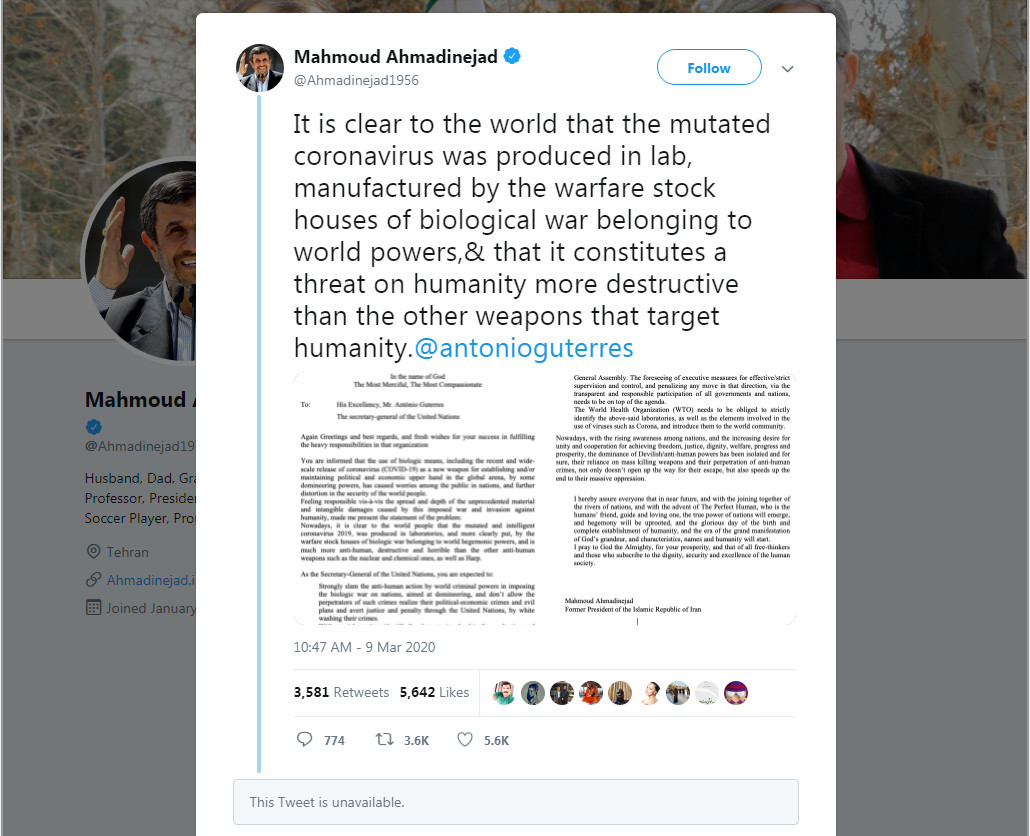
In a later article I emphasized that the top Iranian leadership and major media had publicly reached the same conclusion. Ahmadinejad was especially vocal on Twitter, even directing his formal accusations to UN Secretary-General Antonio Guterres, with just a single one of his numerous Tweets drawing many thousands of Retweets and Likes.
At the time, the global media ridiculed as total lunacy the Iranian position that the Covid virus had been developed in an American biological laboratory. But Prof. Jeffrey Sachs served as chairman of the Lancet's Covid Commission, and his recent articles have fully confirmed the likelihood of that scenario.
In November 2020, Trump was defeated for reelection by Joseph Biden, who had served as vice president under Barack Obama, so the Iranian political establishment hoped to improve relations with America and revive the JCPOA. When Ahmadinejad declared his intent to enter the 2021 presidential race, he was once again blocked from participation, perhaps partly because the Iranian leadership feared that his loud accusations that Covid had been an American bioweapon would eliminate any such possibility.
Israel and its Zionist partisans had long vilified Ahmadinejad as their most hostile Iranian foe, even sometimes arguing that he possessed an apocalyptic determination to destroy Israel and the West. The Wikipedia article "Mahmoud Ahmadinejad and Israel" runs more than 10,000 words and quotes prominent international officials as claiming that his public statements amounted to calls for genocide against the Jewish State. Various Jewish leaders around the world sometimes described Ahmadinejad as a "second Hitler" as did opinion columns in the Yale News and many other highly respectable publications. Such extremely bitter antagonism only gradually subsided after he left office in 2013.
In June 2025, Israel launched its sudden attack on Iran with waves of successful assassinations of important Iranian officials, and a few days later there were news reports that masked gunman had killed Ahmadinejad along with his wife and sons. These reports were gleefully welcomed by pro-Israel activists although they were later denied and turned out to be erroneous. Other, somewhat different accounts of a failed assassination attempt circulated around the same time.
Subscribe to New Columns
When Israel and America again attacked Iran in late February of this year, Supreme Leader Khamenei and many other top Iranian military and political officials were immediately killed by the initial waves of airstrikes. The next day, a leading Israeli newspaper reported that the victims also included Ahmadinejad and his IRGC bodyguards. Iranian and other regional outlets carried the same story, and FoxNews trumpeted the death of the hated former president.
But these reports were soon denied by a close Ahmadinejad associate, and they turned out to be erroneous, with the former Iranian president surviving and taken to a safe location.
None of this much surprised me. Not all assassination attempts are successful and the fog of war is always found in the confusing early days of a military conflict.
However, more than two months later, the New York Times suddenly published a major expose that promoted an entirely different account of these same basic events, one that was widely picked up and echoed all across the global media.
Relying entirely upon anonymous American and Israeli officials as sources, the four Times journalists explained that instead of trying to kill Ahmadinejad, the American and Israeli governments had planned to install him as the new leader of Iran after they successfully assassinated the Ayatollah Khamenei and most of Iran's other top political and military officials. The missiles fired at the former president's home had merely been intended to kill his IRGC bodyguards and thereby rescue him from their captivity. However, the plan went awry when Ahmadinejad was inadvertently wounded in that missile strike and went into hiding instead of declaring himself Iran's new leader.
I found this reconstruction of events quite bizarre, and noted that it entirely relied upon the statements of anonymous sources hardly known for their candor.
The Times drew upon some material in an Atlantic article published ten days after the attack that was also based upon anonymous sources. The Atlantic is currently edited by the notorious Jeffrey Goldberg, whose personal commitment to Israel was so strong that he moved to that country and famously volunteered as an Israeli prison guard. Goldberg later won major journalist awards for his articles promoting the ridiculous Israeli hoax that Saddam Hussein had close ties with Osama bin Laden and was a madman threatening America with his vast stockpiles of Iraqi WMDs.
One of the Times authors was Ronan Bergman, an Israeli based in Tel Aviv who maintains extremely close ties to Israeli intelligence. Bergman is best known for Rise and Kill First, his magisterial 2018 volume on the history of Mossad assassinations.
Ahmadinejad had been a lifelong supporter of the Palestinians and bitterly hostile towards Israel. Since 2023, the horrific atrocities and massacres that Israel has inflicted upon innocent Palestinian civilians has totally shifted the perceptions of that conflict and the Israeli state across the entire world, including among most Americans. Yet we are expected to believe that during these same years, Ahmadinejad's own loyalties shifted in exactly the opposite direction, leading him to become an eager Israeli henchman. I suppose that this is possible, but I would hardly consider it likely.
In support of the remarkable theory that Ahmadinejad had decided to become the willing Iranian collaborator of the national enemies of his own country, the Times cited a long article in New Lines Magazine, an apparently well-funded anti-Iranian print and web publication based in America. Among other things, that article claimed that two individuals closely associated with Ahmadinejad named Mohammad Rostami and Reza Golpour had been arrested and imprisoned in 2017 on grounds that they were spying for Israel. But when I tried to confirm those striking claims, I found that those two individuals instead seemed tied to the IRGC, and had apparently fallen afoul of some bitter factional disputes within the Iranian national security establishment. They seemed to have little if any direct connection with Ahmadinejad.
I doubt that too many Westerners truly understand all the complex inner workings of Iranian politics and I hardly number myself in that very select group. Perhaps Ahmadinejad decided to betray his country and become an American-Israeli stooge in exactly the way that the Times claimed. Some of the alt-media podcasters whom I follow would normally disregard almost everything that the Times publishes about the Middle East as lies, but they accepted that story without question, wondering why the Iranian government had not already arrested and executed Ahmadinejad as a traitor. I think this might illustrate the effectiveness of the "Big Lie" technique.
However, a very different scenario also came to my mind. During his long career, Ahmadinejad had become notorious as the Iranian leader most hostile to Israel and America, and he had apparently been blocked from the presidential ballot on three occasions because of the enormous international backlash his harsh public sentiments had provoked. In June 2025 there had been reports of an Israeli assassination attempt against him.
The current president of Iran was the very moderate Masoud Pezeshkian, who came into office in 2024 following the death of hardline President Ebrahim Raisi. The latter had been killed in a very suspicious helicopter crash weeks after bombarding Israel with a wave of missile and drone attacks in retaliation for the lethal Israeli bombing of the Iranian embassy in Damascus.
With Israel and America about to launch an unprecedented all-out attack on Iran at the end of February, perhaps they were concerned that Ahmadinejad's political star might now rise again. So even as the Israelis used waves of missiles to assassinate most of Iran's top current political and military leaders, they targeted Ahmadinejad in similar fashion, striking his home and killing several of his IRGC bodyguards though he himself was only injured.
But with Ahmadinejad now alive and in hiding as a wounded national martyr, they decided that their best option was to undercut his potential political popularity by fabricating the story that he had become a traitor, eager to collaborate with the enemy countries that had suddenly launched a massive, unprovoked attack against his own.
I considered it very odd that an anonymous associate of Ahmadinejad would eagerly speak with hostile journalists from the Times and confirm that Iran's popular former president had allied himself with Israel and America against his own country. I considered my own contrary reconstruction far more plausible, and Ahmadinejad's own biographer had a similar reaction, while some Israeli experts were equally skeptical of the Times account.
In reading the Times story, I noticed one especially glaring omission. During his eight years as Iranian president, Ahmadinejad had become most notorious for his strong advocacy of Holocaust Denial, even organizing a major 2006 international conference dedicated to that very controversial movement. No such international conference had ever previously occurred and it attracted a great deal of harsh media coverage. According to news reports, some important Iranian officials feared that it would greatly increase anti-Iranian sentiments around the world.
This had been a leading cause of the enormous Western political backlash that Iran suffered during his presidency. Though hardly a technical expert on the topic, he had subjected himself to hostile interviews on Holocaust Denial by ABC News , CNN's Larry King , and numerous other MSM outlets, probably establishing him as the world's most prominent public figure on that issue.
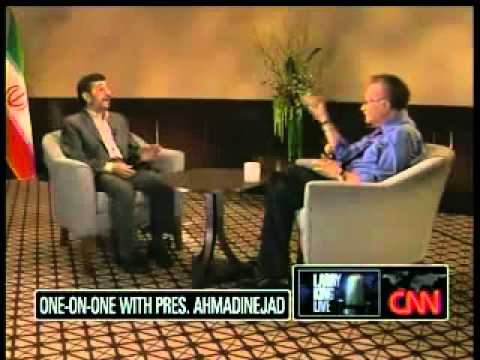
Yet there was barely any mention of this in the long Times article. If the Israeli and American governments had planned to install the world's most prominent Holocaust Denier as the new leader of Iran, one would assume that the Times journalists must have had some questions on that controversial plan, but they apparently did not.
Moreover, the roots of Ahmadinejad's involvement in the topic and his decision to hold that conference were interesting.
When he entered the presidency, resistance to the American occupation of Iraq was still raging, while Neocon and pro-Israel groups were doing their best to vilify Muslims. Therefore various efforts were made to provoke and incite Muslims by publishing cartoons attacking the Prophet Muhammad, or by burning or otherwise desecrating copies of the Koran, and doing these things allegedly on "free speech" grounds.
Ahmadinejad and other Muslims sought to respond to this provocation in kind. But contrary to ignorant Westerners, Muslims revered Jesus as the holy prophet of God and Muhammed's immediate predecessor, while the Virgin Mary was regarded as the most perfect of all women. So any attacks upon those leading symbols of Christianity would be even more forbidden in Islamic societies than they were in the heavily secularized West.
However, Ahmadinejad and his allies recognized that certain other issues were protected with truly religious fervor in the Western societies that claimed to have abandoned religion. As I explained in a long 2019 article:
In 2009, Pope Benedict XVI sought to heal the long-standing Vatican II rift within the Catholic Church and reconcile with the breakaway Society of St. Pius X faction. But this became a major media controversy when it was discovered that Bishop Richard Williamson, one of the leading members of that latter organization, had long been a Holocaust Denier and also believed that Jews should convert to Christianity. Although the many other differences in Catholic doctrinal faith were fully negotiable, apparently refusing to accept the reality of the Holocaust was not, and Williamson remained estranged from the Catholic Church. Soon afterward he was even prosecuted for heresy by the German government.
Internet critics have suggested that over the last couple of generations, energetic Jewish activists have successfully lobbied Western nations into replacing their traditional religion of Christianity with the new religion of Holocaustianity, and the Williamson Affair certainly seems to support that conclusion.
Consider the French satirical magazine Charlie Hebdo. Funded by Jewish interests, it spent years launching vicious attacks against Christianity, sometimes in crudely pornographic fashion, and also periodically vilified Islam. Such activities were hailed by French politicians as proof of the total freedom of thought allowed in the land of Voltaire. But the moment that one of its leading cartoonists made a very mild joke related to Jews, he was immediately fired, and if the publication had ever ridiculed the Holocaust, it surely would have been immediately shut down, and its entire staff possibly thrown into prison.
Western journalists and human rights advocates have often expressed support for the boldly transgressive activities of the Jewish-funded Femen activists when they desecrate Christian churches all around the world. But such pundits would certainly be in an uproar if anyone were to act in similar fashion toward the growing international network of Holocaust Museums, most of them built at public expense.
Indeed, one of the underlying sources of bitter Western conflict with Vladimir Putin's Russia seems to be that he has restored Christianity to a favored place in a society where the early Bolsheviks had once dynamited churches and massacred many thousands of priests. Western intellectual elites held far more positive feelings toward the USSR while its leaders retained a stridently anti-Christian attitude.
- American Pravda: Holocaust Denial
- Ron Unz • The Unz Review • August 27, 2018 • 17,600 Words
Iran and its mainstream media still retains some residue of that perspective originally promoted by Ahmadinejad. A few years ago I was interviewed by Iranian broadcast television on a number of topics regarded as very controversial in the West, with two of those half-hour segments discussing the Holocaust.
rumble.comVideo Link rumble.com
Video Link