Lorenzo Maria Pacini
With Russia and China watching, and the Axis of Resistance at stake, Pezeshkian's tense signature hints: "We hope we've done the right thing."
Shadows between Washington and Tehran
There is something strange about everything that is happening. The new order in the Middle East is potentially destined for success, but there are still too many unanswered questions.
An analysis of the internal dynamics within the U.S. and Iranian governments reveals some troubling shadows.
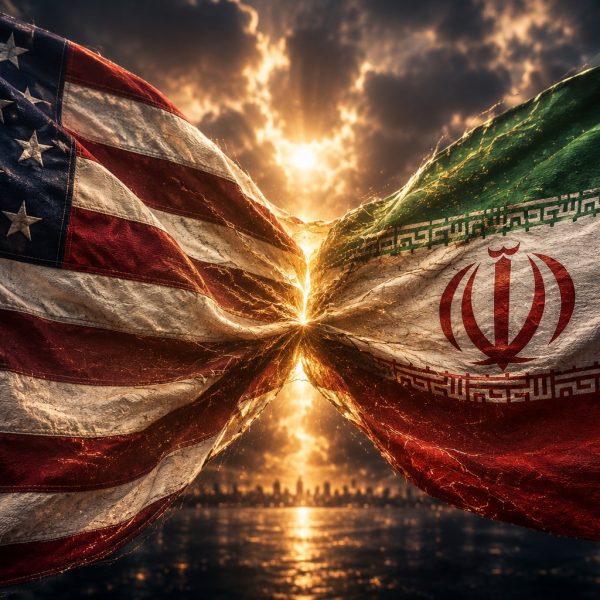
The U.S. has effectively allowed Iran to get almost everything it wanted, on its own terms, to the point that the agreement is being described as a victory for Iran and a defeat for the U.S. In a peace agreement-even in the form of a memorandum-it is not technically appropriate to speak of "winners" and "losers," since peace is the most precious good for peoples, and when it is achieved by both sides, it is the peoples who win.
Setting aside these technical details for experts, it is unclear why a memorandum was reached rather than a stable agreement. It is a question many are asking. A likely answer is this: the memorandum is a trap. The U.S. administration wants to see if anyone within Iran will take the bait. And who is this "someone" ? The leaders of the IRGC. Why ? Because, in the U.S. view-and consistent with what the president himself has repeatedly stated to the press-the problem is not Iran itself, nor its people, nor even its government, but rather the Revolutionary Guards. Why ? Because they have too much power, because they control the Axis of Resistance, because-as American analysts say-they are "terrorist criminals," and therefore the U.S. has a duty to fight Islamic terrorism.
Given this scenario-however implausible it may seem to some-we must consider the possible consequences. If all of this were true, the situation would unfold as follows: the U.S. is waiting to see the IRGC fall into the trap and decide not to pursue peace, but rather to attack or close the Strait of Hormuz again, or to refuse to comply with the terms of the memorandum; at that point, the U.S. could respond with a serious military commitment; Iran would be put in check, with the added risk of a civil war and a further attack by Israel. It would be a catastrophe.
What would the other observers from around the world do then ? The question falls on Russia and China. Both have supported the Pezeshkian government and its desire to find a peaceful solution and have advocated for swift and secure resolutions. The guarantee of a new, balanced Middle Eastern order is an ideal scenario for both superpowers. An internal "deterioration" within Iran would erode confidence in the peace process and could mean, for Russia and China, allowing the U.S. to operate unhindered (which is largely what they have done during more than 100 days of conflict).
It is unclear what the actual situation inside Iran is. Some internal divisions already existed previously, and during these months of direct conflict, contradictions and disagreements between the IRGC and the regular forces have emerged. What is known, however, is the expression on President Masoud Pezeshkian's face when he signed the memorandum: a tense and serious expression, which a source present at the negotiations reported was accompanied by the president's remark, "We hope we've done the right thing for Iran."
The regional impact
Let's try to imagine what such a scenario would mean at the regional level. The U.S. is already on the ground and could intervene promptly against Iran-but also as a deterrent against any last-minute folly on Israel's part. The outbreak of another phase of the conflict is the greatest fear of all those keeping a close eye on the signing of the agreement in Geneva, following the digital signature in the wake of the Islamabad agreement.
Most observers continue to view the event through the lens of the past, assuming that past dynamics must necessarily repeat themselves. But real geopolitics does not operate by inertia. When two strategic adversaries begin structured dialogue, the effects ripple far beyond the borders of the two countries involved: they impact the entire Middle East, Europe, continental Asia, and the delicate balances of the global economy.
Other European powers are eager to get in on the action, especially France, which-through President Emmanuel Macron-expressed its desire at the G7 summit to secure a share of the economic pie from reconstruction efforts. The United Arab Emirates came under direct attack from Trump during the G7 press conference and will now have to contend with other regional players, effectively placing them at a disadvantage for the future, with Iran already highly suspicious of them and tensions running high with Pakistan and Saudi Arabia. Israel, for its part, is at the center of widespread controversy and risks making one of the worst mistakes in its history by boycotting the peace agreement. Tensions are at a breaking point.
What is clearly emerging, at least from the U.S. side, is that the U.S. does not want the Axis of Resistance to remain as it is, and this, at least to date, has not been considered tolerable by the Revolutionary Guards. The Axis of Resistance has made it possible to counter Western imperialism and has directly ensured the survival not only of Iran, but also of Lebanon, Palestine, Yemen, Iraq, Afghanistan, and even Syria for a long period. Demanding the dismantling of the Axis is like demanding that half the heart of the Iranian Revolution be torn out. Yet the U.S.-and with it, every other Western power-cannot remain at ease in the Middle East as long as the Axis stands ready to fight. That is why there is a demand to destroy it.
But is all of this truly acceptable to the Iranian leadership ? Is this peace agreement really worth such a radical change ? The question remains, for now, still open.