June 23, 2026
Over the last few weeks I'd been paying less and less attention to our continuing Iran War mostly because less and less seemed to be happening.
Every few days President Donald Trump would loudly announce that a peace agreement was about to be signed that would fully reopen the Strait of Hormuz to oil tanker traffic. Then a couple of days later he would invariably declare that he was instead about to launch a massive bombing attack against Iran, sometimes even doing so in very limited fashion and afterward suffering some retaliatory strikes by Iranian missiles and drones. Next, Trump would explain that he had called off his huge planned attack because a peace agreement was on the very verge of signing, thereby restarting that same cycle over again.
Almost all of these statements by Trump were treated with great seriousness by many or most of our leading mainstream media outlets, usually including the New York Times.
Trump's regular declarations that peace was at hand were always strongly promoted by Barak Ravid, the chief Middle East correspondent of Axios, and then widely echoed across the rest of the media. But as journalist Glenn Greenwald emphasized, Ravid was an Israeli who had formerly worked in his country's intelligence service, raising serious doubts about his sincerity.
The "former" Israeli spy and IDF soldier @BarakRavid has spent 15 months serving as the main propaganda arm for Netanyahu and Trump on Iran (he performed the same function for Netanyahu/Biden on Gaza).He recites the same story over and over: the US and Iran are very close to a... t.co
- Glenn Greenwald (@ggreenwald) May 6, 2026
Last week Trump once again announced that he and the Iranians were very close to an agreement. This finally prompted CNN to broadcast an amusing montage of all the past Trump statements along similar lines stretching back to April, with Anderson Cooper reckoning that they now totaled around 39 in number. All of those instances had been interspersed with Trump's bombing attacks or at least his threats along such lines.
CNN montage of all the times Trump announced deals with Iran.Anderson Cooper: Today marks 39 times that he has said something like that. pic.twitter.com/10JYq299sN
- Blue Georgia (@BlueGeorgia) June 12, 2026
After the tenth or twentieth such declaration by Trump, I'd generally stopped paying much attention. On a couple of occasions, I'd been gullible enough to actually fall for his patter, and once I realized that I'd been tricked, I was sufficiently humiliated that I subsequently became more cautious.
But even as I disregarded Trump's unreliable statements, I carefully waited for the global supply of oil to run low, which I felt sure would eventually force America to the bargaining table. I'd originally estimated that the world might reach that energy cliff some time in May, but I'd been proven wrong. Instead, various knowledgeable commodities experts predicted that the crunch would probably arrive in July, as the world's stockpiles approached "tank bottom." Given the looming danger of a collapse of the global economy, I hardly regarded a few weeks one way or the other as being too significant.
"I've never seen anything like it before."Storage tanks for oil, jet fuel, diesel, gasoline will be running out in Europe in May.
Oil storage tanks in the United States will run empty "somewhere in the July 4 period,"
- Carlyle's Jeff Currie pic.twitter.com/TIsL6rKUWX
- Wall Street Mav (@WallStreetMav) May 6, 2026
Surprisingly enough, Trump's regular statements that the Iranians were about to fully reopen the Persian Gulf waterway to oil tanker traffic were almost always followed by a significant drop in crude oil prices, sometimes a large one. I thought that even the dimmest and most gullible oil trader would have stopped reacting in such absurdly Pavlovian fashion after the twelfth or fifteenth time that they'd been tricked. So this tended to support my suspicion that these seemingly inexplicable pricing reactions came because the oil markets were actually dominated by mindless AI trading systems, as I'd originally suggested in May.
Another possibility might be that these seemingly irrational movements in oil prices were explained by the AI systems that apparently control 70% of daily trading on the markets. Perhaps these regularly reacted to Trump's unreliable statements merely based upon their expectations of how all the other AI trading systems would react.
Whether or not that was actually the case, it seemed rather obvious that one or more individuals with advance knowledge of Trump's statements or the Axios articles promoting them were taking advantage of that information in options markets, sometimes earning hundreds of millions of dollars in what certainly seemed like insider trading. So although those 39 false alarms might have left a president or a publication looking a little foolish, the enormous quantity of unearned wealth that someone was making probably explained why the game continued.
BREAKING: According to our analysis, ~$920 million worth of crude oil shorts were taken 70 minutes before an Axios report claimed the US and Iran were near a "14-point" deal to end the war.At 3:40 AM ET today, nearly 10,000 contracts worth of crude oil shorts were taken without... pic.twitter.com/SZafvnZHHG
- The Kobeissi Letter (@KobeissiLetter) May 6, 2026
For these reasons, when Trump once again declared last week that he was about to sign an agreement with the Iranians, I mostly ignored him. After all, 39 times bitten, 40th time shy. But to my considerable surprise, our president actually happened to be telling the truth this time, and on Friday he signed a very preliminary "Memorandum of Understanding" with the Iranians, with the White House distributing the video clip.
🚨 President Donald J. Trump has SIGNED the Iran Memorandum of Understanding at Versailles in France. 🇺🇸 pic.twitter.com/JQ6qlbvFAF- The White House (@WhiteHouse) June 17, 2026
In the days after the announcement but prior to the actual signing, various preliminary or distorted versions of the text had begun floating around on the Internet, presumably leaked in order to manipulate the political or media reactions. Probably as a consequence, Trump Administration officials then used a conference call to provide the actual text to reporters from the New York Times and other top media outlets, which these latter then published.
The full wording was quickly distributed by other publications, and I'm providing the text below, bolding those elements that I and many others found the most striking:
- Paragraph 1
The United States of America and the Islamic Republic of Iran and their allies in the current war by signing this M.O.U. declare the immediate and permanent termination of military operations on all fronts, including in Lebanon, and undertake from now on not to initiate any war or any military operation against each other, and to refrain [from] the threat or use of force against each other and ensuring the territorial integrity and sovereignty of Lebanon. The final deal will confirm the permanent termination of the war on all fronts, including in Lebanon and other provisions of this paragraph.'
- Paragraph 2
The United States of America and the Islamic Republic of Iran undertake to respect each other's sovereignty and territorial integrity, and to refrain from interfering in each other's internal affairs.
- Paragraph 3
The United States of America and the Islamic Republic of Iran commit to negotiating and achieving the final deal in maximum 60 days extendable with mutual consent.
- Paragraph 4
Immediately upon the signing of this M.O.U., the United States of America will begin the removal of its naval blockade and any disturbances or impediments against the Islamic Republic of Iran, and will fully end the naval blockade within 30 days. During this period, the traffic of vessels will be in proportion to the numbers of prewar traffic being restored by the Islamic Republic of Iran. The United States of America further undertakes to remove its forces from the proximity of the Islamic Republic of Iran within 30 days after the final deal.
- Paragraph 5
Upon the signing of this M.O.U., the Islamic Republic of Iran will make arrangements using its best efforts for the safe passage of commercial vessels with no charge for 60 days only from the Persian Gulf to the Sea of Oman, and vice versa. The traffic of commercial vessels will immediately start, and considering the need for removing the technical and military obstacles and demining by the Islamic Republic of Iran, will be instated within 30 days. The Islamic Republic of Iran will conduct dialogue with the Sultanate of Oman to define the future administration and maritime services in the Strait of Hormuz, in discussion with other Persian Gulf littoral states in line with the applicable international law and the sovereign rights of coastal states of the Strait of Hormuz.
- Paragraph 6
The United States of America undertakes with regional partners to develop a definitive, mutually agreed plan with at least U.S.D. 300 billion for the reconstruction and economic development of the Islamic Republic of Iran. The mechanism for the implementation of this plan will be finalized as part of a final deal within 60 days. All required licenses, waivers and permissions needed for the relevant financial transactions will be granted by the United States of America.
- Paragraph 7
The United States of America undertakes to terminate all types of sanctions against the Islamic Republic of Iran, including the United Nations Security Council resolutions, I.A.E.A. Board of Governors resolutions, and all unilateral U.S. sanctions, primary and secondary, in an agreed-upon schedule as part of the final deal. The Islamic Republic of Iran and the United States of America acknowledge the critical importance of the sanctions termination issue above mentioned, and express their intentions to immediately address these issues in the negotiations in order to achieve mutual agreement on them.
- Paragraph 8
The Islamic Republic of Iran reaffirms that it shall not procure or develop nuclear weapons. The United States of America and the Islamic Republic of Iran have agreed to resolve the disposition of stockpiled, enriched material pursuant to a mechanism that will be mutually agreed upon in accordance with the schedule mentioned in Paragraph 7, with the minimum methodology to be down-blending on site under the supervision of the I.A.E.A. The two parties also agreed to discuss the issue of enrichment and other mutually agreed matters related to the Islamic Republic of Iran's nuclear needs, based on the statutory framework being agreed upon in the final deal. The final deal will confirm the provisions of this paragraph. The United States of America and the Islamic Republic of Iran acknowledge the critical importance of the nuclear issues above mentioned, and express their intention to immediately address these issues in the negotiation in order to achieve mutual agreement on them.
- Paragraph 9
Pending the final deal, the United States of America and the Islamic Republic of Iran agree to maintain the status quo. The Islamic Republic of Iran will maintain the current status quo of its nuclear program, and the United States of America will not impose any new sanctions, and will not deploy additional forces in the region.
- Paragraph 10
The United States of America undertakes that immediately upon the signing of this M.O.U., and until the termination of sanctions, U.S. Department of Treasury will issue waivers for the export of Iranian crude oil, petroleum products and derivatives, and all associated services, including banking transactions, insurances, transportation, etc.
- Paragraph 11
The United States of America undertakes to make fully available for use the frozen or restricted funds and assets of the Islamic Republic of Iran upon the implementation of this M.O.U. The United States of America and the Islamic Republic of Iran will mutually agree on the procedures related to the release of these funds during the negotiations. Such funds, whether retained in the original account or transferred, shall be made fully usable for payment to any ultimate beneficiary designated by the Central Bank of the Islamic Republic of Iran. The United States of America undertakes to issue all necessary licenses and authorizations accordingly.
- Paragraph 12
The United States of America and Islamic Republic of Iran agree that an executive mechanism will be established to monitor the successful implementation of this M.O.U. and the future compliance of the final deal.
- Paragraph 13
After signing this M.O.U. and subject to the beginning of the implementation of Paragraphs 1, 4, 5, 10 and 11 of this M.O.U., and the continuing implementation of these measures, the United States of America and the Islamic Republic of Iran will start negotiations regarding the final deal exclusively on the other paragraphs.
- Paragraph 14
The final deal will be endorsed by a binding U.N.S.C. resolution.
When I read the document I was shocked that the terms were so extremely favorable to Iran. Indeed, the agreement seemed so lopsided that it represented a complete American capitulation to the country that we had massively attacked less than four months earlier.
Only two significant commitments were required of the Iranians. They promised neither to procure nor develop nuclear weapons, merely reiterating something that they had already repeatedly declared for decades. And they would reopen the Strait of Hormuz to cargo traffic, agreeing not to charge fees for the first sixty days.
So Iranian policies returned to the pre-war situation, except that they planned to permanently charge substantial fees for any cargo vessels using the vital strategic waterway that they now totally controlled.
Meanwhile, the concessions made by the American side were breathtaking, and included most of the Iranian wish-list.
In the very first paragraph, America repeatedly declared that it and its allies would "immediately and permanently" terminate all military operations in Lebanon and fully respect "the territorial integrity and sovereignty" of that country. This would obviously require an immediate end to all of Israel's recent actions regarding Lebanon, including the invasion and occupation of that country, the countless bombing attacks against Beirut and other Lebanese cities, and the planned annexations.
Over the years and the decades, America had regularly sought to undermine and overthrow the Islamic Republic and destroy the Iranian economy, but we now promised to permanently end any such future interference.
Upon signing, America agreed to immediately begin lifting its naval blockade, fully ending it within 30 days. This would allow the large backlog of Iranian tankers to carry their accumulated oil to their customers in China and the rest of the world, earning many billions of dollars for the Islamic Republic, while all goods could once again be freely imported. America would also remove its forces from the proximity of Iran within 30 days of the final agreement.
America and its regional partners agreed to develop a plan for providing a $300 billion fund for the reconstruction and development of Iran, offering all the necessary licenses and waivers, and finalizing that effort within 60 days. Much of that $300 billion reconstruction fund would presumably come from America's wealthy but fearful Gulf Arab allies, and according to a source quoted by Reuters, more than half of that huge sum had already been committed. I was shocked that Trump was willing to fully endorse such a gigantic financial windfall for the country that we had long demonized.
Since the fall of the Shah nearly a half-century ago, America had always been deeply hostile to the Islamic Republic, subjecting it to waves of economic sanctions, and these had been raised to crippling levels during Trump's first term. But the Trump Administration now agreed to terminate all of these, both those unilaterally imposed by our own government and those endorsed by various international bodies, while also promising not to impose any new sanctions nor to deploy any additional military forces to the region. Immediately upon signing, the American government would issue waivers for all Iranian exports of oil and other petroleum products and all associated banking, insurance, and transportation services, making it easy for Iran to sell its products into all world markets.
America would immediately make fully available all of Iran's frozen or restricted financial assets and funds, which Iran could then use in any way it so chose.
The Times had published a heavily annotated version of the text, and its journalists had made many of these same points.
Under normal circumstances, opposing advocates would provide sharply contrasting spin about this sort of controversial international agreement. But there were relatively few disputes in this case.
I saw the agreement as totally one-sided, amounting to an abject American capitulation to the Iranians. Numerous Israeli analysts said much the same thing once the official terms were disclosed. The Times quoted a number of them in an article entitled "Israel, Stunned by Trump's Iran Deal, Sees It as a 'Catastrophic Capitulation.'"
Israel awoke to a frightening new reality on Thursday as it absorbed, with disbelief and largely in silence, the terms of President Trump's preliminary agreement to end the war with Iran.It accomplishes none of Israel's war aims, analysts and officials said, and arguably leaves the country in worse shape on each of them...
The hundreds of billions of dollars that Iran may receive in sanctions relief, unfrozen assets, or reconstruction aid could wind up funding more missiles in Iran and aiding Tehran's militia allies around the Middle East...
"It's a bad agreement in which the Americans are paying with cash, and got, at the maximum, a letter of intent," Yaakov Amidror, a hawkish former national security adviser to Prime Minister Benjamin Netanyahu of Israel, said in an interview.
David Horovitz, the editor of The Times of Israel, called it "a catastrophic capitulation," in the headline of a fiery opinion column.
And Nir Dvori, an analyst for Israel's Channel 12 News, likened the deal to a "diplomatic Oct. 7" — a cataclysmic disaster for which Israel was wholly unprepared...
"We are remaking the region," Chuck Freilich, a former Israeli deputy national security adviser, said on Thursday.
"Iran came out stronger, and I believe is now the regional hegemon," he added. "They stood up to the U.S., the global superpower. They can have missiles, and there's nothing in the agreement about the nuclear issue except we'll talk about it. This is an Iranian victory over the U.S. and Israel."...
Ben-Dror Yemini, a columnist at Yediot Ahronot, Israel's largest newspaper, wrote that Mr. Netanyahu had led Israel into "the most severe collapse in its history."
"Trump reneged on every promise, turned Iran into a power, strengthened Hezbollah, and as a final flourish, gave Israel a kick and humiliation," he wrote.
Many of the most enthusiastic American supporters of Trump's Iran War reacted in equally horrified fashion, including Washington Post columnist Marc Thiessen:
The website Mediaite summarized a long list of such statements under the evocative title "'American Surrender': Conservatives React in Horror to Formal Iran Deal Announcement." Lt. Col. Daniel Davis provided clips of a few of these responses on one of his podcast videos.
Meanwhile, analysts far less friendly towards Trump and the Israelis reached very similar conclusions.
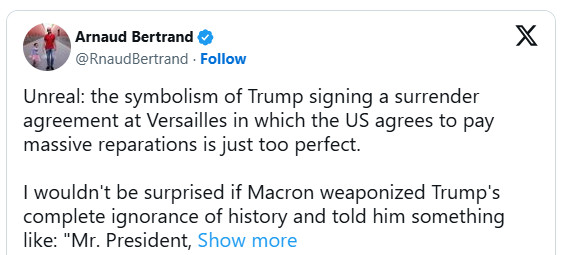
After the end of the First World War just over a century ago, the infamous Treaty of Versailles had marked the surrender of Imperial Germany, with its terms including the payment of huge financial reparations to the victorious side. So Arnaud Bertrand noted the delicious irony of Trump agreeing to sign the terms of America's own Middle Eastern defeat and surrender at that same symbolic location, suspecting that our profoundly ignorant president was completely unaware of that notorious historical precedent.
I thought that the best and most comprehensive analysis came in an hour-long monologue by Tucker Carlson, who emphasized the astonishing nature of America's political and economic concessions. Indeed, he explained that when he'd first seen some of the alleged clauses circulating on the Internet he found them so extreme that he'd assumed that they were merely falsehoods aimed at discrediting and torpedoing the intended agreement. But they turned out to be absolutely real.

He noted that Israeli Prime Minister Benjamin Netanyahu and his Neocon allies had spent decades trying to persuade every American president to attack and destroy Iran on behalf of Israel, but Trump had been the first one who had fallen for their transparent scheme. Although Carlson was far too polite to say so, his verdict brought to mind a harshly evocative but accurate meme that I'd seen floating around on the Internet.
Trump's fateful decision would have huge and permanent consequences for our position in the region and our status in the world. Thoughtful Americans had sometimes feared that the American Empire would be destroyed in an East Asian war fought against our rising Chinese superpower rival. But nobody had ever imagined that our downfall might result from just a few weeks of sustained combat against Iran, a greatly despised, mid-size regional power run by religious clerics, having only a small economy, and lacking any of our advanced weapons systems.
Indeed, over the last couple of months, Prof. John Mearsheimer has persuasively argued that we had suffered the greatest strategic defeat in our entire national history, whose 250th Fourth of July anniversary ironically arrives in the next two weeks.
By losing our eighty-year dominance over the massive natural resources of the Persian Gulf, we had shattered a central pillar of our global hegemony, and probably set into motion the rapid decline of the petrodollar system that gave us control of the world financial system. American global power might never recover from these devastating blows.
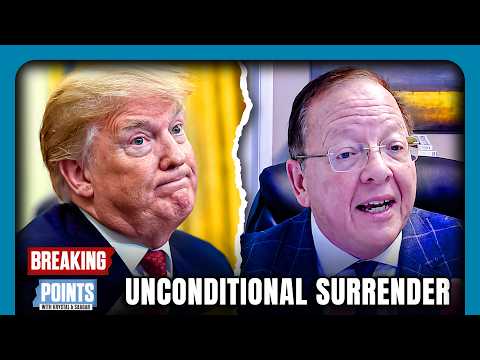
In a Friday interview, Prof. Robert Pape of the University of Chicago took much the same position as Carlson regarding the agreement that we were signing, describing it as America's "unconditional surrender" to Iran. He even went so far as to suggest that the outcome of the war had potentially established Iranian regional hegemony over the Persian Gulf and its resources. As a result, Iran might be elevated to the status of a fourth center of world power, an idea that I had also long had at the back of my mind.
Simplicius, a highly regarded military affairs blogger entitled his own column "US Finally Capitulates with 'Memorandum' of Surrender" and he included some of the earliest media headlines.

He also quoted a CNN report noting that American intelligence sources concluded that Iran had firmly established its ability to control the Strait of Hormuz at will going forward:
US intelligence agencies have recently assessed that Iran can effectively shut down access to the Strait of Hormuz at will from now on, meaning the country's regime has acquired a powerful new ability to hurt the global economy as a result of the war, according to three sources familiar with the findings.Regardless of the framework agreement that is due to be formally signed on Friday to open the key waterway as a prelude to nuclear talks, Iran proved it can shut off access to the strait during the current conflict and US intelligence assessments suggest that could happen again.
Although the terms of the agreement were surprising, there was nothing mysterious about the reasons that Trump finally gritted his teeth, abandoned all his previous positions, and signed what amounted to a complete capitulation to Iran. Indeed the very same day that the lead story in the WSJ announced that the agreement had been reached, a different front-page story presented some of the factors that had driven America into making those huge political concessions:
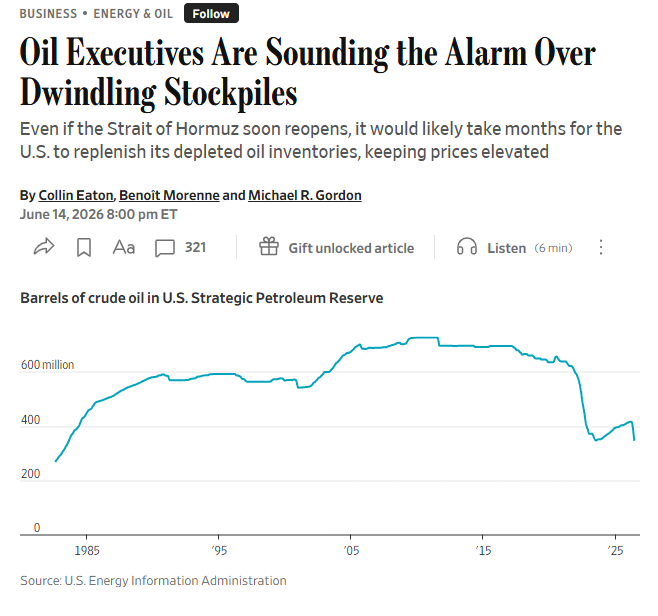
The chart showed that our strategic petroleum stockpiles had already reached the lowest levels since the early 1980s, and some of the statements by top oil executives and other experts were alarming:
Mike Wirth, chief executive of Chevron has repeatedly warned on television that the supply crunch will soon manifest itself around the world. Neil Chapman, the No. 2 at Exxon Mobil has said the U.S. is approaching "unheard-of inventory levels." Other executives, such as Wil VanLoh, of Quantum Capital Group, say "it's going to get ugly.""The world has never had to destroy 10 million barrels a day of oil demand," VanLoh added, referring to the crude production not making it to global markets...
Chapman, a senior vice president at Exxon, said physical oil prices could rise as high as $150 or $160 a barrel once the limits at global hubs are hit.
"You can debate whether that's going to hit those really low levels in two weeks or three weeks. But once you get to that point, then you'll see prices shoot up," he said at a conference in New York.
Other MSM outlets had already reported similar concerns:
Subscribe to New Columns
A few days later, Trump justified his agreement with Iran by explaining that if the Strait of Hormuz were not immediately reopened, the world would exhaust its oil stockpiles within the next four weeks, triggering a huge global economic crisis.
As ABC News reported that same day, Trump said he feared that the catastrophic oil shortage would produce a new worldwide Great Depression and transform him into a second Herbert Hoover.
President Donald Trump said Wednesday that he was motivated to finalize the memorandum of understanding (MOU) with Iran to prevent "economic catastrophe" if the war was not resolved soon."So rather than possibly going into a depression, rather than having your favorite president be Herbert Hoover, he was always the one I didn't want to be," Trump said of the 31st president whose policies are often blamed for starting the Great Depression.
"I didn't want to see economic catastrophe. If you kept this going, that could have happened. But all I know is, every time we talked about the possibility of peace, the stock market shot up like a rocket ship," Trump said during a press conference Wednesday on the sidelines of the G7 Summit in Évian, France.
Trump is a notorious fabulist, easily able to convince himself of all sorts of things that aren't true. So perhaps that one brief moment of candor exhausted his total supply.
Soon after he started the war, Trump had loudly proclaimed that he would settle for nothing short of "unconditional surrender" by Iran. Therefore, the same day that he signed the agreement aimed at ending the conflict, an interviewer reminded him of that boast, and our president boldly replied that he'd indeed successfully forced Iran into accepting "unconditional surrender."
When Prof. Mearsheimer was shown that clip a couple of days later, he joked that Trump wasn't really lying. The signed agreement did constitute "unconditional surrender," but that America was the country that had surrendered.
Obviously, only the most gullible or sycophantic Trump supporters could fail to recognize the reality of our massive capitulation to Iran, a direct consequence of our defeat in the war. These individuals apparently included FoxNews star Sean Hannity, and the sort of arguments being made by these diehard Trump loyalists were soon mocked in a video clip that attracted a half-million views on Twitter.
Over its long history, America had acquired an unfortunate reputation for reneging upon agreements, a pattern that had become exponentially worse under Trump. Therefore, many were convinced that our country would surely fail to honor the terms of the preliminary agreement that we had just signed, let alone seriously negotiate the intended final agreement over the next 60 days, and the Iranians were fools to expect otherwise. But I think that such concerns are probably mistaken.
The crucial point is that even once the Iranians began allowing free transit of the Strait, it would take many weeks for the huge number of trapped cargo vessels to exit that very narrow waterway and many additional weeks for the oil tankers among them to reach their destinations around the world.
Furthermore, most of the owners of the hundreds of trapped tankers and their Lloyds of London insurers were still quite nervous about mines and whether the agreement would actually hold, so they would probably wait until they were sure that transit was safe. Although a couple of dozen tankers quickly passed outward into the Gulf of Oman, it seems likely that most or nearly all of them were Iranian vessels or transporting Iranian cargo, with the end of the American blockade now allowing them to carry their oil shipments to China and other customers around the world.
So notwithstanding Friday's signing ceremony, the daily global shortfall of oil supplies would certainly continue for at least the next couple of months, steadily worsening the worldwide oil crisis. Therefore, even as the American and Iranian representatives spend the next sixty days attempting to negotiate a final agreement, Trump and his advisors will probably be faced with an increasingly desperate economic crisis, one that would turn totally calamitous if no agreement were reached and the Iranians kept the waterway closed. The threat of such a closure and the prospects of a looming Great Depression would certainly concentrate the minds of the American negotiators and the president who stood behind them.
Over the last few months, accumulated global oil stockpiles had partially insulated the world from the immediate consequences of the Iranian closure, but now that situation would be reversed, with a very lengthy time-lag between the Iranians reopening the Strait and the end of the draw-down of those oil stockpiles. So the world economy would probably be at its most vulnerable point over the next sixty days, exactly when America was negotiating the final terms with Iran, and Prof. Pape made the same points in his interview a few days ago.
A perfect test of this apparent Iranian leverage almost immediately appeared.
The Iranians had made an end to Israeli aggression against Lebanon one of the central elements of the agreement that they had signed, mentioning Lebanon three separate times in the very first paragraph. But Israel ignored those requirements, refusing to leave the Lebanese territory that it had occupied and continuing to bomb that country, killing additional civilians.
So the Iranians declared that until the Americans forced their Israeli allies to comply, they would refuse to participate in the Geneva talks and would once again shut down the waterway over those violations.

After four attacking Israeli soldiers were killed in Lebanon, a powerful, far right Israeli cabinet minister declared that "All of Lebanon must burn" and that "Trump's agreement does not bind us." Vice President JD Vance forcefully responded, warning the Israelis against alienating their only powerful ally. A post published late Sunday by the Simplicius blogger summarized many of the elements of this growing rupture.
So either Trump and his top officials would quickly bring the Israelis to heel regarding Lebanon or the Iranians would keep the waterway closed, losing nothing. Meanwhile, the lifting of the American blockade has allowed many of the large Iranian oil tankers to begin delivering their supplies to their customers, earning billions of dollars of new revenue.
Similarly, an appalled Lt. Col. Davis noted that Trump had suddenly rewritten in his mind the agreement that he had just signed, unilaterally declaring that the Iranians would never be able to charge any fees for shipping through the Strait despite the explicit wording of the text to the contrary.
But if Trump actually tried to back out of any of those terms, the waterway would remain closed and just as he feared, Trump would go down in history as the new Herbert Hoover. So the Iranians still hold all the cards.
One crucial point that Prof. Mearsheimer repeatedly emphasized in his Friday interview was that the Trump Administration had no other options. None of the many critics of the agreement in Israel or in America could offer any other suggestions.
This has been a direct consequence of the very unexpected military defeat we had suffered at the hands of the Iranians, perhaps one of the most remarkable upsets in modern world history.
Despite all mainstream media reports hailing our overwhelming success, within a week or so it became clear to me that we seemed to be losing the war, and I soon pointed to some of the early evidence supporting that very surprising conclusion.
- Is America Winning or Losing the War with Iran?
- Ron Unz • The Unz Review • March 9, 2026 • 6,600 Words
The following week my article began by outlining some of the enormously disproportionate odds the Iranians had initially faced:
The American-Israeli war against Iran began a couple of weeks ago and seemed very much a David-vs-Goliath contest, with combat operations likely to be extremely one-sided.In recent years, America's annual military spending has been roughly a trillion dollars, while Iran's budget was merely $8 billion...
Over the last quarter-century, our ground forces have greatly shrunk in size, so our current strength is overwhelmingly concentrated in our air power, supplemented by our naval forces, with the latter primarily serving as mobile platforms for aircraft and cruise missiles. According to news accounts, the forces that we positioned in the Persian Gulf against Iran amounted to our largest deployment in decades, including...two of our powerful carrier groups, thus constituting a very substantial fraction of our total military power.
Even that greatly understated the odds against Iran. In a 2003 interview, the renowned Israeli military historian Martin van Creveld had rather boastfully declared that his country's armed forces were the second or third strongest in the world. While that was probably something of an exaggeration, Iran was not merely at war with the world's greatest military power, but also another in the topmost ranks.
Raising Iran's challenges to even more absurd heights, the Israelis and Americans initiated the war with an extremely successful surprise attack against their Iranian foes.
The Trump Administration was engaged in ongoing peace negotiations regarding Iran's civilian nuclear program then exploited the ruse of a possible breakthrough. This baited the Iranians into having their top military and civilian leadership meet to discuss whether to accede to the American demands, allowing them all to be killed in a sudden missile strike. The victims included Iran's 86-year-old Supreme Leader, its top national security officials, and dozens of their most senior military commanders, all eliminated in the very effective decapitating first strike that amounted to the official American-Israeli declaration of war.
- An Iranian Toll-Gate on the Strait of Hormuz?
- Ron Unz • The Unz Review • March 16, 2026 • 7,200 Words
But as the weeks went on, it became more and more apparent to all observers that we were losing the war. We had suffered surprisingly effective blows by Iran's highly accurate ballistic missiles and powerful drones, and had no means of dislodging the Iranians from their tight control of the Strait of Hormuz. All of this became obvious by the time we arranged our limited ceasefire and truce.
As I wrote in early May:
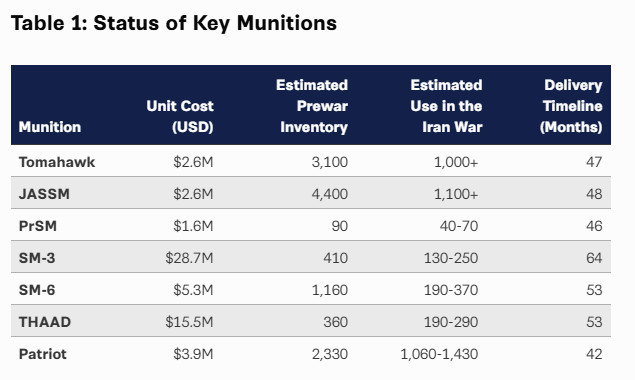
We had spent years or even decades accumulating our enormously expensive arsenal of "boutique" weapons, only to have now expended a large fraction of those munitions during just a few weeks of combat against Iran, combat that failed to achieve any of our stated military objectives. A recent CSIS report fully confirmed this situation, indicating that in many categories we had exhausted at least one-third to one-half of our entire global stockpiles, which would take years to be replenished.
Prof. Mearsheimer is generally known for his cautious and measured statements, but around that time he declared in a long interview that the war was completely lost, saying so in extremely forceful terms:
We have lost this war big-time. This war is a catastrophe for the United States...we're screwed...Trump wants to shut the war down, but the only way he can is to surrender. This war is an unequivocal defeat for the United States. This will go down in the history books as the greatest foreign policy blunder in American history, replacing the Iraq War at the top of the charts....This war is a colossal disaster...

An article I published the following week summarized this situation and argued that America might be driven out of the Middle East as a consequence of our defeat:
Over the last decade, we had spent well over two trillion dollars on our naval forces. One of our navy's most crucial missions had been safeguarding the vital sea lanes of the Persian Gulf, but that mission has obviously been a complete and total failure.Our annual military spending has been comparable to that of the rest of the world combined and more than one hundred times greater than Iran's. But despite our surprise attack, we had failed to defeat the Islamic Republic, or successfully protect our Gulf Arab allies from suffering Iran's retaliatory responses.
Although Trump and other American officials had repeatedly boasted that their airstrikes had destroyed the overwhelming majority of Iran's missiles and launchers, a few days ago the Washington Post revealed that a confidential CIA analysis had reached very different conclusions:
Iran retains about 75 percent of its prewar inventories of mobile launchers and about 70 percent of its prewar stockpiles of missiles, a U.S. official said. The official said there is evidence that the regime has been able to recover and reopen almost all of its underground storage facilities, repair some damaged missiles and even assemble some new missiles that were nearly complete when the war began.
- Will America Be Expelled from the Middle East?
- Ron Unz • The Unz Review • May 11, 2026 • 6,100 Words
All of this raises a deeply ironic historical parallel.
As some Americans might know, Iran is merely the modern name for Persia, an ancient civilizational state whose existence stretches back thousands of years.
These days few Americans are taught the history of their own Western civilization, but in past generations all educated Westerners would have known the story of how Athens and the other small city-states of ancient Greece had successfully defended themselves against conquest by the vast Persian Empire, one of the largest the world had ever seen.
No one had given the Greeks any hope of resisting the huge Persian armies that invaded their country more than 2,500 years ago, but against all odds the courageous Athenians won the Battle of Marathon against Persian invaders in 490 B.C. Then eleven years later a combined Greek army defeated an even larger Persian host at the Battle of Plataea.
Like other Western countries, America has always traced its civilizational roots to the ancient Greeks. But by a strange irony of fate, we had now become the massive global empire that unexpectedly met defeat when it attempted to conquer and destroy the far weaker but extremely courageous descendants of the ancient Persians.